Get EnterpriseAM daily

Chasing warehouse space

1

WHAT WE’RE TRACKING TODAY

TODAY: Octo + GFH eye warehouses, cold storage assets

Good morning, friends. We’re wrapping up the week with a brisk read focused on the Gulf’s logistics buildout, led by a fresh USD 300 mn wager on warehouses and distribution centers by Octo and GFH as well as a SAR 3.2 bn pipeline of new ports, rail, and logistics projects in Saudi Arabia’s Eastern Province.

There’s one logistics story overshadowing all the others this morning. Conflicting reports from Iran and the US have left the status of Hormuz unclear, with Tehran saying the waterway has been closed to shipping and Washington maintaining that commercial traffic continues to transit the strait.

Markets are reacting accordingly: Oil jumped on the news, with Brent crude rising over 2% to USD 95.14. Asian markets opened lower — extending losses initially triggered by a tech selloff — and in the US, equities are on track to open in the red with futures down in response to the attacks.

Yanbu keeps Europe flying

Saudi Arabia’s jet fuel exports to Europe are on track to surpass pre-war levels, with exports from Yanbu to the EU and UK hitting 118k bb / d in the first week of June, quantities not seen since mid-2025, according to Kpler and Vortexa data cited by Reuters. Our monthly high this year was the 77k bb / d seen in January.

The workaround is simple: Before the closure, the Middle East was Europe’s main jet fuel supplier, sending around 300k bbl / d through Hormuz out of the continent’s total 550k bbl / d imports. With the waterway largely blocked, Saudi Arabia is leaning harder on Yanbu, turning the Red Sea port into a critical pressure-release valve for Europe’s aviation fuel supply chain.

Europe is filling the rest of the gap elsewhere: The Saudi flows are landing alongside higher imports from the US and Nigeria, which averaged around 200k bbl / d in May. That is why Europe has so far avoided a visible jet fuel shortage, even as fuel prices remain the bigger pain point for global carriers’ bills.

Kuwait looks back at the game

Kuwait is offering spot crude cargoes to Asian refiners for the first time since the disruptions began. At least 4 mn barrels of medium-sour Kuwait Export Crude are being marketed to refiners in China and South Korea, Bloomberg reports, citing traders familiar with the matter. The barrels are being offered directly by Kuwait Petroleum Corporation rather than through intermediaries, with the cargoes already positioned outside Hormuz and available for prompt delivery into Asia.

The move points to a small but notable increase in tanker activity around Kuwait's export system. The VLCCs Al Riqqa and Dar Salwa were last tracked loading at Mina Al Ahmadi in late May and early June before their AIS signals stopped transmitting, according to Bloomberg vessel-tracking data. Their current locations remain unknown, but the timing suggests Kuwait may be building a buffer of export barrels beyond the strait to preserve access to Asian buyers.

On a long-term fix: Kuwait Petroleum is in discussions with Saudi Arabia and the UAE about expanding their existing pipeline systems to accommodate Kuwaiti crude exports, CEO Sheikh Nawaf Al Sabah said. No timeline was provided, and the stage of the discussions remains unclear.

Market watch

Oil prices climbed this morning after Tehran announced the closure of Hormuz and Washington threatened further strikes, Reuters reports. Brent crude futures increased USD 1.48 to trade at USD 94.58 / bbl by 02.43 GMT, while US West Texas Intermediate (WTI) gained USD 1.71 to USD 91.74 / bbl.


The Baltic Index continues to slide: The Baltic Exchange’s dry bulk index — which tracks rates for the capesize, panamax, and supramax vessel segments — was down 1.7% to 2,771 points on Wednesday. The capesize index slipped 3.2% to 4,301 points, while the panamax index was up 0.3% to 2,211 points. The smaller supramax index was up 0.3% to 1,618 points.

PSA

Maersk adds heavy-load surcharge: Danish shipping firm Maersk will apply a USD 500 heavy-load surcharge to 20-ft dry and tank containers moving from North India, Pakistan, and the Middle East to North America, effective 9 July. The fee will apply to boxes with a verified gross mass (VGM) above 24 metric tons, with VGM including the cargo, packing and securing materials, and container tare weight. The charges apply to all Ocean products except SPOT and Maersk Go.

*** YOU’RE READING EnterpriseAM Logistics, the essential MENA publication for senior execs who care about the industry that connects producers and retailers to global markets. We’re out Monday through Thursday by 10:15am in Cairo and Riyadh, and 11:15am in the UAE.

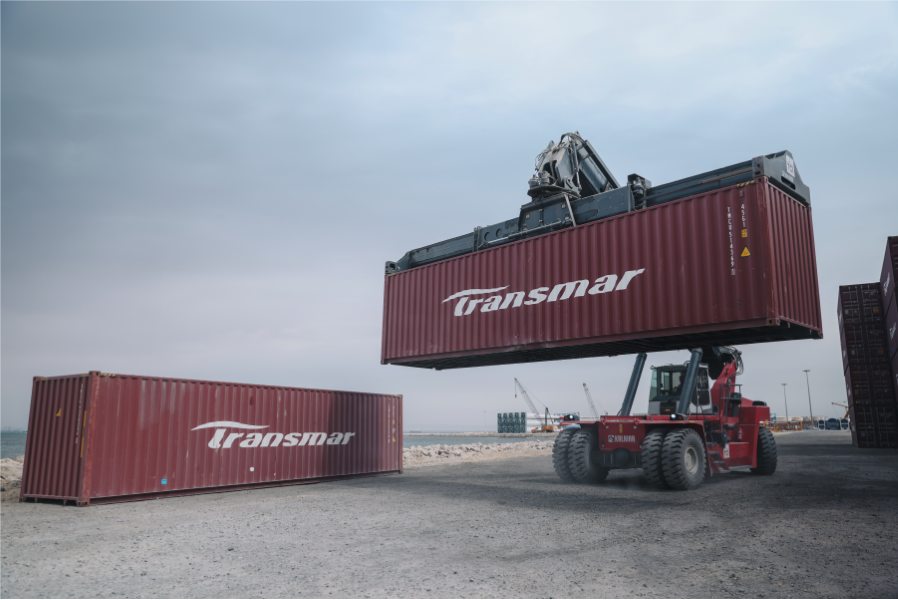
EnterpriseAM Logistics is available without charge thanks to the generous support of our friends at Hassan Allam Utilities and Transmar.

Were you forwarded this email? Tap or click here to get your own copy of EnterpriseAM Logistics.

Want to send us a story idea, request coverage, ask for a correction, or otherwise get in touch? Reach out to us on [email protected].

DID YOU KNOW that we also cover Egypt, Saudi Arabia, and the UAE? ***

This publication is proudly sponsored by

2

The Big Story Today

Octo, GFH to develop a USD 300 mn warehousing project in UAE + Saudi Arabia

The warehouse trade rolls on: UAE alternative investment manager Octo Management Consultancies partnered with Bahraini investment manager GFH to develop a USD 300 mn logistics and industrial real estate platform targeting development prospects across the UAE and Saudi Arabia, according to a statement.

What the platform will target: The platform, for which GFH will serve as investment manager and development partner, will focus on large-format warehousing, multi-let industrial assets, cold storage facilities, and distribution centers. The venture will pursue a mix of build-to-suit and speculative developments — primarily targeting assets at the development stage.

Why it matters: The platform lands at a moment when demand for logistics space across the UAE is structurally outpacing supply. Warehouse occupancy rates in Dubai have exceeded 97%, with rents rising 33% y-o-y — underscoring how acute the supply-demand imbalance has become.

The logistics partnership is one of several to crop up as of late, signaling that investors believe the structural drivers behind those numbers — e-commerce growth, supply chain localization, manufacturing expansion, and major infrastructure investment — have considerably further to run across both the UAE and Saudi Arabia. Back in January, GFH established a UAE-focused logistics platform in partnership with Asian investment manager Gaw Capital. Meanwhile, Abu Dhabi asset manager Lunate formed a strategic partnership with alternative asset manager Blackstone late last year to develop a USD 5 bn portfolio of Grade A logistics assets across the GCC.

3

Projects

Saudi is building out the Eastern Province as a logistics hub

An investment wave hits the Eastern Province: Developers are committing more than SAR 3.2 bn to new ports, logistics, and rail projects in the Eastern Province.

Bigger berths, bigger ambitions

SGP takes over Jubail container terminal: The largest ticket saw Saudi Global Ports Group (SGP) secure a contract from Mawani to operate the container terminal at Jubail commercial port, backed by more than SAR 2 bn in private sector investment. The project will raise the terminal’s annual capacity to 2.4 mn TEUs through a series of upgrades, including extending the berth length to 1.4 km, deepening the berth to 18 meters, and expanding the fleet of ship-to-shore and rubber-tyred gantry cranes to 39 units.

Building the land-side network

New truck services hub for Dammam port: At King Abdulaziz Port in Dammam, Mawani signed an agreement with Q Saudi to develop an integrated truck services center with SAR 180 mn in investment. The 97.7k sqm facility will include truck staging and waiting areas, driver rest facilities, and commercial services aimed at improving traffic flow and reducing waiting times.

Agility to expand Dammam logistics footprint: Mawani also partnered with Agility Logistics Parks to develop an integrated logistics zone covering nearly 400k sqm at King Abdulaziz Port, it said on X.

Two new logistics centers come online: King Abdulaziz Port also saw the launch of two new logistics centers worth a combined SAR 70 mn. Aldrees opened a SAR 40 mn, 14.6k sqm facility, while United Electronics Company (eXtra) launched a SAR 30 mn logistics center spanning more than 32k sqm. eXtra said the facility will increase its handling capacity by 30% and improve cargo flows through the port.

Inline Image

4

Purchasing

Saudi’s non-oil sector gathers pace in May on domestic demand, supply resilience

Saudi Arabia’s non-oil private sector gathered further momentum in May, with the Kingdom’s Purchasing Managers’ Index (PMI) climbing to 52.8, up from April’s 51.5, according to the Riyad Bank Saudi Arabia latest report (pdf). The jump signals a steady recovery since March’s slump following the eruption of the US-Iran war. While the reading sits comfortably above the neutral 50.0 threshold, fueled by reviving local demand and stabilizing supply networks, export hurdles and high costs kept the index below its long-term historical average of 56.8.

A modest demand growth still drove higher output and new orders: As business conditions normalized, companies dusted off delayed contracts and restarted frozen projects, pushing output levels to a three-month high, according to Riyad Bank’s Chief Economist Naif Al Ghaith. New orders also rode the same wave, rising to 52.0 in May, compared to April's 51.5 reading, but they remain below their long-run average, Reuters reports.

The global market offered little help: Foreign orders contracted sharply for the third month in a row, choked off by ongoing shipping bottlenecks, high freight costs, and regional conflict.

Logistics stabilization pushed inventory rebuild: Average supplier delivery times shortened in May for the first time in three months. Firms went on a buying spree sensing a window of stability, boosting purchasing activity for the first time since February to rebuild their inventories and hedge against future disruptions.

Sentiment remains resilient: Saudi businesses expect the non-oil economy to sustain its upward momentum through 2026, driven by better domestic demand, stabilized supply chains, controlled inflation, strong government investment, and robust trade, Al Ghaith notes.

Tags:

Inline Image

5

Also on Our Radar

Sharjah, SAL, and Asyad add capacity across land, air, and sea

Building inland capacity

The Sharjah Ports, Customs and Freezones Authority is developing the Al Dhaid Logistics Complex, with phase one spanning more than 16 mn sq ft and designed to handle up to 1.5 mn TEUs annually, state news agency Wam reports.

The buildout is heavy on cargo-handling basics: The complex will include truck holding areas, cargo yards, warehousing, inspection, and screening facilities, traffic management systems, dedicated access roads, and wider road links. It will also feature rail sidings and loading facilities.

Another Central Asian carrier checks in

Another Central Asia carrier lands with SAL: Saudi Logistics Services (SAL) has inked a yearly renewable agreement with Uzbekistan’s Fly Khiva Group to provide integrated air cargo ground-handling services in the Kingdom. The agreement covers cargo handling, aircraft loading and offloading, and other ramp operations, with services paid on demand under the contract’s pricing schedule.

Not the first Central Asian play: SAL had previously signed cargo-handling agreements with Uzbekistan Airways and Azerbaijan Airlines and has a Kingdom-wide cargo-handling agreement with Silk Way Airlines.

The fleet reset keeps rolling

Oman’s Asyad Shipping has sold its 2001-built Sohar LNG carrier for USD 23 mn, according to a disclosure (pdf). The vessel had been part of Asyad’s fleet since 2003 and was 50%-owned through a joint venture with Mitsui O.S.K. Lines. The transaction is expected to generate a JV gain of USD 2.1 mn, with Asyad set to recognize half of that amount, subject to final closing adjustments.

This is not a one-off sale — it is the same fleet-reset play: Asyad had planned the sale of four older, partially owned LNG carriers — Ibra, Ibri, Nizwa, and Salalah — under a USD 110 mn agreement signed in December 2025, with the vessels scheduled for handover in 1Q 2026.

Why it matters: Asyad is rotating out older LNG assets while bringing in newer LNG carriers and VLCCs that are tied to long-term charters and feature higher-efficiency specs. The Omani firm had already framed this as part of Asyad’s wider OMR 1 bn five-year fleet expansion strategy — including two LNG carriers, four crude oil tankers, and two oil-derivative tankers entering service in 2026-2027.


JUNE

21-24 June (Sunday-Wednesday): Saudi Smart Logistics, Riyadh, Saudi Arabia.

22-23 June (Monday-Tuesday): Decarbonizing Shipping Forum, Rotterdam, Netherlands.

AUGUST

30 August-1 September (Sunday-Tuesday): Air Cargo Middle East, Riyadh, Saudi Arabia.

30 August-1 September (Sunday-Tuesday): Saudi Warehouse and Logistics Expo, Riyadh, Saudi Arabia.

SEPTEMBER

16-17 September (Wednesday-Thursday): Saudi Maritime & Logistics Congress, Dammam, Saudi Arabia.

22-24 September (Tuesday-Thursday): Seamless Middle East, Dubai, UAE.

28-30 September (Monday-Wednesday): Transport Logistics Middle East, Riyadh, Saudi Arabia.

OCTOBER

12-14 October (Monday-Wednesday): The Airport Show, Dubai, UAE.

21-22 October (Wednesday-Thursday): Global Ports Forum, Singapore.

26-29 (Monday-Thursday): Air Cargo Forum, Miami, US.

27-29 October (Tuesday-Thursday): Routes World, Riyadh, Saudi Arabia.

NOVEMBER

2-5 November (Monday-Thursday): ADIPEC Maritime and Logistics Exhibition and Conference, Abu Dhabi, UAE.

Now Playing
Now Playing
00:00
00:00