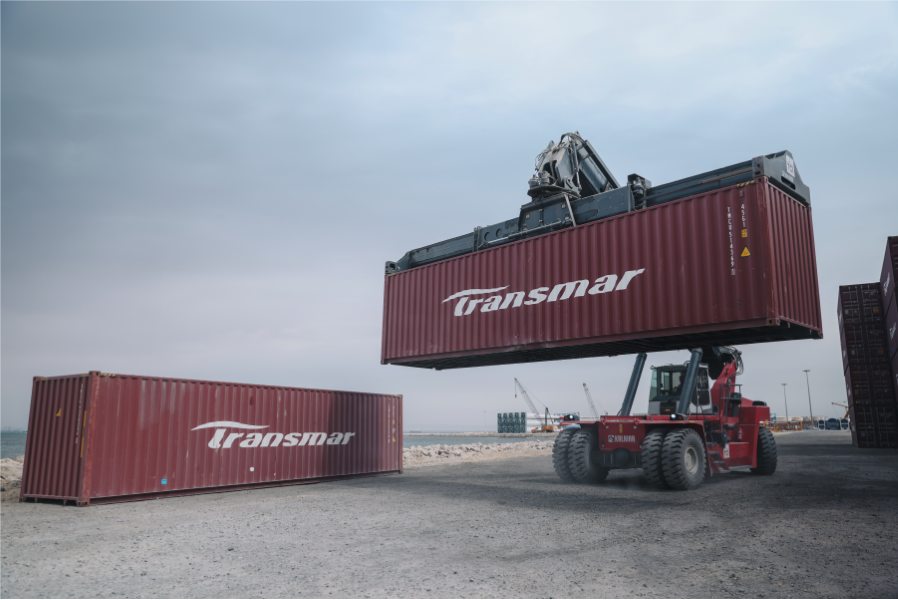
Alexandria opens its first dry port to absorb surging transit cargo

1

WHAT WE’RE TRACKING TODAY

TODAY: Alexandria’s Amreya Dry Port opens today + Gulf crude flows but diesel stalls

Good morning, nice people. Today's issue keeps coming back to one question: how cargo gets out when the usual routes are full, slow, or risky. Alexandria opens its first dry port today, giving the city’s seaports a place inland to send the transit cargo that has been pouring in. Meanwhile, Gulf crude is back on the water, but refined fuels haven’t caught up.

The Gulf’s sovereign funds and largest companies are committing billions to AI infrastructure at home and to AI companies in the US and beyond. EnterpriseAM AI + Innovation reports on where that capital goes, who controls it and what it is actually buying.

Every Tuesday and Thursday, we also cover the startups and established firms across MENA putting AI to work, and how it is changing jobs, education and the way business runs.

It’s sharp, analytical and skeptical journalism that ignores hype and is laser-focused on informing our readers, not pleasing our sources.

Sign up here to be among the first to get it straight to your inbox.

Sea you in Greece

Egypt and Greece are advancing plans for two new shipping corridors — a passenger and truck ferry (Ro-Pax) line linking Alexandria to Patras, and a cargo (Ro-Ro) route to Volos — following the third session of the Egyptian-Greek Joint Maritime Committee on 5 October, the Alexandria Port Authority said. The Greek side also signaled interest in dry bulk trade and in coordinating cruise itineraries to turn Alexandria and Greek ports into shared home ports for Eastern Mediterranean tourism.

REFRESHER- The talks come on the heels of the recent Arab-Balkans Corridor launch, which formalized direct shipping links between Egypt and Greece to position Greek ports as primary transit hubs for Egyptian cargo heading into the Balkans and broader Central European markets.

KSA, UAE agree on rail link

Riyadh and Abu Dhabi signed a preliminary agreement on rail links and electricity interconnection, according to The National, with UAE Investment Minister Mohamed Alsuwaidi and Saudi Energy Minister Prince Abdulaziz bin Salman putting their names to it in Riyadh. It sets a framework for moving goods and cargo by rail across the border, commissions feasibility studies on linking the two networks, covers cooperation on exchanging and selling power, and provides for coordination with the rest of the GCC on the wider Gulf grid. There are no figures, timelines, or named projects in the agreement, which comes 10 days after Sheikh Mansour’s visit to Riyadh reopened the conversation.

The gas crunch gave Egypt every reason to speed up its energy transition, and the question now is who builds it and who pays for it.

Power Trip, our four-part signature series, turns this week to the transition and the private developers now building much of Egypt’s new power.

Issue II looks at how the deals behind these projects work, who is lending to them, and why the country is building a nuclear plant at El Dabaa alongside its solar and wind farms. We also look at whether the regional crisis has finally pushed industry toward renewables, and at the factories Egypt is counting on to build its own panels, batteries, and turbines.

Tap here to subscribe to the Egypt edition and get Power Trip delivered straight to your inbox.

Market watch

Oil prices fell this morning as traders weighed Saudi supply risks against potential Russian diesel supplies, Reuters reports. Brent crude futures dipped USD 1.30 to USD 105.35 / bbl by 03.29 GMT, while West Texas Intermediate (WTI) slipped USD 1.25 to USD 92.49 / bbl.


The Baltic Index eases: The Baltic Exchange’s dry bulk index — which tracks rates for the capesize, panamax, and supramax vessel segments — was down 2.2% to 3,070 points on Monday. The capesize index declined 4.4% to 4,148 points, while the panamax increased 0.3% to 2,432 points. The smaller supramax rose 0.4% to 1,821 points.

***

YOU’RE READING EnterpriseAM Logistics, the essential MENA publication for senior execs who care about the industry that connects producers and retailers to global markets. We’re out Monday through Thursday by 10:15am in Cairo and Riyadh, and 11:15am in the UAE.

EnterpriseAM Logistics is available without charge thanks to the generous support of our friends at Hassan Allam Utilities and Transmar.

Were you forwarded this email? Tap or click here to get your own copy of EnterpriseAM Logistics.

Want to send us a story idea, request coverage, ask for a correction, or otherwise get in touch? Reach out to us on [email protected].

DID YOU KNOW that we also cover Egypt, Saudi Arabia, and the UAE? ***

This publication is proudly sponsored by

2

The Big Story Today

Alexandria’s first dry port opens today as container traffic through the city’s ports climbs 14%

Alexandria is getting a dry port to help its seaports handle a surge in transit cargo. El Amreya Dry Port, Alexandria’s first and Egypt’s second after Sixth of October, opens today — pushed back two days from the originally planned 11 October — CEO Ahmed Abul-Hassan tells EnterpriseAM. Container traffic through Alexandria and Dekheila rose 14% to 2.59 mn TEUs in FY 2025/26, according to Alexandria Port Authority’s Annual Statistical Report (pdf). Transit led the growth as shippers leaned on Mediterranean gateways while geopolitical tensions affected Red Sea ports.

Why it matters: Dry ports move part of a seaport’s storage, handling, and customs work inland, so containers spend less time on the quay and goods move faster and more cheaply between factories, ports, and markets. El Amreya is the first dry port to serve Alexandria directly and one of 33 dry ports and logistics zones the Transport Ministry plans nationwide.

What’s inside

It’s built as a logistics hub: Total port investment stands at approximately EGP 700 mn, according to the dry port’s general manager Wafaa El Sayed Ibrahim. The dry port is owned by the National Service Projects Organization and operated by Safety Link Shipping & Trade under a 25-year contract, Almasry Alyoum reports. Safety Link, which was awarded the tender to develop the facility, sees it as an integrated logistics corridor serving exporters and every link in the supply chain, Chairman Ahmed Mustafa tells us.

“It wasn’t designed as a storage or real estate project — it’s a strategic gateway,” Ibrahim tells us. It sits on 146k sqm along the Cairo-Alexandria Desert Road, 22 km from Alexandria Port, 18 km from Dekheila, and 16 km from Borg El Arab Airport and the industrial city. The container yard spans 75k sqm with a capacity of 3.1k FEU (forty-foot containers), handling empty, full, export, import, and transit containers including hazardous goods and chemicals. The site includes a reefer station with 826 connection points, a cold storage complex with 10k tons of freezing and chilling maximum capacity, a 100-ton certified scale, and a 38-truck waiting area.

Connected from day one: El Amreya will open with a connection to Nafeza, Egypt’s national single window for foreign trade, to process customs procedures digitally, Ibrahim says. The facility will also integrate with the national railway network, targeting a 15-20% reduction in cargo transport costs, she adds. A Qatar National Bank Al Ahly branch on site handles customer transactions. The Misr Technology Services (MTS) logistics center organizes procedures and operations within the port, giving access to cargo owners across different services within the same facility, Abul-Hassan tells us.

Why Alexandria needs the room

Transit is doing the heavy lifting: Transit containers through Alexandria and Dekheila jumped 74% in FY 2025/26 to 553.4k TEUs from 317.4k a year earlier, with transit tonnage up 62% to 5.78 mn tons. Loaded containers serving the local market grew more slowly, up 6% to 1.59 mn TEUs from 1.50 mn, while empties slipped 1.3% to 446.5k TEUs. Total container tonnage rose 11% to 28.31 mn tons.

The ships followed: Container vessel calls increased 7% to 2.2k, while ferries climbed 26% to 221. Liquid bulk calls rose 5% to 658, while dry bulk held flat at 818. Egypt is also working as an overland bridge for some of that traffic, with shippers routing Europe-GCC cargo through Egypt: trailers land at Damietta, move overland to Safaga, and cross to Saudi Arabia.

The port is expecting more of the same: The government has earmarked about EGP 9 bn to upgrade Alexandria’s quays, including finishing work at Al Max port, five breakwaters totaling 6.9k meters, and two new 80-90 ton tugboats, Asharq Business reports, citing unnamed government officials. The Transport Ministry also targets four new shipping lines from Alexandria to Europe and Africa within two years. The ministry is separately aiming to lift commercial port net income about 10% to USD 127.7 mn in FY 2026/27 from USD 115.9 mn.

IN CONTEXT- Tahya Misr terminal has handled 2.6 mn TEU since opening (38% of it transit) with 403 trains moving 39k TEUs to Sixth of October Dry Port, according to a Transport Ministry statement. That model (moving containers from ship to rail to an inland clearance point) is the same play El Amreya is built to replicate for Alexandria and Dekheila: pull cargo off the quay, clear it inland, and release berth space for the next vessel.

How it fits the national plan

The ministry wants a network: The Transport Ministry’s 33 dry ports and logistics zones aim to link manufacturing, agricultural, and mining centers to seaports and consumer markets by road and rail. They sit along seven corridors, which include Arish-Taba, Sokhna-Alexandria, Cairo-Alexandria, Tanta-Mansoura-Damietta, Gargoub-Salloum, Cairo-Aswan-Abu Simbel, and Safaga-Qena-Abu Tartour. El Amreya targets food products, agricultural exports, pharma, and cars, as well as overland transit heading to Libya, Sudan, Jordan, and African markets, Ibrahim says.

More are in the pipeline: Sky Ports is developing a dry port in Alexandria’s New Borg El Arab, with technical studies due for submission early this month. Meanwhile, Medlog’s USD 130 mn Tenth of Ramadan dry port and logistics hub is expected to begin operations in 2027.

What makes it work

The data has to reach the truck: The government is separately working to bring road freight companies into Nafeza, as we’ve previously reported. Carriers need to know what’s been cleared, what’s still outstanding, and who has to act before a truck leaves, or “it’s just earlier waiting,” Trella co-founder and COO Ali El Atrash told us last month. Sokhna offers a template: its planned digital truck yard already uses Nafeza clearance status to manage truck access so drivers don’t make trips for containers that aren’t ready, Egytrans Nosco co-CEO and Nafith Egypt Chairman Abir Leheta previously told us.

Alexandria is a different operating environment: Reliance Operations and Maintenance Services Managing Director Omar Ragheb has cautioned against cutting waiting times at ports only to add them in yards. He also told us Alexandria runs a less structured operation than Sokhna and Safaga, so coordination between El Amreya, the seaports, and truckers will carry more of the load there.

OUR TAKE- Opening day will show the facility is ready. The real test comes a few months in: whether container dwell times at Alexandria and Dekheila start to come down, and whether trucks are picking up boxes that have actually cleared. If El Amreya can make that work in a port as busy as Alexandria, it’s a good sign for the rest of the ministry’s list.

MEANWHILE- As El Amreya prepares to open, Tanzania’s Transport Minister toured Alexandria Port alongside Kamel El Wazir last week. The goal: an Egyptian-led consortium builds and operates a multi-purpose terminal at Dar es Salaam, and Egypt gets a logistics zone in Tanzania while Tanzania gets one here. Both sides are also seeking to link up the zone in Tanzania to its rail network so cargo can reach landlocked neighbors.

3

Trade

Gulf crude is flowing again, but diesel isn’t, and the West’s fuel stockpiles are nearly spent heading into winter

Gulf crude is back on the water, but the fuels the West runs on are still in short supply, and the stockpiles that covered the gap are running low as winter approaches. Middle Eastern crude shipments were back to roughly pre-war levels by late September, while diesel and gasoline exports were running at just 58% of pre-war volumes.

The West has almost used up its cushion, Vitol Group CEO Russell Hardy said at the Energy Intelligence Forum in London, Bloomberg reports. Months of disruption from the regional war have eaten through the inventories markets can readily draw on, leaving little room to absorb another supply shock, he said.

The IEA’s numbers show how fast that happened: Global observed oil inventories fell by 507 mn barrels between the start of the war and the end of August, including 95 mn barrels in August alone, according to the International Energy Agency (IEA). The agency warned that shrinking stocks and a strained global refining system are raising the risk of further tightening.

Diesel is where the squeeze is: Gulf diesel and gasoil exports averaged 390k bbl / d in August, about a quarter of pre-war levels. Disruptions at Russian refineries have added to the shortfall, leaving combined Gulf and Russian diesel exports 1.6 mn bbl / d below February.

European refiners have little room to make up the difference: They were already running near maximum capacity in late September, according to the European Commission. Commercial stocks at the Amsterdam-Rotterdam-Antwerp hub are below their five-year average, though they have stabilized in recent weeks. The Commission said European supplies remain stable, but the global shortage has kept diesel and jet fuel prices high.

So Washington is buying Russian diesel: US President Donald Trump reached an agreement with Russian President Vladimir Putin to bring more than 300k tons of Russian diesel into US and global markets immediately, followed by 500k tons in November and 1 mn tons after that, Reuters reports. The US has also eased sanctions on Russian diesel imports until 7 April 2027.

The G7 is speeding up emergency releases and putting diesel first: The group plans to put up to 100 mn barrels of crude and diesel into the market over four months, largely by accelerating the 400 mn-barrel emergency program agreed in March, of which 325 mn barrels have been released. Country allocations, the product mix, and delivery arrangements are still being worked out, according to the IEA.

Plenty of oil is still in storage, but not all of it can reach the market: IEA member governments hold roughly 1.1 bn barrels of public emergency stocks, including more than 200 mn barrels of diesel, and the agency says further releases remain possible. Aramco CEO Amin Nasser has said less than 10% of global oil inventories can be accessed in practice because of logistical and technical limits.

East Coast distillate stocks were 32% below their five-year seasonal average in September, according to the US Energy Information Administration. The agency expects them to stay 20-30% below normal through winter, when the region leans harder on imported heating oil and diesel. Imports typically cover around 15% of East Coast distillate demand from December to February, which leaves buyers exposed to the same global shortage.

What’s next: The second batch of Russian diesel, 500k tons, is due in November, and G7 governments still have to agree on who releases what and when.

Tags:

4

Also on Our Radar

DP World takes over a Chittagong terminal for 15 years, and NMDC launches its AED 618 mn rock dredger

DP World gets 15-year Bangladesh port concession

DP World has inked a 15-year concession pact with Bangladesh’s Chittagong Port Authority to operate and maintain the newly built New Mooring Container Terminal and an adjoining container yard, as per a press release. The terminal will remain state-owned while DP World does the heavy lifting — upgrading civil infrastructure, deploying digital logistics solutions, and managing daily terminal operations.

ICYMI- Last year, UAE maritime players were in talks for possible investments in Bangladeshi ports, including Chittagong. At the time, options included acquiring and managing operations for a major port. DP World was previously reported to be considering investing in a new terminal at Chittagong.

But for now, Bangladesh just wants less friction: Chittagong is Bangladesh’s economic lifeline, but chronic congestion routinely slows down the country's exports. DP World will link the terminal to its wider network of ports, logistics infrastructure, and supply-chain services.

Rock solid

NMDC Group has put its AED 618 mn rock-cutting dredger into service, giving the group more capacity to dig through hard seabed as it works through an AED 56.1 bn order book. The group inaugurated the Abu Al Bakhoush, the vessel it ordered in January which we flagged at the time, according to a disclosure (pdf).

The Abu Al Bakhoush is built for rock: The 148-meter cutter suction dredger, built by Jiangsu Haixin Shipping Heavy Industry, can dredge down to 38 meters and carries a 7.8 MW cutter designed for hard ground. It takes NMDC’s fleet past 170 vessels.

The dredger joins the fleet with plenty of work lined up: NMDC’s order book stood at AED 56.1 bn at the end of 1H 2026, after AED 7.8 bn in new awards during the half, according to the group’s 1H results. That compares with AED 62.3 bn in September 2025. Revenue for the half came in at AED 14.1 bn.


12-14 October (Monday-Wednesday): The Airport Show, Dubai, UAE.

20-22 October (Tuesday-Thursday): TOC Americas, Cartagena, Colombia.

21-22 October (Wednesday-Thursday): Global Ports Forum, Singapore.

26-29 (Monday-Thursday): Air Cargo Forum, Miami, US.

27-29 October (Tuesday-Thursday): Routes World, Riyadh, Saudi Arabia.

NOVEMBER

2-5 November (Monday-Thursday): ADIPEC Maritime and Logistics Exhibition and Conference, Abu Dhabi, UAE.

10-11 November (Tuesday-Wednesday): TOC Asia, Singapore.

10-12 November (Tuesday-Thursday): Intermodal Europe, Rotterdam, Netherlands.

11-13 November (Wednesday-Friday): Logitrans, Istanbul, Turkey.

18-19 November (Wednesday-Thursday): Breakbulk Asia, Singapore.

FEBRUARY 2027

10-12 February (Wednesday-Friday): Routes Americas, San Juan, Puerto Rico.

MARCH 2027

16-18 March (Tuesday-Thursday): CMA Shipping, Houston, US.

16-18 March (Tuesday-Thursday): Routes Asia, New Delhi, India.

APRIL 2027

20-22 April (Tuesday-Thursday): Routes Europe, Antalya, Turkey.

26-29 April (Monday-Thursday): Transport Logistic and air cargo Europe, Munich, Germany.

26-29 April (Monday-Thursday): Saudi Smart Logistics, Riyadh, Saudi Arabia.

Now Playing
Now Playing
00:00
00:00