Get EnterpriseAM daily

AD Ports Group furthers investments in Karachi Port

1

What we're tracking today

TODAY: AD Ports inks agreement with Karachi Port + GCC PMI reports are out

Good morning, ladies and gentlemen. We have a meaty issue this morning with the latest PMI reports from the GCC, all the latest from the Red Sea, and a smattering of ports and cargo updates. But first…

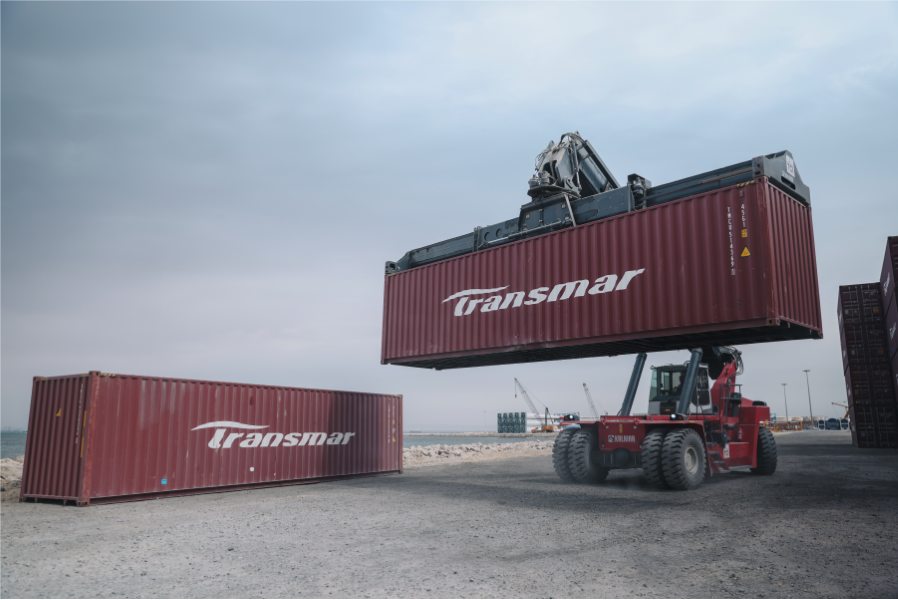
We are excited to welcome on board Transmar, one of the region’s leading shipping lines, as our latest pillar advertiser of Enterprise Logistics. Headquartered in Cairo and founded by the El Ahwal family over 45 years ago, Transmar provides comprehensive maritime and logistics solutions for a customer base spanning across the MENA region, East Coast of Africa and the Indian Subcontinent. Operating in 13 countries and 22 ports, Transmar boasts the largest dedicated container fleet in the region.

Transmar joined the AD Ports Group family in September 2022, helping contribute to the group’s vision of becoming a global trade facilitator. With decades of experience in the shipping and terminals industry, Transmar is a leading force in the transport of the region’s trade.

We have long admired Transmar and have been delighted to have our friend Nada El Ahwal, the company's chief strategy officer, join us for both exclusive private C-suite events and on stage at our conferences.

Enterprise Logistics is available to thousands of readers every day without charge thanks to the generous support of Transmar and Hassan Allam Utilities.


HAPPENING TODAY-

The Middle East Bunkering Convention will kick off today in Dubai and run through to Wednesday.. The event will bring together industry experts to tap into issues affecting the global marine fuel sector, including supply chains, decarbonization, and new fuels.

PSA-

Abu Dhabi is closing Al Ain City’s Zakhir Roundabout from Saturday 3 February to Thursday 2 May and traffic is being diverted, Abu Dhabi Integrated Transport Center said on X.

WATCH THIS SPACE-

#1-Egypt is surveying sites for 11 new freezones in a bid to attract FDI and boost exports, according to a statement released by the country’s General Authority for Investment and Free Zones. The proposed sites vary in size between 115 to 150 acres, with potential plots located in 10th of Ramadan City, El Alamein, El Sadat City, Burj Al Arab, October, Obour, Sohag, Beni Suef, Aswan, and Tiba, the statement said.

AND- Egypt’s ports to form joint-venture for seaport development: Egypt’s Suez CanalAuthority, the General Authority for the Port of Alexandria, and the Damietta Port Authority will establish a joint venture dubbed the Suez Canal Company for Seaport Development, Masr Times reports, citing Egypt’s Official Gazette. The company will oversee the management, operation, and maintenance of multi-purpose terminals across Egypt’s ports, according to the newswire.

#2- Jordanian customs have reworked procedures and kicked off the “Golden List” at Aqaba Special Economic Zone, with reforms seeing a consolidation of customs guidelines to streamline compliance, according to a statement released last week. The Golden List will allow companies subscribed to the initiative to benefit from facilities and perks, subject to certain requirements, the statement added.

#3- Huawei to digitize Dubai’s customs systems? Dubai Customs met yesterday with a delegation from Chinese tech giant Huawei to discuss enhancing collaboration in digitization and information technology, as well as the introduction of digital customs procedures, according to a press release.

#4- Iran is set to inaugurate 760 km of new roads and highways by year’s end, in a bid to relieve traffic bottlenecks and develop the country’s transit corridors, IRNA reported on Thursday, citing deputy head of the Construction and Development of Transportation Infrastructures Company Mohammad-Reza Kadkhodazadeh. The projects extend across 16 provinces and come at an investment of IRR 263 tn (USD 6.26 bn), IRNA said.

Breakdown: The developments include 62 km of highways in West Azerbaijan province, 55 km in Bushehr, 68 km in South Khorasan, 97 km in Kerman, 51 km in Khuzestan, 68 km in Central province, 50 km in Chaharmahal and Bakhtiari, 14 km in North Khorasan, and 29 km in Razavi Khorasan, IRNA added.

#5- DP World + Australia’s Maritime Union (MUA) have finally reached a tentative agreement to end a months-long labor dispute, according to a statement released on Friday. The four-year agreement covers fair pay, safety, job security, and fatigue management measures for DP World employees, according to the statement. The agreement, which has not yet been endorsed by union members, also includes annual pay raises of 8%, 7%, 4%, and 4.5% for some 1.8k workers, Splash News reported on Friday. Work stoppages due to the labor dispute were costing DP World some USD 84 mn in losses per week.

MARKET WATCH-

The Baltic Exchange’s dry bulk sea freight index bumped up on Friday, but fell w-o-w on the back of a general decline in rates across all vessel segments,Reuters reported on Saturday. The overall measure — which factors rates for capesize, panamax, and supramax vessels — increased 1.4% on Friday to settle at 1407 points, driven by a surge in capesize rates, but registered a weekly decline of 7.3%. Capesize rates increased 5.5% on Friday to 2030 points, but ended the week 4.9% lower. The panamax sub index fell for its fifth straight session, dropping 3.5% to 1444 points, with a weekly decline of 14.9%. The supramax sub index fell 7 points to 1041 points, closing out the week with a 2.3% drop.

DATA POINTS-

#1-Qatar’s ports handled over 103k TEUs in January 2024, 39% of which were transhipment containers, according to a Mwani Qatar statement released on Thursday. The Qatai port and terminal operator also handled over 56k tons of general and bulk cargo, 31.3k heads of livestock, 6k RoRo units, and 49.7k tons of building materials in January, the statement added.

#2- DP World’s digital arm for the GCC Dubai Tradecarried out some 32.6 mn transactions in 2023, up 25% y-o-y, Wam reported on Thursday. 48% of 2023’s transactions were in clearance and border control and another 44% related to cargo handling and logistics. The initiative looks to bring diverse trade and logistics players together on a unified digital platform, WAM said.

#3- Morocco’s 2023 trade deficit narrowed 7.3% y-o-y to MAD 286 bn (USD 28.6 bn), on the back of reduced imports and boosted revenues from tourism, Reuters reports, citing a monthly report by the country’s foreign exchange regulator. Energy imports fell 20.4% y-o-y to MAD 122 bn, while wheat imports saw a 25.3% y-o-y drop to MAD 19.3 bn. Revenues from tourism surged 11.7% y-o-y to MAD 104 bn, on the back of a record 14.5 mn visitors. Greater automotive exports and stronger remittances also contributed to the country’s improved trade position for the year, the newswire added.

CIRCLE YOUR CALENDAR-

The UAE will host Breakbulk Middle East on 12 and 13 February in Dubai. The networking event brings together government officials, oil and gas players, and contractors with representatives from upwards of 8k companies from 98 countries.

The UAE will host Sustainable Aviation Futures MENA from Monday, 12 February through to Wednesday, 14 February in Dubai. The event will see 80 expert speakers and upwards of 200 high level attendants and will handle topics pertaining to regulation, financing, and investments in Sustainable Aviation Fuels (SAF) in MENA.

The UAE will host the Future Warehouse & Logistics Conference from Monday, 12 February to Wednesday, 14 February in Dubai. The event will handle means for supply chain leaders to boost resilience and overcome challenges, with discussions on disruptions, sustainability, Internet of Things (IoT), automation, workplace management and other topics.

The UAE will host theTradeTech Forum on Tuesday, 27 February in Abu Dhabi. The forum will see some 180 trade leaders and experts discuss the technologically advanced trade environment and a showcase of trade tech solutions.

The UAE will host The Logistics Middle East Award on Wednesday, 6 March in Dubai. The awards ceremony brings together industry experts to celebrate the sector’s biggest accomplishments over the previous 12 months.The deadline for submitting nominations is Friday, 19 January.

KSA will host a special World Economic Forum event from Sunday, 28 April through to Monday, 29 April in Riyadh. The event will focus on global collaboration and energy.

The UAE will host The Electric Vehicle Innovation Summit from Monday, 20 May to Wednesday, 22 May in Abu Dhabi. The event will see industry leaders come together to discuss sustainable mobility and tapping into groundbreaking advancements in electric vehicles while engaging with key decision-makers.

Check out our full calendar at the bottom of this email for a comprehensive listing of upcoming news events and news triggers.


This publication is proudly sponsored by

2

Purchasing

Non-oil private sector activity across GCC shows continued expansion in January, while Egypt continue to face contraction

How MENA countries’ non-oil private sector performed in January: Purchasing manager indices (PMI) tracking non-energy sectors in UAE, Saudi Arabia, and Egypt painted a mixed picture in January. Both the UAE and Saudi Arabia remained in expansion, albeit at softer paces, dipping due to supply chain risks, and increased costs, while Egypt remained in contraction amid inflationary pressures and import obstacles.

REMEMBER- The all-important 50.0 mark is the threshold separating contraction from growth. Anything over 50 denotes expansion and anything below indicates contraction.

The UAE’s non-oil private sector slowed in January with the index inching down to 56.6 in January compared to 57.4 in December, expanding at a slower pace amid softened output and new order growth, according to S&P Global’s PMI (pdf). Nevertheless the headline expansion showed robust expansion on the back of strong demand and business inflows that uplifted activity and operating conditions, increased sales and marketing, new and current projects, greater investment and government initiatives propelling the growth, according to the report.

Saud Arabia’s non-oil activity improved at their slowest rate in two years: KSA’s headline PMI dipped to 55.4 in January, down from 57.5 the previous month, according to Riyadh Bank Saudi Arabia’s PMI (pdf). Although the kingdom witnessed strong growth in business activity and new orders —- greater competition and increased cost pressures softened the expansion. There was also an uptick in inflationary pressures on the back of high demand, increased material prices, and supply chain risks leading to the sharpest incline in purchasing costs since mid-2012.

Firms purchasing was proactive in UAE + Saudi: The UAE noted a rise in new business on the back of strong demand, respondents said, which shot up new sales, and new customers. Input purchases also grew sharply as UAE firms tried to increase their stocks in anticipation of increased client demand. Increased new business levels in Saudi Arabia drove a rise in input demand, while purchasing activity and inventory holdings grew sharply. Like the UAE, strong demand was prevalent —- but business activity fell to a five-month low. The Kingdom witnessed increased levels of new business, fuelling increased input demand as purchasing activity and inventory holdings also increased —- albeit at an eight-month low.

Growing supply-chain risks are prevalent: Despite lead times shortening, the UAE experienced delivery delays as firms increased their shipping costs due to Red Sea disruptions, as well as hiked transport costs paved the way to increased purchase prices, causing material and salary expenses to be pushed up. Saudi felt input price inflation at its highest level since August 2020 due to greater supply chain risks, and increased staff costs. In a bid to counter this, selling prices in the Kingdom were raised but modestly and slowly as respondents were reluctant to pass on the costs to their customers, with Saudi construction firms even reducing their prices.

Egypt underperformed: Egypt’s non-oil private sector contracted as inflationary pressures continued to weigh down the headline figure, according to S&P Global’s Egypt PMI (pdf). Egypt’s PMI dropped slightly to 48.1 in January from 48.5 the previous month. Firms in Egypt’s output and new orders fell in January due to increased prices dampening client demand, with price pressures, and geopolitical conflict also weighing down growth. While firms' purchasing activity decreased, its trend moved closer to stabilization, as firms indicated stock levels were kept stable, and lead times only increased slightly.

Inflation continues to be a thorn in Egypt’s side: Inflationary pressures picked up in January, respondents noted, with input and output costs increasing to their highest levels in 12 months, on the back of increased purchasing costs. Currency weakness and ongoing import problems also caused prices for wood, iron, and fuel to be ramped up, leading to firms to push a greater share of their costs onto customers and cause sharp increases in prices.

The Red Sea crisis was felt by all: Disruptions to the UAE’s supply lines had “modest impact,” on their non-oil sector growth in January, with few firms noting delivery delays, and rising backlogs, and increased shipping costs, S&P Global Market Intelligence Senior Economist David Owen said in his comment to the report. KSA also recorded the sharpest rise in purchase prices since May 2012 — with firms noting strong demand, higher material prices, greater supply chain risks, and higher shipping costs amid the Red Sea crisis. While Egypt’s tourism took a hit from the Israel-Gaza conflict and geopolitical tensions — causing firms to be less upbeat for the future headwinds, Owen commented.

UAE’s outlook remains positive, although slipping from December: UAE firms remained optimistic for the non-oils sector’s growth over the coming year, as firms expect strong demand and sales pipeline to continue to drive expansion in output, with new projects and investment to help buoy growth.

While Saudi Arabia is not as upbeat, their construction firms are more so: Firms business expectations in the Kingdom dropped to the second-weakest in January, since mid-2020 citing slowed demand growth and inflationary pressures to pose limitations to firms' business expansion in 2024. However, backlog of work in Saudi was registered for the first time in four years, particularly in the construction sector, reflecting strong demand for construction services, attributed to ongoing infrastructure and real estate development, reflecting a positive outlook for the construction sector to reap in investment, and sustain expansion, Riyadh Bank Chief Economist Naif Al-Ghaith commented.

Businesses in Egypt are also not upbeat: Firms are concerned that weak economic conditions will persist into 2024, with respondents' expectations worsening to one of the lowest levels in its PMI series history. There was only mild optimism for future business activity recorded.

Looking for Qatar + Lebanon’s PMI? Catch them here later today and our coverage will continue tomorrow.

3

Ports

AD Ports Group inks agreement to further developments and operations at Karachi Port

AD Ports Group and Pakistan’s Karachi Port Trust (KPT) have inked a 25-year concession agreement for a bulk and general cargo terminal at Karachi Port, according to a statement released on Saturday. The agreement will see JV Karachi Gateway Terminal Multipurpose Limited (KGTML) — formed by majority shareholder AD Ports and UAE-based Kaheel Terminals — develop, operate and manage bulk and general cargo terminal berths 11 to 17 at Karachi Port’s East Wharf granting it full operational control, the statement notes.

By the numbers: The JV will invest some USD 75 mn in the first two years for upfront payments, fees, and investments in port infrastructure and equipment. An additional USD 100 mn investment will be poured in within five five years, boosting the terminal’s capacity 75% to handle 14 mn tonnes yearly. The facility is expected to rake in some USD 30 mn in revenues a year in the short term, the statement notes.

What else do we know? Under the agreement’s terms, KGTML will have access to a 1.5k meters quay wall for general cargo and bulk operations and an adjacent 800 meters quay for container operations. Cargo operations will focus on steel, paper, and clinker, while the clean terminal will process grains and fertilizers, the statement added.

It's not the first time they partner up: The agreement builds upon a concession agreement inked in June 2023 that saw AD Ports acquire the rights to develop, operate and manage Karachi Gateway Terminal Limited’s (KGTL) container terminal berths 6 to10 at the same wharf.

REMEMBER- Pakistan and the UAE inked a slew of multi-bn USD agreements last November, outlining investments in Pakistan’s logistics, ports, and other sectors.

4

Disruption Watch

Companies may turn to new trade corridors running on land through the Middle East

Land routes through Saudi Arabia and the UAE are emerging as a potential lifeline for trade amid the crisis in the Red Sea, Bloomberg reported over the weekend. The commercial trade routes in the "heart of the Middle East" are designed to avert the Bab El Mandeb strait in the southern Red Sea, a choke point the Houthis have been exploiting.

What we know: Israeli software startup Trucknet Enterprise is among those testing the routes, sending goods from ports in the UAE and Bahrain through the Kingdom and Jordan towards Israel and Europe, its CEO Hanan Fridman told business information service. The route, which hasn’t been tapped before on a commercial level due to strained ties between Israel and Arab countries, saw Trucknet sending cargo from India, Thailand, South Korea and China in recent weeks. Asian-bound goods were also moving in the opposite direction, helping bring costs down.

Other options being weighed: German shipping giant Hapag-Lloyd is considering linking Jebel Ali port in Dubai and two eastern ports here with Jeddah on the west coast. Another option by the German group seeks linking Jebel Ali with Jordan, which borders Israel.

But there’s a catch: An overland truck route will work for some types of cargo, but Hapag-Lloyd spokesman Nils Haupt admitted that it’s a short term-solution for shippers looking to ship small cargo — “not thousands of containers.” While it may “carry a not-insignificant quantity of traffic, [the land bridge] will remain a niche solution for shipments specifically to Israel," Chris Rogers, head of the supply-chain research group at S&P Global, said.

And risks: "Gulf Cooperation Council states may be hesitant to promote the route as the Houthis have not yet threatened UAE or Saudi maritime assets," according to S&P Global analysts. "A road route via Saudi Arabia and Jordan also would increase risks of cross-border attacks on cargo by Iran-aligned Iraq-based or Syria-based militants," they added.

These routes could serve as a trial run for the planned US-backed India-Middle East-Europe Economic Corridor in which Saudi Arabia is taking part. The crisis in Gaza has stalled talks on the corridor, which was announced during the G20 summit in India last year.

Attacks are seeing a redistribution of freight volumes across EMEA ports: The rerouting of shipments away from the Red Sea is seeing shipping from affected areas redistributed to ports in the UAE, and Africa, creating congestion in ports alongside reroutes, according to a Thursday report by international credit rating agency Fitch. Large operators including DP World and its diverse portfolio of terminals are less affected, as falling volumes in ports such as Sokhna (Egypt) and Jeddah (Saudi Arabia) are offset by higher volumes in Jebel Ali (UAE) and Africa.

Not all are so lucky: Single-terminal operators are more severely affected, Fitch said. Transhipment volumes in Egypt, Saudi Arabia, and Turkey are the worst off, with Mersin’s (Turkey) transhipment volumes particularly hard hit. The disruptions are not expected to continue long term, Fitch said, citing the importance of the Red Sea as an international trade route and the efforts of a US-led coalition to counter disruptions in the sea lane.

And Suez Canal receipts almost halved in January: Suez Canal receipts fell 47% y-o-y to USD 428 mn in January as the number of ships passing through the waterway dropped almost 37% to 1.4k last month thanks to Houthi attacks on shipping in the Red Sea, Suez Canal Authority boss Osama Rabie told Kol Youm (watch, runtime: 9:28) on Friday.

The latest: French shipping giant CMA CGM has again suspended shipments through the Red Sea until further notice due to the heightened risk of attacks from Yemen’s Houthis, Reuters reported on Friday, citing sources it says have knowledge of the situation. The shipping firm returned to the Red Sea in January, after pausing transit in December.

Russian oil tankers transits via the Red Sea have continued “largely uninterrupted”, Reuters reported on Thursday, citing shipping executives, analysts, and flow data. Despite seeing a slight downtick in December, Russian tanker traffic in the Red Sea was up 20% compared to the same period last year, the newswire wrote citing tracking by oil analytics firm Vortexa, contrasting with transit patterns for other tanker fleets, which saw widespread reroutes over the past two weeks, the newswire said.

That's not what we heard last week: Russian oil traders were reported to be diverting their shipments around the Cape of Good hope last week, due to the heightened risks of attacks, and looking for suitable locations to refuel and restock.

Shipping giant MSC stressed the need to circumvent a “significant supply chain crisis”, with concerns that rerouted shipping patterns could have a mounting impact on global trade, MSC Maritime policy and governmental affairs head Bud Darr told the US House of Representatives’ Transport and Infrastructure Committee at a hearing on Wednesday (watch, runtime: 2:04:55). During the hearing, which weighed policies on combating Red Sea disruptions, Darr noted that although initial Houthi attacks against commercial shipping targeted vessels with links to Israel, they have since become “indiscriminate”, forcing MSC to continue to reroute their vessels until they were more confident in their security.

Demand for China to Europe rail shipments via Russia has surged,as Red Sea disruptions continue to reshuffle trade routes, CNBC reported on Thursday. Freight forwarders are looking for options less expensive than air freight and faster than seaborne shipments rerouting around the Cape of Good Hope, the news outlet said. Demand for the railway route has “skyrocketed” since the start of Red Sea disruptions and the overall impact on demand will take several months to unfold, RailGate Europe’s chief business development officer Julija Sciglaite told CNBC. Some companies are not showing interest in the option citing concerns about possible EU sanctions on trade mediated via Russia, the news outlet added. These companies are turning to the “middle corridor” sidestepping Russia by going through Kazakhstan to Turkey via the Caspian sea, the outlet reported, citing managing director of Rail Bridge Cargo Igor Tambaca.

STRIKES AND ATTACKS CONTINUE-

US forces carried out more strikes on Saturday targeting six Houthi anti-ship cruise missiles that were being prepped for launch, Reuters reported, citing US Central Command (Centcom). The latest attack comes on the heels of another strike last week targeting 10 unmanned drones that were being prepped for launch in Yemen, Reuters reported separately, citing a US official as saying. An American warship also downed three Iranian-made drones and an anti-ship ballistic missile in the Gulf of Aden, with no damages or injuries reported, the newswire said citing Centcom.

Yemen’s Houthis reportedly carried out an attack against American merchant ship KOI in the Gulf of Aden, Reuters reported last week, citing Houthi military spokesperson Yahya Sarea as saying on Wednesday. The attack came hours after another strike targeting US Navy destroyer Gravely, the newswire said. British maritime security firm Ambrey also reported an explosion aboard a merchant vessel in the region, but did not clarify if this was the KOI, the newswire said citing the security firm. Liberian-flagged KOI is operated by UK-based Oceonix Services, which also operates oil tanker Marlin Luanda which was damaged in a Houthi attack on Saturday, the newswire added.

British and American forces struck 36 Houthi facilities in Yemen on Saturday, one day after the US launched air strikes against 85 targets in Iraq and Syria that it claimed have ties to Iran’s Revolutionary Guards Corps, killing 40, Reuters reported. “Our response began [on Friday]. It will continue at times and places of our choosing,” US President Joe Biden said in a statement. The attacks come in response to an Iran-backed attack that killed three US servicemen in Jordan last week.

IN DEFENSE NEWS-

India is doubling down on countering piracy in the region: The country has deployed some dozen warships east of the Red Sea as it looks to deter resurging piracy in the area, and as Western powers shift their focus towards dealing with the Houthi threat, Reuters reported last week, citing Indian officials. “Houthis and piracy are disconnected. But pirates are trying to use this opportunity as the West's efforts are focused on the Red Sea,” the newswire cited an unnamed Indian navy official as saying. India already has two frontline warships in the Gulf of Aden, and some 10 warships in the northern and western Arabian Sea, with surveillance aircraft, marking the country’s largest deployment to the region, and larger than Chinese, French or US deployments to the area, officials said. India is also not participating in the US-led Red Sea naval taskforce, the newswire also added.

REMEMBER-Monday saw Indian navy vessel INS Sumitra respond to two Iranian fishing vessels that were hijacked by Somali pirates, rescuing 17 Iranian nationals from the first boat, before rescuing 19 Pakistani nationals aboard the second.

MARKET REAX-

The oil market is looking more disconnected and fragmented as it turns to local alternatives amid disruption-driven increases in freight rates, Bloomberg reports. The trend is seeing the development of two disconnected oil trading regions — one centered around the Atlantic, the North Sea, and the Mediterranean and another enclosing East Asia, the Persian Gulf, and the Indian Ocean. European refiners didn't pick up Iraqi crude last month, with shipments from the North Sea and Guyana seeing an uptick in demand in the European market, Bloomberg wrote citing traders. Meanwhile, Abu Dhabi’s Murban crude is seeing greater demand in Asia and crude loadings from the US to Asia declined by more than a third between December and January, the outlet said citing Kpler tracking data. “The pivot toward logistically easier cargoes makes commercial sense, and that will be the case for as long as the Red Sea disruptions keep freight rates elevated,” Kpler analyst Viktor Katona was cited as saying by the outlet.

The LNG market may take it a step further: US and Qatar-based LNG producers are considering swapping their cargoes to get around bottlenecks at the Suez and Panama Canals, with US cargoes making their way to Europe to meet Qatari contracts and Qatari cargoes shipped in turn to US customers in Asia.

5

Cargo

Menzies + Eurus Express form cargo and logistics JV in China

Menzies expands into China: Agility Logistics subsidiary Menzies Aviation has inked an MoU with China-based logistics solutions provider Eurus Express to set up a joint venture operating out of Hainan, China, according to a statement. No details regarding the investment ticket or timelines were disclosed.

Details are scant: The JV will offer premium cargo and logistics services for Hainan and the Asia-Pacific region, leveraging Hainan’s free trade port status, the statement said.

About Eurus Express: The Hong Kong, Hainan, and Shenzhen-based logistics solutions provider delivers supply chain solutions in 58 locations across 17 countries. Their portfolio of services include shipment pickup, last-mile delivery, and return logistics management, according to the company website.

Menzies is doubling down on China: Menzies snapped up a 50% stake in Hong Kong’s Jardine Aviation Services Group (JASG) last week, establishing a foothold in Hong Kong and bolstering a pre-existing partnership with China National Aviation Corporation (CNAC).

6

Also on Our Radar

Bahri + Boeing Saudi Arabia inks supply chain MoU, QatarEnergy + Mitsui ink long-term energy agreement, and aviation updates from KSA and Egypt

SUPPLY CHAINS-

KSA’s national shipping company Bahri has inked an MoU with Boeing SaudiArabia to expand cooperation in supply chain and distribution, according to a statement. The two firms will use Bahri’s existing supply chain avenues in the kingdom to collaborate in freight forwarding, warehousing, inventory management, and performance-based logistics consulting. The move aims to boost supply chain efficiency, particularly for KSA’s defense sector.

SHIPPING + MARITIME-

QatarEnergy + Mitsui ink long-term supply agreement:QatarEnergy has signed a 10-year agreement to supply 11 mn barrels of condensates per annum to Japan-based Mitsui & Co ’s energy subsidiary Mitsui & Co Energy Trading Singapore starting April, according to a statement. The agreement allows for boosting the volumes of condensate. Additional volumes of condensate are set to be exported from Qatar following the launch of its North Field East and North Field South expansion projects.

ROADS-

Oman’s Ministry of Transport, Communications, and Information Technology has greenlit Al-Sharqiya Expressway Project's Phase 2, according to a statement released on Thursday. The project — which costs around OMR 68 mn — stretches along 52 km and links North and South Al Sharqiyah. The initiative also involves converting the existing road into a three-lane dual carriageway with tunnels, bridges, and intersections. The project is slated for completion in 25 months.

AVIATION-

SGS, Saudia’s Flyadeal renews ground handling services contract: The Saudi GroundServices Co. (SGS) will continue to provide ground handling services to Saudia-owned budget carrier Flyadeal under a three-year contract renewal worth SAR 800 mn, it said in a disclosure to Tadawul last week. The contract covers the services for domestic and international flights at airports across the Kingdom, it said, expecting "sustainable company revenues during the contract period.”

Egypt Air sells Airbuses to support fleet transformation: US-based aircraft leasing company Azorra has purchased 12 Airbus A220-300 planes from national flag carrier Egypt Air, a statement (pdf) from Azzora’s legal counsel for the transaction Matouk Bassiouny & Hennawy (MBH) said. The transaction will support Egypt Air’s “ongoing fleet transformation,” the statement added.

OTHER STORIES WORTH KNOWING THIS MORNING-

  • Qatar Airways Cargo adding new freighter service:Qatar Airways Cargo is set to launch a new weekly freighter service from Munich with 300 tonnes of cargo capacity. (Statement)
  • KSA’s Mawani records 148 inspections in January: The Saudi Ports Authority (Mawani) recorded 148 inspections on shipping agents and ship chandlers in January 2024. (Statement)
  • Iraqi Airways halts flights to Moscow: Iraqi Airways has suspended flights between Baghdad and Moscow “until further notice” due to “operational issues with the Russian side.” (Iraqi News)
  • EPG has rebranded:Emirates Post Group (EPG) has revealed its new brand identity, dubbed 7X. The new brand brings Emirates Post, FINTX, and the Electronic Documents Centre (EDC) under its aegis. (Wam)
  • Turkish Cargo launches three new pharma products: Turkish Cargo has kicked off TK Pharma Standard, TK Pharma Extra, and TK Pharma Advanced, boosting the air freighter’s temperature controlled storage and specialized handling solutions for pharma and medical consignments. (Statement)
  • COSCO expands further in North Africa: Shanghai-based shipping company COSCO Shipping Lines has inaugurated its first Moroccan branch in Casablanca, with aims to boost its involvement in North Africa. (Statement)
7

Around the World

Boeing holds off on 2024 guidance and admits to shortfalls, Container carriers are boosting orders for company-owned newbuilds

Boeingwill hold off on sharing or updating financial and operational objectives for 2024 but plans to stick to its 2025 and 2026 financial targets, CNBC reported last week, citing comments made by CEO Dave Calhoun told employees in a message. Financial targets for next year and 2026 see the company ramping up revenues to USD 100 bn by early next year. 4Q 2023 earnings saw the aircraft maker post a USD 30 mn loss, substantially less than the USD 663 mn loss it saw for the same period last year. Topline figures also improved, boosting 10% y-o-y to USD 22 bn, according to the outlet.

Boeing has also called out itself on recent shortfalls: “We caused the problem. And we understand that,” Calhoun said, referring to a recent Alaska Airlines incident which saw a Boeing 737 Max 9 forced to make an emergency landing after a panel blew out mid-flight. The Federal Aviation Administration (FAA) cleared the Max 9 to fly again last week, but said it would hold back Boeing’s plans to boost its production rate for the aircraft. The National Transport Safety Board (NTSB) is expected to release a preliminary report on the Alaska Airlines incident in the coming days, CNBC wrote.

ICYMI- Airbus delivered some 735 commercial aircraft in 2023, rising steeply above competitor Boeing's 480 deliveries. The deliveries solidify Airbus’s title as the world’s largest plane manufacturer for the fifth straight year, and cast doubt on whether the commercial aircraft market is still characterized by the long-running Boeing-Airbus duopoly.


Container carriers are boosting orders for new builds in a bid to curb their exposure to the charter market, Seatrade Maritime reported on Thursday, citing Braemar researcher Jonathan Roach. “Today about 80% of the orderbook is liner company owned. Historically liner companies owned about 55% of ordered tonnage,” Roach said. Nevertheless, analysts are mixed on whether this strategy will pay off for carriers, with some noting that carriers may find running costs for owned vessels higher than chartered ones, citing the substantial costs of newbuilds and high interest rates, the report said citing analysts.

OTHER STORIES WORTH KNOWING THIS MORNING-

  • Ukraine targets Russian refinery: Two Ukrainian attack drones hit on Saturday Russia’s Volgograd oil refinery, the largest plant in the country’s south. The attacks caused a fire to break out, but it has since been extinguished and operations at the refinery have resumed. (Reuters)
  • EU leaders vow to ease environmental regulations on farming: The EU plans to rethink recently passed climate-related legislation on farming. Farmers took to the streets in Brussels to protest environmental regulations that they say are hurting their businesses. (Financial Times)

5-7 February (Monday-Wednesday): Middle East Bunkering Convention, Dubai, UAE.

5-7 February (Monday-Wednesday): Cargo Facts EMEA 2024, Amsterdam, Netherlands.

6-7 February (Tuesday-Wednesday): The Middle East ProcureTech Summit, Dubai, UAE.

12-13 February (Monday-Tuesday): Breakbulk Middle East conference, Dubai, UAE.

12-14 February (Monday-Wednesday): Sustainable Aviation Futures MENA, Dubai, UAE.

12-15 February (Monday-Thursday): Future Warehouse & Logistics, Dubai, UAE.

12-15 February (Monday-Thursday): African Air Expo, Cape Town, South Africa.

22-24 February (Thursday-Saturday): International Freight Forwarders Conference, Dubai, UAE.

26-29 February (Monday-Thursday): World Trade Organization's 13th Ministerial Conference, Abu Dhabi, UAE.

27 February (Tuesday) :TradeTech Forum, Abu Dhabi, UAE.

28 February (Wednesday): Industrial and Building Technology event, Dubai, UAE.

28 February-1 March (Wednesday-Friday): MENA Transport Congress and Exhibition, Dubai, UAE.

MARCH

3-5 March (Sunday-Tuesday): Sustainable Green Blue Infrastructure Conference 2024 (Marlog), Green Plaza Mall, Egypt.

4-8 March (Monday-Friday): Logistics & Transport Management 2024, Dubai, UAE.

5-6 March (Tuesday-Wednesday): ShipTek International Conference & Awards 2024, The Address Dubai, UAE.

5-6 March (Tuesday-Wednesday): MRO Middle East, Dubai Trade Center, Dubai, UAE.

6 March (Wednesday):The Gulf Ship Finance Forum, Waldorf Astoria Dubai International Financial Centre, UAE.

6 March (Wednesday): The Logistics Middle East Awards, Dubai, UAE.

7 March (Thursday): Truck and Fleet Conference 2024, Dubai, UAE.

12-14 March (Tuesday- Thursday): IATA World Cargo Symposium, Hong Kong International Airport, Hong Kong.

20 March (Wednesday): Construction work scheduled to begin on the 162 km Rasht-Astara Railway in Iran.

APRIL

27 April- 1 May (Saturday-Wednesday): Iran Expo 2024, Tehran International Permanent Fairground, Iran.

28 April - 29 April (Sunday - Monday): World Economic Forum, Riyadh, KSA.

29 April- 2 May(Monday-Thursday): GLA Global Logistics Conference, Dubai, UAE.

30 April- 2 May(Tuesday-Thursday): Autonomous E-mobility Forum, Doha, Qatar.

April: Driftx. Abu Dhabi, UAE.

MAY

2-3 May (Thursday-Friday): Geneva Dry, Hotel President Wilson, Geneva, Switzerland.

2-4 May(Thursday-Saturday): The International Conference on Logistics Operations Management: smart, sustainable and green logistics (GOL), Marrakesh, Morocco.

3-5 May (Friday-Sunday):2024 IEEE 15th international conference on Logistics and Supply Chain Management, University of Sousse, Tunisia, Tunis.

7-9 May (Tuesday-Thursday): Annual Investment Meeting (AIM) Congress, Abu Dhabi, UAE.

14-15 May (Tuesday-Wednesday): Seamless Middle East, Dubai World Trade Centre, UAE.

14-16 May (Tuesday-Thursday): Airport Show, DWTC, Dubai, UAE.

20-22 May (Monday-Wednesday): The Electric Vehicle Innovation Summit (EVIS), Abu Dhabi, UAE.

21-23 May (Tuesday-Thursday): WAGA 2024, Riyadh, Saudi Arabia.

JUNE

2-4 June (Sunday-Tuesday):IATA Annual General Meeting (AGM) and World Air Transport Summit, Dubai, UAE.

19-21 June (Wednesday-Friday): World Freezones Organization’s Annual International Conference and Exhibition, Bari, Italy.

OCTOBER

6-8 October (Sunday-Tuesday): Routes World 2024, Bahrain.

7-9 October (Monday-Wednesday): AFSIC – Investing in Africa, London.

22-24 October (Tuesday-Thursday): Asean Ports and Logistics 2024, Johor, Malaysia.

NOVEMBER

11-14 November (Sunday-Thursday): ADIPEC Maritime and Logistics Exhibition and Conference, Abu Dhabi.

13-15 November (Wednesday-Friday): The Bahrain International Airshow, Sakhir Airbase, Bahrain.

DECEMBER

10-12 December (Tuesday-Thursday): Middle East Business Aviation, Dubai World Central, Dubai, UAE.

20 December (Wednesday): The 5th Iran-Senegal Joint Economic Cooperation Commission, Dakar.

EVENTS WITH NO SET DATE

1Q 2024: Construction of phase 3 of Agility’s logistic park in Abidjan, Côte d'Ivoire to be completed.

1Q 2024: Egypt’s Transport Ministry to launch pre-qualification tender for Cairo-Alex freight railway.

1H 2024: Civil Construction subcontracts for construction firms in Oman for implementation of the Abu Dhabi - Suhar rail link to be announced.

2H 2024: Bahri’s barges for Saline Water Conversion Corporation (SWCC) to begin initial and commercial operation.

King Salman Energy Park is set to become operational.

2025

Mid-2025: Iraq will complete phase one of the construction of the Grand Faw Port.

DHL and Aramco’s logistics and procurement hub in Saudi Arabia will commence operations.

AD Ports-operated Safaga Port’s multi-purpose terminal will become operational.

Phase 3 of APM Terminals Tangier MedPort to be complete and operational.

1Q 2025: Sadr Park’s Logistics Center in Riyadh to be completed.

1Q 2025: Phase twoof Jafza Logistics Park to be completed.

2027

4Q 2027: Oman’s Musandam Airport construction to be completed.

Now Playing
Now Playing
00:00
00:00