Logistics (MENA)
  MENA+ Edition
  Egypt Edition
  UAE Edition
  Saudi Edition

 Share Issue





Good morning, nice people. It's a little quiet out there this morning — and for once, quiet is looking a lot like optimism. No fresh disruption to report on the logistics front, and two decent-sized infrastructure stories to end the week with.
Today's issue leans investment-led: The European Investment Bank is putting EUR 365 mn behind upgrades to Morocco's motorway and rail networks, though we're still waiting on a disbursement timeline or project-level breakdown. And in Oman, CMA CGM and Asyad Group are teaming up on a USD 400 mn multipurpose logistics terminal in Sohar.
The optimism could be coming from things quietly…normalizing. Gulf carriers — Emirates, Qatar Airways, Etihad — are back to roughly 95% of prewar capacity, clawing back the share Lufthansa picked up while they were grounded. And direct cargo shipping between the UAE and Iran has resumed, the same week flights did.
Borrowed capacity, returned with interest
Gulf cargo carriers are clawing back the market share the Iran war handed to Lufthansa. Emirates, Qatar Airways and Etihad are now flying at roughly 95% of prewar capacity, eroding the demand and yield boost the German carrier picked up while regional rivals were disrupted by the conflict, Lufthansa Cargo CEO Ashwin Bhat told Bloomberg. Lufthansa hasn't cut prices to defend share, and Bhat called demand “surprising” for what's usually a soft summer stretch. The cargo unit posted EUR 324 mn (USD 369 mn) in operating net income last year, about 17% of the group's total.
Mounting pressure: The EU is also scrapping its duty-free exemption for low-value e-commerce imports — replacing it with an EUR 3 per-item fee. Bhat says Asian customers are “nervous,” and Lufthansa has already seen goods front-loaded into Europe ahead of the change. E-commerce is under 20% of its cargo business, but a demand drop could trigger aggressive price-cutting that spills into every carrier's margins — Gulf carriers included.
SkyCargo's second life for old jets
Emirates SkyCargo has become the first cargo carrier to fly a converted Boeing 777-300ERSF freighter — with the aircraft entering commercial service on a Hong Kong-Dubai route carrying more than 100 tonnes of cargo, Khaleeji Times reports. The converted jet packs 811 cubic metres of cargo volume — a 25% jump over Boeing's own 777-F production freighter — and fits 47 pallet positions, 10 more than the production model. That extra volumetric capacity is aimed at e-commerce cargo, which already makes up around 20% of global air cargo tonnage and is still growing.
The logic: recycle the fleet you already have. “We are optimizing our fleet assets by converting older Boeing 777-300ER passenger aircraft to meet the growing demand for air cargo capacity,” Emirates SkyCargo Divisional Senior Vice President Badr Abbas said. The converted jet is the sixth new freighter to join the SkyCargo fleet since March 2026, after five Boeing 777-F production freighters.
What's next?What's next: Emirates SkyCargo is set to take delivery of five more 777-Fs and one more converted 777-300ERSF by the end of 2026.
UAE-Iran direct shipping is back on
Direct cargo shipping lines between the UAE and Iran have resumed the same week that flights restarted between the two countries, after months during which bilateral commercial ties had effectively stalled. Iran’s Trade Development Organisation Logistics Director-General Ali Emami confirmed the resumption of shipping activity to Iran’s Mehr News Agency, saying that “trade relations are returning to normal.”
That’s big: The UAE — and Jebel Ali in particular — is the dominant re-export gateway for Iranian imports of intermediate goods, raw materials, and equipment. When that corridor went dark during the conflict, Iranian importers were rerouting through Oman and Turkey at higher costs and longer lead times, and cargo was sitting stranded at Jebel Ali.
Commercial tracks are moving in step with the diplomatic ones. The resumption comes as the US and Iran are scheduled to hold talks in Doha this week — and as the UAE and Iran seem to have agreed their commercial relations are important enough to warrant an attempt to get ties back on track, with recent talks taking place between UAE and Iranian officials, and no attacks on the UAE since May, despite sporadic attacks on Bahrain and Kuwait over the past few weeks.
Cha-ching for Maersk
Tariffs are good for business — if you’re Maersk: Danish shipping firm Maersk has raised its full-year earnings guidance by at least USD 1 bn, citing a surge in Far East demand tied to new US tariffs, according to a statement. The firm now expects 2026 underlying EBITDA of USD 8-10 bn, up from its prior USD 4.5-7 bn range, as US retailers rush to stockpile Chinese goods ahead of fresh tariffs set to hit dozens of countries from late July.
Why it matters: Freight rates are at their highest since the 2024 Red Sea crisis, with the Shanghai containerized freight index just 13% off that peak, the Financial Times reports. Time-charter rates have also hit a post-Covid high — a sign that shippers expect the squeeze to last, not just a short-term tariff scramble.
After the whole chain
CMA CGM has agreed to acquire FedEx Supply Chain for USD 1.4 bn — in an agreement that will nearly triple the North American footprint of Ceva Logistics, CMA CGM's contract-logistics arm, adding FedEx Supply Chain's roughly 150 warehouses, according to a statement. CMA CGM and FedEx also plan multi-year ocean and air-cargo agreements, phased in through 2028, under which CMA CGM becomes a preferred, non-exclusive ocean carrier for FedEx. The contract is expected to close in 2026, subject to regulatory approval.
The move tracks with CMA CGM's push into logistics and air freight: The firm closed a USD 2.4 bn ports JV with Stonepeak in January and is mid-way through a USD 20 bn US buildout across ships, terminals, and air cargo.
FedEx is moving the other way — shedding units to focus on its core air-ground network. The FedEx Supply Chain sale is the company's second major divestiture in weeks, following last month's spin-off of FedEx Freight into a standalone public company, as tariffs and the end of the US de minimis exemption weigh on delivery volumes.
Market watch
Oil prices fell nearly 1% this morning as progress in US-Iran talks eased concerns over disruptions at Hormuz, Reuters reports. Brent crude futures slipped USD 0.77 to USD 70.80 / bbl by 02.56 GMT, while West Texas Intermediate (WTI) was down 0.84 to USD 67.74 / bbl.
The Baltic Index continues to rise: The Baltic Exchange’s dry bulk index — which tracks rates for the capesize, panamax, and supramax vessel segments — was up 2.4% to 2,562 points on Wednesday. The capesize index climbed 4.1% to 3,692 points, while the panamax index gained 1.1% to 2,177 points. The smaller supramax index rose 0.4% at 1,673 points.
Get Enterprise daily
The roundup of news and trends that move your markets and shape corporate agendas delivered straight to your inbox.
*** YOU’RE READING EnterpriseAM Logistics, the essential MENA publication for senior execs who care about the industry that connects producers and retailers to global markets. We’re out Monday through Thursday by 10:15am in Cairo and Riyadh, and 11:15am in the UAE.
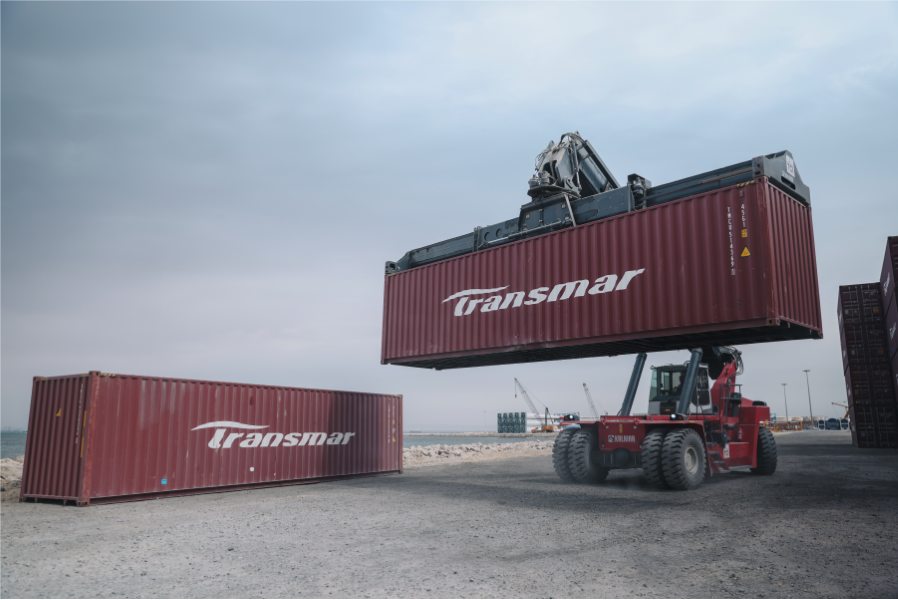
EnterpriseAM Logistics is available without charge thanks to the generous support of our friends at Hassan Allam Utilities and Transmar.
Were you forwarded this email? Tap or click here to get your own copy of EnterpriseAM Logistics.
Want to send us a story idea, request coverage, ask for a correction, or otherwise get in touch? Reach out to us on [email protected].
DID YOU KNOW that we also cover Egypt, Saudi Arabia, and the UAE? ***