Get EnterpriseAM daily

Did the Gulf’s land bridge workaround turn into a permanent trucking corridor?

1

WHAT WE’RE TRACKING TODAY

TODAY: The Gulf’s land bridge play is here to stay

Good morning, nice people. Two months ago, we wrote about the Gulf’s shift toward a “portfolio of corridors.” Today, we explore how that transition is gaining momentum as firms seek alternatives to chokepoint-dependent routes.


Meanwhile, activity in Hormuz remains murky, with an Adnoc tanker reportedly making its way through, according to Bloomberg, after it resurfaced loaded near northern Indonesia on its way to Japan, after going dark for more than two weeks.

Contrasting that optimism: CMA CGM’s Maltese-flagged San Antonio came under attack while transiting the strait on Tuesday, the shipping giant told Reuters. The incident coincides with Washington’s decision to pause Project Freedom amid renewed diplomatic outreach to Iran.


Riyadh to Mumbai. Abu Dhabi to Singapore. Dubai to London. Cairo to Shenzhen.

The most important business stories in MENA aren’t happening inside MENA anymore — they’re happening at the edges, where regional capital meets global ambition.

EnterpriseAM MENA+ is our new flagship newsletter, built to cover the flows of capital, people, and ideas across the Middle East — and beyond it. AI, geopolitics, the war for talent, sovereign wealth strategy, the changing energy economy, and the new corridors reshaping global trade.

Tap or click here to get your own copy delivered to your inbox every Monday, Wednesday, and Friday at 12 pm UAE | 11 am KSA | 11 am Egypt.


Watch this space

STORAGE — Morocco has fuel, but not enough space to hold it: Morocco Energy Minister Leila Benali said the country is planning a MAD 6 bn fuel-storage buildout through 2030 — adding more than 1.5 mn cbm of capacity as Rabat aims to close strategic stock gaps in butane and jet fuel. One-third of the new investment program is expected to be completed this year.

Where it matters: Existing reserves are sufficient for diesel, gasoline, and fuel oil, while jet fuel and butane are the weak spots. The program targets 400k cbm of new butane storage and 100k cbm of jet fuel capacity by 2030, with a focus on household energy and aviation supply.

Morocco’s storage problem is also geographic. Roughly 80% of fuel storage capacity is concentrated along the Casablanca-Settat and Tangier-Tetouan corridor, leaving the system exposed to regional imbalance if supply gets disrupted. The government is now steering new capacity toward other regions, with Nador West Med positioned as a strategic fuel and natural gas storage hub.


CRUDE — Japan is moving to lock more Emirati crude in its own backyard, after securing a commitment from the UAE to increase joint crude oil stockpiles held in Japan by Emirati companies. The UAE agreed to both replenish crude volumes already released from existing reserves and to further expand the stockpile arrangement. Japan and the UAE already operate joint crude storage facilities under a longstanding agreement.

This is what energy trade looks like when chokepoints choke points: The UAE supplies around 40% of Japan’s crude imports, making it one of the most strategically important energy partners. Expanding storage in Japan gives refiners a physical buffer against shipping disruptions — shortening the distance between supply and consumption.

Why it matters: In a disrupted market, the producer that can ensure availability — not just exports — gains leverage, and strategic stockpiling is becoming part of Gulf producers’ customer-retention playbook.

Market watch

Oil prices climbed more than USD 1 this morning as markets weighed the prospects of a Middle East peace agreement, Reuters reports. Brent crude futures gained USD 0.87 to trade at USD 102.05 / bbl by 04.00 GMT, while US West Texas Intermediate (WTI) increased USD 0.76 to USD 95.84.


The Baltic Index continues to inch up: The Baltic Exchange’s dry bulk index — which tracks rates for the capesize, panamax, and supramax vessel segments — remained flat at 2,991 points on Wednesday.

***YOU’RE READING EnterpriseAM Logistics, the essential MENA publication for senior execs who care about the industry that connects producers and retailers to global markets. We’re out Monday through Thursday by 9:15am in Cairo and Riyadh, and 10:15am in the UAE.

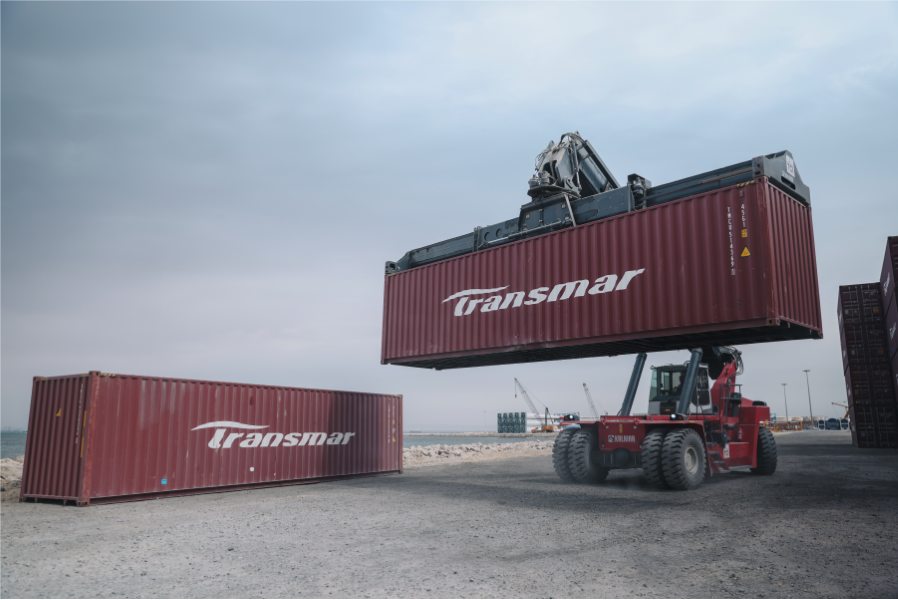
EnterpriseAM Logistics is available without charge thanks to the generous support of our friends at Hassan Allam Utilities and Transmar.

Were you forwarded this email? Tap or click here to get your own copy of EnterpriseAM Logistics.

Want to send us a story idea, request coverage, ask for a correction, or otherwise get in touch? Reach out to us on logistics@enterprisemea.com.

DID YOU KNOW that we also cover Egypt, Saudi Arabia, and the UAE ? ***

This publication is proudly sponsored by

2

The Big Story Today

From chokepoints to checkpoints

Back in March, we argued that Gulf states were transitioning from a system built around one optimal trade route toward a “portfolio of corridors.” Two months later, that thesis proved right. What began as an emergency response to the near closure of the strait has since evolved into a regional stress test for supply chains — one that is reshaping how producers, ports, and shipping lines approach resilience across the Middle East.

We also noted at the time that the issue was not about trucks replacing ships, but about redistributing risk across pipelines, inland corridors, ports outside the chokepoints, and multimodal logistics systems — a distinction that proved critical. The past two months have demonstrated the need for flexibility and diversification.

The landbridge moment

What looked like contingency planning is now operating at scale: UAE-based trucking platform Trukker said it deployed more than 500 trucks during the early days of the conflict to support inland landbridge operations — reporting a 30% increase in road shipments during March.

The map changed: With maritime access through Hormuz constrained, ports like Jeddah on Saudi Arabia’s Red Sea coast, and Oman’s Sohar and Salalah increasingly absorbed cargo flows previously routed through hubs like Jebel Ali. IMF Portwatch data showed ship arrivals into Jebel Ali drying up through March and April as carriers and cargo owners searched for alternatives.

Shipping lines also started acting more like overland logistics operators: Hapag-Lloyd established trucking corridors across Saudi, Oman, and the UAE, connecting Bahrain, Kuwait, and Qatar, while Maersk and MSC rolled out similar land-based cargo solutions across the region.

One corridor stood out

At the heart of the landbridge push was a functioning Europe-Egypt-GCC corridorwhich saw trailers arriving at Damietta, moving overland to Safaga, and then crossing by ferry to Neom before continuing by road into Gulf markets.

That route matters because it provides a different kind of logistical flexibility — it connects Europe, the Mediterranean, the Red Sea, and the Gulf in one continuous logistics chain. Unlike purely intra-Gulf trucking operations, the Egyptian corridor created a cross-peninsula bypass system that is capable of feeding European goods directly into GCC markets — and vice versa.

It’s live and reliable: “We successfully executed multiple shipments from different European origins, covering both dry and reefer cargo to GCC destinations which started to give more confidence to other customers,” Commercial Director at Pan Marine Ghada Samy tells EnterpriseAM, adding that “customers are increasingly relying on this model, as it is helping them reduce safety stock levels and manage cashflow more efficiently.”

In the longer run, the model works — with a few caveats: “Under normal conditions, this route can make commercial sense when leveraging higher capacity of equipment, door-to-door service, and optimized transit time. As freight rates normalize, the cost gap narrows, making this corridor increasingly competitive,” Samy explains.

What moves — and what doesn’t

The disruptions highlighted which sectors can survive on landbridge logistics. High-value and time-sensitive cargo — industrial inputs, spare parts, FMCG, food products, metals, and petrochemicals — adapted to hybrid land-sea systems despite the added higher costs.

Bulk commodities remain structurally tied…however, Iraq reportedly moved limited crude volumes by truck during the disruption, while Fertiglobe’s CEO Ahmed El-Hoshy said the company continued operations by trucking fertilizer cargoes overland to ports outside Hormuz before loading into ships — a workaround involving “double handling” and higher transport costs.

That distinction matters because the economics still favor shipping: Long-haul trucking remains more expensive than maritime transport on a per ton-km basis — trucking rates climbed as much as 120% in the UAE and 70% in Saudi amid fuel price increases, long haul demand, and operational pressure at serviceable ports — underscoring the argument made in March that land logistics are less about replacing ships and more about prioritizing critical flows.

The cost of redundancy

Until recently, supply chains were largely optimized around cost minimization and route efficiency. Repeated disruptions have accelerated a shift toward a resilience-led model. Which means that to play you have to pay — in a bid to maintain alternative routes, preserve access to multiple ports, expand storage, and keep contingency logistics systems alive even when the cheapest maritime routes partially recover.

We still stand by our take

The underlying model is already changing: Supply chains are moving from an era of narrow optimization to an era of strategic redundancy, where resilient efficiency — not minimal cost — defines a well‑designed network. When the same lanes and chokepoints are repeatedly disrupted, building supply chains around a single “most efficient” route is a concentration of risk.

The bottom line: In March, the question was whether the Gulf could build fallback routes quickly enough to survive the chokepoint disruption. Two months later, the bigger question is whether those fallback systems become permanent features of Middle East trade long after the disruption fades. The future isn’t one dominant route — it’s a portfolio of corridors. Power in global trade is shifting from control of a single chokepoint to control of multiple options when it fails.

“The crisis has made visible what was previously hidden: in an interconnected world, resilience is not a luxury; it is the entry ticket to lasting growth,” Wolfgang Lehmacher, former head of supply chain and transport industries at the World Economic Forum previously told us.

3

Investment Watch

Mubadala backs mega container merger

Mubadala Investment Company is adding to its logistics wager, co-investing USD 300 mn alongside US investment firm Stonepeak to back Bermuda-based Textainer’s acquisition of shipping container firm Seaco, according to a statement. The transaction that brings together two major container lessors into one of the world’s largest platforms.

What’s being built: The combined business will control a fleet of more than 8 mn containers and a global depot network serving key trade routes, particularly across Asia. The tie-up builds on Stonepeak’s earlier acquisition of Textainer in 2024 and Seaco in 2025, consolidating scale in a sector built on long-term leases and high utilization.

Why it matters: Container leasing underpins global trade — with around 75% of goods moving by sea — offering steady, utilization-driven returns tied to shipping demand. The move adds to Mubadala’s growing exposure to transport and logistics infrastructure, including its stake in trailer leasing platform TEN.

4

Purchasing

KSA’s non-oil sector bounces back

Saudi Arabia’s non-oil private sector found its footing again in April. The headline index rose to 51.5, up from March’s 48.8, according to the Riyad Bank Saudi Arabia PMI (pdf). The move back above the 50.0 threshold signals a modest recovery in operating conditions on the back of domestic demand, though the improvement is dampened by aggressive price hikes and constricted supply chains.

While the recovery is a positive sign, the big jump is partly a “temporary re-boost” linked to the monthlong ceasefire, MENA economist Hamzeh Al Gaaod tells EnterpriseAM, as the pause in hostilities has allowed flight activity and general business operations to resume. Al Gaaod says the current PMI level still reflects a broader slowing trend that began before the conflict, rather than a complete return of customer confidence.

The caveat: One factor propping up the numbers is Saudi Arabia’s role as a regional hub during the crisis, as significant trade flows have been rerouted through the Kingdom to supply other GCC nations that were cut off due to the closure of the Strait of Hormuz. While this logistical necessity has supported the PMI figure, Gaaod warns that it “doesn't really show the full picture of what a genuine reopening of Hormuz would look like,” serving instead as a “precursor” to a potential re-acceleration once regional tensions fully ease.

And supply chain bottlenecks are driving a stock build-up and local pivot: Saudi firms proactively increased inventories to hedge against shipping disruptions, despite a second consecutive month of falling purchases. Longer delivery times pushed a shift to local suppliers, while stockpiling helped firms work through backlogs and return to overall growth in business activity.

5

Also on Our Radar

Asmo breaks ground on flagship Spark logistics hub

Asmo breaks ground on its first purpose-built logistics hub

Asmo — the Aramco-DHL JV — broke ground on its first purpose-built logistics hub at King Salman Energy Park in partnership with Bahraini alternative investment firm Arcapita. The 1.4 mn sqm facility will serve Aramco, its affiliates, and other energy and industrial customers, with plans for a temperature-controlled grade warehouse, chemical storage, offices, staff facilities, and a large open yard for industrial handling. Acrapita will fund and own the asset, while Asmo will lead development and operation under a 22-year lease.

6

Logistics in the News

Norway's old gas fields are back in play

Europe is digging into old supply: Norway is set to revive three long-dormant North Sea gas fields — Albuskjell, Vest Ekofisk, and Tommeliten Gamma fields — as Europe continues to diversify away from Russian and Middle Eastern supply. The fields are expected to resume production in 2028 — nearly 40 years after they last pumped gas. The revived supply will mostly target Europe’s core industrial buyers. Gas will be exported to Germany, while a smaller condensate stream will move to the UK.

Its supply cushion is thinner: Europe’s gas strategy is still carrying the shock of replacingRussian pipeline flows, with LNG doing much of the backfilling since 2022. That has left the bloc more exposed to global cargo competition, chokepoint risk, and storage pressure. EU gas storage stood at around 31% in late April — its lowest since 2022 — and the bloc will need a 13% increase in LNG imports to meet its 90% winter storage target.

Norway’s geopolitical leverage is growing: Oslo is now western Europe’s largest petroleum producer — taking Russia’s place as the main gas supplier for several European countries. That shift has boosted the country’s leverage with Brussels, including in disputes over its right to keep drilling in the Arctic, even as the EU tries to balance climate targets and energy-security priorities.


MAY

12-14 May (Tuesday-Thursday): Aviation Energy Forum (AEF), Paris, France.

19-21 May (Tuesday-Thursday): Ground Handling Conference (IGHC), Cairo, Egypt.

19-21 May (Tuesday-Thursday): Terminal Operations Conference & Exhibition, Hamburg, Germany.

JUNE

2-4 June (Tuesday-Thursday): ProPak Mena, Cairo, Egypt.

4-5 June (Thursday-Friday): Supply Chain and Logistics Summit, Amsterdam, Netherlands.

6-8 June (Saturday-Monday): IATA World Air Transport Summit, Rio de Janeiro, Brazil.

10-11 June (Wednesday-Thursday): Black Sea Ports and Logistics, Istanbul, Turkey.

21-24 June (Sunday-Wednesday): Saudi Smart Logistics, Riyadh, Saudi Arabia.

22-23 June (Monday-Tuesday): Decarbonizing Shipping Forum, Rotterdam, Netherlands.

AUGUST

30 August-1 September (Sunday-Tuesday): Air Cargo Middle East, Riyadh, Saudi Arabia.

30 August-1 September (Sunday-Tuesday): Saudi Warehouse and Logistics Expo, Riyadh, Saudi Arabia.

SEPTEMBER

16-17 September (Wednesday-Thursday): Saudi Maritime & Logistics Congress, Dammam, Saudi Arabia.

22-24 September (Tuesday-Thursday): Seamless Middle East, Dubai, UAE.

28-30 September (Monday-Wednesday): Transport Logistics Middle East, Riyadh, Saudi Arabia.

OCTOBER

12-14 October (Monday-Wednesday): The Airport Show, Dubai, UAE.

21-22 October (Wednesday-Thursday): Global Ports Forum, Singapore.

26-29 (Monday-Thursday): Air Cargo Forum, Miami, US.

27-29 October (Tuesday-Thursday): Routes World, Riyadh, Saudi Arabia.

NOVEMBER

2-5 November (Monday-Thursday): ADIPEC Maritime and Logistics Exhibition and Conference, Abu Dhabi, UAE.

Now Playing
Now Playing
00:00
00:00