Real estate foreign ownership regs, zones approved

1

WHAT WEโ€™RE TRACKING TODAY

Cabinet greenlights foreign ownership rules

Good morning, all. We lead today’s issue with M&A news after local restaurant management Foodics acquired Greek hospitality analytics startup Norma AI in a seven-figure transaction. We speak to Foodics CRO Belal Zahran to learn more about the transaction and dive deeper into the company’s plans for the future.

Plus: We look at how Saudi workers are preparing for retirement.

Foreign ownership rules, zones approved

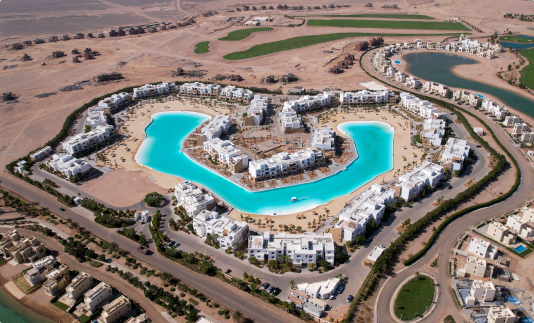
The foreign-ownership map is here: The Cabinet approved the executive regulations of the Law of Real Estate Ownership by Non-Saudis and published the zones where non-Saudis can now buy. The law went live in January, but as a framework without a map.

What’s on the menu? Riyadh’s list includes Qiddiya, New Murabba, Diriyah Gate, King Salman Park, KAFD, Sedra, the Sports Boulevard and arts district, and King Salman International Airport. Jeddah opens its central district plus 55 development areas across the governorate, while Makkah and Madinah each get a named list of their own, led by Jabal Omar, Masar, Knowledge Economic City, and Rua Al Madinah. Ownership in the two holy cities stays confined to Muslim buyers.

The Saudi Properties platform is now open for applications, with three on-ramps. Residents apply directly with their Iqama and are screened automatically, and non-residents must first obtain a digital ID through a Saudi embassy or consulate. Foreign companies without a local presence have to register with the Investment Ministry via Invest Saudi before filing online.

What to watch: The final regs will be published in Umm al Qura on Saturday. We will take a deeper look at the regs and the zones to analyze how the new developments reshape the real estate industry.

SAR, Italy ink rail partnership deal

Saudi Arabia and Italy hit the railway tracks: Saudi Arabian Railways (SAR) and Italian State Railways (FS) signed an MoU to develop rail and transit projects across the MENA region, according to a press release. The broad framework covers infrastructure development, network digitalization, and transport decarbonization, while also exploring AI and machine learning initiatives that back construction, design, and operational activities.

Railway expansion seems to be gaining more ground: Spain already lends a hand in Saudi infrastructure. A Saudi-Spanish consortium built and runs the Haramain High-Speed Railway linking Makkah and Madinah, while Talgo has an order from Saudi Railways for 20 more high-speed trains. Meanwhile, Riyadh and Ankara have also expanded rail cooperation, and the cabinet recently approved the Kingdom’s accession to the GCC railway agreement — a 2.1k-km railway project that aims to link the six GCC member states.

PSA

It’s going to be a dusty few days: The National Center of Meteorology (NCM) has issued an alert for strong winds and dust storms along the coastal road from Jeddah to Jazan from today until next Wednesday. Drivers take care as the storms will lead to significant visibility issues, the NCM says.

*** You’re reading EnterpriseAM Saudi, your essential daily roundup of business, economics, and must-read news about Saudi, delivered straight to your inbox. We’re out Sunday through Thursday by 7am Riyadh time.

EnterpriseAM Saudi is available without charge thanks to the generous support of our friends at Tas’heel and Hassan Allam Properties.

Want to send us a story idea, request coverage, ask for a correction, or otherwise get in touch? Reach out to us on [email protected].

DID YOU KNOW that we also cover Egypt, the UAE, the MENA logistics industry, and the MENA <> India corridor?

Were you forwarded this email? Tap or click here to get your own copy of EnterpriseAM Saudi delivered every weekday.

***

The big story abroad

The latest update in the US-Iran war is a familiar one, with the US senate moving to end the conflict, mirroring a move by the House earlier this month. The largely symbolic decision signals growing reluctance among Republicans to back the war, just as the Trump administration is expected to petition Congress for tens of bns of USD to fund the conflict.

The selloff continues: Chipmaker equities saw losses amid a wider selloff yesterday, as investor confidence wanes amid expectations of rising interest rates and worries over the massive scale of Big Tech’s AI investments. Leading the drop were Micron and Qualcomm. Industry giant Nvidia also shed 4.1%, pulling its total market capitalization under the USD 5 tn mark.

Equities are on track to recover during today’s session, with Asia-Pacific markets already setting the stage — South Korea’s Kospi is up 2.7% this morning as investors buy the dip. US futures are trading higher as signs of increasing traffic crossing the Strait of Hormuz keep oil prices down.

SpaceX raised USD 25 bn by issuing senior unsecured notes within two weeks of its blockbuster IPO. The company said it will use the proceeds to fully repay a bridge loan, cover associated fees, and fund general corporate operations.

Meta under scrutiny: Washington is reportedly pressuring Meta to submit its AI models for voluntary review in what seems to be an attempt to tighten oversight of the US AI scene. The pressure on Meta — the last holdout among major AI firms — echoes the government’s directive for Anthropic to restrict access to its programs earlier this month.

The young generation’s plan: As we inch closer to the largest transfer of wealth in history, the question of how the younger generation will spend the USD 83.5 tn estimated to be inherited over the next two decades is one on wealth managers and financial institutions’ minds. UBS tells CNBC that the shift may divert inherited wealth away from traditional family assets, especially real estate, as younger heirs diversify their holdings across different asset classes and global markets.


This publication is proudly sponsored by

Easier life with Tasheel
The Luxury of Certainty

2

M&A WATCH

Foodics buys out Norma AI in seven-figure acquisition

Foodics fully acquires Norma: Local restaurant management and POS solutions provider Foodics has completed its full acquisition of Norma AI, the Greek hospitality analytics startup it first partially acquired in 1Q 2025.

The agreement folds Norma’s team into Foodics’ AI division, completing a seven-figure transaction funded from a USD 100 mn AI war chest Foodics had already earmarked, CRO Belal Zahran tells EnterpriseAM.

Zahran frames the Norma integration as part of a broader platform play, where intelligent solutions are embedded across the tech stack, helping restaurant owners make sense of complex analytics and act faster. Clients who rely on the platform daily are harder to displace, driving retention, while premium AI tiers are on the roadmap as a direct revenue line. “Our goal is to be the ultimate end-to-end solution — the intelligent ecosystem that our operators can virtually live in to run every aspect of their business,” Zahran says.

The goal is irreplaceability: Foodics operates across over 40k branches in the GCC and North Africa. At that scale, Norma’s tech will form the data layer Foodics is betting will make the platform hard to rip out. “That’s what we’re focused on — how we can become so irreplaceable that existing clients never leave, and new clients naturally choose us,” Zahran says.

REMEMBER- The Norma buyout follows last year’s acquisition of UK-based online ordering platform SoloVenture, alongside stakes in SME accounting system Add and F&B supply chain platform Arzaq Plus. CEO Amad AlZaini told EnterpriseAM in 2024 that acquisitions were part of the company’s expansion plan.

3

M&A WATCH

Knauf launches SAR 293.5 mn tender to take UMI private and delist it from Tadawul

Knauf International GmbH is moving to take full control of United Mining Industries (UMI). The German building materials group will launch a tender offer to acquire UMI’s remaining shares at SAR 57 per share — the same price it paid for its initial stake — valuing the buyout at SAR 293.5 mn for over 5.1 mn shares, according to a press release (pdf).

REMEMBER- Knauf had already acquired 63.2% of UMI for SAR 504.5 mn from its shareholders Al Mojel Trading & Contracting, Al Muhaidib Group, and Rashed Developments in May, as step one of the full takeover.

The mechanics: The offer has no minimum acceptance threshold — Knauf buys whatever is tendered and remaining shareholders keep their holdings. If its stake reaches 90%, it may seek CMA approval to exercise squeeze-out rights for the rest. Three UMI board members with ties to Knauf — tax consultant Markus Haaf, GCC CEO Paul Christopher Button, and Middle East, Turkey, and Africa CEO Serge Nicolas Bekhaazi — will abstain from voting.

Delisting is the endgame. Knauf plans to take UMI off Tadawul after the tender closes, and with no minimum acceptance threshold, it doesn’t need full take-up to get there. For minority holders, the exit window is the tender itself. Those who don’t accept may end up holding illiquid stock in an unlisted company.

Why it matters: A EUR 15.6 bn German building materials group taking a Saudi mining company private is a bet on the Kingdom’s construction pipeline — and a signal that foreign industrials are willing to pay for direct access to Saudi raw materials rather than importing them. Knauf already operates across the GCC.

ADVISORS- Lazard Saudi Arabia is advising Knauf on financials, and Fahad Abuhimed, Majid Alsheikh, Mansoor Alhagbani, and Clifford Chance on regulatory matters.

4

ECONOMY

Are workers ready for retirement?

Saudi nationals feel good about their finances today, but some doubt they are ready for retirement. A survey by asset manager BlackRock found that 82% of Saudi nationals are positive about their current financial wellbeing, but only 59% felt prepared for retirement, according to the Read on Retirement report (pdf). The figure fell to 41% among Saudi expats, the lowest of any group surveyed.

The gap between intent and action is wide. Three-quarters of respondents say they have begun preparing for retirement, yet only 24% are contributing to a pension or savings plan. Most hold cash (49%) and gold (40%) instead — liquid, but no defence against outliving their savings.

Current cost-of-living pressures are eroding retirement savings for Saudi and UAE workers. Some 42% of respondents worry about lacking short-term savings for unexpected expenses, while 41% face high housing and rental costs, and 35% cannot afford to put money aside for future investments.

REMEMBER- The amended Social Ins. Law, in effect since last July, raised the retirement age to 65 and cut the old-age pension accrual rate for new entrants from 2.5% to 2.25% of average wage per year. BlackRock estimates replacement rates dropping from some 70% to 45%.

Structure = confidence: Saudi nationals with a workplace scheme were 20 points more likely to feel prepared than those without (78% vs 58%); for expats the gap was 43 points (82% vs 39%). Appetite for a defined-contribution scheme is near-universal — 95% of Saudi nationals and 84% of Saudi expats — yet just 6% expect to rely on one.

SOUND SMART- A defined-contribution scheme channels regular, invested contributions — in BlackRock's model, a matched 8% from employer and employee — into the worker's own portable account. That is the structural break from the End of Service Benefit, an employer-funded lump sum that sits uninvested and doesn't travel between jobs.

Tags:
5

MOVES

Cenomi Retail taps Sameer Jain as its new CEO

Cenomi Retail appointed Sameer Jain (LinkedIn) as its new CEO effective next month, according to a statement (pdf). Jain succeeds Salim Fakhouri (LinkedIn), who resigned from the position. Jain brings more than two decades of experience across retail and consumer businesses, recently serving as CEO of New Business and Home Centre Middle East at Landmark Group. He previously held leadership and advisory roles at McKinsey & Company, AT Kearney, and Ernst & Young.

Cenomi has been going through a rough patch: The Capital Markets Authority took 17 unnamed suspects — a mix of current and former board members, an unnamed CEO, several finance managers, and members of the audit team at the company's former external auditor — to the criminal court last month over alleged manipulation of the stock price.

6

ALSO ON OUR RADAR

SAR 2.4 bn worth of infrastructure developments coming to Riyadh

The Ladun-Al Ayuni consortium formally signed SAR 2.4 bn worth of infrastructure contracts with the Royal Commission for Riyadh City, building on contract awards in May, according to two Tadawul disclosures. The larger contract — SAR 2.1 bn — covers Al Qirawan (3.6 mn sqm) and Al Narjis (87k sqm); the second — SAR 326.7 mn — covers Namar (570k sqm).

The timeline: Both contracts run five years, including three years of construction followed by two years of operation and maintenance, with scope spanning roads, water, sewage, power, and telecoms networks, alongside public spaces. Land will be handed over infrastructure-ready to citizens under the Real Estate Balance Program's first phase.

IN CONTEXT- Saudi Arabia’s infrastructure pipeline hit a new peak in May, with project awards logging SAR 30 bn. Infrastructure took 55% of total awards, with Aseer leading the pack and Riyadh coming in second.

Two new hotel funds

Yaqeen Capital has launched the shariah-compliant Yaqeen Madinah Hotel Fund, targeting a total size of SAR 600 mn, according to a Tadawul disclosure. The private, closed-ended real estate development fund will bankroll the construction of two hotels, branded residential apartments, and retail spaces in the holy city.

AND- Osool & Bakheet Investment launched its Ashaad Al Hamra Hotel Development Fund, with a target of SAR 713 mn, according to a Tadawul disclosure. The closed-ended fund will acquire land in Al Khobar to develop a luxury hotel project.

Why it matters: Real estate funds are proving to be an engine for Saudi asset managers this year. Earlier this year, we saw Arabian Dyar and Al Rajhi Capital launch an SAR 4.5 bn real estate fund to develop residential and hospitality projects in Makkah and Madinah.

FinMin closes SAR 10.6 bn June sukuk issuance

The Finance Ministry wrapped up its SAR 10.6 bn local sukuk offering for June 2026, according to a statement from the National Debt Management Center. The issuance, which comes under the government’s SAR-dominated sukuk program, came in six tranches ranging from three to 15 years.

7

PLANET FINANCE

Private debt in GCC hit USD 4.1 bn last year โ€” overtaking venture capital for the first time

Private debt has quietly overtaken venture capital as the Gulf's dominant startup financing tool for the first time as non-dilutive capital becomes increasingly attractive in a global VC environment that remains cautious, according to a report by Stride Ventures.

GCC private debt deployment hit USD 4.1 bn in 2025, up 8.2x from USD 500 mn a year earlier, according to the report. For the first time, structured credit outpaced venture capital in the region’s startup funding mix — VC deployment came in at USD 3.3 bn, out of USD 7.4 bn in total tracked startup investment.

Fintech’s dominance is striking even within private debt — the sector accounted for 95.5% of total GCC deployment, or USD 3.9 bn, with the rest spread across agritech, proptech, SaaS, and logistics. The concentration signals that the market is still early: fintech’s large, legible cashflows make it the obvious first home for structured credit, but the playbook hasn’t yet spread to other sectors at scale.

A lot of the funds are targeted toward Saudi: Saudi Arabia accounted for roughly USD 3.9 bn of the region’s total private debt deployment — about 95% — driven by a handful of very large transactions. Tamara pulled in USD 2.4 bn, Lendo USD 740 mn, and Deem USD 400 mn. The UAE was a distant second at USD 211 mn, with CredibleX (USD 100 mn) and Kitopi (USD 50 mn) among the larger transactions. Bahrain saw USD 22 mn in private debt transactions.

Growth credit still dominates: The entire volume of venture debt deployed across the GCC from 2018 to 2025 — USD 2.8 bn — was surpassed by growth credit activity in 2025 alone, which came in at USD 3.9 bn. Venture debt in 2025, by contrast, stood at just USD 249 mn.

Founders are using this capital offensively, not defensively. The report’s founder survey is telling: 54% of respondents said they used private debt for growth and expansion, while 36% used it to bridge between equity rounds. Working capital optimization and runway extension each came in at 27%. Only 9% cited M&A or capex.

Who’s driving the market? GCC policymakers surveyed by Stride identified dedicated private credit funds as the most active players, ahead of international cross-border lenders, government and DFI institutions, and non-banking financial services firms and specialty lenders.

TASI

11,034

-0.4% (YTD: +5.2%)

MSCI Tadawul 30

1,477

-0.2% (YTD: +6.5%)

NomuC

22,999

-1.0% (YTD: -1.3%)

USD : SAR (SAMA)

USD 3.75 Sell

USD 3.75 Buy

Interest rates

4.25% repo

3.75% reverse repo

EGX30

51,770

-1.6% (YTD: +23.8%)

ADX

10,025

-0.1% (YTD: +0.3%)

DFM

6,105

-1.3% (YTD: +1.0%)

S&P 500

7,365

-1.4% (YTD: +7.6%)

FTSE 100

10,429

-0.1% (YTD: +5.0%)

Euro Stoxx 50

6,231

-1.3% (YTD: +7.5%)

Brent crude

USD 76.70

-0.5%

Natural gas (Nymex)

USD 3.15

+0.1%

Gold

USD 4,112

-0.9%

BTC

USD 62,574

-2.1% (YTD: -28.6%)

Sukuk/bond market index

914.59

0.0% (YTD: -0.5%)

S&P MENA Bond & Sukuk

152.09

-0.1% (YTD: +0.1%)

VIX (Volatility Index)

19.49

+12.8% (YTD: +30.4%)

THE CLOSING BELL: TADAWUL-

The TASI fell 0.4% yesterday on turnover of SAR 4 bn. The index is up 5.2% YTD.

In the green: Saudi Fisheries (+9.9%), Development Works Food (+5.2%), and Ash-Sharqiyah Development (+5.0%).

In the red: Consolidated Grunenfelder Saady (-9.9%), Arabian Pipes (-5.7%), and Sisco Holding (-4.6%).

THE CLOSING BELL: NOMU-

The NomuC fell 1.0% yesterday on turnover of SAR 17.9 mn. The index is down 1.3% YTD.

In the green: Anmat Technology (+10.2%), Albattal Factory (+9.6%), and Qomel (+6.4%).

In the red: Bena Steel (-9.9%), First Avenue (-9.8%), and Sahat Almajd (-9.0%).


JUNE

21-24 June (Sunday-Wednesday): Saudi Food Exhibition and Conference, Riyadh Front Expo.

21-24 June (Sunday-Wednesday): Saudi Print & Pack, Riyadh International Convention & Exhibition Center.

21-24 June (Sunday-Wednesday): Riyadh International Industry Week, Riyadh International Convention & Exhibition Center.

21-24 June (Sunday-Wednesday): Saudi Plastics & Petrochem, Riyadh International Convention & Exhibition Center.

21-24 June (Sunday-Wednesday): Saudi Smart Logistics, Riyadh International Convention & Exhibition Center.

22-24 June (Monday-Wednesday): The Future Hospitality Summit, Mandarin Oriental Al Faisaliah Hotel, Riyadh.

AUGUST

30 August-1 September (Sunday-Tuesday): The Saudi Entertainment and Amusement Expo, Riyadh Front Exhibition and Conference Center.

31 August-3 September (Monday-Thursday): Leap Tech Conference, Riyadh Exhibition & Convention Center - Malham.

SEPTEMBER

8-10 September (Tuesday-Thursday): The WTM Spotlight Riyadh, Riyadh Front Exhibition & Conference Center (RFECC), Riyadh

15-17 September (Tuesday-Thursday) The Global AI Summit, King Abdulaziz International Convention Center, Riyadh.

23 September (Wednesday): Saudi National Day.

28 September-1 October (Monday-Thursday): The International Conference on Theory and Practice of Electronic Governance (ICEGOV), Prince Sultan University, Riyadh.

OCTOBER

12-15 October (Monday-Thursday): World Energy Congress, Riyadh.

26-28 October (Monday-Wednesday): ACHEMA Middle East, Riyadh International Convention & Exhibition Center.

28-29 October (Wednesday-Thursday): Procurement and Supply Chain Futures Forum, Mandarin Oriental Al Faisaliah Hotel, Riyadh.

28-29 October (Wednesday-Thursday): Real Estate Supply Chain Forum, Mandarin Oriental Al Faisaliah Hotel, Riyadh.

NOVEMBER

11-12 November (Wednesday-Thursday): Aluminum Arabia, The Arena, Riyadh.

16-19 November (Monday-Thursday): Cityscape Global, Riyadh Exhibition and Convention Centre (Malham), Riyadh.

25-29 November (Wednesday-Sunday): Aero Middle East and Sand & Fun, Thumamah Airport, Riyadh.

Signposted to happen sometime in 2026:

Signposted to happen sometime in 2027:

  • The World Water Forum takes place in Riyadh;
  • The Ocean Race finishes in Amaala on the Red Sea;
  • Riyadh-Kudmi transmission line to be completed;
  • Capital Markets Forum takes place in March in Riyadh.

Signposted to happen sometime in 2Q 2027:

  • The Hail Region Water Networks Project is expected to be completed.

2027f

FEBRUARY

1-3 February (Monday-Wednesday): Energy Regulators Regional Association annual conference, Riyadh.

Now Playing
Now Playing
00:00
00:00