King Salman Park CEO exits

1

WHAT WE’RE TRACKING TODAY

**The workarounds keep coming**

Good morning, wonderful people. After weeks of tankers and refineries being targeted, and drones being intercepted, the conflict seems to be getting out of hand, and Saudi is getting more and more involved. It’s hard to predict where things will go from here.

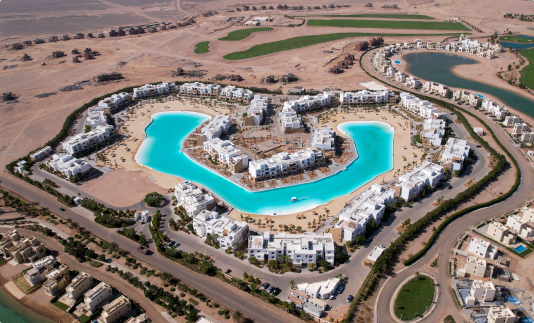
Here at home, a quiet exit at the top of Riyadh’s biggest build. George Tanasijevich is departing as CEO of the King Salman Park Foundation, the organization behind the capital's largest urban development, people familiar with the matter tell us. No word yet on why, but Chief Development Officer Dale Chadwick has reportedly been named the next CEO.

And a marker worth clocking from Washington: The Fed held its benchmark at 3.5% to 3.75% for a fifth straight meeting. The divided meeting saw three regional presidents dissenting in favor of a hike. The pressure on the Fed is now pointing up, which matters for every USD-pegged economy in the Gulf.


The EnterpriseAM Egypt Forum is back — and this year, we're giving the full day to the one question on every business leader's mind: What does AI actually mean for your company, your people, and your own job?

Leaders in New York, London, Abu Dhabi, and Singapore are asking the same things, and nobody has built a playbook that works yet. We're all figuring it out in real time — and for Egypt, the stakes are unusually high.

Egypt could leapfrog a generation on the back of this technology — or watch AI hollow out the industries and jobs we can't afford to lose. The leaders who get literate early will be the ones who get to decide which road we take.

Every session on stage answers one question: "So, what do I actually do about it?"

Join us on 5 October in Cairo. Seats are limited and attendance is by invitation only. Request your invitation here.

The workarounds keep coming

A consortium of US and Saudi firms is advancing plans for a USD 5 bn refinery and export complex outside the Strait of Hormuz, Reuters reports. The Mera Oil consortium — made up of Texas-based developer MWG Enterprises, the Patel Family Office, and PWS, an associate of Saudi industrial conglomerate AHQ Group — has entered the final stage of picking a host site.

The plan is to circumvent the strait: The planned facility would process 200k bbl / d and connect to deepwater port infrastructure, large-scale storage, and marine export facilities with direct access to international shipping routes, with plans to produce ultra-low-sulfur diesel and jet fuel for the US, Gulf, Atlantic Basin, and other markets.

A lot still needs to fall into place: The consortium has narrowed its search to three undisclosed locations across the GCC and expects to select a host by the end of the year. The partners are also still negotiating with potential feedstock providers, with definitive arrangements expected to advance alongside the final site decision. Its commercial and strategic value will depend on where the refinery is built, where its crude comes from, and whether the consortium secures financing and buyers.

Saudi pushes US for F-35s

Defense Minister Khalid bin Salman was in Washington to lobby for F-35 fighter jets and wider security cooperation this week, Semafor reports, citing unnamed sources. Saudi Arabia wants to use the momentum from last week’s US nuclear agreement to finally secure the delivery of long-anticipated F-35s, the sources said.

REMEMBER- US President Donald Trump indicated a readiness to provide the Kingdom with “a lot” of F-35s last November, stressing the close ties between Washington and Riyadh. Trump later approved a defense sale package that included future deliveries of the fighter jets following a visit by Crown Prince Mohammed Bin Salman.

During a meeting with US Vice President JD Vance yesterday, the defense minister reportedly said that Riyadh still favors de-escalation with Tehran despite this week’s joint US-Saudi strikes on Iran-aligned forces in Iraq, Axios reports, citing an unnamed source. The sit-down was intended to assure Washington that the military action was strictly an act of self-defense, the source said.

LIV Golf might cancel its flagship Team Championship

LIV Golf is on the verge of cancelling its season-ending Team Championship, the Wall Street Journal reports, citing sources familiar with the matter. The event, scheduled for the end of August at Saint John’s outside Detroit, was set to offer USD 40 mn in prize money and was billed as the league’s flagship tournament. This serves as the latest sign of uncertainty after the Public Investment Fund decided to stop its funding after the 2026 season.

The golf league is already losing ground to rivals: The setback comes days after the Asian tour, which received USD 300 mn from LIV to establish its international series, agreed to partner with the PGA Tour and the DP World Tour, joining the rival side of professional golf. While LIV is still expected to stage its remaining two tournaments, it is still considering scaling back significantly or shutting down altogether in 2027.

REMEMBER- The league was reportedly not certain that PIF will continue to fund it through the rest of the season, as it currently seeks USD 250-350 mn from new investors to support a planned LIV 2.0 strategy. The sovereign fund pulled the plug to support its new strategy of prioritizing financial returns and sustainability.

Data point

SAR 17 bn — that’s the combined 1H 2026 dividends declared by eight listed Saudi banks, equivalent to roughly 50% of their combined 1H net income of SAR 34.2, according to an Al Arabiya Business survey of Tadawul disclosures.

The roundup: SNB leads the pack with SAR 6.9 bn distributed across 6 bn shares at SAR 1.15 per share. Riyad Bank follows at SAR 2.6 bn, then Saudi Awwal Bank at SAR 2.1 bn, Alinma at SAR 1.5 bn, BSF at SAR 1.4 bn, ANB at SAR 1.3 bn, Bank Albilad at SAR 750 mn, and the Saudi Investment Bank at SAR 499 mn. Al Rajhi and Bank Aljazira have not yet declared 1H dividends.

***

You’re reading EnterpriseAM Saudi, your essential daily roundup of business, economics, and must-read news about Saudi, delivered straight to your inbox. We’re out Sunday through Thursday by 7am Riyadh time.

EnterpriseAM Saudi is available without charge thanks to the generous support of our friends at Tas’heel and Hassan Allam Properties.

Want to send us a story idea, request coverage, ask for a correction, or otherwise get in touch? Reach out to us on [email protected].

DID YOU KNOW that we also cover Egypt, the UAE, the MENA logistics industry, and the MENA <> India corridor?

Were you forwarded this email? Tap or click here to get your own copy of EnterpriseAM Saudi delivered every weekday.

***

The big story abroad

The start-stop nature of the regional war has intensified after Iran and the US exchanged attacks in the early hours of the morning. Iran renewed its missile attacks on US forces in the Middle East before Washington responded with fresh strikes on the Islamic Republic, the US Central Command said.

Grant Thornton closed the largest accounting takeover seen in years, moving to acquire longtime rival CBIZ for USD 5 bn in an allcash transaction. The move cements Grant Thornton’s rank as the largest US audit and consulting firm, excluding the Big Four, marking a culmination of an acquisition streak kicked off two years ago.

Standard Chartered has unveiled a USD 1 bn share buyback plan, coinciding with imminent cost cuts, which will include scaling down back-office jobs and intensifying AI use. The move is backed by higher 2Q income, with pre-tax earnings rising 2% y-o-y to USD 2.3 bn — exceeding analysts’ expectations.

Meanwhile, in the banking world: Goldman Sachs is mulling a potential USD 5.4 bn debt offering — split between secured bonds and a term loan — to help raise funds for a Microsoft-tied data center backed by Blackstone. The planned bond issuance would have a five-year maturity, whereas the loan would be due in seven years.


This publication is proudly sponsored by

Easier life with Tasheel
The Luxury of Certainty
2

THE BIG STORY TODAY

EXCLUSIVE- King Salman Park CEO exits amid leadership shakeup, sources say

Riyadh’s largest urban development is undergoing a leadership change at the top. CEO of King Salman Park Foundation George Tanasijevich (Linkedin) is departing the organization, people familiar with the matter tell EnterpriseAM.

Who’s the replacement? Chief Development Officer Dale Chadwick has been named as the incoming CEO, our sources say. Chadwick joined the foundation in 2022, having previously served as executive project officer at Macetpm, as well as vice president for Asia at Venetian Cotai Limited, where he oversaw design and construction on integrated resorts, including Marina Bay Sands and the Venetian Macau.

The leadership change comes as Saudi’s gigaproject ecosystem shifts focus toward assets that can generate direct commercial returns, rather than purely quality-of-life infrastructure. State-linked developers have increasingly prioritized mixed-use and hospitality components with clearer revenue models as fiscal pressure builds on the Kingdom’s project pipeline.

King Salman Park is one of the largest urban park developments globally, spanning more than 17 mn sqm in Riyadh.

3

WAR WATCH

US and Saudi strike Iran-backed forces in Iraq

The US and Saudi Arabia launched joint airstrikes on Iran-backed armed groups in Iraq on Monday, in retaliation for drone attacks on Saudi oil facilities launched from the Arab country, Reuters reports. Iraq’s Popular Mobilization Forces said the strikes killed at least 20 fighters and wounded 32, with Baghdad condemning the attack as a violation of its sovereignty.

ICYMI- Geopolitical tensions surrounded the Kingdom on its main fronts, with Yemen's Houthis saying that they targeted a Saudi oil tanker, claiming it crossed the group's naval blockade despite prior warnings. Meanwhile, the Defense Ministry said it intercepted multiple drones targeting oil facilities in the Eastern Region. The ministry attributed the attack to Iran-affiliated militias operating from Iraqi territory.

Could we get more involved? Riyadh wants to establish an international coalition to protect Red Sea shipping from attacks by the Houthis, Reuters reports, citing unnamed sources. The alliance’s makeup is still being negotiated with dozens of countries.

Diplomatic efforts also took a hit after Iran rejected an Omani proposal to jointly manage the strait. The GCC-backed proposal involved applying a shared control mechanism that would allow voluntary service charges. Tehran, however, seeks sole control of the inbound shipping lane and partial control of the outbound route, a senior Iranian official told Reuters.

The escalation is spreading like wildfire across the region, with Iran saying it launched missiles at US bases in Jordan and targeted tankers in the Strait of Hormuz, while Trump pledged further retaliation. Meanwhile, Jordan said it intercepted five Iranian missiles, and Iran-backed Iraqi militia Harakat Hezbollah Al Nujaba warned that US and Saudi forces would pay a “heavy price.”

ALSO- A fire in Egypt’s Damietta Port yesterday spread to two regasification and storage vessels, the Egyptian Oil Ministry confirmed. On-site emergency personnel including firefighters contained the blaze, which impacted a total of two ships, the ministry said, adding that there were no injuries. The ministry’s statement did not address widely circulating claims in the international press of a drone strike on the US-owned gas storage tanker. The ministry called on the press and social media users to “obtain information from official statements issued by the ministry.” A source in the petroleum industry told us the incident began when a blaze broke out in the engine room of an old, stationary ship.

US President Donald Trump said he had been “briefed” on the fire, adding, “it’s a little ​more of the same. But it's going to be straightening out,” Reuters reported. Trump did not elaborate further.

4

REAL ESTATE

KEC extends partnership funding model to its SAR 7.5 bn Knowledge Gardens project

Knowledge Economic City (KEC) is turning another chunk of its Madinah land bank into a revenue-generating project without fronting the capital. KEC signed a letter of intent with BSF Capital to establish a closed-ended private real estate investment fund for the development of the Knowledge Gardens, a 332k-sqm mixed-use project in Madinah with an estimated development cost of SAR 7.5 bn and projected revenue of SAR 10.2 bn, according to a Tadawul disclosure.

The structure: BSF Capital will manage the fund, and Fourmen Investment will serve as lead developer and investor. Meanwhile, KEC and its subsidiary Algharraa International Real Estate Development will contribute the land, valued at approximately SAR 1.66 bn, of which they expect to receive around SAR 800 mn incash, with the remainder taken as equity plus development management fees.

The ownership split: Fourmen will hold 46.2% of the fund, KEC and Algharraa combined at 39.9%, other investors at 13.9%. The fund has a four-year life — three years for development, one for marketing and exit — with two optional one-year extensions.

What gets built: The master plan includes around 4.1k residential units, 183 apartments, a 450-key hotel, roughly 80k sqm of commercial and office space, a community center, a mosque, a kindergarten, and more than 52k sqm of parks and open spaces across four mixed-use zones.

The financing: The fund will draw on the land contribution, direct equity, bank financing with a five-year tenor, and additional investors. Bank debt covers three years of development and two years of repayment through project sales.

Why it matters: This is the second time in weeks that KEC has monetized its Madinah land bank through a partnership model. The Multaqa Residences agreement with Alrashid Properties followed the same logic, with KEC keeping the land, a specialist developer carrying the capital and construction risk, and both sides sharing the upside. If the model keeps repeating, KEC is effectively converting an underperforming land portfolio into a series of revenue-generating vehicles, each funded by someone else.

What’s next: The LOI is valid for 120 days, during which the parties will finalize agreements and complete regulatory requirements.

5

STARTUP WATCH

Saudi venture market emerges smaller, more local in 1H 2026

Saudi’s venture market looked very different in the first half of the year, with fewer rounds, smaller checks, and an almost entirely Saudi investor base. The Kingdom’s startups raised USD 219 mn across 72 rounds in 1H, with funding down 74% y-o-y against a 41% drop in round count, according to a separate report from the platform.

The drop-off was top-heavy. No round above USD 100 mn closed in the Kingdom during the half, after transactions of that size contributed USD 414 mn a year earlier. Series A held up, with seven rounds worth roughly USD 105 mn, nearly matching the prior year on several mid-sized fintech transactions. Pre-seed and seed funding fell 48%. No Series B or Series C+ rounds were recorded at all.

The capital that did move went to a narrow set of companies. Fintech absorbed 67% of funding despite a 41% decline in the sector. The 10 largest rounds accounted for about 64% of 1H’s total, with seven of them raised by fintech startups. Gaming, meanwhile, led on round count rather than value.

Domestic capital filled more of the gap than it did a year ago. Saudi-based investors supplied 74% of funding, up from 54% in 1H 2025, while the international share fell to 13% from 36%.

That tracks with what we’ve been reporting: Saudi VCs have been continuing to raise and deploy even as regional and global investors remain cautious on geopolitical risk. Sharakah Capital partner Latifa Banasr previously told us the next three years are expected to bring more regional VC firms expanding their presence.

The shift showed up in investor activity too. Saudi Arabia was the largest source of venture investors across MENA in 1H 2026, accounting for 26% of all participating investors, according to a separate Magnitt report. Riyadh-based Merak Capital was the region’s most active investor, deploying USD 7.1 mn across 19 transactions, up from just one a year earlier, driven by its focus on gaming startups. It was trailed by the UAE’s Raseya Capital with USD 4.8 mn spread across 17 transactions, and Plus VC with USD 2.8 mn across 14 transactions.

The regional picture mirrors the Saudi one. Investor activity fell 26% y-o-y to 243 investors across MENA on a 48% drop in international participation, against just a 2% decline among regional investors. Regional participation was also concentrated, with the 10 most active investors accounting for 45% of all MENA transactions in 1H, up from 39% a year earlier, despite a decline in overall activity.

We broke down the startup side of the regional VC picture here.

6

EARNINGS WATCH

Sabic trims losses, First Mills grows, Solutions’ margins tighten in 2Q

Sabic trims its losses

Saudi Basic Industries Corporation (Sabic) trimmed its net losses in 2Q 2026 to SAR 833 mn, up from a SAR 4.1 bn loss a year earlier, owed almost entirely to the absence of one-off charges rather than a stronger operating quarter, according to a Tadawul disclosure. Revenue fell 17.9% y-o-y to SAR 24.8 bn as sales volumes dropped, only partly cushioned by higher average selling prices, according to its earnings release (pdf).

The y-o-y improvement came from what didn’t recur. Losses from discontinued operations shrank by SAR 3.8 bn — last year’s quarter carried impairments tied to the closure of Sabic’s Teesside cracker in the UK — while improved results from associates added SAR 732 mn and lower finance costs another SAR 380 mn, both against noncash charges booked a year earlier. Strip those out and the picture inverts: on an adjusted basis, Sabic swung to a SAR 384 mn loss from a SAR 1.2 bn net income in 2Q 2025.

Petrochemicals carried the damage, with its operating income shrinking to SAR 80 mn against a SAR 1.8 bn gain a year earlier — chemicals and polymers prices rose on tighter regional supply, but weaker volumes outweighed the pricing gain. Agri-Nutrients also softened, with income easing to SAR 490 mn from SAR 1 bn. Specialties was the exception, lifting operating income to SAR 220 mn from SAR 170 mn on stronger high-end demand.

The quarter’s supply routes also shifted. Polymer shipments from the Kingdom’s east coast to the west more than doubled as the war rerouted trade flows, and Sabic used its new Red Sea Express container service to keep deliveries moving. Sabic Agri-Nutrients completed its first west coast shipment of bagged and bulk urea.

On a 1H basis, net loss shrank to SAR 820 mn, compared to SAR 5.3 bn in 1H 2025. Revenue fell 14.3% y-o-y to SAR 51 bn.

REMEMBER- The chemicals giant spent the past few months reshaping its business. The firm completed the SAR 3.6 bn sale of its European operations in January before returning to the black in 1Q, reporting a net income of SAR 13.2 mn, compared with a SAR 1.2 bn loss a year earlier.

What’s next? Sabic’s projects are on track, with the Fujian Petrochemical Complex expected to begin operations in 4Q 2026, CEO Faisal Alfaqeer said. The company started commercial production at its 1 mn-ton MTBE plant during the quarter and signed a project development agreement with Rongsheng New Materials to develop advanced chemical materials for Asian markets. It is also weighing an equity investment of up to 50% in Rongsheng.

Dividends: Sabic will distribute SAR 3.3 bn in dividends for 1H 2026 at SAR 1.1 per share by 1 September, it said in a Tadawul disclosure.

Feed drives First Mills’ 2Q

First Mills grew its 2Q 2026 net income 28.3% y-o-y to SAR 66 mn, with revenue keeping pace with a 26.7% increase to SAR 301.3 mn, according to its earnings release (pdf). The milling company rode stronger animal feed sales and steady flour demand, while a richer product mix and tighter cost control helped convert revenue growth into wider margins.

Feed did the heavy lifting. Revenue from the segment jumped nearly 79% in the quarter after its acquisitions of Al Manar Feed Company and Al Kenan Al Arabia Trading Company expanded production and distribution capacity, while flour sales also grew on higher volumes. At the same time, First Mills diverted more bran into feed production rather than selling it, wagering on the higher-value business.

1H followed the same trajectory: First-half net income climbed 11.4% y-o-y to SAR 146 mn on revenue of SAR 634 mn, up 21.6%, boosted by similar drivers.

Dividends: First Mills will pay out SAR 99.3 mn in dividends for 1H 2026 at SAR 1.79 mn apiece, according to a Tadawul disclosure. The distribution is set for 19 August.

Solutions by stc’s revenues climb, net income trails

Solutions by stc posted a 1.6% y-o-y increase in its net income to SAR 453 mn in 2Q 2026, even as revenue climbed 11.6% y-o-y to SAR 3.2 bn, according to a Tadawul disclosure. Core ICT services did the heavy lifting, with revenue from the segment jumping 28.6%, while managed services also grew 3.3%. But most of that top-line growth was eaten up by higher operating costs, the absence of a one-off fair value gain booked a year earlier, lower finance income, and a bigger zakat bill.

On a 1H basis, the company’s bottom line rose 2.1% y-o-y to SAR 824 mn, while its revenue increased 9% y-o-y to SAR 6.2 bn on the same drivers.

7

PLANET FINANCE

Fed keeps rates steady after divided meeting

The Fed has run out of room to cut, and Wednesday made that official. The US Federal Reserve held its benchmark rate at 3.5% to 3.75% for the fifth consecutive meeting, voting nine to three, with three regional Fed presidents dissenting in favor of a 25 bps hike.

It was one of the closest calls in years. The rate has sat at its lowest level since November 2022 for five straight meetings.

The year opened with markets pricing at least one cut in 2026. They are now pricing a hike, possibly as soon as September. What flipped the bias is inflation, which the Fed ties, in part, to “the conflict in the Middle East,” compounded by a rebound in oil.

The bind? The pressure is energy- and supply-driven, and higher rates do little to touch it, which leaves the committee holding a restrictive stance against inflation its own tools cannot reach.

The dissent came from Cleveland’s Beth Hammack, Minneapolis’ Neel Kashkari, and Dallas’ Lorie Logan, all of whom wanted to tighten as inflation has run above the 2% target for more than five years. New Chair Kevin Warsh, in his second meeting since succeeding Jerome Powell in May, called the split “a good family fight,” and has been dismantling the Fed’s forward guidance, telling markets to read developments directly rather than wait for the committee to signal its next move. President Trump renewed his push for lower rates.

The plumbing is already tightening without the Fed lifting a finger. The 30-year Treasury yield climbed more than 9 basis points to 5.193% after the decision. Morgan Stanley reads it the other way: it expects a hold through 2026 and two cuts in 2027, arguing markets have already tightened conditions by the equivalent of four 25 bps hikes since the Iran conflict began.

What’s next: The 15-16 September meeting will come following updated economic projections and two rounds of inflation and jobs data before then. June’s dot plot already split the committee: nine officials saw at least one hike by year-end, eight saw no change, one saw a cut. Warsh declined to submit a projection of his own.

MARKETS THIS MORNING-

Asia-Pacific markets opened higher in early trading following the Fed’s rate decision. South Korea’s Kospi is leading gains, with Japan’s Nikkei, the Shanghai Composite, and the Hang Seng all trailing behind. But it isn’t just the Fed’s decision that pushed the Kospi higher — “the Korean stock market underwent a strong deleveraging phase since mid-June. Now, it has entered a phase of attractive and low valuations and momentum,” JP Morgan says.

TASI

10,544

-1.3% (YTD: +0.5%)

MSCI Tadawul 30

1,412

-1.4% (YTD: +1.8%)

NomuC

21,770

-0.5% (YTD: -6.6%)

USD : SAR (SAMA)

USD 3.75 Sell

USD 3.75 Buy

Interest rates

4.25% repo

3.75% reverse repo

EGX30

53,627

-0.2% (YTD: +28.2%)

ADX

9,840

+0.1% (YTD: -1.5%)

DFM

5,797

+0.1% (YTD: -4.1%)

S&P 500

7,316

-1.5% (YTD: +6.9%)

FTSE 100

10,908

+0.3% (YTD: +9.8%)

Euro Stoxx 50

6,249

-0.7% (YTD: +7.8%)

Brent crude

USD 90.74

+7.9%

Natural gas (Nymex)

USD 2.72

0.0%

Gold

USD 4,135

+0.9%

BTC

USD 64,011

+0.4% (YTD: -26.9%)

Sukuk/bond market index

909.24

+0.1% (YTD: -1.1%)

S&P MENA Bond & Sukuk

150.63

+0.2% (YTD: -0.8%)

VIX (Volatility Index)

20.66

+13.5% (YTD: +38.2%)

THE CLOSING BELL: TADAWUL-

The TASI fell 1.3% yesterday on turnover of SAR 5.3 bn. The index is up 0.5% YTD.

In the green: Takween Advanced Industries (+10.0%), Tabuk Agricultural Development (+10.0%), and Americana Restaurants (+7.7%).

In the red: Gas Arabian Services (-8.5%), Riyad Bank (-5.4%), and Specialized Medical (-5.3%).

THE CLOSING BELL: NOMU-

The NomuC fell 0.5% yesterday on turnover of SAR 13.7 mn. The index is down 6.6% YTD.

In the green: Molan Steel (+9.9%), Smile Care (+8.1%), and Neft Alsharq (+7.5%).

In the red: Knowledge Tower (-9.2%), Taqat Mineral Trading (-8.7%), and Keir International (-8.3%).


AUGUST

30 August-1 September (Sunday-Tuesday): Saudi Paper and Packaging Expo, Riyadh International Convention & Exhibition Center.

31 August-3 September (Monday-Thursday): Leap Tech Conference, Riyadh Exhibition & Convention Center - Malham.

SEPTEMBER

8-10 September (Tuesday-Thursday): The WTM Spotlight Riyadh, Riyadh Front Exhibition & Conference Center (RFECC), Riyadh.

15-17 September (Tuesday-Thursday) The Global AI Summit, King Abdulaziz International Convention Center, Riyadh.

23 September (Wednesday): Saudi National Day.

28 September-1 October (Monday-Thursday): The International Conference on Theory and Practice of Electronic Governance (ICEGOV), Prince Sultan University, Riyadh.

OCTOBER

25-26 October (Sunday-Monday): The Global Proptech Summit, Mandarin Oriental Al Faisaliah Hotel, Riyadh.

26-28 October (Monday-Wednesday): ACHEMA Middle East, Riyadh International Convention & Exhibition Center.

26-29 October (Monday-Thursday): The Future Investment Initiative, King Abdulaziz International Conference Center, Riyadh.

28-29 October (Wednesday-Thursday): Procurement and Supply Chain Futures Forum, Mandarin Oriental Al Faisaliah Hotel, Riyadh.

28-29 October (Wednesday-Thursday): Real Estate Supply Chain Forum, Mandarin Oriental Al Faisaliah Hotel, Riyadh.

30 October-1 November (Friday-Sunday): The New Global Sport Conference, Sofitel Hotel & Convention Centre, Riyadh.

NOVEMBER

11-12 November (Wednesday-Thursday): Aluminum Arabia, The Arena, Riyadh.

16-19 November (Monday-Thursday): Cityscape Global, Riyadh Exhibition and Convention Centre (Malham), Riyadh.

29 November-1 December (Sunday-Tuesday): The UN Trade and Development Global Supply Chain Forum, Riyadh.

Signposted to happen sometime in 2026:

2027

FEBRUARY

1-3 February (Monday-Wednesday): Energy Regulators Regional Association annual conference, Riyadh.

MARCH

21-25 March (Sunday-Thursday):The World Water Forum, Riyadh.

22–24 March (Monday-Wednesday): Capital Markets Forum, Four Seasons Hotel, Riyadh

APRIL

26-29 April (Monday-Thursday): World Energy Congress, Riyadh.

JUNE

1-3 June (Tuesday-Thursday): The Saudi Entertainment and Amusement Expo, Riyadh Front Exhibition and Conference Center.

Signposted to happen sometime in 2027:

  • The Ocean Race finishes in Amaala on the Red Sea;
  • Riyadh-Kudmi transmission line to be completed;
  • Aero Middle East and Sand & Fun takes place in Thumamah Airport, Riyadh.

Signposted to happen sometime in 2Q 2027:

  • The Hail Region Water Networks Project is expected to be completed.
Now Playing
Now Playing
00:00
00:00