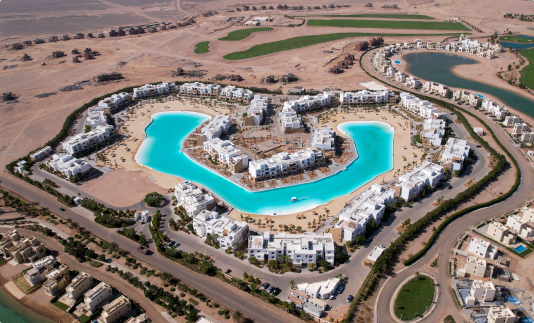
Foreign property ownership rules are finally here

1

WHAT WE’RE TRACKING TODAY

Saudi supertankers hauling mns of barrels pass through Hormuz

Good morning, friends. We kick off the week with a breakdown of the foreign property ownership rules, which were published over the weekend, detailing the registration requirements and fees for non-Saudis looking to own property here.

Oil shipments on the rise

Saudi Arabia is shipping the most oil from inside the Gulf since the closure of the Strait of Hormuz, with four Bahri-owned supertankers hauling some 8 mn bbl loaded at Ras Tanura sailing into the Gulf of Oman on Thursday — the largest single-day exit since the US-Iran interim peace deal took effect two weeks ago, Bloomberg reports.

MEANWHILE- Reuters put the tally higher, at five tankers carrying 10 mn bbl, and said Aramco resumed Ras Tanura loadings after a near four-month halt. Vessels are clearing the strait in convoys, mostly via a US-administered corridor in Omani waters.

REMEMBER- Aramco made a rare move to the spot market last week, selling at least 6 mn bbl across three supertankers bound for South Korea, Japan, and China as it works to restore war-stifled flows. The rebound was broader than just Aramco, as Gulf crude exports have recovered to at least 75% of pre-conflict levels, aided by a resumption of loadings at Ras Tanura, Aramco’s main Gulf export terminal.

Rikaz eyes IPO + education move

Khobar-based real estate developer Rikaz is weighing a future IPO to bankroll its expansion across the Kingdom, CEO Khalid Al Gahtani told AGBI. The company is currently building out 13 mn sqm of warehousing, logistics, and distribution space nationwide, with its flagship project being The Node, a 3 mn sqm logistics park in eastern Riyadh.

Its most immediate priority is Makkah. Last month, Rikaz announced a SAR 2 bn mixed-use project in the city’s East Hindawiyah district as part of a consortium with Dar Al Majd Real Estate and First Avenue Real Estate Development — with Rikaz holding 20% in the consortium. The construction is set to begin within 12 months and is targeted for delivery within 24.

Beyond logistics, Rikaz is also moving into education — an area that has historically been reserved for the public sector, Al Gahtani said. The company has set up an investment fund alongside First Avenue Real Estate Development, AlMajdiah, and SNB Capital to develop new schools and refurbish existing ones, riding a wave of government-led privatization efforts, he adds.

Jumping the queue for jets

Saudia and Etihad eye early delivery slots amid Air India uncertainty: National carrier Saudia and the UAE’s Etihad Airways are reportedly in preliminary talks with Boeing and Airbus to secure delivery positions as early as 2029 and 2030, Bloomberg reports, citing unnamed sources. The two airlines are looking to capitalize on slots that could open up if Air India pulls back on its order commitments.

What’s going on with Air India? Air India Group posted a c. USD 2 bn loss for FY 2025/26, compounded by surging fuel costs, Pakistan’s airspace ban — which has added distance and cost — and broader disruptions from the regional conflict, Reuters reported.

Why the slots matter: For airlines, jumping the delivery queue is rare. A near-term slot means newer, more fuel-efficient aircraft in service sooner as Gulf carriers work towards modernizing their fleets and boosting passenger capacity as they expand their international networks.

CMA invites bids for commodity market activities

The Capital Market Authority is taking applications for licenses to establish and operate a commodities and metals market in the Kingdom, according to an announcement. The application period runs through 31 October. The authority plans to grant one license during the current application window, with the initial focus on operating a secondary market for commodity and metal derivatives contracts.

*** You’re reading EnterpriseAM Saudi, your essential daily roundup of business, economics, and must-read news about Saudi, delivered straight to your inbox. We’re out Sunday through Thursday by 7am Riyadh time.

EnterpriseAM Saudi is available without charge thanks to the generous support of our friends at Tas’heel and Hassan Allam Properties.

Want to send us a story idea, request coverage, ask for a correction, or otherwise get in touch? Reach out to us on [email protected].

DID YOU KNOW that we also cover Egypt, the UAE, the MENA logistics industry, and the MENA <> India corridor?

Were you forwarded this email? Tap or click here to get your own copy of EnterpriseAM Saudi delivered every weekday.

***

The big story abroad

Amid no significant developments in the US-Iran peace talks, no single story is dominating the international front pages this morning.

Iran began yesterday a six-day funeral for former Supreme Leader Ayatollah Khamenei, who was killed by US-Israeli strikes at the start of the war in February. Processions will go through different cities in Iran and Iraq and are expected to draw tens of mns of mourners.

US clean power bill soars: US companies are facing a 40-120% surge in green energy costs as the Trump administration restricts renewable tax credits, one survey found. The steep price squeeze is being exacerbated amid a campaign by data center operators to buy up the available clean energy supply.

And in the M&A world: Investment banking giant Goldman Sachs secured its largest share of M&As in Europe, the Middle East, and Africa in nearly a decade during 1H 2026, LSEG data found. The bank advised on 111 transactions, capturing 44% of the region’s USD 676 bn M&A market.

We dive deeper into the trends characterizing global M&A activity in today’s Planet Finance, below.

Meanwhile, on Wall Street: Faster-than-expected income projections are leading to fears of an impending “earnings bubble,” underpinning the ongoing US stock market rally. Driven by a resilient economy and the AI boom, S&P 500 earnings are expected to surge 25% in 2026, Bloomberg data found.

World Cup haunted by “ghost ticketing”? Online ticket marketplace StubHub is under investigation for allegedly allowing sellers to list World Cup tickets they do not possess, a practice known as “ghost ticketing.” Texas Attorney General Ken Paxton opened a probe into the firm's failure to provide tickets, an issue he says StubHub previously blamed on FIFA’s own ticketing platform.


This publication is proudly sponsored by

Easier life with Tasheel
The Luxury of Certainty
2

THE BIG STORY TODAY

The rulebook (and price) for foreign property ownership is here

The rulebook that lets foreigners buy into Saudi’s property market is finally here, nearly six months after the law went into effect in January. The executive regulation, outlined in the Official Gazette (Umm Al-Qura) on Friday, includes detailed registration requirements, a transfer fee, a new portal to manage the process, and penalties for violations.

The headline: The rules set a 2% fee when a non-Saudi disposes of a real estate right in Riyadh, Makkah, Madinah or Jeddah. The good news is that it’s well below the 5% ceiling the law allowed. The bad news? It comes on top of the 5% real estate transaction tax (RETT) that already applies to all sales. Still, the fee is zero outside the four cities, and is waived under certain conditions including inheritance and public-interest expropriation.

REMEMBER- The Kingdom has designated multiple ownership zones across the four cities, with each city following a different strategy. Riyadh limits access to nine zones centered on flagship giga-projects and a transit-oriented development site, while Jeddah opens its city center alongside 55 development zones. Makkah designates 11 developments and Madinah 10, focused on pilgrimage, hospitality, and mixed-use projects.

A foreign buyer now has a concrete checklist. A non-resident individual needs an Interior Ministry digital identity, a local bank account, and a Saudi phone number tied to that identity before owning. Foreign companies register with the Investment Ministry, disclose their direct and indirect owners, keep a Saudi-issued legal representative, and flag any 5%-plus ownership change within 15 days.

Unlisted Saudi firms with foreign shareholders get a separate track: Inside the zones — the holy cities included — they can buy for operations or staff housing without the ministry's sign-off. Outside the zones, where the two holy cities are off-limits, they need it.

Everything runs through one portal, and misrepresentation is expensive. REGA operates a single electronic portal for non-Saudi ownership and disposals, linked to the property registry. Payments must clear electronically under Saudi Central Bank rules. A foreign buyer who submits false information to acquire property faces a fine of up to 5% of the right’s value, capped at SAR 10 mn, plus a forced sale. Lesser breaches carry graduated fines that escalate with each offence, though violators get 10-180 days to fix the problem first.

What’s next: Watch for the first foreign transactions to clear the portal, the real test of whether the plumbing works. Then watch whether the zone map widens beyond the gigaprojects, and whether the holy cities’ tighter conditions channel or chill Gulf and wider Muslim-investor demand.

3

IPO WATCH

MENA IPO market stays in limbo as structural headwinds overtake geopolitics as the bigger drag

Geopolitics, make way for structural headwinds: A little over two months after a US-Iran truce shaved off the region’s immediate risk premium, the regional IPO market is still in somewhat of a limbo with prospective issuers taking one and two steps forward before retreating into an ever-inflating pipeline. The consensus is that structural headwinds — like tighter liquidity, more expensive funding, and tougher valuation discipline — have now overtaken geopolitics as the bigger obstacle.

REFRESHER- The region closed 1Q 2026 with just four IPOs raising a combined USD 296.6 mn — the weakest first quarter since 2018. The ceasefire had made markets attractive again, analysts told us, but the structural rot ran deeper than geopolitics: Thinner liquidity, a valuation recalibration, and a string of 2025 listings that never delivered meaningful secondary-market returns had already killed the region’s IPO euphoria before the first shot was fired.

The pundits’ read hasn’t changed much since then: “The developments since April largely reinforce our view that the IPO market remains highly selective rather than broadly reopened,” Tahir Abbas, head of research at Ubhar Capital in Oman, tells EnterpriseAM, adding that fundamentally strong companies offering attractive valuations are among the best placed to make it onto the trading floor at times like this.

The 2Q scorecard: Saudi contractor Mutlaq Al Ghowairi (MGC) yanked its USD 800 mn Tadawul offering despite institutional orders exceeding supply. Egypt’s Banque du Caire pushed its long-anticipated listing to the fall citing the summer market lull, with Qalaa Holding’s National Ports Management following suit. The UAE’s Al Habtoor shelved its DFM plans entirely, with Emirates Global Aluminium (EGA) also holding off its market debut until next year at the earliest, after one of its smelters suffered severe damage during the conflict.

It’s not all doom and gloom, some (small-ish) names made it to the finish line: Dar El Balad — small-cap Saudi IT services firm — surged 28.21% on its Tadawul debut in May, with its institutional book 66.6x oversubscribed making it the first GCC listing since the Iran war broke out and a closely watched litmus test for regional sentiment. Egypt’s Korra Energi followed in June, closing up 19.5% on its EGX debut with EGP 977.9 mn in first-day turnover, making it the bourse’s second IPO of the year, and the first since the war began.

Breaking through the noise is Oman’s Omifco, which just priced its upcoming IPO after closing an oversubscribed bookbuilding process ahead of plans to hit the Muscat Exchange next week. (We have more on the offering in this morning’s Markets + Deals column, below). Meanwhile, Qatar’s Dandy has priced its offering at QAR 1.37-1.42 per share, targeting QAR 214 mn in total proceeds.

What’s nailing the window shut

The IPO slowdown predates the war…: Gulf equity markets were already under pressure from falling oil prices, stretched valuations, declining dividend yields, and a shift of flows toward US and AI-driven markets, Muhammad Ahsan, Bank Nizwa’s senior head of treasury & global markets and investment banking, tells EnterpriseAM. “Poor post-IPO performance of some companies made the IPO case difficult. War brought this to a halt, but we had already seen a slowing trend,” he added.

…but issuers now have to exercise more caution: In addition to grappling with geopolitical risks and the growing weight of structural factors, companies looking to go public also need to consider “more disciplined valuation expectations” from investors, Abbas says. These factors have become the primary determinants of IPO execution, requiring issuers to be more realistic on pricing and timing of the issue,” he added.

The market is paying more attention to post-listing performance than oversubscribed order books, Junaid Ansari, director of investment strategy and research at Kamco Invest, tells EnterpriseAM. “With current market performance limited by geopolitical issues, IPO contenders are worried that post-listing performance may not live up to investor expectations,” he says. Abbas echoes that view, arguing that “while investor appetite for quality issuers still exists, covered books alone are no longer sufficient to guarantee successful execution. Valuation expectations, aftermarket performance considerations, and issuer flexibility have become equally important.”

The clustering risk is real: “Deal sequencing has generally remained disciplined, with advisors and issuers showing greater willingness to postpone transactions rather than force execution into suboptimal market conditions,” Abbas says. The risk, he warns, is that the growing backlog increases clustering pressure once sentiment does shift, this is why the careful coordination of issuance calendars matters.

Foreign capital isn’t exactly rushing back: The geopolitical backdrop may have improved, but Abbas says it has not been enough to trigger “a meaningful return of big foreign participation.” Instead, global interest rates and the broader macro outlook remain the bigger swing factors, leaving international investors highly selective and focused on quality issuers with compelling valuations.

That caution is also showing up in pricing. GCC equities continue to trade at a discount to broader emerging markets, Ansari notes, a valuation gap that is still weighing on demand from international investors.

The comeback

The revival will be spearheaded by governments offloading stakes in well-known, established names — essentially following the Omifco model, Ahsan argues. “Private sector firms will not be too keen to come for an IPO in this environment, at least for the next few months,” he tells us. The bar for a privately-owned issuer to go to market in this climate — pricing realistically, building a book with skittish institutional investors, then holding up in secondary trading — is simply too high for most IPO-hopefuls to clear.

The hottest listing venue? Saudi Arabia retains its structural edge despite MGC’s withdrawal, Abbas argues. One pulled listing, even one as closely watched as a USD 800 mn infrastructure offering with a covered book, doesn’t alter the kingdom’s position as the region’s deepest institutional market. “Every market experiences transaction-specific outcomes,” he tells us, and Saudi’s fundamentals as an IPO destination haven’t changed: The domestic institutional base is the largest in the region, government-linked flows remain active, and the pipeline is deeper than anywhere else in the Gulf.

Oman, meanwhile, continues to benefit from a supportive privatization program, Omifco being the most recent proof point. The UAE stays in the middle because higher exposure to international sentiment makes execution harder to read. Kuwait and Egypt face comparatively greater challenges: Shallow liquidity in the former, and macro stress in the latter.

Pundits remain cautious on the outlook

“Our base case is for a gradual recovery in IPO activity during the remainder of 2026, led by high-quality government-linked entities and companies with strong earnings visibility, while private-sector issuers remain selective. We expect issuance volumes to improve but remain below the peak levels seen in recent years,” Abbas says.

“The downside scenario would involve a resurgence in geopolitical tensions, prolonged elevated interest rates, or a deterioration in global risk sentiment, which could further delay IPO activity and keep execution windows narrow,” Abbas added.

Near-term complications sit on the horizon: Minor skirmishes could spill into July and continue to weigh on markets, Ansari says, making issuers more likely to delay or cancel plans while waiting for better valuations. He warns that forthcoming 2Q corporate results could reset expectations further if the conflict's impact on fundamentals runs deeper than the market is pricing. On top of that, liquidity is set to face a seasonal 3Q slowdown, he adds, with cyclicals unlikely to recover before year-end at the earliest.

Ahsan is the most cautious of the three, expecting only a tepid recovery in 2H at best, with the Saudi market leading, and little to nothing expected from the UAE and Qatar. “I believe stability in regional geopolitics could drive more issues, but in 2027,” he tells us.

Tags:

4

M&A WATCH

Salic folds Ukrainian CFG into Olam Agri

PIF-owned Salic is integrating its wholly-owned Ukrainian subsidiary Continental Farmers Group (CFG) into Olam Agri, the Singapore-based global agrifood giant in which it holds an 80% stake, according to a company statement.

Doubling down on global reach: CFG has been in Salic’s hands since 2018, and now it manages close to 200k hectares of farmland in western Ukraine, runs storage facilities with roughly 530k tons of capacity, and produces over 1 mn tons of grain annually. Last year, Salic acquired 80% of Singapore’s Olam Agri for USD 1.8 bn, gaining access to food, feed and fiber, agri-industrials, and ag-services in over 30 countries.

Why this matters: The move feeds directly into the Kingdom’s food security calculus. Saudi Arabia still relies on imports to meet 70-80% of its total food demand, and the recent US-Iran tensions have exposed just how fragile that dependence can become when wartime choke points tighten. The move also builds one integrated system for Salic connecting its domestic and international assets into a single ecosystem, building a more resilient agrifood supply chain.

5

ALSO ON OUR RADAR

Gac approves Kingdom Holding, Fakeeh acquisitions

M&A Galore

Kingdom Holding and Fakeeh’s acquisitions get the green light from Gac: The General Authority for Competition (Gac) approved 21 economic concentration decisions in June, according to a LinkedIn announcement. These approvals include Kingdom Holdings’ SAR 840 mn acquisition of a 70% stake in Al Hilal from PIF, Fakeeh Care’s SAR 1.6 bn buyout of Al Fagih, and Jamjoom Pharma’s manufacturing facility purchase from Pfizer.

REMEMBER- Al Hilal’s divestment is part of PIF’s strategy to sell football clubs after turning them into financially sustainable entities that can generate returns and attract foreign investments. Meanwhile, Fakeeh’s acquisition adds a 350-bed hospital in central-east Riyadh to its portfolio, pushing total capacity to 535 beds across a two-site cluster.


ALSO- Nomu-listed Rawasi Albina Investment Company signed a non-binding MoU to acquire 50% of Al Amlaq Al Hadidiyah Trading Establishment, a Riyadh-based wholesaler of metal and steel pipes, sheets, sections, and timber, according to a Tadawul disclosure. If completed, the establishment will be converted into a jointly-owned company with each party holding an equal stake.

Why this matters: Rawasi Albina uses steel products and construction materials in its own projects, so owning half of the company that supplies them is a vertical integration bid to enhance project execution, widen the business base, and eventually lift income margins.

Jeddah is getting a cricket stadium

The Saudi Arabian Cricket Federation inked a strategic MoU with the Pakistan Cricket Board to develop a cricket stadium in Jeddah, SPA reports. The partnership also seeks to build a sustainable Saudi cricket ecosystem through talent development, technical programs, coaching and officiating initiatives, competitive tournaments, and knowledge exchange between the two cricket boards, Zawya reports.

REMEMBER- Saudi Arabia is set to host major cricket for the first time through a strategic partnership between the local federation and the UAE-based DP World International League T20 (ILT20). The agreement licenses ILT20 as an official league in the Kingdom, with future seasons expected to stage matches here at home.

6

PLANET FINANCE

Megadeals are back just as AI rewrites the M&A playbook

Global M&A surged to a record USD 2.8 tn in 1H 2026, up 49% y-o-y, as megadeals swept through markets despite geopolitical turbulence, the Financial Times reports, citing LSEG data. Bain's midyear M&A outlook also points to a broad rebound, with activity in the first five months of the year putting 2026 on track to become the second-best year for M&A on record.

Bigger, not busier: Just 47 transactions worth more than USD 10 bn accounted for more than USD 1.3 tn — nearly half of global M&A value — while the total number of transactions fell 9% to around 24k, a six-year low, according to LSEG data. Bain similarly found strategic M&A value rose 36% y-o-y while transaction count increased just 2%, suggesting companies are making fewer, but bigger wagers.

Corporates are placing the bets — PE is sitting most of them out. Financial sponsor transaction value fell 9% even as strategic buyers pushed ahead, Bain says — a split that shows corporate acquirers, not buyout firms, are driving the rebound.

EMEA is having a moment: Strategic transaction value across Europe, the Middle East, and Africa is up 77% y-t-d (as of May), powered by large targets in the region, Bain says. Europe has become an M&A hotspot as companies chase consolidation and scale, including the USD 24 bn offer for Altice France and Kone's USD 34.4 bn bid for TK Elevator.

AI is also pushing M&A beyond tech: Technology led all sectors with USD 649 bn of announced transactions in 1H, according to LSEG. Bain points to the proposed NextEra Energy-Dominion Energy merger as an example of how data centers are reshaping acquisition tactics, with utilities looking for the scale needed to build power generation for large-load demand data centers.

The catch? Bain calls it a “winner’s paradox”: Companies are chasing scale and resilience at the same time that AI transformation is becoming impossible to ignore. Or, as the report puts it: “How could we possibly manage an AI transformation alongside, or through, a massive integration program? At the same time, how can we afford not to?”

That means every acquisition thesis now needs an AI lens. Bain says acquirers need to assess how AI changes the target's business model, where synergies can arrive faster, and how much extra cost AI transformation adds to integration. In short: The M&A market is hot again, but integrating acquisitions while reinventing the business for AI may prove the harder task.

What's next: Bain has global dealmaking on pace to top USD 5.3 tn for the full year — just short of 2021's record USD 5.6 tn. Whether that pace holds through 2H will say a lot about whether this is a genuine cycle or a megadeal sugar high.

TASI

10,827

-0.3% (YTD: +3.2%)

MSCI Tadawul 30

1,439

-0.3% (YTD: +3.7%)

NomuC

22,929

+0.1% (YTD: -1.6%)

USD : SAR (SAMA)

USD 3.75 Sell

USD 3.75 Buy

Interest rates

4.25% repo

3.75% reverse repo

EGX30

50,533

+0.1% (YTD: +20.8%)

ADX

9,901

+0.9% (YTD: -0.9%)

DFM

6,059

+1.1% (YTD: +0.2%)

S&P 500

7,483

0.0% (YTD: +9.3%)

FTSE 100

10,679

+0.3 (YTD: +7.5%)

Euro Stoxx 50

6,413

+0.8% (YTD: +10.6%)

Brent crude

USD 72.12

+0.5%

Natural gas (Nymex)

USD 3.25

+1.5%

Gold

USD 4,187

+1.5%

BTC

USD 63,315

+0.9% (YTD: -27.7%)

Sukuk/bond market index

912.50

-0.2% (YTD: -0.7%)

S&P MENA Bond & Sukuk

152.08

-0.1% (YTD: +0.1%)

VIX (Volatility Index)

15.81

-2.1% (YTD: +5.8%)

THE CLOSING BELL: TADAWUL-

The TASI fell 0.3% on Thursday on turnover of SAR 4.3 bn. The index is up 3.2% YTD.

In the green: Sharqiyah Development (+10.0%), Aljazira Takaful (+9.5%), and LIVA Ins. (+7.5%).

In the red: Saleh Al Rashed (-4.5%), Electrical Industries (-4.5%), and Canadian Medical Center (-4.3%).

THE CLOSING BELL: NOMU-

The NomuC rose 0.1% on Thursday on turnover of SAR 10 mn. The index is down 1.6% YTD.

In the green: Taqat (+9.2%), Alfakhera for Men’s Tailoring (+8.3%), and Aljouf Mineral Water Bottling (+8.3%).

In the red: Alwaha REIT (-14.8%), Hedab Alkhaleej (-9.9%), and Al Rashid Industrial (-6.6%).


AUGUST

30 August-1 September (Sunday-Tuesday): Saudi Paper and Packaging Expo, Riyadh International Convention & Exhibition Center.

31 August-3 September (Monday-Thursday): Leap Tech Conference, Riyadh Exhibition & Convention Center - Malham.

SEPTEMBER

8-10 September (Tuesday-Thursday): The WTM Spotlight Riyadh, Riyadh Front Exhibition & Conference Center (RFECC), Riyadh.

15-17 September (Tuesday-Thursday) The Global AI Summit, King Abdulaziz International Convention Center, Riyadh.

23 September (Wednesday): Saudi National Day.

28 September-1 October (Monday-Thursday): The International Conference on Theory and Practice of Electronic Governance (ICEGOV), Prince Sultan University, Riyadh.

OCTOBER

25-26 October (Sunday-Monday): The Global Proptech Summit, Mandarin Oriental Al Faisaliah Hotel, Riyadh.

26-28 October (Monday-Wednesday): ACHEMA Middle East, Riyadh International Convention & Exhibition Center.

28-29 October (Wednesday-Thursday): Procurement and Supply Chain Futures Forum, Mandarin Oriental Al Faisaliah Hotel, Riyadh.

28-29 October (Wednesday-Thursday): Real Estate Supply Chain Forum, Mandarin Oriental Al Faisaliah Hotel, Riyadh.

30 October-1 November (Friday-Sunday): The New Global Sport Conference, Sofitel Hotel & Convention Centre, Riyadh.

NOVEMBER

11-12 November (Wednesday-Thursday): Aluminum Arabia, The Arena, Riyadh.

16-19 November (Monday-Thursday): Cityscape Global, Riyadh Exhibition and Convention Centre (Malham), Riyadh.

29 November-1 December (Sunday-Tuesday): The UN Trade and Development Global Supply Chain Forum, Riyadh.

Signposted to happen sometime in 2026:

2027

FEBRUARY

1-3 February (Monday-Wednesday): Energy Regulators Regional Association annual conference, Riyadh.

MARCH

21-25 March (Sunday-Thursday):The World Water Forum, Riyadh.

22–24 March (Monday-Wednesday): Capital Markets Forum, Four Seasons Hotel, Riyadh

APRIL

26-29 April (Monday-Thursday): World Energy Congress, Riyadh.

JUNE

1-3 June (Tuesday-Thursday): The Saudi Entertainment and Amusement Expo, Riyadh Front Exhibition and Conference Center.

Signposted to happen sometime in 2027:

  • The Ocean Race finishes in Amaala on the Red Sea;
  • Riyadh-Kudmi transmission line to be completed;
  • Aero Middle East and Sand & Fun takes place in Thumamah Airport, Riyadh.

Signposted to happen sometime in 2Q 2027:

  • The Hail Region Water Networks Project is expected to be completed.
Now Playing
Now Playing
00:00
00:00