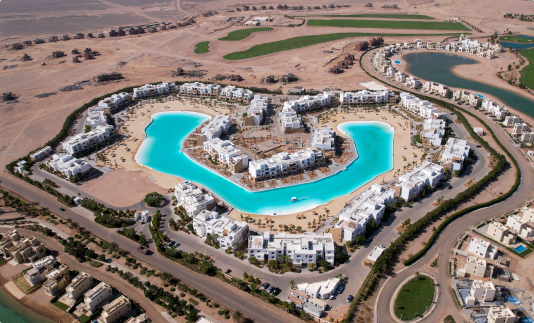
Almosafer wagers on connected trips

1

WHAT WE’RE TRACKING TODAY

THIS MORNING: Traders ask Aramco to load from Yanbu to Sidi Kerir

Good morning, folks. Today’s leading theme is tourism, and how changing spending patterns, religious travel, and other factors are reshaping its landscape. To get some insight into this, we spoke to Muzzammil Ahussain, CEO of Almosafer Travel & Tourism Company, about the changing profile of Saudi travelers, Red Sea luxury hotspots, and rising destinations.

ALSO- We take a look at Dar Albalad, which has brought aboard Bassam Ibn Salamah as managing director.

The EnterpriseAM Egypt Forum is back — and we’re devoting the full day to the singular set of questions on everyone’s mind: What does AI actually mean for your company, your people, your economy, your own job — and your kids’ future?

Every session on stage answers one question: “So, what do I actually do about it?”

Join us on 5 October in Cairo. Seats are limited and attendance is by invitation only.

Request your invitation here.

Too risky from Yanbu, too costly from Sidi Kerir

At least two Asian refiners asked Aramco to shift September crude loadings from Yanbu to Egypt’s Sidi Kerir, as security concerns limit tanker availability through the Houthi-threatened Red Sea, Bloomberg reports, citing traders in the know. Aramco had already assigned Japanese and South Korean customers cargoes from Sidi Kerir for September, while most Chinese, Taiwanese, and Indian refiners were told to load at Yanbu.

Still loading at Yanbu? It remains the shortest and cheapest route to Asia for buyers able to secure willing tankers. The Red Sea is dangerous, not closed, with some vessels — including Chinese-owned tankers — still crossing Bab Al Mandab.

The switch solves the security problem but creates a cost problem. Sidi Kerir cargoes mean sailing around Africa to reach Asia, on top of a location premium already in Aramco's pricing. Since September's Asia price cut, the deepest since 2020, applies only to crude loaded at Ras Tanura in the Gulf, cargo picked up elsewhere costs more. Add the detour, and at least one refiner may simply skip its September allocation, a flexibility built into annual contracts, according to Bloomberg.

REMEMBER- Crude exports from Egypt’s Sidi Kerir more than doubled to around 2.3 mn bbl / d in August, from some 1 mn bbl / d in July, with Saudi barrels accounting for most of the increase.

Almosafer to list this year?

IPO plans: Travel platform Almosafer plans to list its shares on the Saudi Exchange’s Main Market before the end of 2026, despite operational challenges stemming from regional tensions that affect travel flows, CEO Muzzammil Ahussain (LinkedIn) told Skift.

The details: The planned IPO will involve the sale of existing shares by current shareholders, rather than a capital increase, meaning proceeds will go to the existing owner, Seera Group. Ahussain said the final offering date has yet to be set. The company is continuing to prepare its internal systems while monitoring market conditions before deciding on the timing.

The timing is key: The planned listing comes as the IPO market has slowed since the escalation of regional tensions, with no major listings closing recently this year. Almosafer had previously indicated plans to pursue an IPO, with its CEO saying in 2024 that the company was targeting a listing within two to three years.

Two listings so far: Tadawul Main Market has seen two IPOs in 2026 to date. Saleh Abdulaziz Al Rashed & Sons sold 30% of its share capital at SAR 45 per share, while Dar Al Balad for Business Solutions offered a 30% stake (21 mn shares).

**We had an extended conversation with Ahussain about Almosafer’s plans and the wider tourism sector, below.

Another blow for LIV Golf

LIV Golf has cancelled its season-ending Team Championship scheduled to be played next week in Michigan, opting to focus on its next chapter, according to a press release. This is the second event to be cancelled since the Public Investment Fund decided to halt its funding after the 2026 season. The championship will take place in Indianapolis this week.

We knew this was likely. The league was reportedly on the cusp of ending its flagship tournament weeks ago after it became uncertain whether the PIF would continue funding the rest of the season.

What now? LIV Golf is reportedly seeking USD 250-350 mn from new investors to support a planned LIV 2.0 strategy, and is prioritizing financial returns and sustainability. The overhaul may involve fewer events, a stronger emphasis on team majors, and lower-value prizes than the current USD 32.3 mn level. Other measures are on the table, like tightening its financials, monitoring travel spending, and ending costly app features.

***

You’re reading EnterpriseAM Saudi, your essential daily roundup of business, economics, and must-read news about Saudi, delivered straight to your inbox. We’re out Sunday through Thursday by 7am Riyadh time.

EnterpriseAM Saudi is available without charge thanks to the generous support of our friends at Tas’heel and Hassan Allam Properties.

Want to send us a story idea, request coverage, ask for a correction, or otherwise get in touch? Reach out to us on [email protected].

DID YOU KNOW that we also cover Egypt, the UAE, the MENA logistics industry, and the MENA <> India corridor?

Were you forwarded this email? Tap or click here to get your own copy of EnterpriseAM Saudi delivered every weekday.

***

The big story abroad

US President Donald Trump has ruled out extending the 60-day agreement between the US and Iran, which expired yesterday. Trump warned that Washington could strike Oman — a key mediator — if it interferes with Washington’s plans to resume traffic in the Strait of Hormuz. Trump also said that back-channel discussions with the Islamic Revolutionary Guard Corps are underway.

Tehran says it is ready to escalate: In light of the stalled talks, Iran is shifting to a “fully offensive” military posture, a senior Iranian official said. The official indicated a willingness to launch a military attack to suspend the naval blockade imposed by US forces.

In the AI world: Nvidia pledged USD 100 bn in backing for a massive OpenAI data center in Ohio, alongside a USD 1.5 bn investment in SB Energy, a SoftBank-led energy company focused on data center development. The site will lease as much as 8 GW of AI computing power and is set to debut in 2032.

More trouble is apparently brewing in the private credit world. An FT report says the largest funds are seeing more writedowns, signaling stress levels last seen almost 10 years ago. The level of loans with non-accrual status by the 20 largest funds rose to a median of 2.8% in 2Q, up from 2% in March. This echoes last week’s report by Fitch Ratings, which found private credit defaults hitting a new record last month.


This publication is proudly sponsored by

Easier life with Tasheel
The Luxury of Certainty
2

TOURISM

Saudi travel proves resilient as Almosafer wagers on the connected trip, CEO says

The travel market is undergoing a structural shift. Domestic tourism, religious travel, and a more diversified international travel map are reshaping how consumers spend on travel. The Kingdom welcomed around 123 mn domestic and inbound tourists in 2025, including 29.3 mn international visitors, while inbound tourism spending topped SAR 172 bn. The momentum has continued into 2026, with domestic tourism trips rising 16% y-o-y in 1Q 2026 and international flights increasing nearly 10%.

Regional geopolitical disruption could weigh on corporate and international family travel. Almosafer, however, says overall booking activity has remained resilient, with travelers increasingly redirecting rather than canceling trips.

We talked to Muzzammil Ahussain, CEO of Almosafer Travel & Tourism Company. Ahussain tells us that domestic travel now accounts for nearly half of the company’s bookings, while stay value in the Kingdom has nearly tripled. Religious travel has also remained a key source of stability, with Makkah and Madinah room nights rising more than 50% y-o-y.

Ahussain also discusses the changing profile of Saudi travelers. He explains how Almosafer navigated the geopolitical shock while delivering record revenue and EBITDA, and how its integrated ecosystem, pricing discipline, and AI-enabled operations supported that performance.

E: How do you assess the performance of the Saudi travel market in 2026 compared to last year, and what has changed in traveler behavior?

Muzzammil Ahussain (MA): Overall booking value on our platform showed impressive resilience despite a genuinely disrupted regional backdrop. When Saudis faced regional disruptions, they did not stop traveling, but simply redirected their plans. Consequently, domestic travel now accounts for nearly half of all our bookings.

Religious travel provided dependable scale, with Makkah and Madinah room nights up more than 50% y-o-y, as pilgrims increasingly embraced two-city journeys. Meanwhile, domestic leisure saw incredible momentum, with stay value within the Kingdom nearly tripling as travelers engaged with New Vision 2030 destinations like AlUla and the Red Sea, which are rapidly emerging as a luxury powerhouse. Behaviorally, we are seeing a shift toward “connected decisions,” where flights, hotels, and experiences are booked as one journey, and a strong preference for certainty, evidenced by a surge in flexibility and protection products.

E: Which international destinations are currently seeing the strongest growth in bookings from Saudi Arabia, and what is driving this demand?

MA: We have seen a shift in destinations. Egypt's leisure coast and North Africa have seen immense growth, with Tangier up around 40%, and strong performances from Hurghada, Sharm El Sheikh, and Marrakech. This is driven by the appeal of the sun and sea, short flight times, excellent value, and the cultural comfort that is essential for family travel.

Long-haul travel has significantly diversified rather than concentrated. Although favorites like London, Paris, Phuket, and Istanbul take the lion's share, we have seen bookings to Shanghai more than double, alongside rising demand for destinations such as Palma de Mallorca, Moscow, and Prague. A decade ago, the Saudi international itinerary was a short, predictable list; today, it is a genuinely global map.

E: What have been the biggest challenges you have faced in 2026?

MA: Our primary challenge in 2026 has been the regional geopolitical situation, which impacted demand and altered booking patterns overnight. We navigated this through two key strategies. First, the structural strength of our unified ecosystem played a crucial role. Because our five distinct verticals share digital infrastructure and do not move in the same direction simultaneously, consumers traveled more domestically, and our Hajj and Umrah vertical recorded its strongest quarter in history precisely when corporate travel faced pressure.

Second, we maintained strict pricing discipline. Rather than discounting to protect our volume line, we focused on improving our per-booking earnings. This approach allowed us to emerge with record revenue and EBITDA.

E: How has demand for domestic tourism changed amid major developments and the implementing of tourism projects across the Kingdom? Has domestic tourism started to compete with international travel for a larger share of Saudi travelers’ spending?

MA: Domestic tourism has profoundly transformed; it is no longer just a fallback option but a choice that now approaches half of everything booked with us. Domestic stay value is growing, indicating that Saudis are not just traveling locally more often — they are spending more on higher-quality experiences.

The Red Sea exemplifies this, emerging as a genuine luxury powerhouse where Saudis now spend more per booking than on their international stays. We are also seeing strong growth across a diverse portfolio of destinations, with AlUla scaling at a premium, Riyadh room nights up over and Jeddah stay value is up nearly 70%. Rather than competing with religious travel, domestic leisure complements it, with families increasingly combining an Umrah pilgrimage with a domestic break in the same year, or even the same trip.

E: Almosafer was recently identified as a key contributor to Seera Holding’s earnings. How have you managed to deliver this performance?

MA: We delivered record revenue and EBITDA in a difficult market, driven by three core drivers. First, our Hajj and Umrah business achieved its strongest quarter ever, with bookings up over 40%, fueled by our strategic role as the official flight partner for the Nusuk platform and our Mawasim tour operator. Second, consumer travel continued to grow despite market pressures, and we successfully improved our take rate rather than chasing volume through discounts.

Finally, our shared ecosystem provides massive operating leverage. Our five businesses run on a single sourcing engine, data backbone, and technology platform, which has allowed us to grow while reducing operating expenses as a share of revenue. This efficiency is further amplified by our AI-enabled process automation.

E: How have recent geopolitical tensions affected bookings and travel to and from Saudi Arabia? Have you observed changes in destinations, booking patterns, timing, or traveler behavior?

MA: The geopolitical climate heavily impacted corporate and government travel, which declined by approximately a quarter. While consumer travel held up better, we observed significant shifts in traveler behavior toward maximizing control. Travelers increasingly book two separate one-way tickets instead of round trips to ensure flexibility over schedules and prices, and demand for trip insurance and cancellation cover has surged.

In international family travel, overseas hotel bookings fell by over 20%, and trip lead times lengthened as families planned more cautiously. Crucially, we saw substitution rather than cancellation; travelers redirected their plans to Egypt, North Africa, or inward into the Kingdom. Religious travel, in particular, did not flinch, proving completely resilient to regional uncertainty.

E: As Saudi airlines and airports continue to expand capacity, do you expect increased air capacity to lower travel prices and stimulate demand?

MA: The expanding capacity and new corridors are acting as a powerful driver of demand across segments. A denser, more affordable network has transformed domestic, inbound, and outbound travel with new routes on low-cost carriers. At the same time, new capacity is expanding the premium top of the market, with Full Service Carriers offering direct connectivity to new destinations.

National carriers are gaining ground across the whole network rather than only at home, with over 50% of our flight segments booked on national carriers. An expanded route network and added international capacity mean more Saudi journeys now begin and end on a Saudi carrier.

E: How significant is business travel to the Saudi travel market today, and is the Kingdom’s growing success in attracting companies, investment, and conferences changing the nature of this segment?

MA: Business travel is undergoing a fundamental transformation fueled by the influx of regional headquarters, foreign investment, and a rapidly expanding events calendar that did not exist a decade ago. The segment has evolved from simple, individual flight and hotel bookings into complex delegation management, requiring coordinated accommodation blocks, ground transport, and hospitality tailored to sudden spikes in international arrivals within a fixed window.

This has become an advanced logistics discipline.

E: What do you see as the biggest transformation coming to the Saudi travel market over the next few years?

MA: We anticipate two major transformations. First, the trip will become even more integrated. More holistic packages — including transfers and experiences — when travelling abroad or domestically. We are already seeing rapid change, with activity bookings growing more than fourfold, driven primarily by domestic tours, new entertainment offerings, and Umrah-linked experiences via our Almosafer Activities marketplace.

Second, AI is shifting, from a back-end tool to an integral part of the traveler's decision-making process. We recently launched our own native AI filter that allows users to describe their ideal stay in their own words — such as “a family suite near the beach” — enabling the platform to assemble the entire trip seamlessly rather than forcing travellers to navigate generic filters.

E: What are Almosafer’s ambitions and vision for the coming years?

MA: Our vision is to be the platform this region's travelers default to, and a core digital infrastructure that the Kingdom's tourism sector relies on. We aim to own the connected trip end-to-end, seamlessly delivering flights, accommodations, transfers, and experiences as a single, unified plan rather than fragmented transactions.

Technologically, we are striving to be the most advanced platform in the region. Our ecosystem currently handles around two bn requests a month, with over 60% of our code co-authored by AI and conversational booking integrated into platforms like ChatGPT and Claude. Ultimately, our goal is to build the capacity required for monumental events like Expo 2030 Riyadh and the 2034 FIFA World Cup, ensuring that the digital booking experience is as world-class as the stadiums and pavilions the Kingdom is building.

3

MOVES

Dar Albalad appoints Bassam Ibn Salamah as managing director

New MD: Dar Albalad for Business Solutions appointed Bassam Ibrahim Ibn Salamah (LinkedIn) as an executive board member and managing director, succeeding Abdulaziz bin Salamah, according to a Tadawul announcement.

Bassam Ibn Salamah co-founded Dar Albalad and has served as the group’s CEO since 2001. He also brings over 25 years of experience in senior management, investment, strategic planning, business development, corporate governance, and oversight of strategic and operational plans. He holds a bachelor’s degree in industrial engineering and an MBA from King Saud University.

4

ALSO ON OUR RADAR

Pinnacle launches a new VC fund , More financing for Diriyah

Pinnacle launches new VC fund

Pinnacle Capital launched a venture capital fund targeting growth-stage companies and secondary prospects in the Kingdom, according to a LinkedIn announcement. It will invest through both primary funding rounds and secondary transactions. The fund’s size and participating investors haven’t been announced yet.

Where will the money go? The strategy aims to provide growth capital to Saudi technology firms while supporting greater liquidity and secondary-market activity within the Kingdom’s venture ecosystem, Wamda reports. The fund will focus on technology companies in fintech, housing, mobility, real estate, urban services, e-commerce, health, and lifestyle.

REMEMBER- The Kingdom’s fundraising momentum has been recovering over the past couple of months. Growth Catalyst Investment Management’s Growth Catalyst Fund secured SAR 360 mn in June to invest in firms across the Kingdom, and SVC has poured funds into Khwarizmi Ventures’ Khwarizmi Venture Capital Fund 2 to target seed-to-Series A startups across the GCC. MasnaVentures has also announced its intention to raise USD 100 mn from US and Saudi investors to help defense tech firms localize manufacturing.

More financing for Diriyah

Diriyah secured a SAR 2 bn financing agreement with Arab National Bank (ANB), according to a LinkedIn announcement. The funding aims to support the development of internationally branded residences across the Diriyah and Wadi Safae masterplans. It also aims to expand its portfolio of residential and hospitality projects and transform the Diriyah area into a cultural, tourism, hospitality, and residential destination centered on At-Turaif.

REMEMBER- The company will need this capital to fund its pipeline, having previously inked a SAR 3.1 bn (USD 827 mn) joint development agreement with Midad Development and Real Estate Investment for a new Four Seasons Hotel and Private Residences in Diriyah. The project pushed Diriyah’s total contracts awarded to over USD 27 bn.

5

PLANET FINANCE

Institutional investors are split down the middle on Big Tech

2Q 2026 13F filings are in, and they reveal something more important than any individual fund’s positioning. Institutional investors are nearly evenly split on the largest US megacap tech stocks, on major software names, and on data centers. The balance is between funds trimming and funds adding, but the direction has become genuinely contested for the first time in three years.

A Reuters analysis of 6.4k filings shows 44% of institutions trimmed their Magnificent Seven positions in 2Q, while 42% initiated or expanded. Major software names (Adobe, Datadog, and the broader group) saw 28.2% act as net sellers against 26.3% net buyers. Data centers were near-perfectly split at 24.3% each. Semiconductors retained a modest bullish tilt (48% net buyers vs 34.5% net sellers), but even that is far from the crowded consensus that drove the rally through 2024 and early 2025. “When buys and sells are that closely matched, to us it signals the absence of consensus. Nobody disputes the quantum of AI spending that is happening. There is disagreement about which companies ultimately will profit,” OnyxPoint Global Management founder Shaia Hosseinzadeh told the newswire.

The consensus names losing conviction: Tiger Global Management, one of the most-watched hedge funds in the AI trade, cut Alphabet by 45.4% and trimmed Microsoft, Nvidia, and Meta positions. SoftBank reduced its TSMC holdings. Erlen Capital’s Bruno Schneller told Reuters the 2Q data reflects AI-related stocks moving “from a fundamental growth story into a highly leveraged momentum trade” — with July’s tech-sector unwinding as the confirmation. The software-disruption thesis we flagged in June through Adobe's 9% collapse now has institutional-flow validation: more than 28% of filers reviewed by Reuters were net sellers of the major software cohort.

OnyxPoint established new positions in BP, Devon Energy, geothermal developer Fervo Energy, and data center operator Keel Infrastructure — clean, textbook HALO positioning. Berkshire Hathaway added USD 17 bn to Alphabet, boosted its Delta stake, and lifted housing bets, making Alphabet a top-three holding in what is now Greg Abel’s second full quarter running the shop. Nvidia’s 13F disclosed a USD 21 bn SpaceX position and a USD 30 bn Intel stake — together about 80% of Nvidia’s disclosed public equity portfolio, in two companies that have both committed to Nvidia’s Vera Rubin architecture. The pattern is consistent: the money isn’t leaving AI; rather, it is rotating from broad-consensus names into concentrated positions in power, real assets, and vendor-linked infrastructure.

PIF’s 1Q pivot to four US positions — which we covered as the smartest single capital allocation call in the GCC complex this year — looks better with each passing quarter. The names PIF exited (Amazon, Visa, Mastercard) are now inside the cohort losing institutional conviction. The names PIF held — Uber, Electronic Arts, Lucid, Clarivate — fit the rotation targets institutional flows are now moving toward. Mubadala, Adia, ADQ, and QIA still carry meaningful exposure across the Magnificent 7 and software complex. 2Q’s 13F data is the closest thing markets have produced to a coordinated institutional signal in months, and the signal is that the consensus trade has moved from crowded to contested.

(** Tap or click the headline above to read this story with all of the links to our background as well as external sources.)

MARKETS THIS MORNING-

Asian markets opened to mixed results earlier today. South Korea’s Kospi gained around 2.5%, while Japan’s Nikkei lagged behind at a loss of 0.3%. Meanwhile, US equities notched losses across the board as the prospects dim for a lasting truce in the regional war.

TASI

10,908

-0.1% (YTD: +4.0%)

MSCI Tadawul 30

1,466

-0.2% (YTD: +5.7%)

NomuC

21,516

-0.7% (YTD: -7.6%)

USD : SAR (SAMA)

USD 3.75 Sell

USD 3.75 Buy

Interest rates

4.25% repo

3.75% reverse repo

EGX30

55,415

-0.8% (YTD: +32.5%)

ADX

10,077

+0.3% (YTD: +0.8%)

DFM

5,856

-0.5% (YTD: -3.2%)

S&P 500

7,745

-0.5% (YTD: +13.1%)

FTSE 100

10,720

-0.3% (YTD: +7.9%)

Euro Stoxx 50

6,530

-0.1% (YTD: +12.7%)

Brent crude

USD 90.87

+2.7%

Natural gas (Nymex)

USD 2.71

+0.9%

Gold

USD 4,475

+0.0%

BTC

USD 64,301

+2.2% (YTD: +26.6%)

Sukuk/bond market index

911.19

+0.3% (YTD: -0.9%)

S&P MENA Bond & Sukuk

151.07

-0.1% (YTD: -0.5%)

VIX (Fear gauge)

15.19

+6.6% (YTD: +1.6%)

THE CLOSING BELL: TADAWUL-

The TASI fell 0.1% yesterday on turnover of SAR 4.3 bn. The index is up 4.0% YTD.

In the green: Raydan Food (+10.0%), Rabigh Refining and Petrochemical (+5.6%), and Kingdom Holding (+4.8%).

In the red: Al Kathiri Holding (-10.0%), Almasane Alkobra Mining (-4.6%), and Advanced Building Industries (-4.1%).

THE CLOSING BELL: NOMU-

The NomuC fell 0.7% yesterday on turnover of SAR 11.5 mn. The index is down 7.6% YTD.

In the green: Naf Company for Feed for Industry (+20.6%), Arabica Star (+9.0%), and Al Ashghal Al Moysra (+7.3%).

In the red: Abdulaziz and Mansour Ibrahim Albabtin (-9.9%), Edarat Communication and Information Technology (-9.4%), and MSGA Investment (-7.9%).


AUGUST

30 August-1 September (Sunday-Tuesday): Saudi Paper and Packaging Expo, Riyadh International Convention & Exhibition Center.

31 August-3 September (Monday-Thursday): Leap Tech Conference, Riyadh Exhibition & Convention Center - Malham.

SEPTEMBER

8-10 September (Tuesday-Thursday): The WTM Spotlight Riyadh, Riyadh Front Exhibition & Conference Center (RFECC), Riyadh.

15-17 September (Tuesday-Thursday) The Global AI Summit, King Abdulaziz International Convention Center, Riyadh.

23 September (Wednesday): Saudi National Day.

28 September-1 October (Monday-Thursday): The International Conference on Theory and Practice of Electronic Governance (ICEGOV), Prince Sultan University, Riyadh.

OCTOBER

25-26 October (Sunday-Monday): The Global Proptech Summit, Mandarin Oriental Al Faisaliah Hotel, Riyadh.

26-28 October (Monday-Wednesday): ACHEMA Middle East, Riyadh International Convention & Exhibition Center.

26-29 October (Monday-Thursday): The Future Investment Initiative, King Abdulaziz International Conference Center, Riyadh.

28-29 October (Wednesday-Thursday): Procurement and Supply Chain Futures Forum, Mandarin Oriental Al Faisaliah Hotel, Riyadh.

28-29 October (Wednesday-Thursday): Real Estate Supply Chain Forum, Mandarin Oriental Al Faisaliah Hotel, Riyadh.

30 October-1 November (Friday-Sunday): The New Global Sport Conference, Sofitel Hotel & Convention Centre, Riyadh.

NOVEMBER

11-12 November (Wednesday-Thursday): Aluminum Arabia, The Arena, Riyadh.

16-19 November (Monday-Thursday): Cityscape Global, Riyadh Exhibition and Convention Centre (Malham), Riyadh.

29 November-1 December (Sunday-Tuesday): The UN Trade and Development Global Supply Chain Forum, Riyadh.

29 November-1 December (Sunday-Tuesday): The Global Logistics Forum, King Abdulaziz International Convention Centre, Riyadh.

Signposted to happen sometime in 2026:

2027

FEBRUARY

1-3 February (Monday-Wednesday): Energy Regulators Regional Association annual conference, Riyadh.

MARCH

21-25 March (Sunday-Thursday):The World Water Forum, Riyadh.

22–24 March (Monday-Wednesday): Capital Markets Forum, Four Seasons Hotel, Riyadh

APRIL

26-29 April (Monday-Thursday): World Energy Congress, Riyadh.

JUNE

1-3 June (Tuesday-Thursday): The Saudi Entertainment and Amusement Expo, Riyadh Front Exhibition and Conference Center.

Signposted to happen sometime in 2027:

  • The Ocean Race finishes in Amaala on the Red Sea;
  • Riyadh-Kudmi transmission line to be completed;
  • Aero Middle East and Sand & Fun takes place in Thumamah Airport, Riyadh.

Signposted to happen sometime in 2Q 2027:

  • The Hail Region Water Networks Project is expected to be completed.
Now Playing
Now Playing
00:00
00:00