Good morning, nice people. If you’ve ever waited months for a plan to work its way through three departments, today’s lede is for you.
Adnoc wants AI to draw up its oil field plans in hours instead of months. We look at what that changes: the slow part moves to the people who have to sign the plan off, the lenders who have to trust it, and the US chips the whole system runs on.
Meanwhile, Adnoc’s neighbor is busy selling India someone else’s gas: Aramco is one of four winners of an Indian tender to supply about 2.75 mn tons of US LPG in 2027, alongside Chevron, TotalEnergies Trading, and Vitol, Reuters reports, citing sources familiar with the matter. It will deliver one cargo a month to Indian Oil, Bharat Petroleum, and Hindustan Petroleum throughout the year.
Now for the heavier news: Iran’s parliamentary speaker and lead negotiator Mohammad Bagher Ghalibaf said civilian infrastructure near US or Israeli military bases, including dams, ports, and power plants, now counts as “dual-use” and fair game for Iranian strikes, applying what he described as Washington’s own logic. A third US aircraft carrier strike group has arrived in the Gulf, and Iran struck a US radar system in Bahrain with a drone, its third attack on the kingdom in under a week. With talks deadlocked, anyone who builds, runs, or insures assets near those bases will want to read his remarks twice.
Become a morning regular
Ports, power, data centers: who builds the region’s infrastructure, and who controls it. In your inbox Monday to Thursday. Free of charge.
Adnoc wants a single AI system to plan its oil fields, a job now handled by separate teams working one after another. Subsurface engineers hand the plan to facilities engineers, who pass it on to the economists. Adnoc uses the final version to decide which wells to drill, which processing plants and pipelines to build, how big they should be, and when. Once that work takes hours instead of months, “the bottleneck shifts towards validation, alignment and decision-making,” RIMS Digital Solutions founder and CEO Ruslan Suleymanov tells EnterpriseAM.
IN CONTEXT- Under a multi-year partnership with OpenAI and G42, Adnoc will use OpenAI’s Frontier platform to turn field master planning from a sequence of separate subsurface, facilities, and economic studies into a single, integrated decision, and it expects plans that took months to take hours, according to the company. The system builds on ENERGYai, the subsurface AI system Adnoc developed with AIQ, and is meant to combine decades of data from thousands of wells, multiple reservoirs, and hundreds of surface facilities with investment costs and commercial considerations.
Why it matters: Even if Adnoc only manages to speed up part of the way, more pressure is bound to fall on the next stage: the period between developing the project and making the final investment decision (FID). That’s “when the decisions that shape a project’s economics and eventual delivery are made,” Wytham Group co-founder Nicholaus Rohleder tells us. Many construction problems start with incomplete engineering or poor coordination between design and execution, and AI’s biggest opportunity is to improve design before substantial capital is committed, he says. The risk is that faster planning comes at the expense of design quality.
Developers can afford to explore more options before spending, while lenders get more time to pick apart the contracts. AI could help developers “identify critical dependencies earlier and secure the commitments necessary to make a project bankable,” Rohleder says. If they can show the engineering is actually better, lenders can turn more of their attention to weak contracts and unclear lines of responsibility.
Hurry up and wait
Good news or bad news first? The good news is that AI can draw up the plan in hours. The not-so-good news is that the holdup moves to getting someone to sign off on it. “The real question becomes not how quickly we can generate a plan, but how confidently we can approve and take ownership of it,” Suleymanov says.
It’s not all rainbows and sunshine at the drawing board either, and that’s where AI could do the most good. “Many of the difficulties encountered during construction originate much earlier, often in incomplete engineering, inadequate project definition or poor coordination between design and execution,” Rohleder tells us. “The greatest opportunity for AI is to improve the quality and thoroughness of design before substantial capital is committed.”
You’ve probably been told not to run before you can walk. It applies here, too. “Faster planning comes at the expense of design quality, particularly where assumptions are insufficiently validated or the transition into construction is poorly managed,” Rohleder argues. “The measure of success should be more reliable project delivery, not simply shorter planning timelines.”
Come fast, come slow, lenders will still ask the same questions: “The fundamentals of project finance remain unchanged, particularly the need for sound engineering, enforceable commercial agreements, creditworthy counterparties and clearly allocated construction risks,” Rohleder tells us. If the gains can be shown, lenders could spend more time on contractual weaknesses, gaps in responsibility, and critical dependencies, he adds, provided “investors understand precisely what the technology has improved, which assumptions have been independently verified and where uncertainty remains.”
In AI we trust (mostly)
So the tech may be ready. Is everyone else? “The main challenge is not necessarily the AI technology itself, but data quality, integration with existing systems, trust in AI-generated outputs, and people’s readiness to adopt new ways of working,” Suleymanov tells us.
Someone still has to put their name to it: That should be the people who know the asset and answer for how it performs, Suleymanov says. “Sign-off should come from the relevant technical and asset leadership. They need to challenge the assumptions, validate the data, assess technical and commercial risks, and make sure the plan is realistic and aligned with business objectives.”
AI might get a seat at the table, but it doesn’t get the final say. Adnoc says human experts will keep oversight of consequential decisions, a principle Suleymanov backs: “AI should strengthen human decision-making, not replace it.”
But who holds the keys?
Adnoc may own the house, but not everything inside it: Its data stays at home, while much of the technology running the system stays in US hands. “Hosting the models on domestic compute gives Adnoc data residency and physical custody, which matters for reservoir data that is among its most sensitive commercial assets,” June Park, political economist and senior resident at the Frontier AI Security Residency at ERA Cambridge, tells us. “But the model weights, update cycle, safety policies and licensing terms stay with a US vendor, and the chips underneath are US-designed and export-licensed.”
The more Adnoc relies on AI, the more it has to trust decisions made outside its control. “The UAE controls the location of the stack while the US retains control of its most consequential layers: the model, the silicon and the permission to operate,” Park argues. “The more field planning depends on these systems, the more Adnoc’s decisions are shaped by choices made elsewhere, such as which model version is available and how it behaves.”
And there's a deadline attached to all those chips: G42’s license-free access to advanced US chips runs until 6 April 2027. In July, the US moved the UAE into Country Group A:5, its most-trusted export-control tier, and named G42 and Core42 approved recipients of advanced computing items. That authorization lapses on 6 April unless the two become US companies or win further approval, as we reported in our Lede on the Gulf’s AI buildout. Adnoc can keep running OpenAI models on its own data only if both keep that status, Park tells us.
Washington is getting stingier with its chips, and that could spell trouble come April. Chip-export hawks now have the upper hand, making the renewal less certain. Nvidia CEO Jensen Huang’s abrupt downfall has hardened the US line on keeping advanced AI chips out of China, ending the administration’s mostly hands-off approach to chip exports. Commerce Secretary Howard Lutnick, whose department approved the UAE and Saudi chip deals, has been called to testify on them before the Senate Banking Committee next month. Expected incoming committee chair Elizabeth Warren has previously called the UAE agreement corrupt GO DEEPER: our piece on the Huang fallout for the Gulf.
The UAE has a way to keep its access, but nobody has explained exactly how. The deal floats the idea of G42 and Core42 becoming US companies to retain access to advanced chips, but doesn't spell out what either would have to do to qualify. If Commerce refuses to renew the authorization or attaches heavy conditions, Gulf AI would find it much harder to work near the cutting edge. That would also put pressure on Adnoc's planning system, which depends on that compute.
So far, so good for the Gulf: The US left the GCC off a new list of countries where data centers face extra licensing over chip-diversion risk. Indonesia, Malaysia, Singapore, Thailand, and Brazil made the cut. G42 and Humain “are government-backed entities with close relationships with many US firms,” Khalij Economics Director Justin Alexander told us. Chips already delivered also buy the region some breathing room: “It’s hard to take back what is already there,” former US Commerce Department export-control official William Reinsch told us.
Keeping your data at home doesn’t necessarily mean keeping control of it. The announcements describe sovereign hosting, but leave out the technical and contractual guarantees governing who can actually see Adnoc's data. “That detail, rather than the server location, determines how much control Adnoc actually has,” Park says. She expects tightening at the margins rather than a cutoff: “The realistic scenario is incremental: tighter conditions on hardware, auditing or usage, rather than an abrupt shutdown.”
Aramco went with “if you can’t beat them, join them” and bought into its AI supplier. It completed its purchase of 49% of Saudi AI company Humain for SAR 9.9 bn (USD 2.6 bn), leaving the Public Investment Fund (PIF) with 51%, and plans to use Humain’s services across its own operations.
You wouldn’t build an oil field around a supplier you could lose, so why plan one around a model you could? Producers that plan on someone else’s model should plan for losing it. “AI should inform field development plans, not own them,” Park argues. Operators should contract for continuity, keep the ability to run planning on an alternative model, retain ownership of their data, and test how planning would proceed if the system went down. That means “treating it as critical infrastructure with the same resilience planning as a pipeline or grid,” she adds.
THE BOTTOM LINE- A plan produced in hours can only be approved as fast as it can be checked, and those checks (sign-off, lender diligence, contracts that can withstand policy changes, and a fallback model) are now part of the infrastructure.
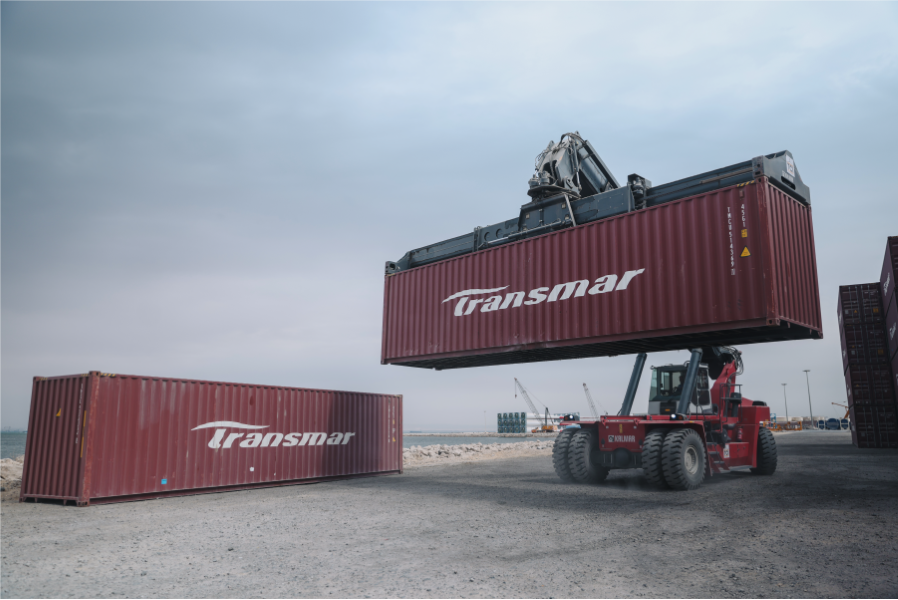
Spain’s Alonso Group has acquired a strategic stake in Dubai-based Cargo Line Freight and Logistics, giving the forwarder access to Alonso’s global operations, purchasing capabilities, and logistics infrastructure, according to a press release. In return, Alonso gets Cargo Line’s “in-depth market knowledge and experience in a strategic and competitive region such as the Middle East, where specialization and know-how are essential,” the Spanish group tells EnterpriseAM. The companies didn’t disclose the value of the deal or the size of the stake.
That know-how is Alonso’s way into the region: The group expects Cargo Line’s integration to extend its ability to offer end-to-end freight services into the Middle East, building on operations that already span ports, rail, warehousing, and forwarding, the company tells us.
Cargo Line gets its way into Europe in return:The group operates 1.1 mn sqm of facilities across freight forwarding, port terminals, road transport, and warehousing. These include the Intersagunto multipurpose port terminal near Valencia and the SAM Algeciras logistics platform, which has more than 120k sqm of facilities — including dry and refrigerated warehousing. Its Fuente de San Luis intermodal terminal in Valencia can handle up to 150k TEUs and 2.6k freight trains a year.
Alonso changed its playbook for the Gulf: It grew in Rotterdam, Milan, and Casablanca by opening its own offices, but here it invested in an existing company. “My reading is that it was buying permission and people, not capacity,” Wolfgang Lehmacher, former head of supply chain and transport industries at the World Economic Forum, tells EnterpriseAM. A customs team that luxury brands and regulated importers trust takes time to build, he says.
The money is in reliability now: “Alonso’s terminals are in Spain, where they serve exporters, not importers in Dubai. As the world’s 41st-largest forwarder, Alonso gets better rates than Cargo Line could alone. But Gulf costs are now set by war surcharges and queues. Maersk charges USD 1k a container to cross Hormuz. Margins will come from charging for reliability,” Lehmacher says.
IN NUMBERS- Logistics makes up most of Alonso’s business: The group’s logistics division handled 412.6k TEUs in 2025. Alonso recorded almost EUR 2 bn in turnover in 2025, including EUR 1.6 bn from logistics.
REMEMBER- The Gulf move follows a push into North Africa: Alonso opened a freight-forwarding office in Casablanca in 2024, Adding to its presence in Tunisia and Algeria, with plans at the time for a second Moroccan branch in Tangier. That expansion targeted sea and overland freight links between North Africa and Europe.
What’s next: The companies plan to pursue additional regional business through their combined networks, but haven’t specified which markets they will prioritize, whether new facilities are planned, or how much capital will be committed to the expansion.
Saudi Arabia is finding ore faster than it is building the smelters and refineries that turn it into metal. Exploration money has answered the Kingdom’s push to court miners, but processing is where the value sits, and its economics are punishing right now. “Right now you’re better off being a copper miner and not a standalone smelter,” Fastmarkets head of market insights William Adams told EnterpriseAM.
Why it matters: Demand for copper, zinc, and the metals behind electrification and AI is set to outrun supply for years, and US and European buyers want sources outside China. The Kingdom’s mining targets depend on turning discoveries into exports and GDP, and that conversion happens at the processing plant.
Exploration spending has more than quadrupled: Spending on gold and copper exploration rose to USD 236 mn in 2025 from USD 54 mn in 2023, according to S&P Global. Maaden added 7.8 mn ounces to its gold resources in January, and the Maaden-Aramco JV signed in August will search 182k sq km for copper and transition minerals using Aramco’s subsurface data.
Standalone smelters are paying to process: Treatment charges, the fees smelters earn for turning concentrate into metal, have been negative for around 18 months on Chinese overcapacity, Colorado School of Mines professor Ian Lange tells us. “The only people building copper smelters are the Chinese,” he says.
The inputs add cost: Much of the Kingdom’s prospective ground sits in the arid interior, and desalination adds to the capital bill, Adams says. Disrupted Gulf sulfur supplies have raised the price of the sulfuric acid used in copper processing, and Red Sea rerouting has pushed up freight.
High prices pay the miner first: Copper averaged USD 14.5k per tonne in October, up 35.1% y-o-y, according to the World Bank (pdf). By our read, prices at that level reward the mine while negative treatment charges keep the smelter squeezed.
Even success would stay small: Saudi Arabia climbed to 10th from 23rd on the Fraser Institute’s mining Investment Attractiveness Index (pdf), and the Kingdom is targeting USD 64 bn in mining GDP by 2030. But every mineral market on earth adds up to between a third and half the size of the oil market, Lange says, so mining’s contribution to non-oil GDP is likely to stay “very small.”
Most people pass through Dubai International Airport (DXB) at some point. This year, far fewer of them have. Passenger traffic fell 28.1% y-o-y to 50.4 mn in 9M 2026, and aircraft movements fell 27.6% to 243k, according to a press release. That means less money for the airport and the businesses around it, while much of what keeps the place running can’t be switched off. Airlines, airports, and suppliers “all feel the pain when these types of events happen,” so it’s hard to say who’s hit hardest, Midas Aviation partner John Grant tells EnterpriseAM.
DXB isn’t the only airport in the region taking a knock: Nine major Middle Eastern airports collectively recorded an estimated USD 900mn-1 bn revenue shortfall in March and April, equivalent to 55% of their budgeted revenue for the period, according to Airports Council International. Over those two months, they ran an average of 53% of their pre-conflict flight schedules.
The airport makes money off passengers and planes, and both are down: Fewer passengers means less in passenger fees and less shopping, and fewer planes means less in landing fees, Sindy Foster, principal managing partner at Avaero Capital Partners, tells us. Exactly how much it loses depends on how DXB sets its charges and which aircraft are flying in, she says.
Running on empty
Fewer travelers doesn’t mean a smaller bill to keep the airport open: “A substantial proportion of airport costs are effectively fixed,” Richard Maslen, head of analysis at CAPA — Centre for Aviation, tells us. Airports can save a little on staff, energy, and contractors, “but only up to a point,” he says. “An airport can become more efficient, but it cannot afford to become less safe or operationally resilient.”
For a megahub, every missing passenger makes the remaining ones more expensive to serve. No single passenger number tells you when a hub stops making financial sense, Maslen says, since every airport’s costs and income look different. “When that scale disappears, the economics quickly become less attractive.”
Airports can shrink their footprint for a while: Some save money in a downturn by closing off sections and moving flights into fewer terminals, Grant says.
Paying for daily operations is a separate question from paying for the airport itself: An airport can earn enough to cover its running costs and still fall short of a decent return on what it cost to build, Foster tells us. At DXB, not all of that build cost sits with the operator, she says, because Dubai finances its airport infrastructure partly through government-linked arrangements, including Airport Financing Company FZCO.
Down the concourse
Dubai Duty Free was among the first businesses to feel it: The retailer posted record AED 8.7 bn in sales in 2025, but its managing director Ramesh Cidambi expects full-year 2026 sales could finish around 25% lower, according to a press release. Sales plunged 66% y-o-y in March, h and 60% in April, then eased as passengers returned. Terminal 1 was down around 40-45%, against 12-13% at Terminal 3, Cidambi said, so the retailer has moved staff between the
Away from the shops, the company that keeps planes moving has taken a hit too: Ground handler dnata reported a 7% decline in global revenue to AED 11 bn in 1H 2026, while net income fell 56% to AED 309 mn. Its airport operations business generated AED 5.4 bn, down 3%, as international growth helped cushion weaker activity at its UAE hub, according to a financial release.
How the losses split comes down to how the contracts are written: When shops pay fixed rents or guarantee the airport a minimum, the airport keeps getting paid as traffic drops and the retailer carries the loss, Foster says. “Contractual protection has limits,” Foster says. If retailers and other partners can’t stay afloat, the airport could face renegotiations, empty units, or gaps in passenger services. Accepting a little less revenue now may work out cheaper, she says.
Wheels back up
Getting the airlines back takes more than having the airport ready. DXB flies to 235 destinations with 57 airlines, and connecting passengers made up 51% of its traffic in September. Rebuilding those networks depends on airlines having the aircraft, crews, demand, and routes that pay, Foster says. And if airlines return faster than the airport can restore ground handling and security, “operational bottlenecks may emerge,” she adds.
The long-term case for DXB still holds: Airports are planned and paid for over decades, Grant argues, so DXB can take a hit to revenue and returns this year without lasting damage to its network.
THE BOTTOM LINE- DXB’s economics depend on a steady stream of passengers, which leaves the airport exposed whenever flights are disrupted. Maslen sees that as a vulnerability rather than a flaw in the megahub model: “Scale remains a major competitive advantage, particularly for airports connecting international markets.”
Chinese refiners are loading up on Middle Eastern crude, Reuters reports, citing traders. Recovering Gulf supplies and steadier export flows have pushed down traders’ offers, while a sharp fall in Brent futures following the US midterms have further lowered buying costs.
Barrels are finding buyers: Adnoc Trading sold Iraqi Basrah Medium and Basrah Heavy to a teapot in China’s Shandong provenance for late-December delivery. Totsa also sold 2 mn barrels of Basrah Heavy to another teapot for January delivery. Mercuria sold 2 mn barrels of UAE’s Upper Zakum to a third independent refiner for delivery at the end of January, while Vitol sold another 1 mn barrels of Qatar’s Al Shaheen to a fourth Shandong refiner.
China isn’t the only Asian buyer returning:India’s imports through Hormuz reached 2.1 mn bbl / d in early November, overtaking the country’s Russian imports of 1.8 mn bbl / d for the first time since the war began.
REMEMBER- Buying Gulf crude doesn’t mean sending a tanker in. China’s largest tanker operators, Cosco and CMES, stopped transiting the strait and began collecting cargoes at transfer points outside it as ship-to-ship transfers became the norm in the region.
The shipping bill is also shrinking: Rates for very large crude carriers (VLCCs) hauling oil from the Gulf of Oman to China fell to around 308 on the Worldscale freight-pricing scale — down 64% from their record high of 841 in early October, according to Baltic Exchange data cited by Reuters. Rates on some other routes, including West Africa to Asia, fell even more.
The link between the two? Shorter journeys free up ships: The recovery of exports has reduced Asian buyers’ need for barrels from the US, West Africa, and the North Sea, cutting demand for longer tanker voyages. More vessels are also becoming available as they finish unloading in East Asia, which adds downward pressure on freight rates.
The freight reversal follows a bumper quarter for tanker owners: Adnoc Logistics & Services’ 3Q net income jumped 321% y-o-y to USD 887 mn, supported by higher charter rates and a larger fleet. Tanker revenue alone rose 358% to USD 2 bn.
Gas diplomacy: Saudi Arabia’s Delta Energy has signed an agreement with Pakistan’s Inter State Gas Systems to explore a proposed USD 30 bn energy infrastructure program, Reuters reports, citing a company statement. The plans span cross-border gas pipelines, LNG facilities, gas processing and storage, and export terminals.
The idea is to bring gas into Pakistan, and potentially onward to India. The companies will assess a pipeline entering Pakistan through its western border and running toward Gwadar, the Arabian Sea port, with a possible extension to the eastern border. The plan also sees a route from Chaman, on the Afghan border, across Pakistan toward the Indian border near Fazilka.
Where would the gas come from? Delta identified Afghanistan’s Kashk gas concession and other Afghan resources as potential sources. The company signed a USD 200 mn exploration and extraction agreement in September covering seven blocks in Afghanistan’s western Kushk-Tirpul basin.
The India leg runs through two capitals: Delta calls the Chaman-Fazilka route a “core strategic commitment,” but says it would need formal engagement and agreement from both India and Pakistan. The two fought a four-day conflict in May last year, and relations remain tense.
BACKGROUND- Delta tried a version of this route decades ago: The privately held Saudi group partnered with US-Unocal in the 1990s on a proposed pipeline carrying Turkmen gas through Afghanistan to Pakistan, with efforts stalling after Unocal pulled out.
On track
Oman’s Al Jazeera Steel Products wants in on UAE rail: The steelmaker is in talks with Hafeet Rail to manufacture railway tracks at its new Abu Dhabi facility, CEO Venkat AN told Asharq Business. Hafeet currently imports its tracks and its first 6k-ton shipment, part of a 33.1k-ton order, arrived from ArcelorMittal’s Spain plant in August. Making track locally would need additional investment and commitments from Hafeet Rail and Etihad Rail to buy the output, Venkat said. No agreement has been announced.
The UAE plant is almost fully up and running: The plant, in Abu Dhabi’s Kezad, began initial operations around August. It rolls medium steel sections and has a capacity of about 500k tons. Full commercial production is due in January 2027. The board has also approved a move into steelmaking, which would let the company produce its own steel rather than only shape it. Venkat said the company will decide when to proceed based on geopolitical conditions.
Don’t expect Gulf steel to fully recover before 2028: Raw-material lead times have stretched to three to four months from two, and customer payment periods have lengthened to 120 days from 90. Venkat expects a slow recovery in 2027 and a real rebound only in 2028.
IN CONTEXT- Hafeet Rail is building the USD 2.5 bn, 238-km UAE-Oman railway, which has secured USD 1.5 bn in debt financing and is targeting trial operations in 4Q 2027. Across the region, GCC states have signed the legal framework for a 2.1k-km regional railway.


 Infrastructure
 MENA+ Edition
 Egypt Edition
 UAE Edition
 Saudi Edition
 AI + Innovation (MENA)


 Share Issue