Fertiglobe reroutes fertilizer exports around chokepoint risk

1

WHAT WE’RE TRACKING TODAY

TODAY: Fertiglobe hedges Hormuz risks + Kuwait restructures its airline to compete without privatizing it

Good morning, nice people. This morning's issue is about hedging against a strait that isn't reopening on anyone's schedule but Iran's.

Fertiglobe is the latest to build the workaround before it needs it. CEO Ahmed El Hoshy told Bloomberg the company still expects to export through Hormuz, but wants the flexibility to keep producing and moving product if the strait shuts. Trucks and alternative ports are already part of the plan; rail could be next.

Adnoc isn't waiting either — it's just not telling anyone. An empty Adnoc L&S LNG carrier crossed the strait with its AIS switched off and turned up inside the Arabian Gulf on Wednesday, Bloomberg reports. Satellite imagery shows a tanker berthed at Adnoc Gas' Das Island export terminal earlier this week, also without broadcasting its position

That instinct explains why yesterday's diplomatic optimism didn't survive 24 hours. We wrote yesterday about Oman's push for a Malacca-style regional management mechanism for Hormuz — a real sign of progress, we said. But, Iran said the plan has “no chance of success,” killing off the path to reopening the strait to commercial shipping.

Meanwhile, one consortium isn't hedging around Hormuz — it's building outside it entirely. A US-Saudi group is in the final stage of picking a site for a USD 5 bn refinery and export complex beyond the strait.

BEFORE WE DIVE IN- A fire in Damietta Port yesterday spread to two regasification and storage vessels, the Oil Ministry confirmed. On-site emergency personnel including firefighters contained the blaze, which impacted a total of two ships, the ministry said, adding that there were no injuries. The statement did not address widely circulating claims in the international press of a drone strike on the US-owned gas storage tanker. The ministry called on the press and social media users to “obtain information from official statements issued by the ministry.”

A source in the petroleum industry told us there had been no damage to natural gas export or import infrastructure — and said the incident posed no threat to the nation’s electricity-generation sector. The incident began when a blaze broke out in the engine room of an old, stationary ship, the source added.

US President Donald Trump said he had been “briefed” on the fire, adding, “it’s a little ​more of the same. But it's going to be straightening out,” Reuters reported. Trump did not elaborate further.


The EnterpriseAM Egypt Forum is back — and this year, we're giving the full day to the one question on every business leader's mind: What does AI actually mean for your company, your people, and your own job?

Leaders in New York, London, Abu Dhabi, and Singapore are asking the same things, and nobody has built a playbook that works yet. We're all figuring it out in real time — and for Egypt, the stakes are unusually high.

Egypt could leapfrog a generation on the back of this technology — or watch AI hollow out the industries and jobs we can't afford to lose. The leaders who get literate early will be the ones who get to decide which road we take.

Every session on stage answers one question: "So, what do I actually do about it?"

Join us on 5 October in Cairo. Seats are limited and attendance is by invitation only. Request your invitation here.

Hormuz’s middle path hits a wall

Iran rejected Oman’s proposal for regional joint management of Hormuz, closing off a path to reopening the strait to commercial shipping, Reuters reports, citing an unnamed senior Iranian source. Tehran said that the Gulf-backed plan had “no chance of success,” one day after Muscat had presented Tehran with a regional mechanism modeled on cooperation in the Strait of Malacca.

A zero-sum game: Iran said it would only accept an arrangement under which Tehran and Muscat manage their respective areas of control, without other powers taking part. But Iran's proposed split is far from equal, wanting control over the entire inbound route and part of the outbound route, leaving Oman to oversee only the section corresponding to its waters. A joint arrangement giving the two countries equal control would not serve Iran's interest, the source said.

The clock is ticking: Every week without an agreement strengthens the case for Gulf producers and logistics companies to route around Hormuz altogether. Pipelines to export terminals outside the strait, trucking to alternative ports, and other bypass infrastructure will be viewed more as the base case for protecting trade flows rather than emergency hedges. The shift will not eliminate the strait’s importance — bypass capacity remains limited relative to the volumes normally crossing the chokepoint— but it could permanently redirect investment toward infrastructure that reduces exposure to Iranian control.

And the workarounds keep coming

A consortium of US and Saudi firms is advancing plans for a USD 5 bn refinery and export complex outside Hormuz, Reuters reports. The Mera Oil consortium — made up of Texas-based developer MWG Enterprises, the Patel Family Office, and PWS, an associate of Saudi industrial conglomerate AHQ Group — has entered the final stage of picking a host site.

The plan is built to route around the strait entirely: The planned facility would process 200k bbl / d and connect to deepwater port infrastructure, large-scale storage, and marine export facilities with direct access to international shipping routes, with plans to produce ultra-low-sulfur diesel and jet fuel for the US, Gulf, Atlantic Basin, and other markets.

A lot still needs to fall into place: The consortium has narrowed its search to three undisclosed locations across the GCC and expects to select a host by the end of the year. The partners are still negotiating with potential feedstock providers, with definitive arrangements expected to advance alongside the final site decision. Its commercial and strategic value will depend on where the refinery is built, where its crude comes from, and whether the consortium secures financing and buyers.

DAE seals Macquarie takeover

DAE joins the mega-lessor tier: Dubai Aerospace Enterprise (DAE) has completed its full acquisition of Macquarie AirFinance (MAF) at an enterprise value of around USD 9 bn, according to a press release. The combined business now holds roughly 1k owned, managed, and committed aircraft worth USD 35 bn, making DAE the world’s third-largest aircraft lessor by fleet value and by number of owned and managed jets.

BACKGROUND- DAE initially agreed to acquire the Dublin-based lessor in February in an allcash transaction carrying a USD 7 bn enterprise value. The transaction follows its USD 2 bn acquisition of Nordic Aviation Capital, which added 252 aircraft and helped DAE more than double its leasing franchise in around 18 months.

Doubling down: The lessor is pairing large-scale acquisitions with institutional-capital platforms that allow it to buy and manage more aircraft without funding every asset itself. Its Mustang Aerospace platform with Neuberger Speciality Finance is targeting around USD 6 bn across multiple investment vehicles following the launch of its Equator platform with Blackstone, which targets around USD 1.6 bn in annual aircraft investment.

Market watch

Oil prices eased this morning as supply flows outweighed escalating Gulf attacks, Reuters reports. Brent crude futures dipped USD 0.96 to USD 89.78 / bbl by 04.18 GMT, while West Texas Intermediate (WTI) slipped USD 0.64 to USD 83.32 / bbl.


MEANWHILE- Opec+ will likely hold oil production steady for the final three months of the year after completing the return of 1.65 mn bbl / d of previously withheld supply in September, Reuters reports, citing four sources familiar with the matter. No final decision has been made.

One last hike: The now-seven core members participating in the cut are expected to approve a roughly 188k bbl / d increase for September when they meet next week. The hike, matching the monthly increases approved for June through August, would complete the phased rollback of voluntary cuts agreed in 2023.

Why this matters: The extra barrels exist largely on paper, as the quota hikes have not translated into equivalent supply growth, with the conflict forcing several Gulf producers to cut exports and the disruption eroding the group's spare capacity. The bigger shift is from restoring cuts to managing a potentially messy redistribution of market share.

What’s next? The group is reviewing members’ maximum sustainable production capacity to set 2027 baselines, and any decision to release more barrels will have to balance members’ demands for larger quotas against weakened spare capacity, disrupted Middle East exports, and forecasts of a surplus if Hormuz flows normalize.


The Baltic Index is on a downwards spiral: The Baltic Exchange’s dry bulk index — which tracks rates for the capesize, panamax, and supramax vessel segments — dipped 1.2% to 2,632 points on Wednesday. The capesize index slipped 1.8% to 4,067 points, while the panamax increased 0.4% to 1,995 points. The smaller supramax eased 1.2% at 1,628 points.

***

YOU’RE READING EnterpriseAM Logistics, the essential MENA publication for senior execs who care about the industry that connects producers and retailers to global markets. We’re out Monday through Thursday by 10:15am in Cairo and Riyadh, and 11:15am in the UAE.

EnterpriseAM Logistics is available without charge thanks to the generous support of our friends at Hassan Allam Utilities and Transmar.

Were you forwarded this email? Tap or click here to get your own copy of EnterpriseAM Logistics.

Want to send us a story idea, request coverage, ask for a correction, or otherwise get in touch? Reach out to us on [email protected].

DID YOU KNOW that we also cover Egypt, Saudi Arabia, and the UAE? ***

This publication is proudly sponsored by

2

Trade

Fertiglobe reroutes fertilizer exports around chokepoint risk

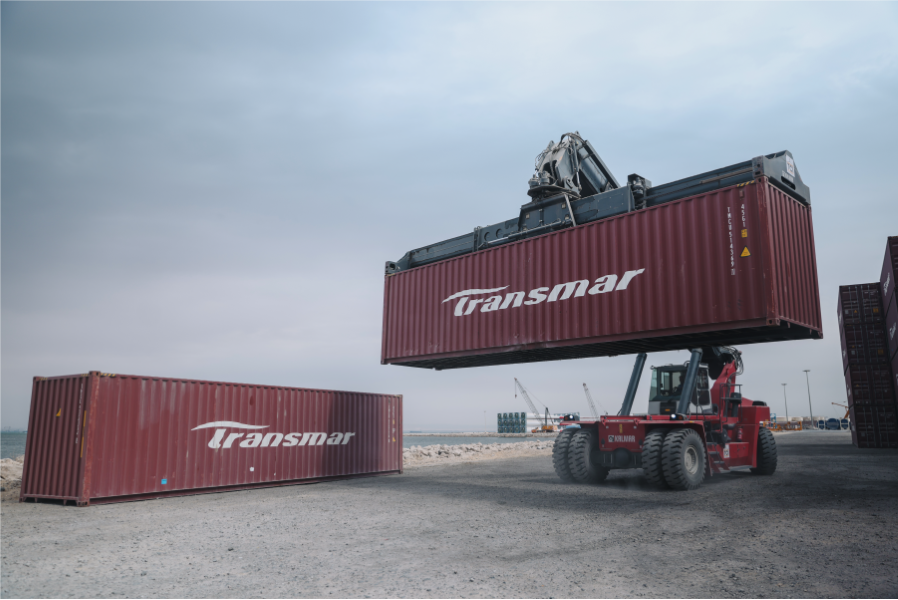
Fertiglobe is diversifying UAE export routes to maintain fertilizer shipments during a prolonged Hormuz closure, CEO Ahmed El Hoshy told Bloomberg. “We still expect to export through Hormuz, but we want flexibility to continue producing and moving products if it is closed,” El Hoshy said.

REMEMBER- El Hoshy previously said that the company continued operations by trucking fertilizer cargoes overland to ports outside Hormuz before loading into ships — a workaround involving “double handling” and higher transport costs.

Rail could be next: Fertiglobe is working with Etihad Rail as it explores using trains alongside trucks and alternative ports to strengthen its export network, El Hoshy said. The talks remain at the exploratory stage, with no MoU or binding agreement disclosed.

Keeping the barrels — or rather, the bags — moving: The company exported volumes equivalent to 56% of its UAE production during 2Q despite the logistical constraints. It avoided disruption-related shutdowns by expanding storage across several locations, with production interruptions limited to scheduled and critical maintenance.

IN NUMBERS- Fertiglobe’s revenues jumped 92% y-o-y to USD 1.1 bn in 2Q, with higher fertilizer prices partly offsetting lower sales volumes and the additional logistics costs.

IN CONTEXT- Red Sea insecurity remains a significant risk for fertilizer markets, particularly for ammonia shipments to Europe, El Hoshy said. Uncertainty surrounding Saudi exports through the Red Sea is widening price spreads between markets east and west of the Suez Canal, creating a window for Fertiglobe to capitalize on its geographically diversified production base.

Energy shocks have amplified the pressure since natgas is the main input for nitrogen fertilizers. “Natural gas’ key role as a fertilizer input could hit agricultural producers, impacting food prices,” MENA Director at Horizon Engage Andrew G. Farrand previously told EnterpriseAM.

Geography is doing the hedging for Fertiglobe. The fertilizer producer can export all of its Egyptian production through the Mediterranean, avoiding both Hormuz and the Red Sea, while its Algerian shipments remain unaffected. That gives the company greater routing flexibility than producers whose capacity is concentrated inside the Gulf or along the Red Sea.

The broader market is taking the latest disruptions more calmly. The Hormuz closure came after the main fertilizer application season in North America and Europe, while rising grain prices could improve farmers’ ability to absorb higher fertilizer costs. China's return to the urea export market in June has also helped reset supply, with El Hoshy expecting the country to ship some 5 mn tonnes this year, slightly more than last year.

What to watch: Natural gas prices will likely be the main fertilizer-market driver during 2H, El Hoshy said. Strong cooling demand and supply constraints could intensify competition for gas between Europe and Southeast Asia, raising production costs and supporting fertilizer prices.

Tags:

3

Aviation

Kuwait Airways shifts to a fully state-owned corporate structure

Kuwait Airways is being locked into state ownership for good — and freed from the state’s own rulebook at the same time. A new decree converts Kuwait Airways into a joint-stock company whose shares stay under direct state ownership, Kuwait Times reports. The decree also grants Kuwait Investment Authority’s board authority over hiring, procurement, and tendering rules — greater flexibility than is generally available to Kuwait's state-owned companies.

Why this matters: The decree aims to boost the airline's efficiency, strengthen its competitiveness, increase operational flexibility, and keep pace with legislative and economic developments.

Some constraints will remain outside management’s control. Kuwait Airways will still be exposed to fuel-price volatility, geopolitical developments, air-service agreements, and broader economic conditions, Sindy Foster, principal managing partner at Avaero Capital Partners, tells EnterpriseAM. “Equally, if government policy continues to require the airline to operate commercially unattractive routes or prioritize non-commercial objectives, those constraints will remain irrespective of the new corporate structure,” she adds.

The reforms therefore remove self-imposed constraints — not structural ones: Kuwait Airways should gain more control over how it operates, but it will still compete against Emirates, Qatar Airways, and Etihad, which benefit from larger networks, stronger hub connectivity, and greater economies of scale, Foster says.

IN CONTEXT- State-owned no longer means state-run in the old sense. The airline's board can now approve its own organizational structure and set its own administrative, financial, employee, procurement, tender, and auction rules, without being bound by the laws that normally govern state property and public tenders.

BACKGROUND- The move follows a major balance sheet cleanup. The carrier last year extinguished nearly USD 1 bn of accumulated losses through a capital reduction, after which approved a KWD 300 mn (c. USD 1 bn) increase in issued capital to be funded according to schedule set by the KIA.

4

Earnings Watch

2Q earnings from DAE, SAL + NDMC Energy

A rougher quarter for DAE

DAE posts a softer quarter: Dubai Aerospace Enterprise’s net income slipped 75.7% y-o-y to USD 86 mn in 2Q 2026, according to its financial release (pdf). The firm’s total revenues declined 8.3% to USD 410.4 mn.

On a six-months basis: DAE’s bottom line declined 57.3% y-o-y to USD 188.2 mn, which it attributed to ins. recoveries recorded in the prior year. The firm’s top line rose 0.6% to USD 865.9 mn, driven by higher lease income from newly acquired aircraft, though partly offset by weaker engineering maintenance revenue.

SAL posts increases across the board

Stronger cargo ground handling and logistics activity boosted Saudi cargo handler SAL’s 2Q results. The firm’s net income rose nearly 18% y-o-y to SAR 191.4 mn, while its revenues jumped around 30% y-o-y to SAR 512.1 mn during the period, according to a Tadawul disclosure.

Behind the numbers: Cargo ground handling revenue increased 29.3%, driven by a 9% rise in volumes and a more favorable cargo mix, while logistics revenue grew 34.2% on expanded services, new customers, and stronger warehouse and contract logistics utilization.

In 1H terms: SAL’s net income increased 10.4% y-o-y to SAR 348 mn, while revenues rose 23.1% to SAR 957.9 mn. Cargo ground handling revenues grew 24.5%, supported by a 3.4% rise in volumes and enhanced service offerings, while logistics revenues increased 15.6%.

Tensions, capex weigh on NMDC Energy’s earnings

Rising costs and regional tensions weighed on ADX-listed NMDC Energy’s 2Q bottom line, leading to a 53% y-o-y drop in net income attributable to shareholders to AED 170 mn, according to an earnings statement (pdf) and press release (pdf). While contract revenues for the period logged a 2% uptick to AED 4.5 bn, the growth was dampened by operational challenges, cost overruns, and disruption due to regional tensions, the firm said.

It is a similar story for 1H: Net income during 1H 2026 fell 57% y-o-y to nearly AED 250 mn, despite a 16% increase in revenue to over AED 9.4 bn. Net income margins contracted sharply to 2.6% during the six-month period from 7.1% a year earlier.

Looking ahead: The contractor enters 2H with strong revenue visibility, backed by an unexecuted project backlog of AED 55.2 bn as of 30 June.

5

Also on Our Radar

DP World goes multi-user in Riyadh + Dubai South doubles down on Aerospace

DP World builds out its Saudi network

DP World opens first multi-user Saudi warehouse: DP World has launched operations at a 15.25k sqm facility in Riyadh's Al Mashael Logistics Hub, its first multi-client third-party logistics warehouse in the Kingdom, Al Bayan reports. The non-bonded site offers more than 17k pallet positions alongside scalable storage, inventory management, import consolidation, and distribution, and is designed to handle goods after customs clearance so inventory can move straight into domestic distribution.

Another node in DP World’s Saudi network: The Riyadh warehouse will connect with the company’s existing logistics operations in Dammam and its port-led investments in Jeddah — including the USD 250 mn, 415k sqm Jeddah Logistics park and the expansion of the South Container Terminal. DP World is also adding 700 trucks across the GCC, capable of supporting up to 35k trips a month.

More aerospace incoming in 3Q

Dubai South is set to see a new aerospace support hub in 3Q, as Mohammed Bin Rashid Aerospace Hub pushes ahead with its 16.7k Sky Support Complex for firms linked to the aerospace industry, according to a press release.

What to expect: The development within the freezone will include 14 warehouse, office, and commercial units tailored to aviation businesses in the Aerospace Supply Chain Zone. The new complex will land as the UAE pushes to establish itself as an aviation hub, building Al Maktoum International while also doubling down on the space industry to reach its target of doubling space economy revenues.


AUGUST

30 August-1 September (Sunday-Tuesday): Air Cargo Middle East, Riyadh, Saudi Arabia.

30 August-1 September (Sunday-Tuesday): Saudi Warehouse and Logistics Expo, Riyadh, Saudi Arabia.

SEPTEMBER

16-17 September (Wednesday-Thursday): Saudi Maritime & Logistics Congress, Dammam, Saudi Arabia.

22-23 September (Tuesday-Wednesday): Breakbulk Americas, Houston, US.

22-24 September (Tuesday-Thursday): Seamless Middle East, Dubai, UAE.

28-30 September (Monday-Wednesday): Transport Logistics Middle East, Riyadh, Saudi Arabia.

OCTOBER

12-14 October (Monday-Wednesday): The Airport Show, Dubai, UAE.

20-22 October (Tuesday-Thursday): TOC Americas, Cartagena, Colombia.

21-22 October (Wednesday-Thursday): Global Ports Forum, Singapore.

26-29 (Monday-Thursday): Air Cargo Forum, Miami, US.

27-29 October (Tuesday-Thursday): Routes World, Riyadh, Saudi Arabia.

NOVEMBER

2-5 November (Monday-Thursday): ADIPEC Maritime and Logistics Exhibition and Conference, Abu Dhabi, UAE.

10-11 November (Tuesday-Wednesday): TOC Asia, Singapore.

10-12 November (Tuesday-Thursday): Intermodal Europe, Rotterdam, Netherlands.

11-13 November (Wednesday-Friday): Logitrans, Istanbul, Turkey.

18-19 November (Wednesday-Thursday): Breakbulk Asia, Singapore.

FEBRUARY 2027

10-12 February (Wednesday-Friday): Routes Americas, San Juan, Puerto Rico.

MARCH 2027

16-18 March (Tuesday-Thursday): CMA Shipping, Houston, US.

16-18 March (Tuesday-Thursday): Routes Asia, New Delhi, India.

APRIL 2027

20-22 April (Tuesday-Thursday): Routes Europe, Antalya, Turkey.

26-29 April (Monday-Thursday): Transport logistic and air cargo Europe, Munich, Germany.

26-29 April (Monday-Thursday): Saudi Smart Logistics, Riyadh, Saudi Arabia.

Now Playing
Now Playing
00:00
00:00