Get EnterpriseAM daily

Available in your choice of English or Arabic

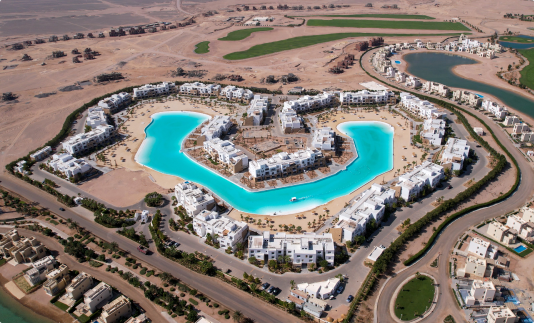
RAK property prices surge amid rising tourism, industrial activity

1

WHAT WE’RE TRACKING TODAY

THIS MORNING: Emirates NBD looks to fold India branches into RBL + Adnoc reportedly exits India refinery project

Good morning, friends. We hope you survived the first day of Ramadan and have caffeinated and hydrated enough to take on the final two workdays of the week.

It seems business has already started to enter a calmer, slower stage now that the holy month is upon us, with the news slowing from earlier this week.

Still, we have updates for you on Ras Al Khaimah’s property sector in 2025, which CBRE says has seen capital values surge amid rising tourism and industrial activity.

Plus: More investments in proptech and AI, this time from private equity firm BlueFive Capital and Secondary Century Ventures.

AND- We have a sit-down with Actis Investments’ head of Middle East and Africa to discuss the data center infrastructure potential here in the region and supportive infrastructure that demands more attention.


ALSO- An update: UAE President Mohamed bin Zayed Al Nahyan has reportedly met with US Senator Lindsey Graham in Abu Dhabi, marking his first public appearance since rumors regarding the Emirati leader’s health circulated on X and in Turkish media following the cancellation of Turkish President Recep Tayyip Erdogan’s visit. Al Nahyan and Graham discussed bilateral ties as well as regional developments and efforts to support stability in the Middle East and further afield, Wam reports. Graham said in an X post that “not only is [Al Nahyan] alive, but he is also well and as sharp as I’ve ever seen him.”

WEATHER- It’s another unseasonably warm day today, with temperatures in Dubai rising to 31°C and Abu Dhabi seeing the mercury peak at 32°C, before cooling to an overnight low of 18°C in both emirates.

Watch this space

ENERGY — State oil giant Adnoc is understood to have withdrawn from a USD 44 bn oil refinery project in India, The Economic Times reports, citing unnamed industry officials who only mentioned “other priorities” as the reason for withdrawal. A withdrawal would come as development of the Ratnagiri refinery in India’s Maharashtra region has been delayed for over a decade on the back of land acquisition issues and local protests. Fellow investor Saudi Aramco is also reportedly seeking to review its investment terms, one official said.

IN CONTEXT- The refinery was conceived as a joint venture between Adnoc, Aramco, and Indian state-run refiners Indian Oil Corporation, Bharat Petroleum, and Hindustan Petroleum, with a planned capacity of 60 mtpa.


Emirates NBD’s India outposts set for life under RBL: Emirates NBD shareholders signed off on a plan to fold the bank’s Indian branches into RBL Bank, according to a DFM filing (pdf). The resolution allows management to proceed with the merger of Emirates NBD’s existing three-branch network (Mumbai, Gurugram, and Chennai) into RBL, which is contingent on acquiring a majority stake (51-74%) in the Indian lender. This is the internal green light for the USD 3 bn transaction, which is facing several regulatory speed bumps.

The lender is also refreshing its funding toolkit: Emirates NBD shareholders approved a AED 6.32 bn dividend payout and a broad debt mandate, authorizing the bank to update its existing USD 20 bn EMTN and AUD 4 bn issuance programs and set up new funding lines of up to USD 10 bn. Within that limit, the bank has the flexibility to issue up to USD 2 bn in regulatory capital instruments.

Data point

12.7 mn shares — that’s the number of shares (valued at USD 630.6 mn) Mubadala held in iShares BTC Trust (IBIT), BlackRock’s spot ETF, by the end of last year, up from 8.7 mn shares at the end of 3Q 2025.

Other Abu Dhabi-linked investment vehicles have also raised their stakes recently. Al Warda Investments, an arm of the Abu Dhabi Investment Council, increased its position in IBIT to 8.22 mn shares, according to the filing. By the end of 2025, Abu Dhabi-based investment entities collectively owned more than 20 mn IBIT shares, with a combined value of over USD 1.1 bn.

The big story abroad

Don’t hold your breath waiting for the Fed to continue its easing policy. Minutes from the Federal Reserve’s January meeting showed that policymakers anticipated “slower and more uneven than generally expected” progress toward its inflation target of 2%. That said, Fed members indicated that keeping rates steady would “likely be appropriate […] for some time as the committee carefully assesses incoming data.”

The greenback was slightly elevated by the news in early trading, maintaining earlier gains against the JPY and the EUR.

ALSO- Social media giant Meta is in hot water after its CEO Mark Zuckerberg testified incourt that the company no longer seeks to maximize the time spent by users on its platforms and bars kids under 13 from logging on. The CEO’s claims ran counter to internal emails and documents indicating otherwise.

The roundup of news and trends that move your markets and shape corporate agendas delivered straight to your inbox.

Subscribe here

***

You’re reading EnterpriseAM UAE, your essential daily roundup of business, economics, and must-read news about the UAE, delivered straight to your inbox. We’re out Monday through Friday by 7am UAE time.

EnterpriseAM UAE is available without charge thanks to the generous support of our friends at Mashreq and Hassan Allam Properties.

Want to send us a story idea, request coverage, ask for a correction, or otherwise get in touch? Reach out to us on UAE@enterpriseAM.com .

DID YOU KNOW that we also cover Egypt, Saudi Arabia, and the MENA logistics industry?

***

Circle your calendar

Check out our full calendar on the web for a comprehensive listing of upcoming news events, national holidays and news triggers.


This publication is proudly sponsored by

Rise every day
From OUR FAMILY to YOURS
2

THE BIG STORY TODAY

Sales prices outpace rents in RAK as 2027 handovers loom

Ras Al Khaimah’s residential market is diverging as it rises. Apartment sale prices jumped 32% y-o-y in 2025, while rents climbed nearly 25%, with the gap between average sales and rental values widening, according to CBRE Middle East’s latest research. That widening gap suggests capital appreciation is running ahead of yield — a classic late-cycle dynamic as inventory handovers approach.

The pricing inflection: Prime apartments have now reached AED 2.4k per sq ft — the highest in the current cycle — led by Al Marjan Island and Mina Al Arab. Villas rose 11% to AED 1.2k per sq ft, while rental growth remained broadly flat, suggesting investors are pricing in the future while tenants are still anchoring in the present.

Why now?

Tourism and big-ticket projects are driving momentum: Visitor arrivals hit a record 1.4 mn in 2025, occupancy rose 4.6%, the average daily rate increased 6.6%, and revenue per available room climbed 11.5%, adding fresh pressure to pricing. The USD 5.2 bn Wynn Al Marjan Island, projected to contribute up to 40% of RAK’s GDP, remains the gravitational anchor ahead of its expected 2027 opening. Record growth in new firms coming to Ras Al Khaimah, which was also the emirate with the most FDI last year, also boosted appeal.

The 2027 hinge: CBRE expects the divergence to moderate from 2027 onward as newly launched stock transitions to handover. In other words, when today’s pricing momentum meets tomorrow’s delivery cycle.

Volumes complicate the picture

Overall sales activity declined y-o-y due to fewer mid-market launches in emerging districts like RAK Central, even as 4Q posted a sharp rebound. Appetite remains, but it’s concentrated, coastal, and premium.

That premium bias isn’t accidental: Of the 9.5k hotel keys in the 2026-2030 pipeline, 92% are five-star — a clear signal RAK is scaling upmarket rather than broadening its base. It’s not just tourism, however, with the 19k+ new companies that came to RAKEZ last year, pointing to corporate interest rising in tandem with tourism.

The structural backdrop

As we’ve previously reported, this pricing cycle is also unfolding as capacity constraints in Dubai and Abu Dhabi push industrial occupiers north. With Grade A rents in Al Quoz touching AED 100 per sq ft and occupancy exceeding 95% — mirrored by 97% occupancy in Kezad — displacement drove a 40% rise in industrial rents across the northern Emirates. More than USD 547 mn in industrial and logistics contracts were awarded in RAK last year alone, reinforcing its role in the UAE’s emerging hub-and-spoke model.

What to watch for

2027 will be about absorption. The question isn’t whether RAK can attract capital — it clearly can — but whether handovers validate today’s pricing or recalibrate it. As mid-market inventory shifts to emerging districts, the emirate will also test whether it can preserve its cost edge or converge toward Dubai-style pricing.

3

INVESTMENT WATCH

BlueFive deploys USD 50 mn in AI firm Origen, continuing to ramp up its AI exposure

BlueFive continues to pivot toward advanced tech prospects: Abu Dhabi-based private equity firm BlueFive Capital invested USD 50 mn in Abu Dhabi-based AI firm Origen, according to a press release. The company plans to use the funds to accelerate product development, scale up product deployment, expand partnerships, and hire additional talent.

The firm is bullish on AI and tech investments: BlueFive Capital has recently closed a USD 3 bn technology and growth fund, with plans to deploy the capital into US and European companies in AI, biotechnology, and advanced computing. The firm has also led a USD 230 mn seed round in the AI-powered Islamic digital bank Mal and launched a USD 4.6 bn China-focused fund-of-funds in partnership with CICC Capital and HBIS Group, which will allocate a portion of this capital to next-gen tech investments.

About the company: Origen develops and implements AI systems designed for operational use cases, targeting the government services, industrial, and residential sectors. The firm focuses on embedding AI into existing workflows to address complex challenges in government services, smart home systems, and advanced manufacturing.

4

FIVE QUESTIONS

Battery energy storage, grid infrastructure investments are needed to support the massive data center and energy buildout that’s coming -Actis’ Sherif El Kholy

Sustainable infrastructure investor Actis has been eyeing the region’s data center infrastructure for a while now, but other supportive subsectors are equally as important and require additional investments, Head of the Middle East and Africa Sherif Elkholy tells us. This includes district cooling — in which the firm has already invested via its stake in Emicool — and power infrastructure, such as grids and battery energy storage systems.

We sat down with Elkholy to gauge his outlook on the data center sector in the region, where he sees pockets of potential, and what supportive infrastructure and energy will be needed to support the massive buildout currently taking place in the region, particularly in the UAE and Saudi Arabia.

EnterpriseAM UAE: You’re a sustainable infrastructure investor, and there’s plenty of that going around in the UAE today. What specific sectors are you currently eyeing?

Sherif El Kholy: We’re looking at power generation, distribution, and transmission, alongside district cooling and digital infrastructure, particularly data centers. We’re also very interested in and looking at investment prospects in battery energy storage system projects, because demand for baseload energy will be key moving forward, as renewable energy is intermittent and cannot alone keep up with soaring demand for power.

E: Which markets are you eyeing?

SK: Saudi Arabia and the UAE both have a very promising road ahead of them in data centers and digital infrastructure. Both are pursuing development at very high speeds, and they are saying and doing all the right things to attract international capital. Demand for cloud and AI capacity in both countries also continues to be very robust.

There’s a very healthy competition that is happening between the two markets. The good news is that the organic window for demand is big enough to accommodate the ambitions of both markets. If you look at the projections of what’s going to happen over the coming five years, that supply-demand imbalance is expected to stay in the medium term.

E: What do you think makes the UAE and Saudi Arabia frontrunners in terms of attracting capital for data center infrastructure in the region?

SK: There are three key patterns or secular drivers underpinning that infrastructure investment window that we see in the UAE and across the whole region. The first one is migration patterns — rural-to-urban migration more broadly, but in the UAE context, this translates primarily to more international migration into the country.

The second is what I would describe as the democratization of infrastructure access, which is the propagation of infrastructure and quality infrastructure services from capital cities to tier-two and tier-three cities that have smaller catchment areas.

The third is purely the focus on digital, which has been made more important since the pandemic exposed gaps in digital infrastructure and in access to stable, high-quality fiber-based internet.

Qatar is also saying all the right things and has just made a big pledge toward data centers, so that’s another market that I think is going to try to get a fair share of the activity. Egypt also has a lot of very interesting plans on that front.

E: Do you see grid infrastructure becoming a challenge as data center infrastructure scales and power demand increases?

SK:As the saying goes, there’s no transition without transmission. Making sure that transmission and grids keep pace with expanding capacity — particularly from renewables — is a global challenge, especially since renewable energy sources inherently put some pressure on grids due to their intermittency.

The health of the grids in the Gulf, particularly in the UAE and Saudi Arabia, is quite strong. However, there will need to be continuous upkeep and reinvestment to make sure they are able to cope with the increased load. Saudi Arabia, for example, today has around 9 GW of renewables that are online and plans to scale that to 100 GW by 2030 — less than four years away. That will require a huge amount of development and investment into the grid.

I would very much like to see some of these transmission and grid investments opened to the private sector in the next phase via an availability-based concession model. So far, most of this capital — if not all — has been coming from public-sector funds. And I think there’s a great potential there to unlock a lot of private capital for this space.

E: Are there any other sectors that you think offer significant upside in the region, provided they are opened to private capital?

SK: Roads are an equally important component of the physical infrastructure landscape in the region that I would like to see opened to private capital, as they could be quite attractive. Toll roads are a major investment prospect across many global growth markets. For Actis in India, they have been such an interesting investment, and we see similar prospects in Latin America and Africa. But so far, I think this is a window that has not yet opened up sufficiently in the Middle East.

5

EARNINGS WATCH

Modon Holding posts 20x jump in 2025 bottom line

ADQ-backed developer Modon Holding saw its net income reach AED 3.9 bn in 2025, a 19.9x y-o-y increase excluding one-off gains, according to its latest earnings release. The firm reported revenues of AED 13.8 bn, a 2.1x y-o-y increase, driven by real estate growth and strategic acquisitions.

As the company’s main growth driver, real estate revenues rose to AED 7.4 bn last year, marking a 2.6x y-o-y increase. As for real estate sales, they jumped 2.8x y-o-y to AED 36.3 bn across Modon’s portfolio, which spans Abu Dhabi, Egypt, and Spain.

ICYMI- The developer saw some ownership shuffles late last year, with Abu Dhabi government-owned L’imad Holding Company snapping up a 42.5% stake from International Holding Company subsidiaries.

6

MOVES

Prypco taps three new execs to scale

Prypco scales leadership team with three new executive hires: UAE-based proptech platform Prypco tapped three new senior executives with experience at Uber, Revolut, and Klarna to join its C-suite leadership team, according to a press release.

  • The firm named Damien Drap (LinkedIn) as its new chief operating officer (COO) to oversee operational scaling and product delivery across the organization. He brings a background as COO and co-founder of real estate marketplace Nomad Homes and general manager of Uber Eats GCC;
  • Haresh Bajaj (LinkedIn) was tapped as chief product officer and will lead the organization’s product and marketing strategy, as well as its platform development, user experience, and customer acquisition. His background includes scaling financial products and product-led growth strategies at global organizations such as Pleo, Klarna, and Barclays;
  • Former Revolut head of engineering AI Denis Agiev (LinkedIn) was appointed as chief technology officer and will lead Prypco’s technology and cloud infrastructure.

REFRESHER- Prypco was founded in 2022 by Amira Sajwani (LinkedIn) in a bid to enable digital-first property investment. It offers fractional property ownership via Prypco Blocks, while its tokenized property investment platform Prypco Mint partnered with the Dubai Land Department to tokenize title deeds.

7

ALSO ON OUR RADAR

Proptech startup Takeem raises funds, DP World brings Maersk into the fold for Jeddah terminal

Another investment W for UAE proptech

UAE proptech Takeem secures investment to scale rental assurance platform: Dubai-based Proptech startup Takeem secured an investment from Reach Middle East, the regional arm of US-based Secondary Century Ventures, according to a press release. The investment aims to support the firm as it expands its offering of proprietary risk intelligence and rental assurance model beyond institutional clients to the broader B2C market. The value of the investment remains undisclosed.

More on Takeem: Takeem aims to address structural inefficiencies in the real estate market, including liquidity issues and limited transparency. So far, Takeem has onboarded 55k residential units with a yearly rental value of over AED 5 bn.

The investment adds further momentum to the UAE’s proptech sector, after Dubai-based real estate investment platform Stake secured USD 31 mn in a Series B funding round earlier this week. Last year, UAE-based Prypco closed a pre-Series A funding round, and Egypt’s Nawy acquired a majority stake in the UAE’s fractional property investment firm SmartCrowd. More widely, the Dubai Land Department has recently kicked off the second phase of its real estate tokenization project.

DP World keeps the reins as APM takes 37.5% at Jeddah terminal

Logistics giant DP World will retain a 62.5% majority stake in South Container Terminal (SCT) at Jeddah Islamic Port, after Danish shipping heavyweight Maersk — through its terminal arm APM Terminals — agreed to acquire a 37.5% minority stake.

Trading control for security: The move cements SCT against regional competition. By bringing Maersk — one of the world’s most aggressive end-to-end logistics players — into the fold, they lock in Maersk’s massive volumes for the long term, preventing a potential pivot to competitor facilities like the Red Sea Gateway Terminal.

DP World already has a deep footprint in SCT: DP World secured a 30-year build-operate-transferconcession for the terminal from Mawani back in 2019. The logistics heavyweight earmarked a USD 500 mn investment figure under the initial agreement to improve and revamp the port, including expanding its infrastructure to better handle ultra-large container carriers.

8

PLANET FINANCE

Maybe the crowd is the smartest economist after all

Prediction markets are booming, evolving rapidly from novelty wagering sites into a serious financial infrastructure that is statistically embarrassing Wall Street, The New York Times reports. Trading volume on prediction platforms surpassed USD 26.2 bn in January, with platform Kalshi alone recording nearly USD 10 bn. While sports wagering drives much of this liquidity, a significant portion — over USD 60 mn on any given day — is now staked on serious economic and political questions, offering a real-time “truth” that professional forecasters are finding impossible to ignore.

This surge has revealed a startling trend: the crowd is often just as smart, if not smarter, than the highly paid professionals. A recent working paper published by the National Bureau of Economic Research found that over a five-year period, traders on Kalshi were as statistically accurate as professional economists in predicting economic indicators — and even more precise at forecasting inflation. Another study by researchers from the London Business School and Yale found that bettors on Polymarket forecast corporate earnings more accurately than the analysts paid to advise investors.

The reason is simple: incentives. Professional analysts often face structural conflicts, researchers argue. They may hesitate to publish an outlier forecast for fear of embarrassment or be influenced by their firm’s need to drive trading commissions. However, anonymous traders face no such social pressure. “The nice thing about prediction markets is that you have to put your money where your mouth is,” said Theis Jensen, a Yale professor who studied the phenomenon.

The rapid commoditization of real-world events has triggered a fierce legislative war that threatens to strangle the industry, The Guardian reports. Because platforms like Kalshi classify their products as “event derivatives,” they operate under the oversight of the Commodity Futures Trading Commission (CFTC), bypassing US state wagering laws.

This distinction has enraged US state regulators. At least 20 federal lawsuits have been filed against major platforms, with state attorneys general arguing they are operating illegal sportsbooks disguised as financial exchanges. Despite the backlash, CFTC Chair Michael Selig said the agency had filed court briefs defending its “exclusive jurisdiction” over prediction markets and vowed not to allow state governments to undermine federal authority.

As US courts decide whether these platforms are the future of finance or merely unregulated casinos, the economic implications are profound. Some economists, like Justin Wolfers at the University of Michigan, suggest that institutions like the Federal Reserve should formally incorporate this data. Yet, he notes a deep institutional resistance. “There’s a deep problem, which is, if you were to do this, you democratize decision making,” Wolfers said, adding that “right now the senior economist has a ton of power. Their view goes.”

MARKETS THIS MORNING-

Asia-Pacific markets are in the green in early trading this morning, mirroring gains seen on Wall Street as tech stocks rebound from earlier losses. With the Shanghai Composite and Hang Seng still closed in observance of the Lunar New Year, South Korea’s Kospi is leading gains.

ADX

10,755

+1.2% (YTD: +7.6%)

DFM

6,765

+1.2% (YTD: +11.9%)

Nasdaq Dubai UAE20

5,650

+2.3% (YTD: +15.6%)

USD : AED CBUAE

Buy 3.67

Sell 3.67

EIBOR

3.4% o/n

3.6% 1 yr

TASI

11,155

+0.5% (YTD: +6.3%)

EGX30

52,222

+0.8% (YTD: +24.9%)

S&P 500

6,881

+0.6% (YTD: +0.5%)

FTSE 100

10,686

+1.2% (YTD: +7.6%)

Euro Stoxx 50

6,103

+1.4% (YTD: +5.4%)

Brent crude

USD 70.31

-0.1%

Natural gas (Nymex)

USD 3.07

+2.0%

Gold

USD 4,986

-0.5%

BTC

USD 66,701

-0.7% (YTD: -23.9%)

Chimera JP Morgan UAE Bond UCITS ETF

AED 3.75

-0.3% (YTD: 0.0%)

S&P MENA Bond & Sukuk

153.59

+0.1% (YTD: +1.1%)

VIX (Volatility Index)

19.31

-4.8% (YTD: +34.0%)

THE CLOSING BELL-

The ADX rose 1.2% yesterday on turnover of AED 1.3 bn. The index is up 7.6% YTD.

In the green: Ins. House (+14.1%), Fujairah Building Industries (+11.1%), and Sharjah Cement and Industrial Development Co. (+7.4%).

In the red: Sudatel Telecommunications Group Company (-2.3%), Rak Co. for White Cement & Construction Materials (-2.0%), and Alpha Data (-1.3%).

Over on the DFM, the index rose 1.2% on turnover of AED 821.6 mn. Meanwhile, Nasdaq Dubai was up 2.3%.


MARCH

19-20 March (Thursday-Friday): Eid Al Fitr, public holiday.

31 March – 2 April (Tuesday-Thursday): Arab Media Summit, Dubai.

26-28 March (Thursday-Saturday): Social Capital Conference, Dubai.

28-29 March (Saturday-Sunday): Emirates International Congress on AI & Visionary Leadership in Transforming Healthcare, Adnec Center Abu Dhabi.

30 March – 2 April (Monday-Thursday): IAAPA Middle East Exhibition and Conference, Adnec Center, Abu Dhabi.

31 March-2 April (Tuesday-Thursday): Investopia, Abu Dhabi.

APRIL

6-9 April (Monday-Thursday): Dubai AI Week, Dubai.

7-9 April (Tuesday-Thursday): Future Health Summit, Adnec Center Abu Dhabi.

7-9 April (Tuesday-Thursday): Middle East Energy, Dubai World Trade Center, Dubai.

13-15 April (Monday-Wednesday): AIM Congress, Dubai World Trade Center.

13-15 April (Monday-Wednesday): The International Glass Manufacturing Show, Dubai.

14-16 April: (Tuesday-Thursday): the International Property Show, Sheikh Zayed Rd, Dubai.

21-23 April (Tuesday-Thursday): UITP Public Transport Summit, Dubai.

29 April (Wednesday): Digital Transformation Summit, Sofitel, Abu Dhabi.

MAY

4-8 May (Wednesday-Saturday): Make It in the Emirates, Adnec Center, Abu Dhabi.

11-15 May (Monday-Friday): Dubai Future Finance Week, Dubai.

11-13 May (Monday-Wednesday): AI Everything Global, Adnec Center, Abu Dhabi.

12-14 May (Tuesday-Thursday): Airport Show, Dubai World Trade Center, Dubai.

19-20 May (Tuesday-Wednesday): Capital Market Summit, Madinat Jumeirah, Dubai.

19-22 May (Tuesday-Friday): Abu Dhabi Water and Energy Week, Adnec Center, Abu Dhabi.

JUNE

3-4 June (Wednesday-Thursday): Annual MENA Investor Conference, Ritz-Carlton DIFC, Dubai.

15 June – 15 September (Monday-Thursday): Dubai Mallathon, Dubai.

JULY

31 July (Friday): Large businesses achieving annual revenues equal to or above AED 50 mn must appoint an accredited service provider for e-invoicing implementation.

Signposted to happen sometime in October 2026:

  • Abu Dhabi Space Week, Abu Dhabi.

NOVEMBER

9-10 November (Monday-Tuesday): Annual government meetings, Abu Dhabi.

OCTOBER

4-10 October (Sunday-Saturday): World Space Week, Abu Dhabi.

DECEMBER

2-4 December (Wednesday-Friday): UN Water Conference, UAE.

Signposted to happen in 2026:

Signposted to happen sometime in 2027:

  • 1-3 February (Monday-Wednesday): World Governments Summit.
  • 31 March: Small businesses with annual revenues of less than AED 50 mn are obliged to contract with an accredited service provider for e-invoicing implementation;
  • 31 March: Government entities are required to appoint an accredited service provider for e-invoicing implementation;
  • 1 July: Deadline for small businesses to implement e-invoicing;
  • 1 October: Deadline for governments to implement e-invoicing;
  • Abu Dhabi’s solar and battery energy facility, combining 5.2 GW of solar capacity and 19 GWh of battery storage, is set for commissioning.

Signposted to happen sometime in 2029:

  • Sibos 2029 organized by the Society for Worldwide Interbank Financial Telecommunication (SWIFT), Dubai;
  • The commissioning of the seventh phase of Mohammed bin Rashid Al Maktoum Solar Park.
Now Playing
Now Playing
00:00
00:00