Good morning, friends. We’re nearing the end of what felt like a particularly long week — but we’re grateful the news cycle has let up a bit.
It’s another M&A-heavy day, with an otherwise mixed bag of news spanning debt, energy, and logistics. The biggest stories to keep an eye out for are Ras Al Khaimah government’s move to up its stake in RAK Properties, an AED 865 mn syndicated loan for an Al Seer Marine JV, and the completion of Abu Dhabi National Hotels’ buyout of Compass Group’s stake in their JV.
We also have part two of our sit-down with our friends at Mashreq’s Fernando Morillo — a must-read for fellow banking and AI nerds.
So, when do we eat? Maghrib prayers are at 6:37pm in Dubai and 6:40pm in Abu Dhabi, and you have until 5am to hydrate and caffeinate ahead of Fajr in Abu Dhabi, and until 4:56am in Dubai.
PUBLIC SERVICE ANNOUNCEMENTS-
#1- WEATHER- Expect another sunny, windy day in Dubai, with the mercury hitting 28°C before falling to an overnight low of 18°C. In Abu Dhabi, similar conditions will see a daytime high of 27°C and an overnight low of 21°C.
#2-Employers subject to the pension law must register their Emirati employees within 30 days of their employment and report service charges to the General Pension & Social Security Authority (GPSSA), the authority said in a statement. Employers must notify the GPSSA within 15 days when Emirati employees leave, or face penalties of AED 200 per day of delay. Delays in salary payments are subject to penalties of AED 100 per day, while non-payment incurs a 10% extra charge.
WATCH THIS SPACE-
#1-Is the government mulling the introduction of golden licenses for businesses? The UAE’s Economic Integration Committee has reportedly discussed a proposal to introduce 10-year golden licenses and five-year silver licenses for businesses at a meeting yesterday, Gulf News reports, without providing further details. The licenses would come in a bid to boost government revenues and stimulate business activity, the outlet said.
#2- Abu Dhabi wealth fund ADQ is considering a bid for Poland’s largest poultry and meat producer, Cedrob Group, Bloomberg reports, citing people familiar with the matter. Initial bids for the company are expected in April, with Cedrob appealing to ADQ as a means to ramp up food security in the Gulf, the sources added. The size of the sale was not disclosed, but Bloomberg previously reported that the Polish company was weighing a sale that would value it at near USD 2 bn.
It’s not the first time ADQ invests in food security: Since covid-19, ADQ has doubled down on its efforts to secure food supplies. In 2020, the wealth fund snagged a 45% stake in European agricultural trader Louis Dreyfus for an undisclosed amount, and poured USD 1 bn into Middle Eastern hypermarket chain giant LuLu Group to help fund its expansion in Egypt.
DATA POINTS-
#1-The UAE has 24 b’naires, putting it 22nd on the Hurun Global Rich List 2024, which measures the number of USD b’naires around the world. The UAE’s ranking dropped y-o-y despite four new b’naires being added to the country’s tally. Dubai came in 28th place on a city level — also down from last year’s ranking — with 21 b’naires living in the city, two more than the previous year.
#2-The USD 1 bn Mother’s Endowment Fund has raised AED 770 mn since its launch twoweeks agoto improve education worldwide, The National reports.
Dubai-based real estate developer Azizi Developments donated AED 600 mn yesterday to the initiative to fund the establishment of an educational complex in Dubai, marking “one of the largest ever charitable donations in the UAE,” Dubai Crown Prince Hamdan bin Mohammed said on X.
HAPPENING TODAY-
The Sharjah Commerce and Tourism Development Authority will be on the agenda for the Sharjah Consultative Council (SCC) when it meets today, Wam reports. The SCC will discuss unspecified recommendations related to the authority based on an SCC report.
HAPPENING NEXT WEEK-
#1- CBUAE to hold AED 29 bn m-bill auction: The Central Bank of the UAE (CBUAE) will auction four m-bills worth up to AED 29 bn next Monday, 1 April, according to a statement (pdf). One of the m-bills is a tap issuance, and the four have tenors ranging from 28 to 336 days.
Decoding central bank speak: M-bills are short-term securities issued in AED by the CBUAE at no interest. The bonds typically have maturity dates of one to 12 months and are not retrievable through any other listing. A tap issuance allows the CBUAE to more finely control money supply by allowing it the flexibility to continue selling bills past the initial auction date.
Get Enterprise daily
The roundup of news and trends that move your markets and shape corporate agendas delivered straight to your inbox.
There’s no single story capturing the imagination of the global press this morning, but watchers of the green economy will want to pay attention here:
Janet Yellen is stirring the pot with China, warning Beijing against dumping key components of the global green economy on other markets.
Yellen claims China is dumping excess production of solar panels, EVs, and lithium ion batteries on other countries. She said the practice “distorts global prices and production patterns and hurts American firms and workers, as well as firms and workers around the world.”
Why the fuss? Western economies are scrambling to catch up to China on clean-tech manufacturing. They see it as critical to energy security, to the green transition, and to bringing manufacturing jobs back to the west. The US is offering tax breaks and subsidies to everyone from green hydrogen producers (hello, Inflation Reduction Act) to key component makers, sparking competition with Canada and the European Union.
Why now? Yellen was speaking on the eve of her second trip to Beijing as US treasury secretary.
Read more: Head to our website for links to stories from the Financial Times and CNBC.
ON A RELATED NOTE- EV and business nerds alike (Elon stans, not so much) will enjoy this morning’s analysis from the Wall Street Journal, which writes that Chinese EV maker “BYD’s rise challenges Tesla — and its valuation. The companies are increasingly close peers while being valued completely differently.”
Tesla is worth about 7x more, and “it takes a lot of faith in Tesla Chief Executive Elon Musk’s promise of autonomy to rationalize the difference,” the Journal suggests.
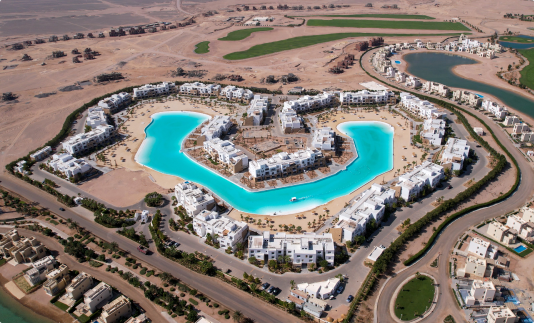
The Ras Al Khaimah government has upped its stake in RAK Properties to 34%, up from 5% previously, through a capital increase, according to a disclosure (pdf). The government became the developer’s single biggest shareholder after RAK Properties’ general assembly greenlit a capital increase that would issue 920 mn new shares, pending the approval of the Securities and Commodities Authority.
Other shareholders: Al Saqr United Group owns an 8.94% stake in the company, while the remaining shares are in freefloat, according to its website.
ALSO- RAK Properties approved a dividend payout of AED 60 mn for 2023, equating to 3 fils per share. Shareholders also get 4% bonus shares, valued at AED 80 mn.
OTHER M&A NEWS-
Waha Capital calls off Peninsula warehouse sale: ADX-listed investment management company Waha Capital has terminated the sale of 17 warehouses between the firm’s subsidiary Waha Land and Abu Dhabi-based property investment firm Peninsula Real Estate Management, according to an ADX disclosure (pdf). The company did not provide details on the reasons behind the termination.
Background: In August 2022, Waha Capital agreed to sell Peninsula 17 leased warehouses at Al Markaz Industrial Development for AED 555 mn in an all-cash transaction. The agreement also included the sale of 136k sqm of completed industrial properties that Waha Land was developing at the time.
Invictus greenlights offer for Graderco stake: The board of Ghitha’s trading arm, Invictus Investment, signed off on presenting a binding offer to acquire a stake of up to 60% of Zalar Holding’s stake in Moroccan agriculture trader Graderco, along with all its subsidiaries, according to an ADX disclosure (pdf). Invictus had first announced plans to acquire the company in February as part of its push into North and East Africa.
ADIB-led syndicate funds BGN + Al Seer Marine for VLGCs: A banking syndicate led by Abu Dhabi Islamic Bank (ADIB) extended a shariah-compliant loan amounting to AED 865 mn to ABGC, a JV between Al Seer Marine and BGN International, Wam reports. The financing marks the second tranche of a USD 370 mn syndicated loan to finance three very large gas carriers (VLGCs) in South Korea and Japan.
The details: Two of the vessels are set to be delivered in 2025, and the third in 2026, according to the statement. These ships will feature dual-fuel LPG engines, advancing towards zero-carbon propulsion.
Advisors: ADIB led the agreement, supported by specialized mandated arrangers including Abu Dhabi Commercial Bank, National Bank of Fujairah, Commercial Bank of Dubai, and Saudi Arabia’s Islamic Corporation for the Development of the Private Sector. Global law firms Denton served as the Syndicate’s Legal Council, and Holman Fenwick Willan served as legal counsel.
Remember: Al Seer Marine received a VLGC named North Gas with 84.3k cubic meters capacity from Hyundai Heavy Industries back in October 2023, marking the second VLGC delivery under the AED 459 mn agreement by ABGC. The first VLGC, Lucky Gas, was delivered in June. Al Seer Marine's fleet now totals 20 ships.
What does the future of banking look like, and will we still need physical branches five or 20 years from now? Will there be room for relationship managers? In part two of our interview with Fernando Morillo (LinkedIn), the group head of retail banking at Mashreq, he dives into these questions and more — including where he sees open finance and AI playing a role in managing bank-client relationships, and the bank’s strategy for its different markets.
A quick refresher about Fernando: He has been with Mashreq for nearly three years, and is in charge of everything from the retail experience through digital propositions Mashreq Neo and NEOBiz. A tech nerd at heart, Fernando’s thoughts on what he viewed as a “boring” industry — banking — completely changed when the internet came along. Before working at Mashreq, he had a run at McKinsey & Co, where he was focused on banking, ins., retail, and digital across Europe, the Middle East, Africa, and the United States.
If you haven’t read part one of our interview, he discusses everything from how AI will impact jobs in the banking industry to the transformation of chatbots and the embeddedness of software into everything a bank does.
We spoke over the course of multiple days in Cairo and Dubai. Edited excerpts of our conversation follow.
KEY TAKEAWAYS from part 2:
Banks have one big edge over fintechs: Scale. He’s not losing sleep over fintech startups, saying some may hit escape velocity, but others will run into the wall — and others, still, will become service providers to larger institutions.
Where will you speak with a human? Go to a branch? When the regulator or the complexity of a transaction demands it. When you want to (if you're HNW). Or if you’re a corporate client with a complex transaction.
Open finance has the potential to transform bank-client relationships, giving clients a more comprehensive insight into their finances and banks the knowledge they need to provide better advice and become more embedded in clients’ decisions.
E: Where does the competition between established banks and non-bank financial institutions shake out? There’s an extent to which our region — the GCC in particular — is overbanked. And with the end of the era of free money, it seems there could be an opportunity for people with larger balance sheets, deeper pockets, longer-term views, maybe less shareholder pressure to make a play.
FM: Yes, and all of that comes as we have these disruptive technologies starting to make a difference in the industry. I think there’s an opportunity for disruption across industries, not only banking.
In banking and finance, we operate in regulated markets. That’s certainly going to have an impact on how much change or consolidation will take place. But incumbents will face a lot of disruption unless they adapt, change their behavior, and operate with the nimbleness of software houses.
What clients want from you is effectively software solutions applied to personal finance and their interactions with digital ecosystems. If you are not the supplier of those solutions, it will be increasingly difficult for you to be competitive, and that will trigger consolidation.
E: So will we see incumbents replaced by new market entrants?
FM: Frankly, I don’t think it will be a massive disruption — there’s enough space for everyone. There are incumbents who will survive — the ones who adapt, who understand their clients, and serve them digitally.
And not all of the new entrants — the fintech players and neobanks — will thrive. There’s a bit too much hype about fintech players right now, if you ask me.
The reality is that only a handful of fintech players will reach a critical threshold with a sufficiently differentiated product. There is a lot of space in the middle for fintechs that can provide banks with services and solutions that banks are not naturally positioned to build.
Mashreq recognizes the critical role fintechs play in reshaping the financial landscape and we’re committed to collaborating with these entities to bring cutting-edge solutions to our customers.
E: So the future for fintechs is to become service providers to banks?
FM: As software houses, fintechs have a ruthless focus on solving a client’s single, specific problem. Banks, on the other hand, offer specific solutions to a very broad array of problems. So it's very difficult to have the perfect solution for each of our problems in the way we service our clients, and that’s where working with fintechs can be very helpful.
It's not a binary situation. We'll see some banks thriving, others having to be integrated into larger institutions. We'll see some fintechs that will go straight to clients and become direct competitors of banks. And we’ll see some fintechs that will be fantastic providers of solutions to banks and to other fintechs.
And, of course, we’ll see many fintechs that will not make the cut. Think about it: At the beginning of the 20th century, there were several hundred automobile producers in the United States. How many are there today? Eight? Ten?
And in the meantime, there is so much banks can learn from how nimble fintech players are. At Mashreq we have units that work across functions in an agile way. Scrum masters in a bank… .Who’d have thought that was possible a few years ago?
E: How can banks know enough about the totality of your finances to make good recommendations in an AI world?
FM: That’s where open finance comes in — an emerging set of standards that will allow you to get an integrated view of your financial position regardless of where you are or what you’re doing. You can see how much money you have, how much money you owe, how much money you should save in order to manage your life financially. That's how banks will become part of your life in use cases that transcend the product, and actually tell you whether it is financially sound for you to make that transaction or not.
And that’s the direction of travel. Big data is already there. AI is getting there. And now, open finance is being established in many countries — it’s a data structure and series of pipes that will allow people to share their financial data from one institution to another. I’m very excited about the new use cases that it will make possible.
Think about how easy it will make going shopping for a loan, for example, if you can get data on five different banks and see their tailored offers, all in a single portal.
E: What is the role of the physical branch in this world? Will there be branches 5 years from now? 20?
FM: Branches are the apotheosis of the universal banking approach, where all segments go and interact with their finances — a one-stop physical shop that’s still a big part of the banking system worldwide.
We’re moving in the other direction at Mashreq — in the UAE, we’ve cut our branch network by 85%. It’s been a deliberate move driven by client demand. People don’t want to go to a physical place and wait in line to do something they can do online.
For instance, Mashreq NEO in the UAE is a true reflection of this approach — a full-service, branchless bank proposition that provides best-in-class customer experience. Mashreq NEO was the first in the UAE to provide access to international markets for investments, including foreign equities, gold trading and foreign currency accounts. It is the largest digital proposition in the region that offers a full suite of banking products, both transactional and discretionary services and investment products.
But I think we’ll still see a need for physical branches in a handful of types of situations. The first involves complexity, where it is too difficult for a client to sort out a solution by themselves. The second is regulatory — some things still need to be done in person. And the third is more high-value interactions in which what I call ‘the tail of complexity’ requires an interaction with a human. This often cannot be a video call or a phone call but a conversation that has to take place across several interactions with data and an exchange of ideas.
Even as AI becomes more able to read human intent and emotion — and it’s getting there — other situations will simply be better managed face-to-face by a human, who understands the needs of the person sitting across from them at a human level.
At Mashreq we are expanding our touch points (exploring newer channels) across the UAE offering more enhanced services to our customers. And branches will continue to play an important role, albeit a different one.
We see the branches evolving to serve the changing needs of customers, specifically those who require deeper personal engagement and advisory services such as purchasing a home, financing a business or discussing legacy decisions.
E: How often will I speak with my relationship manager in the future?
FM: Part of the answer depends on whether you’re a small or large business, whether you’re a private banking client or other. More and more, you’re going to get good access to data and sound advice over your device. And you’re going to be able to click in the app to bring your RM into the conversation through chat or video in the digital space.
And then if it’s more complex, perhaps you’ll want to see the RM in an office, or the RM will come to you.
Think of it this way: If it’s tweaking your portfolio, you’ll probably do that 90% or more of the time in the app. Maybe you’ll tap to call in your RM if you have an additional question, but the AI will be great at portfolio construction.
Where you’ll want a face-to-face interaction isn’t when you’re gently rebalancing a portfolio, but when you feel that you need to completely burn it down and start from scratch because you worry you may have gotten the allocation completely wrong.
E: What about at the corporate banking end of the scale?
FM: Corporate or wholesale is really outside of my purview, but I would expect you’ll see AI tools being used by bank relationship managers, risk teams, and the like to ensure they better serve their corporate clients. But robo-advisors for large corporates really don’t seem to be in the pipeline now. Mashreq made substantial progress with the introduction of new digital platforms in its investment banking sector, contributing to enhanced operational efficiency and client servicing. It’s additive.
E: How does your strategy on digitization differ in, say, Egypt or Pakistan versus the UAE?
FM: They’re really different propositions, even if they’re all moving in the same direction.
In Egypt or Pakistan, it’s about digitizing the country’s financial system and driving financial inclusion at large — bringing more people and SMEs into the system is what’s going to move the needle for the industry and for society. It’s not the time yet to come up with advanced, super-niche products.
In a developed economy like the UAE, the foundations for digital are already in place. So the next big thing is digitizing wealth management and providing clients with more advanced products and services that give them the tools they need to manage their finances in the long run.
And in the case of SMEs in the UAE, it's more about digitization of loans and bringing down the cost of lending. And that will roll out to less-developed economies as they mature.
E: What’s driving growth for you folks? Your full-year results were fantastic.
FM: In the case of the UAE, the country has had a phenomenal few years. We’ve benefitted from great management of Covid, the recovery in oil prices, and from the simple fact that the UAE is a great place to live. That’s made it a global hub for business and sparked a property boom. And as a bank, we are growing with that — it’s not just us at Mashreq but the sector as a whole. And, of course, the interest rate environment is great for banks because it provides a tailwind.
In parallel, the bank has a truly entrepreneurial culture, so we’ve really gone for growth — growing our assets, our liabilities, our services. And as we’ve done so, our risk management approach has been just right.
Our culture of innovation and obsession with client experiences and digital have allowed us to outperform the market. It's this obsession with coming up with something cool and good for the market that creates the numbers.
And let’s not forget our greatest asset — our people, who are instrumental in our ability to deliver a superb customer experience and develop award-winning products and services.
E: And in Egypt?
FM: Our operation is much smaller in retail in Egypt. For the most part, we are a corporate bank there, but we see huge potential for growth in the mass market. I think we can play a fantastic role in driving financial inclusion, which is going to be a massive catalyst of growth in the country in the long term. With 110 mn people, the opportunity is immense.
We want to be the ones who gave the middle-aged entrepreneurs of tomorrow their first accounts, their first credit cards, their first loans. We want to look back in 10 years’ time and say we did our bit on that front.
E: What’s the biggest surprise more than two years into your time with Mashreq?
FM: The quality of the people — Mashreq has always been known as a business that can choose and develop great talent, but now that I’ve been here, it’s amazing to see how deep that runs.
And maybe we’ve been a bit too successful on that front [laughs]. Because what happens is that people come here, develop as professionals, and then others in the market start poaching talent…
I think the other big thing — on the personal front — has been re-learning that everything is possible and can be done in a very agile way without compromising on risks. Coming from very large institutions, this gets beaten out of you, and Mashreq is amazing: It has no fear of trying new things, and it balances that off with a very careful approach to risk management. You can see that in our non-performing loan ratio, which is less than half the industry average.
Mashreq is careful about risk, but it leaves the door open to try new things and new technologies in business.
Your limits in business are internal — they’re in you. It’s all about your attitude toward what’s possible, and that’s something I’ve rediscovered at Mashreq. This amazing entrepreneurial culture where you are in a meeting and someone says something that sounds ridiculous, but then you figure out how to make it real. This comes from the top, this culture of “you need to try anything that provides an amazing client experience, even if it sounds crazy — just look for ways to minimize risk as you do”.
Here, we’re asked to dream and come up with things that challenge the status quo. It’s very refreshing, and it’s something I have had to relearn since coming here.
Abu Dhabi National Hotels (ADNH) has finalized the acquisition of the remaining stake in its JV with Compass Group, ADNH Compass, it said in a disclosure to the ADX (pdf). The value of the transaction — which will see ADNH acquire Compass’ entire 50% stake in the company — was not disclosed in the statement.
ICYMI- ADNH and Compass Group had reached an agreement for the takeover earlier this month. The acquisition “is part of ADNH’s strategic plan to boost its revenues” and income margins from key business segments,” the company said at the time. The transaction is expected to help ADNH reel in an additional AED 100 mn in annual net income.
Background: ADNH established a JV in 2008 with Compass Group and is now “rated as the biggest provider of food and manpower services to corporates and organizations,” according to Gulf News. The JV now offers its services, which include retail and vending, cleaning and housekeeping, pest control, and integrated facilities management, to clients ranging from schools and universities, to defense and correctional players, and the healthcare industry.
DP World to establish new terminal at Port Santos: Emirati port operator DP World has inked a 30-year agreement with Brazil’s leading railway operator Rumo to establish a new terminal for grains and fertilizers at Port Santos, according to a statement. The agreement will boost the port’s handling capacity by some 12.5 mn tons per year — including 9 mn tons of grains and 3.5 mn tons of fertilizer. Rumo will pour USD 500 mn of investment into the project.
The details: The new terminal will be developed in DP World’s private-use terminal on Santos’ left bank, the statement said. The agreement's initial operating period is for 30 years, with an option to extend subject to DP World’s approval. DP World will overlook port operations, including cargo movement.
The timeline: Construction is expected to take some 30 months, upon fulfillment of precedent conditions such as government approvals, the statement also said.
Background: DP World invested some USD 50 mn as part of a larger USD 85 mn terminal expansion project to boost its container operations at the port, acquiring 21 new port assets to increase capacity to some 1.7 mn TEU, according to a separate statement released last week.
IN OTHER DP WORLD NEWS-
The port operator plans to boost its container handling capacity globally by around 7.6 mn twenty-foot equivalent units (TEU) to 102.6 mn TEUs by the end of 2024, from 95 mn TEUs the year prior, Emirates Today reports, citing a DP World document.
TEUs? A TEU is a standard measurement in the shipping and terminal industry and is based on the dimensions of a common twenty-foot shipping container. The acronym stands for Twenty-foot Equivalent Unit. A double-length container, for example, would count as two TEUs.
The breakdown: The firm will add around 1 mn TEUs to its Jeddah market, around 900k TEU to its London Gateway, and 400k TEUs each to South Korea’s Busan Port and India’s Cochin Port. A further 3 mn containers will be added to its Chinese facilities, 400k containers to its Belgium market, 300k containers each to Egypt's Sokhna Port and Tanazania’s Dar el Salaam Port, and 200k containers each to Canada’s Vancouver ports and Peru’s Callao Port.
Umm Al Qaiwain Ruler Sheikh Saud bin Rashid Al Mu’alla appointedSheikh Ahmed bin Nasser bin Ahmed Al Mu’alla as his special advisor, with the rank of head of a department, Wam reports.
Investcorp Capital has appointed Rohit Nanda (LinkedIn) as its chief financial officer, effective from 2 April, it said in an ADX disclosure (pdf). Nanda previously served as Investcorp’s head of operations and head of investment structuring and business support in Asia. He succeeds Abbas Rizvi (LinkedIn), who has been tapped as CFO of Investcorp Holdings.
It’s a mixed bag for the UAE in the foreign press this morning, with one dominant theme being a tougher environment for Russian expats in the country.
Are Russians over the UAE? Some Russian expats in the UAE are considering returning home or moving away after an expat boom last year drove up rents and costs of living, Bloomberg reports, citing bankers and experts. Russian money flows into the UAE are also slowing down, and businesses are downsizing, one immigration firm representative said.
This isn't expected to have an impact on the economy: While Russians have left their mark on both Dubai and Abu Dhabi — but more so Dubai — the impact from a potential exodus of expats would be minimal considering the presence of other wealthy expats from different nationalities, experts said.
Russian oil firms are also reportedly experiencing payment delays due to heightened scrutiny from UAE banks, as well as banks in China and Turkey, over US sanctions compliance, Reuters reports.
ALSO WORTH NOTING-
Emirates CEO Tim Clark wants to see the next Boeing CEO have a “strong engineering” background and exhibit more “lateral thinking”following an escalating crisis in quality at the airplane manufacturer, he told the Financial Times. Emirates is one of the manufacturer’s biggest clients.
#1- The Abu Dhabi National Oil Company (Adnoc) has begun crude oil production from its Belbazem offshore block,operated by its JV with China National Petroleum Corporation, Al Yasat Petroleum, according to a statement. The block — located 120 km northwest of Abu Dhabi — comprises three offshore fields in Belbazem, Umm Al Salsal, and Umm Al Dholou.
The details: Adnoc aims to produce up to 45k barrels a day (bbl / d) of light crude through the block, and 27 mn standard cubic ft per day of associated gas, eyeing a company production target of 5 mn bbl/d by 2027, with an eye towards achieving gas self-sufficiency.
Refresher: Adnoc awarded an AED 2.73 bn construction contract for the Belbazem offshore block back in May 2021. Belbazem leverages operational facilities from the Satah Al Razboot offshore field operated by Adnoc Offshore, plus Al Yasat’s AI and digitization solutions to enhance efficiency while slashing emissions and costs.
#2- Positive Zero + Tamimi Energy partner on solar energy: Subsidiaries of KSA’s TamimiEnergy and Dubai-based decarbonization firm Positive Zero have signed a partnership agreement to develop solar projects across Saudi Arabia, according to a statement. Subsidiaries Sirajpower and Enerco will work together to finance, develop and source talent and tech for commercial and industrial solar power solutions across the Kingdom.
REMEMBER- Positive Zero just received a lot of funds to put towards decarbonization projects: US-based investment giant BlackRock invested USD 400 mn in Positive Zero through a diversified infrastructure fund. The investment allows Positive Zero to grow its sustainable energy adoption and offer fully financed sustainable energy solutions across the GCC which it has already begun doing in the UAE and Oman.
AGRICULTURE-
Badia Farms teams up with Bahraini Edamah to invest in Bahrain’s sustainable agriculture sector: Dubai-based urban vertical farming company Badia Farms signed a partnership with the Bahrain Real Estate Investment Company (Edamah), the real estate arm of Bahraini sovereign wealth fund Mumtalakat, to invest “several mn USD” to establish a sustainable farm in Bahrain, according to a statement. Under the agreement, Badia will lease a 50k sqm plot of land in the Bahraini village of Hamala from Edamah.
The details: The project will see Badia use advanced hydroponic farming methods, water recycling and solar power to maintain year-round crop production, according to a separate statement.
MANUFACTURING-
UAE-based Green Metal Industries has earmarked AED 367 mn (USD 100 mn) to set up a steel recycling and manufacturing plant located in AD Ports’ Khalifa Economic Zones Abu Dhabi, Kezad, according to a statement. Located in the Kezad industrial area, Kezad Al Ma’mourah, the plant will span some 116k sqm and is set to commence commercial operations in 1Q 2025.
INFRASTRUCTURE-
DIP Angola taps Chinese firm for infrastructure works: Dubai Investments Park(DIP) Angola signed an agreement with China Harbour Engineering Company (CHEC) for the first phase of DIP Angola’s infrastructure development, according to a press release. Over the course of 10 months, CHEC will construct the roadworks, storm sewer systems, water systems, and electrical infrastructure for phase 1A of the project.
REAL ESTATE-
#1- New sustainable residence in Dubai Marina? Dubai-based real estate developer Select Group and IHG Hotels & Resorts’ Six Senses are launching a 122-storey Six Senses Residences in Dubai Marina, including 251 residences, and wellness infrastructure and amenities, in what it says will be the world’s tallest residential tower, IHG said in a statement. The project is slated for handover in 1Q 2026, with WSP Middle East responsible for design and construction.
#2- Key Mavens Development is gearing up to launch a new AED 300 mn project in Dubai Creek’s Jaddaf Waterfront area, according to a press release. The project, named Montage, will offer luxury residential units at what it says will be “reasonable prices compared to its location.”
HEALTHCARE-
Abu Dhabi-based healthcare company M42’s Imperial College London Diabetes Centre is set to inaugurate a center for diabetes treatment in Madinat Zayed, Al Dhafra in 2H 2024, the Abu Dhabi Media Office said. The center aims to facilitate treatment for over 6k patients in the area by cutting travel time by 75%.
INS.-
PureHealth’s subsidiary, the National Health Ins. Company (Daman) has partnered with Axa Global Healthcare to offer international private medical ins. plans to its customers in the UAE that provide access to Axa’s network of 1.9 mn healthcare providers worldwide, Wam reports.
INVESTMENT-
The Abu Dhabi Chamber of Commerce and the UAE International InvestorsCouncil will promote Abu Dhabi as a global investment hub by forming economic delegations and holding joint workshops and international events to expand the Chamber’s international members, after the two sides signed an agreement, according to a press release.
FTX founder Sam Bankman-Fried will be sentenced in a US court today, and it’s anyone’s guess how many years he’ll do in the pokey: A handful, as his lawyers have suggested, or up to five decades, as prosecutors are suggesting.
Why is it so hard to sort out? And why is the gulf between defense and prosecution sentencing recommendations so wide?
Crypto has soared since FTX melted down — its appreciation against the greenback is masking the underlying losses. Prosecutors have called the meltdown of FTX “one of the biggest financial frauds in American history.” But his legal team told the judge that, in the end, everyone is being made whole through bankruptcy proceedings: “Each victim . . . will receive 100 cents on the USD, plus interest,” they say.
Customers may in fact get 40% than the initial value of their claims against FTX, the Financial Times said earlier this week, citing remarks by FTX’s bankruptcy administrators.
But, but, but… That math relies on the fact that clients who filed claims against FTX are getting their money back in USD. But their original assets were crypto, and BTC, for example, is up about 4.4x to nearly USD 70k between the time FTX’s meltdown and now. The value of the AI assets FTX held — including a nearly USD 1 bn stake in Anthropic that administrators recently sold — have also soared.
There should be “no rush” to cut rates given recent US inflation data, a senior US Federal Reserve official said yesterday, though he didn’t rule out the possibility of rate hikes later this year. (Reuters)
THE MARKETS THIS MORNING-
Asian shares are in the red this morning while US futures were largely unchanged overnight, leaving the Dow, Nasdaq Composite, and S&P 500 still on track to close the first quarter up 10% or more. European futures were up slightly as we slid toward dispatch time this morning, suggesting major benchmarks will open in the green later today.
Remember: Today is the last day of trading in 1Q 2024 for most Western markets, which will close Friday and Monday for the Easter holiday weekend.
ADX
9,273
-0.5% (YTD: -3.2%)
DFM
4,231
-0.3% (YTD: 4.2%)
Nasdaq Dubai UAE20
3,716
-0.9% (YTD: -3.3%)
USD : AED CBUAE
Buy 3.67
Sell 3.67
EIBOR
5.1% o/n
5.3% 1 yr
TASI
12,607
+0.2% (YTD: +5.4%)
EGX30
28,224
-2.9% (YTD: +13.4%)
S&P 500
5,248
+0.9% (YTD: +10.0%)
FTSE 100
7,931
0.0% (YTD: +2.3%)
Euro Stoxx 50
5,081
+0.4% (YTD: +12.4%)
Brent crude
USD 86.31
-0.07%
Natural gas (Nymex)
USD 1.72
-3.9%
Gold
USD 2,194.8
+0.7%
BTC
USD 69,010.50
-1.4% (YTD: +63.2%)
THE CLOSING BELL-
The ADX fell 0.5% yesterday on turnover of AED 1.2 bn. The index is down 3.2% YTD.
In the green: Ooredoo (+3.1%), Emsteel Building Materials (+2.8%) and Response Plus Holding (+2.4%).
In the red: The National Bank of Ras Al Khaimah (-4.6%), RAK for White Cement and Construction Materials (-3.7%) and E7 Group (-3.3%).
Over on the DFM, the index fell 0.3% on turnover of AED 663.8 mn, while Nasdaq Dubai closed down 0.9%.
CORPORATE ACTIONS-
The Emirates Central Cooling Systems Corporation (Empower) has approved thedistribution of AED 425 mn in dividends for 2H 2023, a DFM disclosure (pdf) reads.
Emirates Driving Company approved the distribution of AED 183.2 mn in cash dividends in 2023, equivalent to 34% of paid capital for the year, amountings to 17 fils per share, according to an ADX disclosure (pdf).
Dubai Refreshment approved a dividend payout of AED 72 mn for 2023, equivalent to 80 fils per share, according to a DFM disclosure (pdf).


 UAE Edition
  MENA+ Edition
  Egypt Edition
  Saudi Edition
  MENA <> India Corridor
  Logistics (MENA)
  Climate (MENA)

 Share Issue