Get EnterpriseAM daily

What’s at stake for trade amid the regional war?

1

WHAT WE’RE TRACKING TODAY

TODAY: How is the regional war disrupting logistics?

Good morning, nice people. Wherever you are in the region, we hope you are safe and sound. The regional security landscape took a turn after a sweeping attack by the US and Israel on Iran over the weekend, prompting a drone and missile strike retaliation from Tehran on Israel and several Arab countries.

What does this mean for us? We explore below both immediate and long-term implications for regional trade and logistics in our news well below. But first…

From The Dept. of Minor Inconveniences

Our website is down: EnterpriseAM.com is one of the many, many services hosted on Amazon Web Services out of the UAE. The data center that hosts our site — and the apps and websites of dozens of other brands you know — was damaged after “objects hit” it, reportedly starting a fire and leading to a power outage. Our site has been down since mid-afternoon on Sunday and we're yet to hear from Amazon about when we can expect it to be back up.

Watch this space

M&A — Adnoc eyes Shell’s Australian LNG stake. Adnoc’s investment arm XRG is in preliminary talks with Shell to acquire a stake in the North West Shelf liquefied natural gas (LNG) project in Australia, sources told Bloomberg last week. While discussions are at an early stage and Shell is speaking with other potential buyers, the agreement would involve a slice of Australia’s oldest and second-largest LNG export facility. Shell first floated the sale of a USD 3 bn stake in the plant back in September.

Adnoc is not the only regional heavyweight eyeing the asset. MidOcean Energy — backed by Saudi Aramco — is also in the running for the Shell stake, Bloomberg reports. Through MidOcean, Saudi Aramco already holds indirect stakes in several Australian LNG projects, including Gorgon, Queensland Curtis, and Pluto.

Why it matters: Following its acquisition of a stake in the Rio Grande LNG project in the US last year, a move into Australia would give the UAE state energy giant a strategic foothold in the Asian market — the world’s primary destination for LNG. With Argentinian LNG also on the horizon, the move signals that Adnoc is expanding its presence in the global gas market, competing directly with global peers for long-term supply security.

What’s next: Watch for the valuation and the size of the stake. The North West Shelf project is a complex joint venture with multiple partners –– including Woodside Energy and BP –– so any Adnoc entry will require navigating a sophisticated web of existing shareholder agreements.

Market watch

Oil prices surged this morning as regional wear threatened global recovery and rising inflation, Reuters reports. Brent crude futures gained 6.4% to trade at USD 76.57 / bbl, while US West Texas Intermediate (WTI) increased 6.2% to USD 71.17 / bbl.

Meanwhile, Opec+ is adding barrels to global supply in April: Opec+ agreed to resume production increases next month, with key members agreeing to 206k bbl / d after pausing hikes in 1Q, according to a statement. This comes as turmoil rattles the Middle East, regional output faces threats, traffic in Hormuz is halted, and talk of oil reaching triple digits surfaces. Middle Eastern leaders have warned the US that a war on Iran could push oil prices above USD 100 / bbl, RBC’s Helima Croft told Reuters, with Barclays analysts penciling in the same level.

The move comes as oil flirts with triple-digit talk: Middle Eastern leaders have warned the US that a war on Iran could push prices above USD 100 per barrel, RBC’s Helima Croft told Reuters, with Barclays analysts flagging the same level.

A supply flex (with limits): The Kingdom, alongside Iraq, Kuwait, and the UAE, had already begun boosting exports from last month to multi-year highs, in anticipation of the attacks. The group’s spare capacity sits largely with Saudi Arabia and the UAE, totaling some 2.5 mn bbl / d.


The Baltic Index rebounds: The Baltic Exchange’s dry bulk sea freight index — which tracks rates for the capesize, panamax, and supramax vessel segments — rose 1.1% to 2,140 points on Friday, ending a two-session slide. The capesize edged up 0.2% to 3,056 points, and the panamax index added 1.4% to 1,942, while the smaller supramax index gained 3% to 1,338 points.


The Drewry World Container Index decreased by 1% to USD 1,899 per 40-ft container last week, according to the latest index readings. The decline is driven by a drop across the transpacific and Asia-Europe rates, especially the Shanghai-Genoa (2%), Shanghai-New York (1%), and Shanghai-Rotterdam (1%) routes, with gradual return to full production after Lunar New Year factory shutdowns.

A further decline is expected over the next few weeks, according to Drewry. A decline is in line with forecasts of a supply glut in 2026 and 2027 that could drive a sharp dip in shipping prices, as the potential full return to the Suez Canal meets a record-breaking wave of new ship deliveries, shipowner association Bimco previously said in a report seen by EnterpriseAM.

***YOU’RE READING EnterpriseAM Logistics, the essential MENA publication for senior execs who care about the industry that connects producers and retailers to global markets. We’re out Monday through Thursday by 9:15am in Cairo and Riyadh and 11:15am in the UAE.

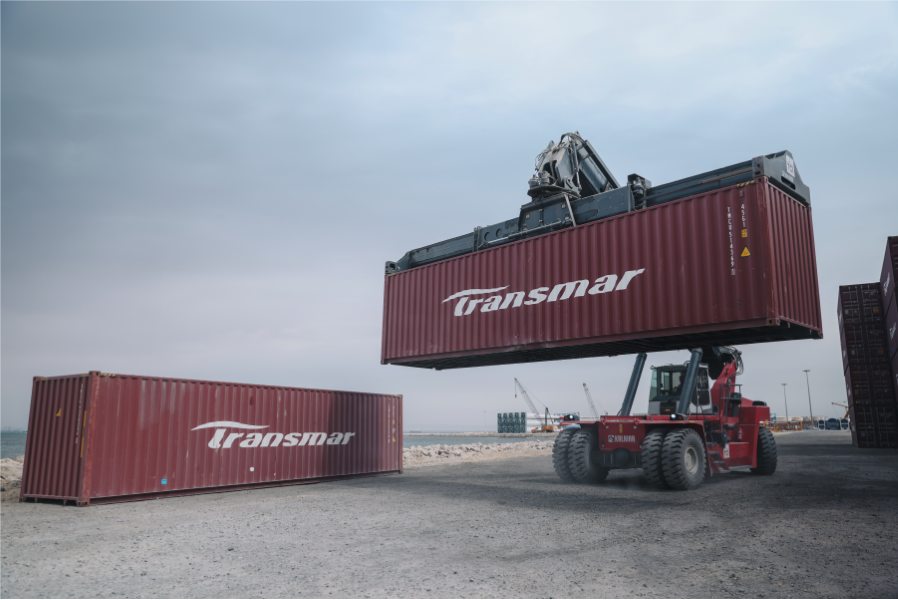
EnterpriseAM Logistics is available without charge thanks to the generous support of our friends at Hassan Allam Utilities and Transmar.

Were you forwarded this email? Tap or click here to get your own copy of Enterprise Logistics.

Want to send us a story idea, request coverage, ask for a correction, or otherwise get in touch? Reach out to us on logistics@enterprisemea.com.

DID YOU KNOW that we also cover Egypt, Saudi Arabia, and the UAE ***

This publication is proudly sponsored by

2

The Big Story Today

What does the escalating war mean for logistics in the region?

Three days in, and the region’s logistics channels are already under strain in the wake of the US-Israeli attack on Iran. While it is still too early to assess true economic impact, traffic through the Strait of Hormuz is thinning, ports are tightening security, and airlines are rerouting and suspending flights.

What to watch: Chokepoints under stress

Maritime traffic is grinding to a halt. Oil tanker movements through Hormuz have been halted, with roughly 240 vessels stopping near the chokepoint — most around Iran’s Bandar Abbas port. Around 130 of those ships were carrying cargo, but none loaded with crude. At present, total AIS traffic, not including dark transits, is down some 80% through the strait, according to data from maritime risk analyst firm EOS Marine.

Three ships were struck yesterday, including one hit by an unidentified projectile northwest of the UAE’s Mina Saqr in Ras Al Khaimah. A second strike reportedly hit a vessel near Sharjah, though its crew was all found to be safe, CNBC Arabia reports. Another incident took place near Oman as a small tanker, Skylight, which appears to be under US sanctions, was hit off its northern coast, with one crew member killed.

Containerships are also caught in the bottleneck, with around 170 containerships carrying a combined capacity of 450k TEUs — some 1.4% of the global maritime fleet — currently inside the strait, Linerlytica co-founder Hua Joo Tan said. At least 15 containerships either entering or exiting Hormuz have reversed course.

A full Hormuz closure would be very painful. Hormuz is the primary export route for crude and condensate pumped by Saudi Arabia and its neighbors, with tankers carrying 16.5 mn barrels per day (bbl / d) through the strait in 2024. The strait handles roughly 80% of the kingdom’s oil exports. Saudi Arabia has one key bypass: the 1.2k km East-West pipeline that stretches from Abqaiq near the Arabian Gulf to a Red Sea terminal at Yanbu, which has a capacity of up to 5 mn bbl / day, expandable by an additional 2 mn bbl / day on short notice.

Pundits think the strait won’t be closed off for long: “If the Strait of Hormuz were to close, the most likely scenario is that it would be temporary, potentially lasting one to two weeks,” Rystad Energy’s Jorge Leon tells EnterpriseAM, adding that a prolonged closure would carry severe geopolitical consequences and likely provoke a rapid international response. “That said, even a short-lived disruption would create a significant logistical backlog.”

Risk perceptions are also rising further south: Shipping lines could be spooked further if the Houthis follow through on their threat to “resume missile and drone attacks, making the Red Sea a standing variable in Tehran’s escalation toolkit,” former head of supply chain and transport industries at the World Economic Forum Wolfgang Lehmacher tells EnterpriseAM.

Any Houthi strikes would resonate beyond the Bab al Mandeb strait, shaping perceptions of risk from Suez to Hormuz and forcing carriers to recalibrate already thin buffers in global container and tanker fleets, Lehmacher said.

Most major shipping lines are already steering clear of the Suez Canal — in the weeks leading up to the conflict, most had been simply testing the waters, Port Said Chamber of Shipping head Adel Lamai tells EnterpriseAM. This included Maersk rerouting its ME11 and MECL services around the Cape of Good Hope, the maritime giant said in a statement Friday. French shipping outfit CMA CGM, MSC, and Germany's Hapag-Lloyd are doing the same until further notice.

For Egypt, hopes of luring traffic back to the canal will be pushed back, with shipping lines often looking for one to three months of stable and safe conditions following the end of any hostilities before sending back their larger vessels, a senior government official tells us. Despite progress being made in bringing back vessels through the canal in recent months, the canal’s target of bringing in USD 8-9.2 bn is now solidly out of reach.

What to watch: Energy flows and industrial supply risk

About 20% of global oil supply — some 21 mn barrels a day —alongside 20%of global LNG exports, passes through Hormuz. The chokepoint carries crude from Saudi Arabia, the UAE, Iraq, Kuwait, and Iran, as well as large volumes of Qatari LNG. Asian buyers — which source roughly a quarter of their LNG from Qatar, and are the largest importers of Gulf crude — are calling suppliers to line up alternatives. “The rational response is not to abandon Hormuz, but to accelerate route diversification and pipeline development,” Lehmacher told us.

Keep the gas flowing: To ensure supply keeps up with demand, Egypt’s Oil Ministry is moving to increase LNG bookings by an additional 20 shipments for some USD 1-1.5 bn, starting with 15 shipments this month, after Israel shut off 1.1 bcf/d of Egypt-bound gas, a government official tells EnterpriseAM.

Turkey is another pressure point in the mix: Ankara imports pipeline gas from Iran under a 9.6 bcm per year contract — though actual volumes recently fell below that level. If flows are curtailed further as the conflict escalates, Turkey — like Egypt — may have to step up LNG purchases, adding demand into an already tightening seaborne market, and putting more pressure on the super-chilled gas price.

What to watch: Port operations and suspensions

Services calling at GCC ports are expecting to face delays, reroutings, or schedule adjustments. “Carriers will instead omit these calls on east-west services and drop boxes at a least-worst alternative port for onward transportation by road,” freight intelligence platform Xeneta chief analyst Peter Sand explained.

Operational disruptions followed for UAE trade hubs, including DP World suspending all operations at Jebel Ali Port as a precautionary measure, halting all activities across the port’s terminals, Bloomberg reports.

Kuwait’s Ports Authority also suspended operations at Shuaiba, and Bahrain halted operations at Khalifa Bin Salman Port and limited activity at Sitrah Port to emergency movements only. Qatar’s Transport Ministry temporarily paused all maritime navigation.

What to watch: Risk premium and energy market repricing

War risk insurers have issued cancellation notices for ships transiting via Hormuz, with brokers telling the Financial Times that coverage will be renegotiated at higher rates than withdrawn outright — and prices could jump as much as 50%. Premiums had been running at about 0.25% of a vessel’s replacement value, meaning a USD 100 mn ship paid roughly USD 250k per voyage; that could now rise to USD 375k. Cargo war risk cover for oil and grain is also set to be reset this week.

“The cost of [covering] ships, containers, and crews, in addition to the refusal of some international ins. companies to [cover] war risks, will put pressure on global trade in the coming period,” former Suez Canal Authority chairman and Suez Chamber of Shipping head Abdel Qader Gaballah told EnterpriseAM. “Furthermore, exchange rate fluctuations and rising oil prices will all contribute to a significant wave of inflation,” he added.

What to watch: Airspace fragmentation and cargo network disruption

Widespread airspace closures and flight disruptions have spread through the region. Iran, Israel, Iraq, Qatar, Bahrain, and Kuwait completely shut their skies to commercial traffic, while the UAE, Syria, and Oman have severely restricted flights. Saudi Arabia is hosting GCC nationals stranded in its airports until conditions are suitable for safe repatriation.

The aviation industry could take a hit: “Any long-term disruption that continues to see the airspace from Kuwait to the UAE closed will have enormous repercussions for the industry. Nearly 100 mn people passed through Dubai alone last year, not to mention the massive cargo operation. Any extended conflict has the potential to upend a large part of the aviation industry,” Ian Petchenik, director of Communications at Flightradar24, tells EnterpriseAM.

Incidents at key airports:

  • Dubai International Airport (DXB): Minor terminal damage caused by an incident overnight prompted evacuation and emergency response;
  • Abu Dhabi’s Zayed International Airport: A drone attack resulted in one death and seven injuries;
  • Kuwait International Airport Terminal 1: A drone strike caused minor injuries and limited material damage, but the resumption of operations is underway.

What’s next?

Repeated stress on the Suez Canal and Hormuz could catalyze a new MENA-doctrine-proof corridor mix, Lehmacher tells us. “We are likely to see faster development of African, Atlantic, and Indian Ocean gateways, greater use of alternative Eurasian and intra-regional routes, and selective upgrading of Gulf and Eastern Mediterranean ports as contingency hubs for rerouting cargo and services when doctrines or security conditions change,” he adds. Ins., finance, and development capital will follow, with more granular, corridor-specific pricing that rewards better security and governance in other routes.

The outlook is more cautious for sectors with direct exposure to the conflict. “Egypt’s Red Sea resorts and airlines face direct demand destruction as regional airspace closures and travel risk aversion take hold,” Randa Hamed, managing director of Okaz Asset Management, tells EnterpriseAM. Import-dependent industries face an acute supply chain shock as freight costs surge, while “real estate construction projects with Gulf financing exposure could face some funding uncertainty” as the regional situation remains fluid.

3

M&A Watch

DAE buys into the mega-lessor tier with USD 7 bn Macquarie takeover

DAE seals Macquarie takeover: Dubai Aerospace Enterprise (DAE) — which is owned by the Investment Corporation of Dubai — inked a definitive agreement to acquire 100% of Dublin-based aircraft leasing company Macquarie AirFinance (MAF) in an allcash transaction with an enterprise value of USD 7 bn, the firm said in a press release. The takeover is expected to close in 2H, pending regulatory approvals.

The state-backed aviation player edged out a handful of rivals: The buyout — first flagged earlier this month — had reportedly also piqued the interest of Saudi Arabia’s AviLease and Qatar’s Lesha Bank, before DAE came out on top.

The move will see DAE’s combined fleet swell to over 1k aircraft, up from 678, leased to 191 airlines in 79 countries. Narrowbodies — currently in high demand due to 11-year backlogs at Airbus and Boeing — make up 70% of those assets.

Eyeing a credit upgrade: The company, which is rated BBB by Fitch, said it will fund the acquisition via a mix of debt and equity to preserve its investment-grade rating while supporting its push for a credit upgrade to lower future borrowing costs.

ADVISORS- Allen Overy Shearman Sterling and KPMG were financial advisors to DAE.

About Macquarie: Founded in 2006, MAF is owned by Macquarie Asset Management, PGGM Infrastructure Fund, and Australia’s Retirement Trust. Its portfolio comprises 191 Airbus aircraft (owned and on order) in addition to 134 Boeing jets, according to its website.

Our take

DAE managed to double its franchise in just 18 months through pure-play M&A. The MAF takeover follows its USD 2 bn acquisition of Nordic Aviation Capital in May, which alone added 252 assets to DAE’s fleet.

The allcash transaction is supported by a significant capital build-up. In 2025, DAE secured USD 3.9 bn in long-term debt, followed by a USD 600 mn bond in January that was 3.3x oversubscribed.

What could come next: Watch to see if this massive commitment to the leasing book accelerates the rumored sale of its Jordan-based MRO unit Joramco, as DAE sharpens its focus on high-margin asset management over labor-intensive engineering.

4

Also on Our Radar

DP World lands five-year logistics contract in Brazil

DP World secures five-year logistics contract in Brazil

DP World widens Brazil logistics footprint: DP World secured a five-year contract to manage a 5k sqm warehouse and production line supply operation for Suzano, a global pulp and paper producer, according to a press release published last week. Located in Espirito Santo, the facility supports Suzano’s consumer tissue division with an inbound capacity of 152 tons per day, with operations ranging from inventory management to product distribution.

IN CONTEXT- DP World’s terminal in Brazil’s Port of Santos handled a record 1.3 mn TEUs in 2025, with the company investing USD 306 mn to expand capacity to 1.7 mn TEUs by the end of 2026. The agreement builds upon DP World’s existing partnership with Suzano and is part of a broader plan to deepen its contract logistics footprint in Brazil, which totals 100k sqm of capacity.

Flydubai posts solid 2025 results

A good year for Flydubai: Low-cost carrier Flydubai saw a 14% y-o-y rise in its net income to AED 1.9 bn in FY 2025, while its total revenue rose 6% y-o-y to AED 13.6 bn during the same period, according to press release published last week.

On the operations front, Flydubai added 12 Boeing 737 aircraft to its fleet and expanded to nine new destinations. The firm’s overall network capacity also recorded a 6% boost — operating 126k flights and carrying 15.7 mn passengers. The airline also locked in its retrofit program, retrofitting eight next-generation Boeing 737-8 jets in 2025.

What’s next? The carrier expects to take delivery of 12 jets in 2026, expecting that “demand for travel remains healthy despite ongoing challenges,” CEO Ghaith Al Ghaith said.

REMEMBER– A capacity surge is coming soon. The airline made a massive 150 AirbusA321neos order late last year at the Paris Airshow. Flydubai also placed an order with US manufacturer Boeing for 75 jets of the narrow-body 737 Max model in November.


2026

MARCH

5-6 March (Thursday-Friday): CargoIS Forum, Miami, United States.

9-13 March (Monday-Friday): World Cargo Alliance Worldwide Conference, Singapore.

10-12 March (Tuesday-Thursday): World Cargo Symposium, Lima, Peru.

18-19 March (Wednesday-Thursday): IntraLogisteX, Birmingham, United Kingdom.

18-19 March (Wednesday-Thursday): Green Marine Transport Conference, Amsterdam, The Netherlands.

26 March (Thursday): Gulf Ship Finance Forum, Dubai, UAE.

APRIL

12-15 April (Sunday-Wednesday): Saudi Smart Logistics, Riyadh, Saudi Arabia.

16-17 April (Thursday-Friday): Global Supply Chain and Logistics Summit, Amsterdam, The Netherlands.

28-30 April (Tuesday-Thursday): Mediterranean Ports and Logistics, Porto, Portugal.

MAY

12-14 May (Tuesday-Thursday): The Airport Show, Dubai, UAE.

12-14 May (Tuesday-Thursday): Aviation Energy Forum (AEF), Paris, France.

19-21 May (Tuesday-Thursday): Ground Handling Conference (IGHC), Cairo, Egypt.

19-21 May (Tuesday-Thursday): Terminal Operations Conference & Exhibition, Hamburg, Germany.

JUNE

2-4 June (Tuesday-Thursday): ProPak Mena, Cairo, Egypt.

6-8 June (Saturday-Monday): IATA World Air Transport Summit, Rio de Janeiro, Brazil.

22-23 June (Monday-Tuesday): Decarbonizing Shipping Forum, Rotterdam, Netherlands.

Now Playing
Now Playing
00:00
00:00