Get EnterpriseAM daily

Turkey eyes local investors for Izmir port development after ending talks with AD Ports

1

What we're tracking today

TODAY: Local investors eyed for Turkey’s Izmir Port + SCZone to get more bonded storage

Good morning, nice people. It’s yet another brisk read this morning, with news on ports and storage projects from Turkey and Egypt. We also have updates on the re-launch of Unifeeder’s Egypt-Syria service, in he latest sign of Syria’s mercurial economic reintegration in the region. Let’s get the ball rolling.

HAPPENING TODAY-

The Africa Procurement and Supply Chain Leaders’ Conference is on its second day and will run until Friday, 29 August in Dubai. The conference will bring together global industry leaders, policymakers, and stakeholders to explore AI innovation in procurement and supply chain efficiency, sustainability, and risk management.

WATCH THIS SPACE-

#1- DP World's feeder service subsidiary Unifeeder is set to relaunch its Egypt–Syria service in September, according to a statement. The move comes as part of Unifeeder’s push to expand its footprint in the Eastern Mediterranean, which has seen it reach the sixth top spot for Mediterranean operators, clinching a market share of 4.3% as of 1 December 2024, up from 1.5% the previous year, according to data by Alphaliner.

ICYMI- Unifeeder launched the India Med Service (IMD) last month in a bid to boost connectivity between India, Egypt, and Turkey, offering its services every 10 days for dry and reefer cargo.

DP World is expanding in Syria: DP World landed a 30-year concession to develop and operate Tartus Port, Syria’s second largest port, last month. The logistics giant is set to invest USD 800 mn to redevelop the port — which will be operated under a build-operate-transfer model — with the goal of making it a key trade link in the Mediterranean.

IN OTHER DP WORLD NEWS- Drydocks World secures contract for FLNG facility in Mexico: Amigo LNG — a JV between Texas-based Epcilon LNG and Singapore-based LNG Alliance — awarded DP World’s Drydocks World an engineering, procurement, and construction contract (EPC) for what will be the world’s largest floating liquified natural gas (FLNG) liquefaction facility, Wam reports. The project includes converting two LNG carriers into floating storage units and building two new FLNG barges at Drydocks’ Dubai yard.

The details: Scheduled to begin operations in 2H 2028, the four-vessel facility off Mexico’s west coast will have a capacity of more than 4.2 mn tons of liquefaction capacity a year, making it the largest FLNG development worldwide. It will help enable direct LNG exports from Mexico to meet growing demand in Asia and Latin America.

#2- Iran to import Russian gas via Azerbaijan: Iran is reportedly close to resolving outstanding issues with the Russian energy giant Gazprom, paving the way for importing Russian gas via Azerbaijan in the “near future,” Tehran’s Ambassador to Russia Kazem Jalali told Moscow-based outlet Tass. The price of the imported fuel has been a major stumbling block to reaching an agreement, Jalali is quoted as saying.

ICYMI- Tehran reportedly agreed to import 55 bn cubic meters (bcm) of Russian gas per year — without settling on a price — last April, while Russian Energy Minister Sergei Tsivilev suggested that Moscow could supply some 1.8 bcm of natural gas to Iran as early as 2025, Reuters reported at the time. Jalali indicated Iran’s readiness to tranship Russian natural gas through its territory last year.

#3- SCA courts Hyundai to enhance its shipyard services: The Suez Canal Authority (SCA) is in talks with South Korea’s Hyundai Corporation to develop the Port Said Shipyard and set up an extension in Port Fouad to build eco-friendly vessels and recycle ship scraps, according to a statement. The project is still in the technical and preliminary feasibility studies phase.

ALSO- Hyundai Corporation has completed the necessary preliminary studies and technical proposals needed ahead of taking on the modernization of the Suez Shipyard Company. The two sides will ink an MoU within six months to begin the necessary studies and designs ahead of implementation.

MARKET WATCH-

#1- Oil prices took a dip this morning as the markets continued to brace for supply disruptions caused by developments in the Ukraine-Russia war, Reuters reports. Brent crude futures fell by USD 0.32 to reach USD 68.48 / bbl by 04.48 GMT, while US West Texas Intermediate (WTI) decreased by USD 0.33 to trade at USD 64.47 / bbl.

Meanwhile, Brent crude futures traded at a slight markdown to Dubai, slipping USD 0.3 / bbl below the Middle Eastern benchmark for the first time in four months, Bloomberg reports. Gulf crudes — the backbone of Asian imports — are typically pegged against Dubai, making the move a key indicator of shifting demand dynamics.

REMEMBER- The brief pullback in Indian purchases of Russian barrels opened space for Gulf grades — like Murban — to capture stronger demand. Brent and Dubai spreads were softening due to the expected jump in Opec+ supply in September and easing concerns over Russian supply disruptions.

Over in Iraq, refining capacity has inched up to 1.3 mn barrels per day (bbl / d) — up from 1.1 mn bbl / d in 2024, according to a statement. The increase comes as Iraq looks to meet domestic consumption, reduce reliance on imported petroleum products, and reach its refining capacity target of 1.65 mn bbl / d. The country is slated to become a net exporter of oil products — once it achieves fuel self-sufficiency — thanks to a series of refinery expansions set to go live this year at South Refineries Co.’s facilities in Basra, Maysan, and Najaf.

DATA POINTS-

#1- Saudi Arabia’s non-oil exports rose 5.6% y-o-y in 2Q 2025 to SAR 55.1 bn, according to preliminary data from the General Authority for Statistics (Gastat) (pdf). Total non-oil exports — including re-exports — were up 17.8% y-o-y at SAR 87.9 bn during the quarter, as re-exports soared 46.2% y-o-y to hit SAR 32.8 bn.

But a drop in oil exports caused the country’s trade balance to see a sharp dip in 2Q, shrinking by 56.2% y-o-y to a surplus of SAR 38.2 bn, with total imports rising to SAR 234.7 bn, while total exports fell to SAR 273.8 bn. This level is almost the lowest value since 3Q 2020.

Breaking it down: Crude exports dipped 15.8% y-o-y during the quarter to SAR 186 bn. Meanwhile, the share of oil exports out of total exports decreased by 6.8 percentage points to 67.9% over the same period. Meanwhile, the ratio of non-oil exports to imports inched up by 1.5 percentage points y-o-y to 37.3% in 2Q 2025, despite imports increasing 13.1%.

The main ports: Dammam’s King Abdulaziz Port received 26.2% of the Kingdom’s total imports in 2Q, followed by Jeddah Islamic Port (22.6%) and Riyadh’s King Khalid International Airport (13.4%).

#2- GCC leads Dubai Chamber exports in 1H: GCC markets accounted for 48.6% of all exports and re-exports for members of the Dubai Chamber of Commerce in 1H 2025, valued at AED 83.6 bn, according to a statement. Non-GCC Middle Eastern countries — excluding the GCC — accounted for 29% of exports and re-exports, reaching AED 49.9 bn during the same period.

***YOU’RE READING EnterpriseAM Logistics, the essential MENA publication for senior execs who care about the industry that connects producers and retailers to global markets. We’re out Monday through Thursday by 9:15am in Cairo and Riyadh and 11:15am in the UAE.

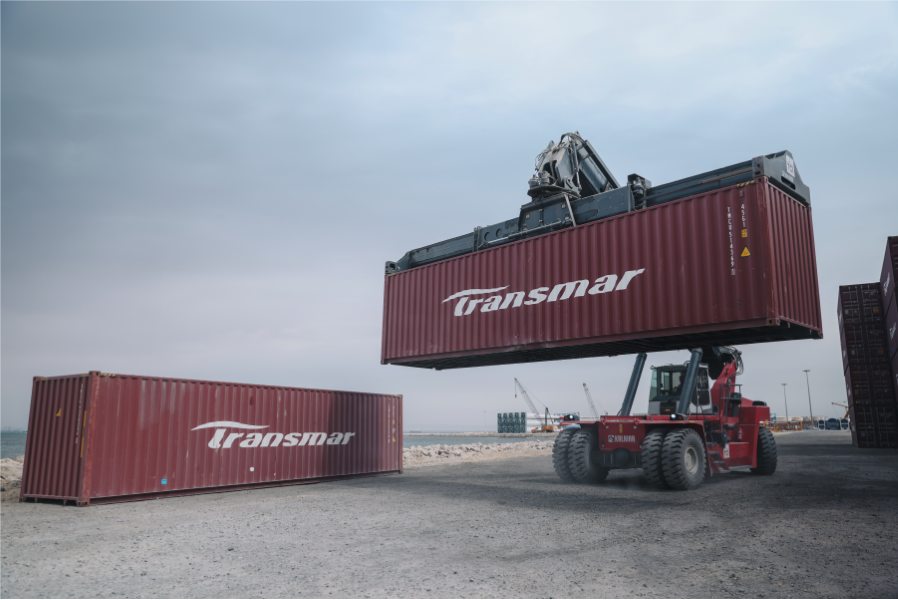
EnterpriseAM Logistics is available without charge thanks to the generous support of our friends at Hassan Allam Utilities, Transmar, and AK-Ships.

Were you forwarded this email? Tap or click here to get your own copy of Enterprise Logistics.

Want to send us a story idea, request coverage, ask for a correction, or otherwise get in touch? Reach out to us on logistics@enterprisemea.com.

DID YOU KNOW that we also cover Egypt, Saudi Arabia, and the UAE ***

CIRCLE YOUR CALENDAR-

Bahrain will host the Syria Recovery and Investment Forum on Sunday, 1 September and Monday, 2 September in Manama. The forum will host global industry leaders, policymakers, and stakeholders to discuss Syria's most urgent rebuilding needs — and attract investments — across key sectors including education, energy, housing, smart cities, ports, and metro systems.

Oman will host Transport Middle East on Monday, 1 September until Wednesday, 3 September in Salalah. The conference will host 35 international speakers and over 50 exhibitors from the maritime sector to discuss global transportation and logistics.

Saudi Arabia will host the Sustainable Maritime Industry Conference on Wednesday, 3 and Thursday, 4 September in Jeddah. The event is set to gather over 60 speakers and more than 3k participants to discuss maritime decarbonization, digital transformation, regulatory frameworks, capacity building, and sustainable practices.

Algeria will host the Intra-African Trade Fair on Thursday, 4 September until Wednesday, 10 September in Algiers. The fair will host over 75 countries and 2k exhibitors across several sectors to explore investment prospects and exchange information on trade between B2B and B2G.

Oman will host the Comex Global Technology Show on Sunday, 7 September and run till Wednesday, 10 September in Muscat. The event will host over 360 participants and 133 tech startups to show achievements in eGovernment, fintech, smart cities, health tech, agritech, and cybersecurity.

Saudi Arabia will host the Smart Ports and Logistics Transformation Summit on Monday, 15 September and Tuesday, 16 September in Jeddah. The summit will host over 40 global and local speakers, industry experts, and policymakers to explore smart port solutions, port operations, and logistics within Saudi Arabia.

Check out our full calendar at the bottom of this email for a comprehensive listing of upcoming news events and news triggers.


This publication is proudly sponsored by

2

Ports

Turkey seeks local investors for Izmir port after talks ended with AD Ports

#1- Turkey is seeking local investors to buy the operating rights for İzmir’s Alsancak port, Bloomberg reports, citing Turkish Transport and Infrastructure Minister Abdulkadir Uraloğlu. “We’ve made significant progress in talks with a few Turkish entrepreneurs who may have foreign partners for the operation of the Alsancak port in İzmir,” Uraloğlu is quoted as saying.

AD Ports is now out of the picture: The Abu Dhabi port operator was reportedly in talks since late 2023 to obtain a stake in the Turkish port in a USD 500 mn transaction — though negotiations fell through six months ago, according to the news outlet. The talks came after Turkey signed a trade agreement with the UAE back in 2023, securing then a pledge for USD 51 bn investments from the Gulf major.

REMEMBER- UAE heavyweights 💙 Turkish ports: DP World and Turkey’s Evyap Group entered a strategic merger and formed a joint venture, DP World Evyap, for the management of two major ports in Turkey’s Marmara region back in July 2024. Under the agreement, DP World acquired a 58% stake in Evyapport, and Evyap Group absorbed a 42% share of DP World Yarimca.

About the port: The port of İzmir — located in the country’s west on the Gulf of Izmir of the Aegean Sea — has the capacity to handle approximately 4k ships and 1.2 mn TEUs annually, Bloomberg reports, citing Turkey’s national railways authority and the port’s current operator.

3

STORAGE + WAREHOUSES

SCZone inks agreement for bonded storage projects in its zones

The Suez Canal Economic Zone inked agreements for a new logistics project with an Egyptian-Turkish consortium that included the state-owned Arab Organization for Industrialization, United Egy Group Shipping, as well as Turkish firms Sigma Logistics and Containers, and Logi Trade Company, according to a statement from the authority.

The new project will be known as Sigma Egypt and will be developed with investments of USD 4.2 mn. The project will develop two separate customs bonded yards for container storage, handling, and repair in West Qantara and Ain Sokhna. The two 50k sqm yards will be fully self-financed and create 100 direct jobs.

Not the latest for Egypt: DP World is building bonded warehouses and open yards for cargo containers close to Ain Sokhna Port as part of its USD 80 mn Sokhna Logistics Park project. Deeper in mainland Egypt, GB Logistics, an affiliate of congolomorate GB Corp, launched bonded warehouse services in Sadat City in May last year.

SOUND SMART: Bonded warehouses are government-authorized facilities that store goods for a limited time without being subject to duties, taxes, or customs fees. They’re particularly useful for temporary storage of goods moving internationally.

4

Spotlight

A look into the region’s leading low-cost carriers in Egypt, Saudi, and the UAE

Low-cost carriers’ (LCC) share of the region’s aviation market has doubled over the past decade, increasing at an average annual rate of 11.5%, according to an OAG report (pdf). To fully understand the underlying drivers and implications of this trend, we take a deep dive into three growing low-cost carriers in the region: Egypt’s Air Cairo, Saudi Arabia's flynas, and the UAE’s flydubai.

The LCC boom has helped make the Middle East aviation sector the second-fastest growing globally — hiking up 9% in the post-pandemic period since 2019, the report finds. South Asia comes first at an 11% growth rate.

More room for growth: The low-cost carrier market will always be growing, with rising demand for budget flights remaining a key driver for this continued growth, Air Cairo logistics specialist Khaled Nour El Din told EnterpriseAM. In 2024, LCC capacity stood at 29% of the region’s total market share — still below the global average of 34%, suggesting more prospects for growth in the region.

THE REGIONAL CONTENDERS

Flynas and flydubai are leading the region, each boasting the same capacity of about 14.4 mn one-way seats. This comes on the back of ever-expanding fleets, facilitating each of the carriers' impressive networks of destinations. Flynas owns 64 aircraft — mostly Airbus A320neos — that service some 1.5k flights to over 130 domestic and international destinations every week, whereas Flydubai boasts 88 Boeing 737 jets flying to 135 domestic and international locations across 58 countries.

Flynas is markedly the fastest-growing airline in the region, boasting a whopping 63% capacity increase in 2019-2024. Flydubai comes in as a close second, with a 56% growth in capacity during the same period.

This is only going up: The two regional contenders are also lining up major capacity expansions as competition for bigger market share heats up. For example, Flynas is set to boost its fleet by at least 280 jets by 2034, after it placed a USD 30 bn order with Airbus last July. Meanwhile, flydubai is also mulling a widebody jet order from Boeing numbering in the hundreds, according to unconfirmed reports in May.

OVER IN EGYPT

Egypt is emerging as a regional gateway across the board. Its airports function as a key link to the African market for regional budget carriers, with 96% of the Saudi state-owned airline flyadeal's capacity and 81% of flynas’ stopping in Egypt. It’s a similar story for the UAE’s Air Arabia with 73% of Africa traffic heading into Egypt.

The country also has its own up-and-coming players, like Air Cairo, which now counts 37 airplanes among its fleet. Its fleet by number of airplanes is now more than half of that currently run by EgyptAir, however, most of Air Cairo’s fleet is of much smaller models than the larger airplanes run by the national flag carrier. At present, Air Cairo operates nearly 200 weekly flights across 50 international and domestic locations, according to its website.

Success for Egyptian players won’t only be found in offering a cheaper service, but filling gaps in the aviation market. While EgyptAir focuses primarily on connecting Cairo with other capital cities, Air Cairo is looking to connect other international destinations with Egyptian destinations outside of the capital, Nour El Din told us.

To make this work, Air Cairo is going to need a bigger fleet. The budget carrier is planning to more than double its fleet to 70+ planes, Nour El Din told us. To put this in perspective, Air Cairo’s fleet only stood at just four planes five years ago.

Air Cairo is also lining up a launch for freight operations, Nour El Din told us. While the airline focuses on passenger operations at present, the airline has retained a license to expand into cargo operations. It also has a dedicated cargo team, which is working on securing the company’s first cargo aircraft, he added

IN-HOUSE MROs ON THE RISE

LLC players’ exponential growth is also hiking demand on the already very busy MRO facilities, prompting the new players to explore their own. Budget carrier flydubai broke ground on its USD 190 mn aircraft MRO facility in Dubai South in July, which is scheduled for operations by 4Q 2026.

Other players are catching up: Flynas is yet to have its wholly-owned MRO facility, but unconfirmed reports have said the company is exploring an in-house facility. This comes as Saudi Arabia ramps up MRO capacity, granting the first industrial MRO licenses to Middle East Aircraft Engines Company and Saudia Technic — a Saudia Group subsidiary — in February. Air Cairo is also eyeing its own aircraft maintenance, repair, and overhaul (MRO) facilities, which have until now been done by EgyptAir’s facilities. Air Cairo is mulling “opening its own MRO facilities in Hurghada,” Nour El Din said without disclosing further details.

REMEMBER- The MRO market is heating up: Global MRO market size reached USD 114bn in 2024, growing by 7.2% during the post-pandemic period, according to data from consulting outfit Oliver Wyman. Aging fleets, aircraft malfunctions, and jet delivery delays were among the top growth drivers in the MRO market, while materials shortages were the primary disruptor for the aviation industry, according to a survey by the firm. The MRO market is expected to grow annually by a steady average of 2.7% to reach USD 156 bn in 2035.

5

Also on Our Radar

Updates on shipping and cargo from Iraq and the UAE

SHIPPING + MARITIME-

Iraq launches corruption probe into oil berth projects: Iraq’s Prime Minister Mohammed Shia Al Sudani is referring several oil berth contracts awarded to foreign companies to the country’s Federal Commission of Integrity for investigation, according to a statement. The probe comes after a special committee tasked with auditing contracts for oil platforms at Iraqi ports found that certain contracting companies were “pursuing their [own] interest at the expense of the state and the public interest,” the statement said.

ICYMI- Iraq completed 97% of its rehabilitation project in Basra’s Khor Al Zubair Port in January2024. The project involved setting up a power station, a firefighting system, a 340-meter oil berth, and a 50k-sqm truck yard. Iraq launched the second phase of an oil berth project in Khor Al Zubair Port in November 2023.

ON A RELATED NOTE- Iraq’s Basrah Gas Co. received an LPG tanker with a 20k-ton capacity — named GasChem — at the second berth of the firm’s export terminal, according to statements here and here. The 188-m-long tanker will export an unspecified amount of semi-chilled gas from Iraq’s Port of Khor Al Zubair to China, INA reports, citing a statement by Iraq’s Oil Ministry Undersecretary Izzat Sabir Ismail. No timeline has been disclosed.

CARGO-

NLC + DP World partner on auto parts cargo: Pakistan’s state-owned National Logistics Corp. (NLC) and the UAE’s DP World have partnered to transport 38 tons of automotive spare parts — their first joint commercial cargo delivery — from Dubai to Tajikistan’s capital, Dushanbe, through Pakistan’s Karachi, state-owned outlet Radio Pakistan reports.

DP World ❤️ NLC: Earlier this year, the two formed a strategic partnership to modernize delivery and logistics systems in Pakistan, aiming to boost its trade and connectivity. DP World and NLC got the green light to form a JV focusing on road freight logistics back in March.

REFRESHER- NLC launched the Transports Internationaux Routiers multimodal logistics route in December 2024, linking the UAE to China via northern Pakistan’s Khunjerab Pass. The route enables NLC to deploy trucks from China’s Kashgar to Karachi — connecting them to DP World’s Karachi Port-Jebel Ali Port shipping service.

6

Around the World

South Africa shortlists private firms to operate freight-rail network

South Africa has shortlisted 11 private firms to manage its state-owned freight-rail network, Bloomberg reported on Friday. The shortlisted companies will now enter negotiations with South Africa’s rail operator, Transnet, for the management of its 41 routes and six corridors. The selected firm (or consortium) will be granted a 10-year operating license, but the government will retain ownership of the assets.

Big plans: Transnet is hoping to secure the private sector’s participation as part of a push to boost its freight capacity by an extra 20 mn tons of freight per year in FY 2026-2027 — aligning with the country’s target to increase rail transport capacity by 70 mn tons to reach 250 mn by 2029.

Why does South Africa want Transnet out of the picture? South Africa’s government has been trying to end Transnet’s monopoly over the 21.2k km network for years as the firm struggled with mismanagement, allegations of corruption, and dropping cargo volumes. Transnet could not afford the investments needed to upgrade the rail network, forcing the government to approve a USD 5.4 bn (ZAR 95 bn) in credit assurance against default for debts in the next five years, on top of the previously pledged USD 3 bn (ZAR 51 bn).

REMEMBER- Regional players have been eyeing South Africa and its ports: Red Sea Gateway Terminal International (RSGTI) is mulling a Transnet tender to develop and operate one of its fresh produce terminals at Durban port — and was set to make a USD 600 mn+ offer for the port. DP World is also considering investing in Transnet’s partial privatization, including USD 3 bn in Africa’s new port infrastructure over the next five years.


AUGUST

25-29 August (Monday-Friday): Africa Procurement and Supply Chain Leaders’ Conference, Dubai, UAE

31 August (Sunday): GCC Forum for Green Mobility, Salalah, Oman.

SEPTEMBER

1-2 September (Monday-Tuesday): Syria Recovery and Investment Forum, Manama, Bahrain

1-3 September (Monday-Wednesday): Transport Middle East 2025, Salalah, Oman.

3-4 September (Wednesday-Thursday): Sustainable Maritime Industry Conference, Jeddah, Saudi Arabia.

4-10 September (Thursday-Wednesday): Intra-African Trade Fair, Algiers, Algeria.

7-10 September (Sunday-Wednesday): Comex Global Technology Show, Muscat, Oman.

15 September (Monday): Logistics Leaders Saudi 2025, Riyadh, KSA

15-16 (Monday-Tuesday) September: Smart Ports and Logistics Transformation Summit, Jeddah, KSA

23 September (Tuesday): TradeWinds Shipowners Forum Greece 2025, Athens, Greece

24 September (Wednesday): Syria Recovery & Investment Forum, Abu Dhabi, UAE

24-26 September (Wednesday-Friday): Routes World, Hong Kong.

25 September (Thursday): World Maritime Day.

30 September-2 October (Monday-Thursday): Global Rail Transport Infrastructure Exhibition and Conference, Abu Dhabi, UAE.

OCTOBER

The International Maritime Organization (IMO) is set to formally adopt the Net-zero Framework this month, stipulating new fuel standards for ships and a global pricing mechanism for emissions.

1-2 October (Wednesday-Thursday): Saudi Maritime and Logistics Congress, Dammam, Saudi Arabia.

6-8 October (Monday-Wednesday): Maritime Cyprus Conference 2025, Limassol, Cyprus.

7-8 October (Tuesday-Wednesday): Global EV and Mobility Technology (GEMTECH) Forum, Riyadh.

13-17 October (Monday-Friday): The Marine Environment Protection Committee’s second extraordinary session, London, UK.

14-15 October (Tuesday-Wednesday): Investing in Africa Conference and Expo, London, UK.

15 October (Wednesday): Global Trade Review, Cairo, Egypt

28-30 October (Tuesday-Thursday): Borneo International Maritime Week, Sarawak, Malaysia.

NOVEMBER

3-6 November (Monday-Thursday): ADIPEC Maritime and Logistics Exhibition and Conference, Abu Dhabi, UAE.

4-6 November (Tuesday-Thursday): Air Cargo Forum, Abu Dhabi, UAE.

9-11 November (Sunday-Tuesday): TransMea Expo, Cairo, Egypt

17-21 November (Monday-Friday): Dubai Airshow, Dubai, UAE.

24-26 November (Monday-Wednesday): World Advanced Manufacturing Logistics Summit & Expo, Riyadh, Saudi Arabia.

DECEMBER

9-10 December (Tuesday-Wednesday): Rail Industry Summit, El Jadida, Morocco.

16-17 December (Tuesday-Wednesday): Saudi Airport Exhibition, Riyadh, Saudi Arabia.

JANUARY 2026

19-23 January (Monday-Friday): World Economic Forum Annual Meeting, Davos, Switzerland.

Now Playing
Now Playing
00:00
00:00