Get EnterpriseAM daily

Tadawul IPO of cold chain solutions maker CGS goes live

1

What we're tracking today

TODAY: Cold chain maker CGS is on Tadawul + CEVA Logistics’ acquisition of Borusan Tedarik is complete

Good morning, friends. The news cycle is showing no signs of slowing down, leaving us with an issue full to the brim as we head into the weekend. Leading today’s issues are IPO and M&A updates from Saudi and Turkey. PLUS: PMI reports from UAE, Qatar, and Lebanon — and all remained in expansion territories. Shall we?


Introducing EnterpriseAM MENA <> India

The flow of capital, talent, and trade between MENA and the Indian subcontinent is one of the most important economic stories in the world. And we’re telling it the way only we can.

EnterpriseAM MENA <> India is our new briefing, published every Monday, Wednesday, and Friday, to track the transactions, trends, and market moves connecting these two dynamic regions.

If you’re investing, trading, or scouting for your next big move in MENA or India, EnterpriseAM MENA <> India delivers the strategic intelligence you need — connecting insights emerging from the Arabian Sea to the Mediterranean to guide your decisions.

The first edition lands this Monday. Subscribe by tapping here.

HAPPENING TODAY-

The Adipec Maritime and Logistics Exhibition and Conference is on its last day today in Abu Dhabi. The event is part of the larger Adipec Exhibition and Conference, featuring 10 parallel conferences. The event brings together over 250k attendees, including high-level officials and executives from governments and the private sector, representing multiple industries like energy and logistics.

The Air Cargo Forum is on its last day today in Abu Dhabi. The forum — hosted by Etihad Cargo — will bring together air freight industry leaders, policymakers, innovators, and stakeholders to discuss industry solutions, tech, strategies, and collaborative initiatives for global air logistics.

WATCH THIS SPACE-

#1- Morocco launches public tender for Casablanca airport terminal: Morocco's National Airports Authority (ONDA) has launched a public tender for the construction of an air terminal at Casablanca’s Mohammed V International Airport for roughly MAD 10 bn (c. USD 1.1 bn), Moroccan outlet Hespress reports, citing a statement it has seen. The terminal’s capacity is initially expected to handle 20 mn passengers — expandable to 30 mn — and span 600k sqm. Construction progress by Moroccan engineering firm Stam — awarded a contract by ONDA back in May to lay some pre-construction groundwork — has now reached 40%, the news outlet reported.

ON A RELATED NOTE FROM MOROCCO- Moroccan flag carrier Royal Air Maroc (Ram) is working on finalizing a mega jet-order for up to 200 aircraft, with 2028 targeted for the beginning of deliveries, Reuters reports, citing comments made by CEO Abdelhamid Addou. The airline expects the deliveries to comprise some 15 new aircraft annually by 2028.

More details: The carrier launched a tender for the order back in April 2024 and is currently mulling orders from Boeing, Airbus, and Embraer, the newswire reported. Roughly one quarter of the order will consist of wide-body aircraft, with the rest comprising narrow-body planes. The order targets the addition of up to 200 aircraft by 2037.

For now, Ram will lease jets: Ram will mainly rely on leased aircraft for one-third of its fleet until 2028, as the aviation industry grapples with delivery delays and supply chain woes, Addou told Asharq Business. Through leasing arrangements, the carrier is looking to add 13 jets per year, Addou reportedly said.


#2- PIF-owned Aircraft lessor AviLease began marketing for an issuance of five-year USD-denominated bonds, according to a regulatory document seen by Reuters. The initial price for the benchmark issuance was set at 140 basis points above US Treasuries. The aircraft lessor could raise at least USD 500 mn from its initial bond under its larger USD 2 bn program, reports suggested last September.

Who’s in: The aircraft lessor picked Citigroup and Mitsubishi UFJ as joint global coordinators. They will also act as active bookrunners and lead managers for the issuance, alongside Abu Dhabi Commercial Bank, BNP Paribas, First Abu Dhabi Bank, HSBC, and Mizuho Financial Group.

Passive bookrunners will include Kuwait’s Ahli United Bank, Saudi Fransi Capital, Crédit Agricole, Emirates NBD Capital, GIB Capital, JP Morgan, Morgan Stanley, Natixis, Riyad Capital, and SNB Capital.

AviLease has big ambitions: Launched three years ago, the company aims to be one of the top 10 in the leasing industry by more than doubling its balance sheet to USD 20 bn by 2030, CEO Ted O’Byrne said in August. With USD 8 bn portfolio, of up to 200 aircraft leased to 50 airlines in 30 countries, it targets expanding its footprint to include the US, India, and Asia, focusing on Saudi Arabia, which holds 20% of its booked aircraft.


#3- Saudi Telecom Company (STC) is among bidders in Syria’s SilkLink data cables, a project set to connect Saudi Arabia to Europe via Syrian territory, Semafor reported yesterday, citing people it says are familiar with the matter. The USD 500 mn project is expected to allow data to bypass the Red Sea, which is the primary route for internet traffic between the Middle East, Europe, and the US, the sources added. Syria is set to award the project this month to one of the bidders, which includes STC as well as consortia backed by Jordanian, Kuwaiti, Omani, and UAE firms.

The rationale: The proposed SilkLink will reduce dependence on the concentrated Red Sea’s submarine cables, which saw repeated failures, including most recently in September, when it disrupted internet access in the region and Asia for days. The new cables will also reduce latency and provide an alternative connection to Europe through Jordan, Syria, and potentially Israel.


#4- Turkey might still be in on Russian nat.gas: Turkey’s state-owned Botas is in talks with Russian energy giant Gazprom to maintain the supply of natural gas via pipeline agreements, as deliveries of roughly 22 bn cbm per year are set to expire at the end of 2025, Bloomberg reports, citing unnamed sources. Ankara and Moscow are reportedly aiming to keep incoming supplies at around the same level, the sources said.

This comes after Turkey rallied LNG supply pacts from Western players, in a bid to replace Russian imports that the country was reported to be letting go amid US pressure on buyers of Russian energy products. Earlier in September, Turkey sealed agreements for more than 15 billion cubic metres (bcm) of LNG for 2026 through 2028, and two other long-term supply pacts for some 10 bcm.


#5- Iraq’s state-owned Somo has cancelled three crude oil cargoes from Russia’s Lukoil, amid concerns over US and UK sanctions on the firm, two market sources told Reuters. The cargoes were scheduled for loading this month.

Background: The US Treasury Department sanctioned Russia’s two largest oil firms Rosneft Oil Company and Lukoil last month. Subsequently, the US Treasury Department has given firms until 21 November to cease transactions with Lukoil.

SOUND FAMILIAR? Lukoil moved its regional trading business from Litasco Middle East DMCC (LME) to a newly formed Dubai entity, Alghaf Marine DMCC, back in August. The move followed UK sanctions on LME and EU measures against its shipping arm, Eiger Shipping, in July after it reportedly considered sanctioning LME itself back in May.

MARKET WATCH-

#1- Oil prices went up this morning as concerns of oversupply dissipate, Reuters reports. Brent crude futures increased by USD 0.17 to USD 63.69 / bbl as of 04:55 GMT, while US West Texas Intermediate (WTI) rose USD 0.18 to trade at USD 59.78 / bbl. The surge came after signs of weaker demand brought rates to a two-week low during a previous trading session.

Meanwhile, Opec+ crude output rose in October to some 28.43 mn bbl / d, around 30k bbl / d above September’s figures, according to a Reuters survey. The increase was driven mainly by Saudi Arabia and Iraq and comes even as Opec+ started implementing additional curbs on select members to offset previous overproduction.

Mixed signals: Five Opec producers — Algeria, Iraq, Kuwait, Saudi Arabia, and the UAE — were expected to collectively boost supply by 86k bbl / d in October before accounting for 140k bbl / d in compensation cuts from Iraq and the UAE. The survey found their actual combined increase hit 114k bbl / d, with production estimates for Iraq and the UAE remaining disputed.

Some fluctuation: Opec secondary-source data suggests adherence to quotas, while other trackers, including the International Energy Agency, see materially higher flows.

REMEMBER- Opec+ had agreed on a 137k bbl / d increase for October, unwinding the 1.65 mn bbl / d voluntary cuts layer, after they initially unwound the full 2.2 mn bbl / d layer by end-September. It is set to pause hikes in 1Q 2026 after following through with a supply increase in November and December.

IN THE LONG RUN- Saudi Arabia’s oil giant Aramco is expecting oil and gas demand to keep growing for decades to come, buoyed by consumption in developing markets, particularly in Asia, CEO Amin Nasser said in an interview with CNBC. Demand will grow by 1.1-1.3 mn bbl / d this year and almost the same next year, he said.

A chunk of capital spending is also going towards AI champion Humain, amid efforts to transform the Kingdom into a global leader in the field, Nasser told CNBC. Aramco is targeting capital expenditures of USD 52-58 bn this year.


#2- Baltic index continues to rise: The Baltic Exchange’s dry bulk sea freight index — which tracks rates for the capesize, panamax, and supramax vessel segments — rose 2.3% to 2,003, buoyed by bigger segments. The capesize increased by 4.7% to 3,084, while the panamax index gained 0.3% to 1,739. The smaller supramax index shed 0.3% to 1,307.

DATA POINTS-

#1- A total of 229 ships “returned” to the Suez Canal in October — marking the highest monthly traffic since ships began diverting the bottleneck in late 2023, according to a statement. The canal recorded a nearly 1.7% rise in transits to 4.4k ships — with a total of 185 mn tons — between July and October 2025.

#2- Saudi Arabia Railways freight operation transported over 7.5 mn tons of goods and minerals in 3Q 2025, according to a statement. The freight operations resulted in the diversion of 359k truck trips from the Kingdom’s roads during the period, leading to a decline of 32 mn liters of fuel consumption and cutting down over 84k tons of carbon emissions annually. The state-owned operator also carried over 2.8 mn passengers during the same period.

***YOU’RE READING EnterpriseAM Logistics, the essential MENA publication for senior execs who care about the industry that connects producers and retailers to global markets. We’re out Monday through Thursday by 9:15am in Cairo and Riyadh and 11:15am in the UAE.

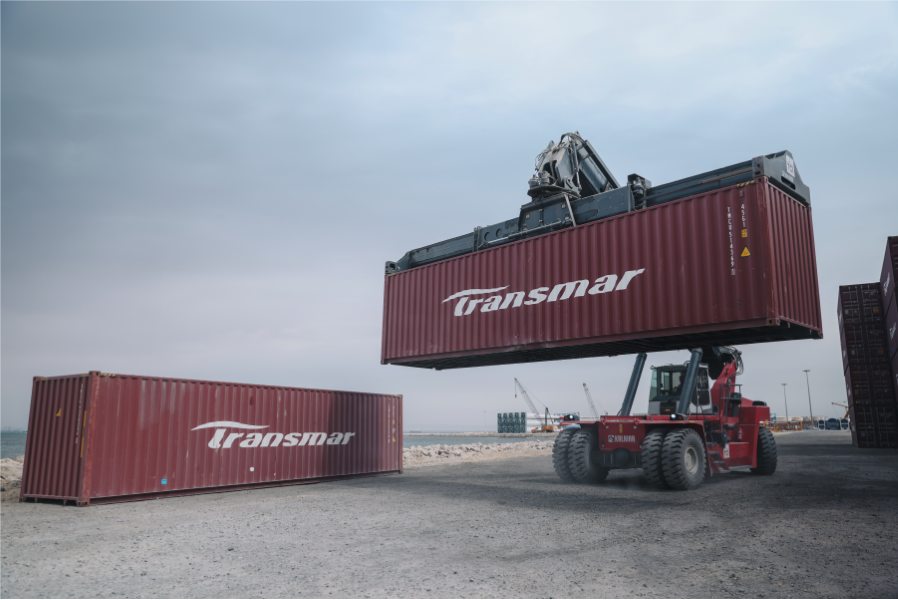
EnterpriseAM Logistics is available without charge thanks to the generous support of our friends at Hassan Allam Utilities, Transmar, and AK-Ships.

Were you forwarded this email? Tap or click here to get your own copy of Enterprise Logistics.

Want to send us a story idea, request coverage, ask for a correction, or otherwise get in touch? Reach out to us on logistics@enterprisemea.com.

DID YOU KNOW that we also cover Egypt, Saudi Arabia, and the UAE ***

CIRCLE YOUR CALENDAR-

Egypt will host the TransMea Expo on Sunday, 9 November until Tuesday, 11 November in Cairo. The expo will host regional and international players in the transport industry to explore tech, new smart solutions, and products for transport and logistics services.

The UAE will host the Dubai Airshow on Monday, 17 November until Friday, 21 November in Dubai. The event will host over 1.5k exhibitors and 148k industry experts from over 150 countries, to discuss air mobility, new MRO breakthroughs, sustainable aviation, startups, and new tech for aircraft simulations.

Saudi Arabia will host the ShipTek International Conference and Awards on Tuesday, 18 November in Al Khobar. The conference will host policymakers, organizations, suppliers, and experts on maritime, offshore, and oil and gas.

Egypt will host the International Procurement Supply Chain Conference on Saturday, 6 December in Cairo. The event will gather over 1k delegates, more than 400 organizations, and over 30 global speakers to discuss the future of trade through keynotes and panel discussions. The discussions will center on Egypt’s transformation in the logistics sector, the future of smart ports and supply chains, as well as digital ecosystems.

Check out our full calendar at the bottom of this email for a comprehensive listing of upcoming news events and news triggers.

This publication is proudly sponsored by

2

IPO Watch

Tadawul IPO of coldchain solutions manufacturer CGS is live

Coldchain tech outfit CGS launches IPO: The institutional offering of the Saudi-based Consolidated Grünenfelder Saady Holding’s (CGS) IPO opened yesterday, and will run until Tuesday, 11 November, with the cold chain manufacturer marketing shares in a price range of SAR 9.5-10, it said in a press release (pdf). The price guidance implies a market cap of around SAR 1 bn at listing and could see selling shareholders raise up to SAR 300 mn in gross proceeds, according to our calculations. CGS holds around 45% of Saudi Arabia’s automotive refrigeration and vehicle-body solutions market.

REFRESHER- CGS secured regulatory approval to take a 30% stake public on Tadawul back in July. Some 30 mn existing shares will be up for grabs in a secondary offering open to both institutional and retail investors. Substantial shareholders are selling down their positions to a combined 70% stake in the company, subject to a six-month lockup period, and will rake in all the proceeds (excluding SAR 22 mn in IPO-related expenses), according to the prospectus (pdf).

Institutional investors can apply for a maximum of 4.9 mn shares each and a minimum of 100k. Retail investors, meanwhile, could receive up to 20% of the offer under a clawback mechanism. Their subscription period runs 26-27 November, during which they can book up to 250k shares each, with the minimum amount set at 10 shares. Final allocations are due 3 December.

A snapshot of its earnings: CGS posted a net income of SAR 49.2 mn in FY 2024, up 66.5% y-o-y. Its revenue came in at 364 mn over the same period, marking a 48.9% y-o-y gain.

Dividend track record: The company said it intends to maintain annual dividend distributions, subject to cashflow, and future capital requirements. CGS and its subsidiaries have declared SAR 18.2 mn in dividends for the nine months to December 2024, after paying SAR 21.8 mn in FY 2024. CGS Riyadh has already approved three interim payouts for 2024-2025, totaling SAR 15 mn, while the parent company declared SAR 3.2 mn in October 2024 to settle partner balances.

ADVISORS- Aljazira Capital is acting as financial advisor, lead manager, underwriter, and joint bookrunner alongside Arqaam Capital; Himmah Capital as advisor to the selling shareholders; Latham & Watkins as legal counsel to the company; PwC as financial due diligence advisor; Ernst & Young as auditor; and Euromonitor International as market consultant.

Receiving agents include Aljazira Capital, BSF Capital, Al Rajhi Capital, SNB Capital, Riyad Capital, Albilad Investment Company, Alistithmar Capital, Derayah Financial, Alinma Capital, ANB Capital, Yaqeen Capital, Alkhabeer Capital, SAB Invest, Sahm Capital, GIB Capital, Musharaka Capital, EFG Hermes KSA, and Awaed Alosool Capital.

3

M&A Watch

CEVA Logistics wraps 100% acquisition of Turkey’s Borusan Tedarik

CMA CGM subsidiary closes acquisition of Borusan Tedarik: CEVA Logistics — a subsidiary of France-based shipping giant CMA CGM — has finalized its full acquisition of logistics and supply chain solutions firm Borusan Tedarik for USD 383 mn, according to a press release. The transaction earned all regulatory approvals before closing.

A different closing figure: CEVA Logistics previously signed an agreement with Turkish firm Borusan Holding to fully acquire Borusan Tedarik for USD 440 mn lastApril — a markedly larger figure than the one confirmed in the latest announcement. The transaction entails CEVA taking over Borusan Tedarik’s subsidiaries across Germany, Bulgaria, Hong Kong, and China.

A plus for CEVA: The acquisition is expected to increase CEVA Logistics’ warehousing and distribution capacity in Turkey by adding nearly 570k sqm to its current 620k sqm warehouse space. CEVA’s ocean capacity will also increase by 25%, and its air capabilities will be among the top five in Turkey, while ground transports are expected to hit nearly 1 mn trips domestically per year. Activities relating to Borusan Port will remain under the ownership of Borusan Holding.

About Borusan Tedarik: The supply chain solutions firm Borusan Tedarik is the leading entity behind Borusan Lojistik, which was minted in 2000 as an integrated logistics player. The company provides domestic and global logistics services, including finished vehicle logistics, contract logistics, ground transport, and air and sea freight solutions. The brand is behind the eTA platform, which is an online marketplace that connects shippers (cargo owners) directly with truck/trailer drivers.

4

Data Centers

G42 capitalizes on its Microsoft partnership to add 200 MW of data center capacity through Khazna

UAE’s AI firm G42 partnered with Microsoft to add 200 MW of data center capacity through its subsidiary Khazna Data Centers, serving as part of the US tech giant’s plan to invest USD 15.2 bn in the UAE between 2023 and 2029, according to a press release. This upgrade is expected to come online before the end of 2026.

We knew this was in the works: Microsoft and its partners previously announced their intention to invest USD 5.1 bn in the UAE’s data center regions over the next four years, in an agreement that built on an earlier USD 1.5 bn investment in G42.

It’s all part of a bigger plan: Microsoft plans to spend more than USD 7.9 bn in the UAE between 2026 and 2029. This includes over USD 5.5 bn in capital expenses for the ongoing and planned expansion of its AI and cloud infrastructure. The firm invested over USD 7.3 bn in the country so far, with over USD 4.6 bn dedicated to advanced AI and cloud data centers.

5

Purchasing

A look at UAE, Qatar, and Lebanon’s non-oil sectors in October

Breaking down non-oil private sector performance in the UAE, Qatar, and Lebanon: Purchasing Manager Indices (PMIs) tracking non-energy sectors were in the green territory in the three countries in October, as they all expanded at a slower pace than the previous month.

REMEMBER- The all-important 50.0 mark is the threshold separating contraction from growth. Anything above 50 denotes expansion, while anything below indicates contraction.

UAE-

The UAE’s non-oil private sector grew at a softer pace in October, though remained above mid-year lows, supported by stronger business activity and a rise in new orders. The country’s seasonally adjusted S&P Global PMI (pdf) dipped to 53.8 in October, from 54.2 a month earlier.

New orders soared in October, signalling the second consecutive month of demand recovery. This trend followed a low point for new business recorded in August, which was the weakest in four years. Firms attributed the expansion to an uptick in client numbers on the back of favorable economic conditions and expanded marketing efforts, as well as business intakes from foreign clients.

Growth remained above the survey’s historical trend for the third consecutive month in October, lifted by strong sales and the launch of new projects.

Purchasing activity inched up, with firms reporting the biggest increase in input buying since June, which contributed to stabilized inventory levels, following a downward trend throughout 3Q.

Input costs saw a modest increase during October as inflation cooled for the second month in a row, with only 4% of the surveyed firms reporting cost hikes. In turn, output inflation remained stable for the second consecutive month despite a marked increase in supplier prices, wages, and transport costs.

Backlog accumulation accelerated in October, reversing a three-month trend. This was mainly driven by capacity constraints due to elevated new business and the administrative delays.

Job creation grew at its slowest rate since March, which “partly reflected a relatively subdued level of business confidence,” S&P Global Senior Economist David Owen wrote in the report. “In fact, the latest survey revealed that firms were the least optimistic in nearly three years,” he adds.

Why the drag? The main reason can be linked to a slowdown in hiring overseas labor, as well as a dip in construction projects across the GCC, which means fewer jobs are being created, TS Lombard analyst Hamzeh Al Gaood told EnterpriseAM, explaining that while absolute numbers are still growing, annual growth rates are slowing down. The UAE — outside of Dubai — is also still affected by oil prices and expectations of a supply glut, which could explain the more bearish sentiment, he added.

QATAR-

Non-oil activity in Qatar expanded at a softer pace again in October, with new business dipping at its fastest pace since January 2023, according to the S&P Global PMI (pdf). The country’s headline index fell to 50.6 in October, down from 51.5 in September, marking the lowest level in nine months, and the 22nd consecutive month that the index has remained above the 50.0 no-change threshold.

Key factors driving the negative dip: “The moderation in overall performance since September reflected a renewed decline in total activity and the fastest reduction in new work since January 2023.” S&P Global’s Trevor Balchin stated in the report. “These negative influences on the headline PMI, along with shorter suppliers' delivery times, were offset by a further rapid gain in employment and, to a lesser extent, rising input stocks," he added.

New orders saw their fifth consecutive monthly decline in October, weighing on business activities amid a notable plummet in construction demand.

Output in the non-oil private sector marked its second drop in three months in October. Sub-sector data attributed the decline to a sharp slip in construction activity, according to the report.

Job creation accelerated at its third-highest rate in the survey's history. Companies expanded their teams in an attempt to boost their capacity and fulfill the heavy workloads. Employment showed an increase among the four monitored sectors, which include manufacturing, construction, wholesale, retail, and services, with manufacturing topping the records for the third consecutive month.

Purchasing activity grew for the fourth consecutive month, resulting in a “sustained rise in inventories.” Supply chains showed more resilience in October, with lead times hitting their fastest degree since May, “as firms reported competition among vendors,” the report explains.

Input costs saw a slight drop in October despite the rise in wage costs and average purchase prices. To maintain competitiveness and attract senior talent, Qatari companies have raised staff wages. Meanwhile, prices charged for goods and services recorded a significant decline, reversing September’s spike, according to the report.

Firms’ sentiment for business activity for the year ahead softened to a three-month low, but remained positive, despite the drop in output and new orders rates. Companies pointed to a rebound in construction, a resilient real estate sector, population growth, international investment, and tourism as key factors behind their positive outlook.

The GCC at large: “The non-oil activity in the Gulf region remained robust, but it is expected that it will not last any longer, particularly for Saudi Arabia”, Capital Economics’ James Swanston wrote in a research note seen by EnterpriseAM. “Weaker oil export receipts will reinforce the need for fiscal consolidation and will more than offset any boost from looser monetary policy, resulting in softer non-oil GDP growth,” he added.

LEBANON-

The Lebanese non-oil private sector continued to expand in October, but at a slower rate than the month prior, according to Blominvest Bank’s Lebanon PMI (pdf). The country’s headline PMI inched down to 50.6, compared to 51.2 in September.

New orders and business activity also showed softer growth compared to September, which is attributed to rising uncertainty. Export orders, meanwhile, continued to decline for the eighth consecutive month, although October’s drop was “only marginal and the softest” since the decline began in March.

On a positive note, job creation recorded its first increase since February, with employment in the private sector rising at the fastest pace seen in 12 years. Consequently, October saw a rise in wage costs, although the increase was marginal.

Input costs grew at the beginning of 4Q, but at a slower pace than the previous month, as businesses spent more on food, transportation, commodities, and electrical components. However, price acceleration eased compared to September, causing firms to be “less aggressive in their own price setting.”

Output volumes hit an eight-month peak amid the slowed price inflation. Firms expanded their stocks of inventory, continuing the trend started in July. The pickup in inventories came despite supply chain disruptions leading to an increase in average lead times, which are now at their longest in nearly a year, caused by delays in customs.

Sentiment still lagging: Even as they broadly reported better conditions in October, “surveyed businesses turned more pessimistic towards the year-ahead outlook for business activity, with concerns of an escalation in regional tensions leading to apprehension among Lebanese companies.”

6

Also on Our Radar

Oman LNG + Spain’s Naturgy explore future LNG sale agreement

TRADE-

Oman, Spain ink MoU over future LNG sale: Oman LNG has inked an MoU with Spain’s Naturgy to discuss a long-term LNG purchase agreement of up to 1 mn tons of the super chilled fuel per year starting 2030, the Oman News Agency reports. According to the MoU, Oman LNG will also consider purchasing LNG cargoes from the Spanish energy player to meet the European market demand.

There’s more: The parties seek to build an LNG carrier in partnership with Oman logistics giant Asyad Shipping, as well as study the possibility of tapping into European regasification terminals and associated gas pipelines to bolster LNG imports, the news outlet reported.

AUTONOMOUS LOGISTICS-

7X + Zelostech launch autonomous logistics vehicles JV: Dubai-based, logistics-focused investment firm 7X has launched AutoLogix Smarttech — a joint venture (JV) with Singapore-based autonomous vehicle specialist Zelostech, according to a press release. The JV aims to create an integrated logistics ecosystem leveraging Level 4 autonomous vehicles to transport goods between logistics hubs.

Phase one will see AutoLogix deploy driverless Level 4 vehicles to support the delivery operations of 7X’s logistics arm EMX. Expansion plans will target the GCC and wider Middle East region, with offerings including last-mile delivery, mobile smart locker networks, and air freight integration.

RAIL-

Russia is set to begin construction of the Rasht-Astara railway by the start of 2026, with related land acquisitions set to wrap up by late 2025, Iranian outlet Mehr News reports, citing Roads and Urban Development Ministry head Amin Tarfa. The Russian contractor has reportedly taken up control of 35% of the land required for the railway.

What railway? Russia pledged EUR 1.6 bn to build the railway, the construction of which will complete the 7.2k-km International North-South Transport Corridor, which is a network of ship, rail, and road routes connecting South Asia to Europe. Azerbaijan and Iran approved a cooperation plan to build and operate the Astara rail cargo terminal by the end of 2025. The corridor is expected to move around 15 mn tons of cargo per year once it is fully completed.

ROADS-

The UAE is working on a package of AED 170 bn in roads and transport projects aimed at easing traffic congestion, consisting of both expansions of major roads and construction of new ones, as well as new modes of public transport, by 2030, state news agency Wam quotes Energy and Infrastructure Minister Suhail Al Mazrouei as saying at the UAE annual government meetings. The plan includes:

  • Studying a fourth, 120km federal highway spanning 12 lanes;
  • adding three lanes to Etihad Road, increasing its capacity by 60%;
  • and expanding Emirates Road to 10 lanes under an AED 750 mn project.

ZONES-

Garment company H&L has become the first Korean company to invest in the Qantara West Industrial Zone, inking a contract with the Suez Canal Economic Zone to build a USD 12 mn factory for sportswear and other ready-made garments, according to a statement from the zone. The project will create 2k direct jobs

DATA POINT- Total investments in the Qantara West Industrial Zone have reached USD 1.2 bn, covering 45 different projects spanning 2.8 mn sqm, and creating 62.2 jobs.

AVIATION-

Menzies Aviation loses Kuwait airport concession: Kuwait's Directorate General of Civil Aviation (DGCA) has informed Agility Logistics’ ground handling subsidiary Menzies Aviation that it will no longer be operating ground handling services at Kuwait International Airport after its current contract ends, according to a disclosure (pdf). This comes after Menzies had previously been notified by the DGCA that it had been selected for the technical and financial tender for the new 10-year concession, the disclosure said. The concession would have involved up to KWD 220 mn in foreign direct investment.

SHIPPING + MARITIME-

The Saudi Ports Authority (Mawani) added Zhonggu Logistics’ new CRX shipping service to Jeddah Islamic Port, linking it to five key ports across the region and Asia, it said in a statement yesterday. The service — with a capacity of 1.5k TEUs — connects Jeddah to the ports of Ningbo and Nansha in China, Aden in Yemen, Sokhna in Egypt, and Aqaba in Jordan.

7

Around the World

Maersk taps China’s New Times Shipping for a batch of up to 12 LNG ships

Maersk orders LNG ships from China shipyard: Danish shipping giant Maersk has reportedly ordered eight LNG dual-fuel containerships — each for roughly USD 193 mn — from Jiangsu-based New Times Shipbuilding with options for four more, Splash247 reports, citing information from brokers. The vessels — a capacity of 18k TEU each— are expected to be delivered between 2028 and 2029. Maersk officials have not confirmed the orders.

Maersk + China strike again: Maersk ordered six LNG dual-fuel vessels from Chinese shipyards, including New Times Shipbuilding last year. Each ship had a capacity of 16k TEU and was valued at USD 200 mn per unit, slated for delivery in 2028. The contract also included the option for six more vessels.

China on the global maritime stage: Chinese shipbuilding orders declined 68% y-o-y to 26 mn deadweight tonnage (DWT) in 1H 2025, following fears over US fees on Chinese-built ships stopping in US ports. Meanwhile, shippers like Maersk were reportedly angling to diversify away from China in terms of vessels and routes. With the dreaded levy on Chinese ships paused for one year— as well as a reciprocal levy on US-made vessels — the shipping industry’s outlook on Chinese-made vessels remains uncertain.


NOVEMBER

3-6 November (Monday-Thursday): Adipec Maritime and Logistics Exhibition and Conference, Abu Dhabi, UAE.

4-6 November (Tuesday-Thursday): Air Cargo Forum, Abu Dhabi, UAE.

9-11 November (Sunday-Tuesday): TransMea Expo, Cairo, Egypt.

11-13 November (Tuesday-Thursday): Freightcamp, Bangkok, Thailand.

17-21 November (Monday-Friday): Dubai Airshow, Dubai, UAE.

18 November (Tuesday): ShipTek International Conference and Awards, Al Khobar, Saudi Arabia.

DECEMBER

6 December (Saturday): International Procurement Supply Chain Conference, Cairo, Egypt.

9-10 December (Tuesday-Wednesday): Rail Industry Summit, El Jadida, Morocco.

16-17 December (Tuesday-Wednesday): Saudi Airport Exhibition, Riyadh, Saudi Arabia.

JANUARY 2026

19-23 January (Monday-Friday): World Economic Forum Annual Meeting, Davos, Switzerland.

27-28 January (Tuesday-Wednesday): SkyMove Air Cargo MENA, Riyadh, Saudi Arabia.

27-28 January (Tuesday-Wednesday): Middle East ProcureTech Summit, Dubai, UAE.

FEBRUARY 2026

4-5 February (Wednesday-Thursday): Breakbulk Middle East, Dubai, UAE.

4-5 February (Wednesday-Thursday): MRO Middle East, Dubai, UAE.

15-17 February (Sunday-Tuesday): World Advanced Manufacturing Logistics Summit and Expo, Riyadh, Saudi Arabia.

25-27 February (Wednesday-Friday): Air Cargo Africa, Nairobi, Kenya.

MARCH 2026

10-12 March (Tuesday-Thursday): World Cargo Symposium, Lima, Peru.

Now Playing
Now Playing
00:00
00:00