Logistics (MENA)
  Egypt Edition
  UAE
UAE  Saudi Edition
  MENA <> India Corridor
  Climate (MENA)

 Share Issue





Good morning, friends. We have a relatively packed issue for you this morning, so let’s dive in.
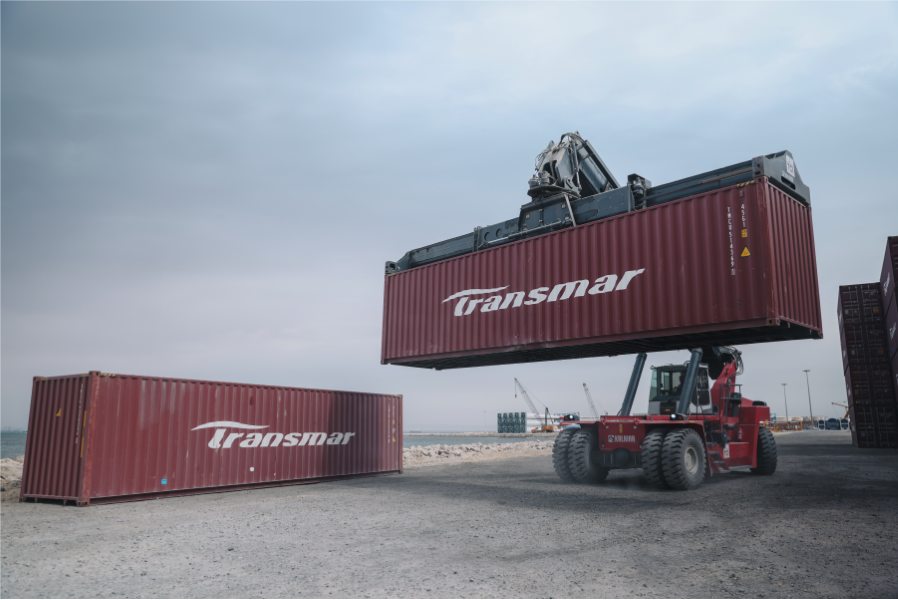
THE BIG LOGISTICS STORY- Iran and Russia are set to invest some USD 38 bn in the development of Trans-Caspian shipping lines as part of the International North-South Transport Corridor (INSTC). Over in the UAE, Amazon has inked an agreement with Hamriyah Freezone to set up a logistics center.
^^ We have everything on this story and more in the news well, below.
HAPPENING THIS WEEK-
The two-day G7 Trade Ministers meeting wrapped yesterday in Japan with an emphasis on supply chain resilience and the need to crack down on “coercion,”according to their joint communique (pdf).The G7 trade ministers called for the “immediate repeal” of import bans on Japanese foodstuffs, purportedly referring to Chinese restrictions, according to Reuters. Despite not mentioning China by name, the statement denounced Chinese actions that seek to “weaponize” trade, the newswire wrote.
“We also acknowledge the need for further efforts to build resilient and reliable supply chains for critical goods such as critical minerals, semiconductors, and batteries,” the statement said, after expressing “concern” over recent export controls on graphite by China, the world’s top producer of the critical mineral, the newswire said.
Transit along Ukraine’s temporary Black Sea Corridor resumes after a 3-day pause: Four vessels departed from Ukrainian ports through its new export corridor on Friday, after initially suspending transit due to threats from Russian airstrikes and mines, Reuters reported, citing transport consultancy STC. Ukraine has been making use of the maritime corridor to restart seaborne exports after Russia quit a UN-brokered agreement in July.
DISRUPTION WATCH-
Israel to compensate shipowners with vessels damaged due to the war: Israel will award compensation for “war damage” incurred by Israeli or foreign-owned vessels operating in the country’s economic waters, Reuters reported, citing a statement by Israel’s tax authority. Israel will pay 100% of the “actual damage,” which is the difference in value of the asset before the incident and after it was damaged.The country is also taking measures to cut down risks to vessels calling at its ports, the newswire added, citing government advisories.
Background: Israel relies on seaborne imports for much of its trade needs, including consumer goods and food. The ongoing conflict with Hamas has seen war risk ins. premiums multiply tenfold since fighting began and some vessels have rerouted away from the port of Ashdod to ports that are farther away from Gaza, the newswire wrote.
WATCH THIS SPACE #1- Has the EU lifted its flight ban on Iraqi Airways? Iraqi Airways is set to operate seven weekly flights to the German cities of Dusseldorf, Frankfurt, Berlin, and Munich, and the Danish capital Copenhagen starting 10 November, Iraqi News Agency (INA) reported, citing the Iraqi Transport Ministry’s media office. The announcement indicates that the bloc is lifting a ban on the airline put in place since 2015 over safety concerns, Iraqi news outlet Rudaw explains. The launching of these flights “will serve the Iraqi community and open new horizons of cooperation between Iraq and those countries,” INA quoted Transport Minister Al Saadawi as saying. The flights will be operated through Baghdad, Najaf, and Erbil airports, the transportation ministry’s director of media and communication Maitham al-Safi told Rudaw.
WATCH THIS SPACE #2- Azerbaijan to drop proposed land corridor with Armenia: Azerbaijan is no longer interested in a land corridor running through Armenia to the Azeri enclave of Nakhichevan, and will instead turn to neighboring Iran on the issue, Reuters reports, citing a senior Azerbaijani official. After the two sides failed to agree on the opening of the Zangezur corridor — which would run through Armenia, “the project has lost its attractiveness,” Hikmet Hajiyev, a top foreign policy adviser to the Azerbaijani president, told Reuters. Azerbaijan will instead discuss the matter with Iran, as this could help reduce tensions around southern Armenia, which the Azerbaijani president has referred to as historically Azeri land, Reuters explains.
Azerbaijan has already posited an alternative corridor through Iran: Azerbaijan’s Nakhchivan railway is set to pass through Iran’s Nakhjavan area instead of through Armenian soil, as an alternative to the proposed Zangezur corridor, Azeri President Ilham Aliyev has said. The commercial corridor is being implemented based on an agreement to establish a route between Azerbaijan and the Nakhchivan via Iranian territory.
WATCH THIS SPACE #3- The US could potentially ramp up crude oil sanctions against Iran over its support for Hamas, CNBC reports, citing head of global commodity strategy at RBC Capital Markets Helima Croft. The West and the Biden administration could “at a minimum” consider restricting Iranian exports, which have risen above pre-2018 levels, when the Trump administration reimposed sanctions on Tehran’s crude.
WATCH THIS SPACE #4 -Abu Dhabi Airport to award Al Falah Development Works contract likely to be awarded in Q4: Abu Dhabi Airports is expected to award the main infrastructure construction contract for its Al Falah Development Works 1A Phase (Package No.2) by 4Q 2023, according to an undisclosed source cited by Zawya. Bids have already been submitted ahead of the 15 August deadline, Zawya adds. The scope of work for the contract will cover logistics infrastructural developments, including the development of roads, electrical and mechanical facilities infrastructure, telecommunications networks, and fences and gates for the bonded freezone area. The project is said to be targeted at logistics institutions, aviation-related businesses, and e-commerce retailers.
Background:According to the source, the project is set to be completed and commissioned in 1Q 2025. Abu Dhabi-based engineering contracting company Al Falah Holding is developing the project, which is located near Abu Dhabi International Airport, and which includes parts of the Abu Dhabi Airports Freezone.
DATA POINT-Hamad International Airport (DOH) handled 590.7k tons of cargo in 3Q 2023, up 3.38% y-o-y, according to a statement. The airport also saw a 24.48% y-o-y increase in aircraft movements during the same period, with 67.3k aircraft movements recorded.
MARKET WATCH-
Oil prices rally 3% on concerns of escalation in the Middle East: Oil prices spiked 3% to a one-week high on Friday on concerns over a wider Middle East conflict as Israel’s army and air force stepped up their operations in Gaza, Reuters reported. Brent futures gained 2.9% to settle at USD 90.48 a barrel, while West Texas Intermediate (WTI) inched up 2.8% to USD 85.54, Reuters said. The latest gains have put Brent’s premium over WTI at its highest since March, making US crude more attractive for energy players. Brent and WTI were down 2% and 4% for the week, with daily trading seeing numerous highs and lows as the market tried to keep up with conflicting news updates. “We are at the mercy of the next headline ... and I think that's kind of what we've been seeing today with the price swings,” an analyst told the newswire.
Yemen could be a flash point for global oil markets: A potential collapse in peace talks between Iranian-backed Houthi militias and Saudi Arabia and the UAE over the Hamas-Israel war could usher in more uncertainty for global oil markets, S&P Global writes, citing analysts. The Houthis have attacked oil refining facilities in Saudi Arabia in the past and have access to weapons that could threaten shipping in the strategic Bab el-Mandeb strait. There are also signs that the Houthis may become embroiled in the ongoing Hamas-Israel conflict, the report said.
This is all concerning, since oil demand is expected to peak this decade: Global demand for oil, coal, and natural gas will peak this decade as the shift towards renewables and electric vehicles moves the world away from fossil fuels, the International Energy Agency (IEA) said in its annual World Energy Outlook report (pdf). The IEA expects global oil demand to peak at around 102 mn barrels per day in the late 2020s before dropping to 97 mn b/d by 2050 if governments maintain their current energy policies.
We could do better: The agency says that demand could drop to 93 mn b/d in 2030 if governments commit to their national energy and climate targets and even 77 mn b/d if they carry out further policy changes to reach net zero by 2050. “The transition to clean energy is happening worldwide and it’s unstoppable. It’s not a question of if, it’s just a matter of how soon,” IEA Executive Director Fatih Birol said in a statement accompanying the report.
But, this may be too optimistic of an outlook: The IEA’s optimistic outlook comes shortly after OPEC published its 2023 World Oil Outlook (pdf), where it upped its long-term oil demand outlook to 116 mn b/d by 2045, a 5% jump from its 2022 forecast. The figure has “potential to be even higher,” the alliance of oil producers said. Chevron CEO Mike Wirth told the Financial Times that the IEA’s forecast is not even “remotely right.”
Get Enterprise daily
The roundup of news and trends that move your markets and shape corporate agendas delivered straight to your inbox.
CIRCLE YOUR CALENDAR-
AD Ports is set to host the International Association of Ports and Harbors (IAPH) World’sPorts Conference-Abu Dhabi 2023 from 31 October to 2 November, at the Abu Dhabi National Exhibition Center, under the theme ‘Reinventing Ports’. The event will bring together more than 100 speakers, from port operators to influential figures in the industry, to network and share expertise on the industry.
Dubai Business Forum is set to take place on 1-2 November at Madinat Jumeirah, in Dubai. The event will bring together top business leaders to boost business partnerships and networking.
Transport Logistic Southeast Asia is taking place between 1-3 November at the Sands Expo and Convention Centre in Singapore. The event is the largest trade show for transportation and logistics, mobility, IT, and supply chain management in the Southeast Asia region. The exhibition will bring together service providers to meet, network and trade with top buyers from the region, and feature expert speakers who will provide insight on future topics.
The Dubai Air Show will be held from 13-17 November at DWC, at the Dubai Airshow site, in Dubai. The event will feature over 180 aircraft including business jets, drones, commercial airlines, military jets, helicopters, and electric vertical take-off and landing (eVTOL) aircraft. The event will also gather decision makers to discuss the latest trends and challenges across the aviation industry, and how to drive sustainable aviation operations.
Etihad Cargo will host the third iteration of ACE in Abu Dhabi between 4 and 6 December. The conference brings together air cargo industry executives with expert speaker debates, workshops, and networking via a one-to-one meeting scheduler and in-person meetings. The event will focus on the air cargo sector in the Middle East.
The Eurasian Economic Union (EAEU) exhibition is taking place from 4 to 7 December at Tehran Permanent International Fairgrounds in Tehran, Iran. The exhibition will be attended by EAEU members, members of the Shanghai Cooperation Organization, and the Persian Gulf Cooperation Council, and will bring together domestic and foreign companies in the industrial, mineral, and agricultural fields to showcase their latest products at the event. Seminars and conferences on transport, trade, and tourism will take place on the sidelines of the event.
Check out our full calendar at the bottom of this email for a comprehensive listing of upcoming news events and news triggers.