Logistics (MENA)
  Egypt Edition
  UAE Edition
  Saudi Edition
  MENA <> India Corridor
  Climate (MENA)

 Share Issue





Good morning, nice people. We have a packed issue as we start our week, with M&A, investment, trucking, and startup updates from across the region. But first, the latest on trade talks as the US tariff deadline looms…
THE BIG LOGISTICS STORY- The US and China finalized a trade agreement last week, stipulating a rare earth materials delivery from China and the removal of some unannounced US export restrictions — likely on advanced microships. The agreement formalizes a framework that the pair reached in London earlier this month.
The details about the new agreement have been scarce, with both the US and Chinese officials saying too little about what it entails. “Silence regarding the terms suggests that there is less substance to the deal than the Trump Administration implies,″ former Obama administration trade official Jeff Moon told AP.
The agreement also leaves some of the US main concerns about China’s trade surplus and subsidy policies unaddressed, but some analysts are optimistic that the formalization of the trade ceasefire could support further talks with China towards a more comprehensive agreement. “
IN CONTEXT- The US is ramping up efforts to finalize a number of bilateral trade agreements ahead of the 9 July tariff deadline, with both the EU and Malaysia hoping to secure an agreement by the deadline or get an exemption as talks continue. About 10 to 12 agreements — out of 18 currently under negotiations — could also be wrapped up by Labor Day in September, US Treasury Secretary Scott Bessent said.
REMEMBER- The UK was the first major trading partner to secure an agreement with the US after the pair signed a non-binding trade agreement in May to keep tariffs on UK goods at 10% — down from the Liberation Day rate of 27.5%. The agreement is set to give the UK preferential treatment in cases of new US tariff schemes, such as those imposed under probes conducted for national security threats, including the ongoing probes on pharma and semiconductors.
The story is all over the int’l press: Reuters | AP | Financial Times | Wall Street Journal | Bloomberg | | The Washington Post | CNBC | New York Times |
WATCH THIS SPACE-
#1- Israeli natural gas exports to Egypt have increased to 650-750 mn cubic feet per day (mcf/d) starting this week, a government source told EnterpriseAM. This marks a ramp-up from Wednesday’s flows of 200 mcf/d when Israel restarted Egypt-bound exports with the reopening of its Leviathan gas field, a government source previously told EnterpriseAM. Flows are expected to gradually rise to reach 850 mcf/d over the coming two months.
Gas deliveries to factories have resumed since last Thursday, and will scale up to full capacity depending on peak height demand, our source told us. Priority has been given to energy-intensive industrial sectors, especially fertilizers, due to local commitments and export contracts, while other industries will receive up to 70% of their usual supply, the source added.
SPEAKING OF- Abu Qir Fertilizers and Misr Fertilizers Production Company (Mopco) will gradually restart operations at their plants following the resumption of natural gas supplies, according to an EGX disclosure (pdf) from Mopco and another disclosure (pdf) from Abu Qir.
ICYMI- The halt to supplies led unsubsidized fertilizer prices to jump some 40% last week. The government was also reportedly weighing an increase in domestic gas prices for industries to offset the mounting cost of importing LNG from international markets.
#2- Asia’s largest budget airline AirAsia will set up a new hub in the GCC this year at a yet-to-be-determined Gulf airport, CEO Tony Fernandes told the Financial Times in an interview. The move would utilize the region’s proximity to Europe to support the Malaysia-based airline’s plans to expand its network to more European destinations, using “a one-stop and multi-hop strategy,” Fernandes noted.
Expanding connections: The airline also added new flight routes linking Kuala Lumpur to Riyadh and Dammam and has increased its existing services to Jeddah, according to a statement. The airline will also explore with Saudi counterparts extending the cooperation to cargo networks and services between the regions.
AirAsia’s been on PIF’s radar: PIF was reported to be planning a USD 100 mn investment in AirAsia back in March, which would make it the largest contributor to the carrier’s USD 226 mn fundraising target. However, the investment hasn’t been locked in yet. “As soon as we get the consent letters and the Thai Stock Exchange we will announce who the new capital is,” Fernandes told Reuters. AirAsia is listed on the Kuala Lumpur Stock Exchange, and its Thai subsidiary has its stocks listed on the Thai Stock Exchange.
ON A RELATED NOTE- Shipping giant Maersk has resumed vessel calls and handling both import and export cargo in Israel’s Port of Haifa, according to a statement published last week. The Danish firm cited the “prospect of current cease-fire agreement bringing de-escalation to the conflict” as the key enabler behind the operational resumption.
ICYMI- Maersk and Hapag-Lloyd halted operations at Haifa port citing regional tensions and crew safety following US strikes on Iranian nuclear facilities last week.
#3- Morocco eyes a piece of EVs supply chains: COBCO — a JV comprising Moroccan investment fund Al Mada and China’s CNGR Advanced Materials — has started production at a USD 2 bn lithium-ion battery components plant in Morocco’s Jorf Lasfar, Reuters reported last week. The move aims to position Morocco as a major player in the automotive supply chain, adapting its capabilities to the EV market, the newswire reported.
What we know: The plant's first production phase will yield two necessary inputs for lithium-ion batteries, nickel-manganese-cobalt and precursor cathode material. The plant is designed to achieve an annual production capacity of 70 gigawatt-hours, which is sufficient to power approximately 1 mn vehicles, the newswire reported, citing a source close to the project.
Rabat’s automotive trade figures: Morocco exported USD 6.26 bn in 2023 — and imported USD 2.5 bn — with France being the largest export market, according to the Observatory of Economic Complexity.
Automotive-focused infrastructure: Rabat has port infrastructure dedicated to the sector, with Tanger Med’s car carrier terminal comprising two sections — the Renault vehicle terminal and the multi-user vehicle terminal — in addition to the railway vehicle terminal, according to its website. Casablanca Port saw 100k new vehicles transit annually via its RoRo terminal in 2018-19, according to Marsa Maroc’s website.
#4- Shipping b’naire John Fredriksen has shuttered his London business base and relocated operations to the UAE, saying the UK “has gone to hell” amid mounting dissatisfaction with the economy and tax policy, The Standard reports. Seatankers Management closed its headquarters on Sloane Square, and the Norwegian-born oil tanker mogul — worth an estimated GBP 13.7 bn according to the Sunday Times Rich List — is among a wave of wealthy residents leaving the UK following the Labor party’s dismantling of the non-dom tax regime in April.
MARKET WATCH-
#1- Oil prices went down this morning amid anticipation of supply hikes due to eased tensions in the region and an expected August production hike by Opec+, Reuters reports. Brent crude futures decreased USD 0.13 to USD 67.64 a barrel by 03.44 GMT, while US West Texas Intermediate (WTI) futures saw a dip of USD 0.18 to trade at USD 66.62 a barrel.
IN CONTEXT- Opec+ is expected to announce its fourth production hike of the year at its upcoming 6 July meeting, adding 411k barrels per day (bbl / d) for August as it continues to claw back market share, four unnamed delegates told Reuters on Friday. While analysts anticipate the 411k bbl / d increase to proceed, some sources suggest a larger hike could be discussed at the meeting.
Volatility in the backdrop: The decision may be complicated by recent market volatility and geopolitical factors, including the potential increased Iranian supply. Oil prices swung to USD 68 a barrel on Friday after the Iran-Israel ceasefire calmed supply worries. This comes after a five-month high of over USD 81 a barrel on 23 June, which was registered following the US strike on Iran’s nuclear facilities.
#2- Baltic index dips once again: The Baltic Exchange’s dry bulk sea freight index — which tracks rates for the capesize, panamax, and supramax vessel segments — dropped 2.1% to1,521 points on Friday. The capesize was down 5.3% to 2,220 points, while the panamax index increased 1.5% to 1,490 points. The small supramax index inched up 0.9% points to settle at 1,009.
Over in our region, the Arabian Gulf shipping costs dipped last week on the back of an Iran-Israel ceasefire announced on Tuesday, Reuters reported last week, citing shipping and insurance industry sources. Shipping rates for supertankers had risen to USD 60k prior to the ceasefire, before dropping to USD 50k last Thursday, the sources said. War risk premiums also softened to 0.35-0.45% late last week from a peak of 0.5% last Monday.
#3- The Drewry World Container Index fell by 9% to USD 2,983 per 40-ft container on Thursday, according to the latest index readings. The drop comes on the back of a forecasted decreased supply-demand equilibrium in global container shipping in 2H 2025, which will depend on US tariffs’ outcome of legal challenges and any new sanctions on Chinese ships.
DATA POINTS-
Total trade volume throughout Morocco’s ports increased by 10.2% y-o-y to 61 mn tons in 1Q 2025, driven by increased transshipment volume, which accounted for nearly half of the total, Al Arabiya reports, citing data from the country’s Directorate of Financial Studies and Forecasts. Transshipment activity increased by 13% y-o-y in 1Q 2025 as exports rose by 14%, imports by 3%, coastal shipping by 32%, and air transportation by 16.4% y-o-y.
#2- Iraq’s imports have reached IQD 28 tn (USD 21.4 bn) in 1Q 2025, Shafaq News reported on Saturday, citing Central Bank of Iraq data. The country’s public sector imported USD 1.4 bn worth of goods in 1Q 2025, which included consumer and capital goods, petroleum products, currency printing materials, and other related items. Iraq’s private sector imported USD 20 bn worth of goods — mainly consumer and capital goods — during the same time period.
Get Enterprise daily
The roundup of news and trends that move your markets and shape corporate agendas delivered straight to your inbox.
***YOU’RE READING EnterpriseAM Logistics, the essential MENA publication for senior execs who care about the industry that connects producers and retailers to global markets. We’re out Monday through Thursday by 9:15am in Cairo and Riyadh and 11:15am in the UAE.
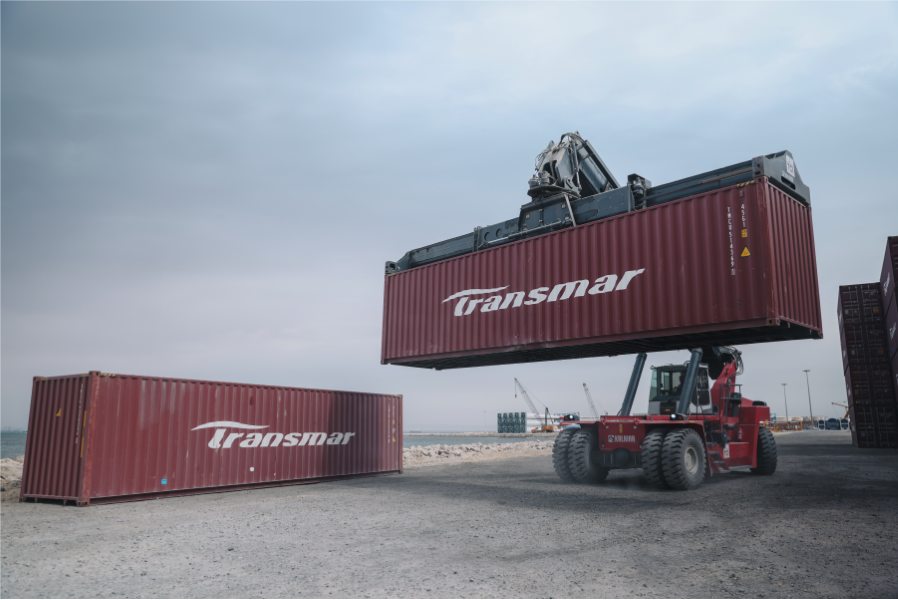
EnterpriseAM Logistics is available without charge thanks to the generous support of our friends at Hassan Allam Utilities, Transmar, and AK-Ships.
Were you forwarded this email? Tap or click here to get your own copy of Enterprise Logistics.
Want to send us a story idea, request coverage, ask for a correction, or otherwise get in touch? Reach out to us on logistics@enterprisemea.com.
DID YOU KNOW that we also cover Egypt, Saudi Arabia, the UAE, and the MENAclimate industry ?
***
CIRCLE YOUR CALENDAR-
Intermodal Africa will kick off on Tuesday, 22 July and run till Thursday, 24 July in Beira, Mozambique. The forum will host over 300 senior government officials, industry leaders, academics, senior executives, and harbor masters in the ports, shipping, and logistics sector. Attendees and speakers will be coming from countries across the Middle East, Africa, and Europe.
Check out our full calendar at the bottom of this email for a comprehensive listing of upcoming news events and news triggers.