Get EnterpriseAM daily

It’s PMI day for Saudi Arabia and Egypt

1

What we're tracking today

TODAY: It’s PMI day for Saudi Arabia and Egypt

Good morning, folks. We have a lot of ground to cover this morning with PMI updates to unpack from Saudi and Egypt, along with an LNG export and storage update from Jordan. Let’s dive right in.

WATCH THIS SPACE-

#1- Egypt is exploring the possibility of exporting electricity to Syria through its interconnection link with Jordan, Egypt’s Electricity Minister Mahmoud Esmat told Asharq Business. The plan hinges on stabilizing the security situation in the country and Egypt’s electricity production vs consumption. An unconfirmed report citing a government official earlier this week pencilled in either 2029 or 2030 as when the country will finally be able to close the gap between domestic production and consumption.

#2- Libya’s Misrata International Airport project is slated to be completed by the end of 2025 with 50% of the project completed, according to a statement. The airport — which covers 24k sqm — has a 3.5 mn annual passenger capacity and includes four aircraft gates and 15 stations dedicated to passenger boarding procedures in a bid to enhance operational efficiency.

Cargo included: Libya’s Trade Ministry greenlit a Libyan-Spanish joint venture back in August 2023 for air cargo and aircraft maintenance services—which will set up an air cargo and aircraft maintenance station dubbed ADVCO at Misrata International Airport.

#3- Hapag-Lloyd expects lower profitability in 4Q: German shipping giant Hapag-Lloyd expects profitability to decrease in 4Q 2024 on the back of a spike in freight rates, but to remain “at a good level,” Reuters reports, citing comments made by CEO Rolf Habben Jansen at a press conference. The firm’s bottom line decreased 46.5% y-o-y to USD 1.8 mn in 9M 2024, and uncertainty looks to extend beyond 2024 as unstable freight rates, route diversions and geopolitical challenges continue.

MARKET WATCH-

#1- Oil prices traded within a narrow range this morning as traders await the outcome of the upcoming Opec+ meeting this week, Reuters reports. Brent crude futures rose USD 0.14 trading at USD 71.97 a barrel by GMT 04.04, while US West Texas Intermediate crude (WTI) futures gained USD 0.08 to USD 68.18 a barrel. The organization will likely push back output increases on the back of weak global oil demand at its Thursday meeting.

#2- Saudi Arabia ramps up oil exports to Asia as Russian supplies dwindle: Saudi Arabia’s oil exports to the Asian markets rose to 5.83 mn barrels per day (bbl / d) in November, adding 550k bbl / d m-o-m, Reuters reports, citing data from LSEG Oil Research. This came as supplies from Russia to the region shed 450k bbl / d m-o-m to reach 3.51 mn.

Doubling down: The Kingdom is also looking to bring prices for Asian buyers to at least a four-year low in January, with selling prices for Arab Light set to fall by around USD 0.7-0.9 per barrel from December prices, Reuters reports, citing six sources at Asian refineries that took part in its survey.

MEANWHILE- Aramco left December prices for liquefied petroleum gas (LPG) unchanged, with propane still going for USD 635 per ton and butane for USD 630, Reuters reports, citing traders.

#3- Baltic index is on a losing streak: The Baltic Exchange’s dry bulk sea freight index — which tracks rates for the capesize, panamax, and supramax vessel segments — fell nearly 4.1% to 1,298 points on Monday, dropping to its lowest since September 2023. The capesize index fell 160 points to 1,973 points, while the panamax index dipped 9 points to a 16-month low of 1,009 points. The smaller supramax index shed 1 point to 979 points.

***YOU’RE READING EnterpriseAM Logistics, the essential MENA publication for senior execs who care about the industry that connects producers and retailers to global markets. We’re out Monday through Thursday by 9:15am in Cairo and Riyadh and 11:15am in the UAE.

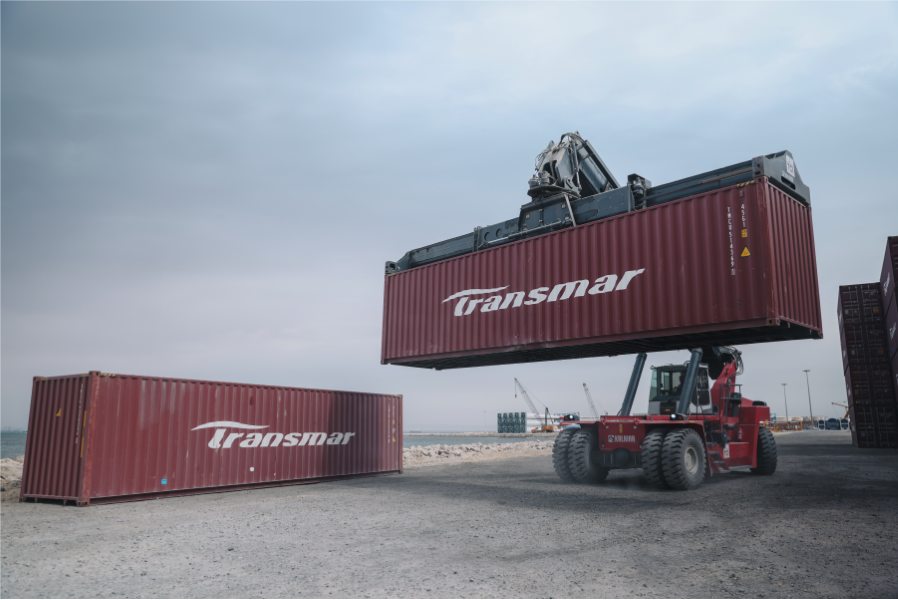
EnterpriseAM Logistics is available without charge thanks to the generous support of our friends at Hassan Allam Utilities, Transmar, and AK-Ships.

Were you forwarded this email? Tap or click here to get your own copy of Enterprise Logistics.

Want to send us a story idea, request coverage, ask for a correction, or otherwise get in touch? Reach out to us on logistics@enterprisemea.com.

DID YOU KNOW that we also cover Egypt, Saudi Arabia, the UAE, and the MENAclimate industry ?
***

CIRCLE YOUR CALENDAR-

Morocco will host the Rail Industry Summit from Tuesday, 10 December to Wednesday, 11 December in Casablanca. The two-day summit includes pre-scheduled business meetings with potential partners, conferences, and themed workshops on new market trends and future strategies presented by OEMs on infrastructure, rolling stock, embedded equipment and railway vehicle interiors.

The UAE will host the Middle East Business Aviation Show from Tuesday, 10 December to Thursday, 11 December in Dubai. The event will showcase innovations from over 135 exhibitors and will have over 25 jets on display, with over 55 speakers offering insight on market trends.

Check out our full calendar at the bottom of this email for a comprehensive listing of upcoming news events and news triggers.


This publication is proudly sponsored by

2

Purchasing

KSA’s non-oil sector continues to see growth, while Egypt remains in contraction

How non-oil private sectors in Saudi Arabia + Egypt performed in November: Purchasing manager indices (PMI) tracking non-energy sectors in the two countries told a mixed tale in November. Saudi Arabia held well above the 50.0 mark threshold driven by healthy customer demand, while Egypt saw a more moderate increase in its headline PMI buoyed by softer input and output inflation growth.

REMEMBER- The all-important 50.0 mark is the threshold separating contraction from growth. Anything above 50 denotes expansion, while anything below indicates contraction.

(** Tap or click the headline above to read this story with all of the links to our background and outside sources.)

First up, Saudi Arabia: Non-oil business activity rose at its sharpest pace in 16 months in November despite a rise in input costs, driven by an increase in new orders, output, purchasing and employment, according to Riyad Bank Saudi Arabia PMI (pdf). The Kingdom’s headline PMI spiked up to 59.0 in November from 56.9 in October, increasing for the fourth consecutive month.

New orders + output driving growth: The uptick in non-oil activity was driven by stronger new order inflows compared to last month and healthier output as businesses banked on strong domestic demand. New customers, enhanced investment spending and marketing efforts also drove up the rise in orders. Export orders also witnessed growth, after a sluggish few months. Firms’ purchasing activity rose at its quickest pace since March on the back of new orders, as companies remain confident that demand volumes will continue to pick up.

Hiring was also up: Firms ramped up hiring efforts to match new orders, with the rate of employment growth hiking up at its second-fastest pace in over ten years. As a result, backlogs were reduced this month, albeit only marginally.

Inflation is still persistent: Purchasing costs jumped up at the fastest pace in over four years due to wider regional geopolitical tensions, which firms say impacted material prices and resulted in higher transport costs. Selling prices rose for the second month running, driven up by a spike in purchasing and hiring. In turn, wages experienced a particular rise, surging up at the fastest pace of pay inflation in over ten years.

Over in Egypt: Egypt’s non-oil activity declined, albeit at a slower pace, for the third consecutive month, pulled down by stagnant new orders, weak demand, drops in employment and reduced output, according to S&P Global’s Egypt PMI (pdf). Egypt’s headline purchasing manager’s index grew marginally to 49.2 from 49.0 in October.

Input rates grew at the slowest rate since July, with price pressures falling to a four-month low despite strong USD rates. This is largely attributed to a lower wage growth rate, as overall staff pay increased at the slowest rate in 16 months. Output price inflation rose marginally and at its softest pace in four months.

Sluggish new orders + outputs dragged down the index: New order volumes dipped, for the four month running, due to persistently weak customer demand. Output rates also fell, resulting in cases of excess stocks at companies and a reduction in purchasing activity.

On the bright side: The rate of non-oil sector contraction eased in comparison to last month, indicating that “business conditions are close to stabilising,” S&P Global Senior Economist David Owen said. Firms’ in the manufacturing sector reported an uptick in new work, offsetting declines in the construction, wholesale and retail sector.

Hiring rates slipped marginally, falling at the fastest pace since February, after growing for the last four months. Firms’ attributed this to a drop in sales volumes, which has led to weaker confidence and caused companies’ to not replace voluntary leavers.

Sentiment remains somewhat optimistic: Easing rates of inflation growth and declines in new orders indicate a possible bounce back from the dip in September, with Egyptian firms verging on meekly positive regarding output expectations for the coming year. Nevertheless, “reductions in purchasing activity and employment hint that firms are not expecting capacity levels to be challenged too much in the months ahead,” Owen said.

KSA firms remain confident that rising demand volumes will continue to persist across the non-oil market over the coming year, allowing for the market to remain resilient despite a fluctuating oil market. As such, patterns of expanding “output and demand, reflects the increasing capacity of non-oil sectors to contribute to economic activity independently of oil price fluctuations,” said Riyad bank Chief Economist Naif Al Ghaith.

3

STORAGE + WAREHOUSES

Jordan + Egypt ink LNG supply and storage agreement

Jordan to use Egypt’s floating LNG regassification units: The Egyptian Natural Gas Holding Company (EGAS) signed an agreement with Jordan’s National Electric Power Company (Nepco) allowing Jordan shared use of one of Egypt's LNG storage and regasification units over the next two years, according to statements here and here.

Why is this important? The agreement will enable Jordan to ensure it can process incoming shipments ahead of its fixed Aqaba LNG terminal slated for completion in 2026, according to Reuters.

(** Tap or click the headline above to read this story with all of the links to our background and outside sources.)

The LNG supply agreement will be through the use of floating storage and regasification vessels (FRSU), which is set to include:

#1- Boosting Jordan’s LNG supply: The agreement will see Egypt supply Jordan with LNG through established pipelines extending between both countries, which aims to contribute to reducing the operating costs of the LNG port in Aqaba as well as protecting the National Electricity Company from global price fluctuations.

#2- Prioritizing gas ships: The agreement also aims to prioritize the use of gas ships between both countries, with 350 mn cubic ft per day allocated to Jordan — 50% of the capacity of one vessel or 25% of the capacity two.

#3- Cutting costs: The National Electricity Company will be allowed to use LNG without incurring fixed costs. The contract also seeks to provide a flexible and less costly alternative to supply Jordan with LNG while new infrastructure projects are being implemented.

Previous LNG ties: Egypt was considering the purchase of a floating regasification unit in partnership with Jordan back in July to uptake and process LNG shipments for integration into their national grid. The ship would be leased out to other nations once both countries stabilize their gas supply.

4

Zones

Egypt + China’s Great Wall Motors continue talks to set up a factory in the SCZone

China’s GWM inches closer to SCZone factory: Chinese automotive and truck manufacturer Great Wall Motors (GWM) is reportedly inching closer to setting up a factory to produce vehicle and spare parts in Egypt’s Suez Canal Economic Zone (SCZone), according to a report carried by Egypt’s state information service. GWM will look to produce multiple car models to supply to the Egyptian market, while also boosting its exports to regional and global markets. The manufacturer also expressed interest in working with local Egyptian companies in the automotive sector to boost their respective production capacity and export capabilities.

(** Tap or click the headline above to read this story with all of the links to our background and outside sources.)

We knew this was coming: GWM made a request for a 1 mn sqm plot of land for an auto factory back in September.

Where things stand now: Egypt is committed to offering its full support for the project, including providing investment incentives available in the SCZone and under a national export support scheme, Prime Minister Mostafa Madbouly said during a meeting with GWM VP Ming Xian Jun. The SCZone is also prepared to facilitate arrangements for the development of a factory, on the condition that the agreement is inked before the end of this year, Madbouly added.

Egypt’s rising automotive demand: Egypt’s car imports spiked some 46% y-o-y to USD 1.69 bn, up from USD 1.15 bn, in the first eight months of this year, according to a statement released last week. The Egyptian government is looking to bolster its domestic automotive industry to enhance the availability of vehicle inventory in the country, the statement added.

About GWM: Hong Kong-listed GWM specialized in parts manufacturing and export of pick-up trucks, SUV and passenger vehicles, according to their website. The firm operates in over 60 countries worldwide, with over 500 stores. The company hosts over 400 overseas networks spanning over a range of regional markets in the Middle East, Africa, South America, Asia Pacific, Russia and Australia.

Making regional moves: GWM launched its first regional parts distribution center in the UAE back in January last year, in a means to streamline its local logistics cycle and parts range. This came on the heels of the establishment of its first middle east OEM office in Dubai the year prior.

5

Startup Watch

Nowlun secures USD 1.7 mn in seed funding round to drive regional expansion

Egyptian digital shipping platform Nowlun has raised USD 1.7 mn in a seed funding round led by Saudi Arabia’s Nama Ventures and Egyptian VC A15, with participation from Sanabil 500 Global and prominent angel investors, according to a press release.

Where is the money going? The funds will be used to accelerate Nowlun’s MENA expansion, enhance its shipment management platform, and expand its real-time cargo tracking capabilities, CEO Moataz Khamis (LinkedIn) told Al Mal.

What’s next? Nowlun aims to double its workforce by 2025 to support its regional and global growth plans. The company is planning to add Jeddah and Damman branches to its current roster of offices in Cairo, Alexandria, and Riyadh next year, Khamis said.

Another funding round in the works? Nowlun plans to launch a fresh round of funding in 2H 2025, Khamis added.

About Nowlun: Founded in 2021 by Moataz Khamis, Mahmoud Khaled, and Ahmed Emara, the online freight forwarding platform offers real-time pricing and booking from 30+ shipping lines. The startup’s shipment management system gives customers comprehensive control over tracking cargo and troubleshooting any issues during delivery.

6

Diplomacy

Qatar and the EU in talks to enhance trade

Qatar + EU look to boost trade ties: Qatar’s Commerce and Industry minister Faisal Al Thani and State for Foreign Trade Minister Ahmed bin Mohammed Al Sayed met with EU Gulf Region Special Representative Luigi Di Maio to discuss boosting trade links and investments, according to a statement. The EU stands out as the GCC’s second largest trade partner, accounting for 11.1% of the Gulf’s total trade in goods last year. Some 16.2% of GCC imports came from the European Union last year, and some 7.5% of the Gulf’s total exports were shipped to the EU.

(** Tap or click the headline above to read this story with all of the links to our background and outside sources.)

Oman + Saudi Arabia eye stronger trade links: A delegation led by Oman’s Chamber of Commerce and Industry chairman Said bin Ali Al Abri held a meeting with Saudi officials to discuss bolstering trade and investment potential between the two countries, Muscat Daily reports, citing a statement made to ONA. The group looks to advertise new investment potential in Oman’s North Batinah region and facilitate new avenues of bilateral trade, Al Abri said in the statement. The pair also discussed the value of investing into Rub al Khali port, which connects the two countries, and facilitated the transportation of goods worth some OMR 159.6 in 1H of this year alone.

7

Moves

Menzies taps new VP for Central and East Africa

Menzies appoints new VP for Central and East Africa: Ground handling firm Menzies Aviation, a subsidiary of Kuwait-based Agility, has appointed Nouamane Zahouani (LinkedIn) as its new vice president for Central and East Africa, according to a statement. Zahouani previously served as the general manager for ground handling and cargo operations since 2019 and had played an important role in securing Menzies Aviation’s International Air Transport Association (IATA) CEIV Pharma accreditation for its Kenya facility.

(** Tap or click the headline above to read this story with all of the links to our background and outside sources.)

8

Logistics in the News

Airbus races against time… and Boeing

Airbus is rushing to speed up deliveries as it hopes to meet promised delivery targets despite persistent production delays and supply chain disruptions, the Financial Times reported last week. The firm will have to deliver 200 jets by year end to meet annual targets, but will have to “match or exceed record delivery volumes” over those two months to “get the higher target that they’ve set themselves compared with 2023,” head of Advisory at Cirium Ascend Consultancy Max Kingsley-Jones added.

(** Tap or click the headline above to read this story with all of the links to our background and outside sources.)

Who has it worse in the aviation duopoly? Boeing is still recovering from the mid-air blowout in a section of its jets in January that shed light on the firm’s shortcomings, and while the incident and fallout gave Airbus a headstart to establish a lead, the company has been “unable to capitalize on Boeing’s weakness because of the supply chain issues” due to engine delivery delays and shortages of labor and components. “Airbus has come out of Covid with more problems than they probably acknowledge and the operational task of turning it around is very significant,” an industry analyst told FT.

It was under control, until it wasn’t: Although Airbus started the year on a high — ending 2023 with a record 2k orders for new aircraft and a total order backlog of 8.5k — it had to cut its end-of-year target back in June from 800 to 770 and postponed its target of producing 75 A320 jets a month from 2026 to 2027. The revisions — which also included cutting its annual profit forecast — revisions that dipped Airbus shares more than 10% at the time, which are currently down 1.3% since the start of the year.

Way in over their heads? Airbus said it had made clear that the delivery target would be “backloaded and challenging” as it was focused on meeting the target while attaining to the post-pandemic travel demand. The firm had “promised a lot…that’s putting a lot of strain on the system,” an industry executive said. Engine supplies also have one of the biggest issues, with CFM International — a JV between France’s Safran and GE of the US and Pratt & Whitney — grappling to meet demand and struggling with durability issues.

9

Around the World

Maersk inks agreements for 20 dual-fuel engine container vessels

Danish shipping giant Maersk inked agreements with three Chinese and Korean shipyards for 20 container vessels equipped with dual-fuel engines, according to a press release. The vessels — with a combined 300k TEU capacity — are part of Maersk’s fleet development program and its vision towards decarbonization. The first vessels will be delivered in 2028 and the last delivery will take place in 2030.

(** Tap or click the headline above to read this story with all of the links to our background and outside sources.)

A breakdown of the order: Two 9k TEU vessels and six 17k TEU vessels will be delivered by Yangzijiang Shipbuilding in China, six 15k TEU vessels will be delivered by Hanwha Ocean in South Korea, and six 15k TEU vessels will be delivered by New Times Shipbuilding in China.

We’ve been expecting this: Maersk announced back in August that it would not be increasing its fleet size beyond its current 4.3 mn TEUS through to the end of the decade as part of its revamped newbuild policy. Under the policy, the firm is looking to proceed with orders of dual fuel ships that can use bio-LNG.


The UK looks to expand ETS scope: The UK government is considering input on proposals to expand its Emissions Trading System (ETS) to include emissions from the maritime sector and recognize non-pipeline transport methods — including shipping through road or rail — for moving captured carbon into geological storage, according to a press release published last week. The move would force businesses with ships operating domestic routes to obtain allowances for every tonne of carbon emitted. The proposed change includes an exemption for sites who are actively seeking activities to decarbonize in a bid to help support the UK ETS’ goal of carbon efficient production across its industrial sectors.

What’s ETS, Enterprise? The ETS is a cornerstone of the EU's climate change policy which launched in January 2024, aiming to efficiently reduce greenhouse gas emissions. The scheme will require shipping companies to purchase allowances for their CO2 emissions. The ETS will require ships entering Europe to pay a carbon tax based on the distance between the last non-EU port to the first EU port, with the exception of the UK, Tangier, and Port Said. You can check out our full explainer here].

OTHER STORIES WORTH KNOWING THIS MORNING-

  • Lufthansa extends flight cancellations: German carrier Lufthansa is extending its suspension of flights to Israel’s Tel Aviv up until 31 January 2025. (Al Arabiya)

DECEMBER

2-3 December (Monday-Tuesday) Wings of Change Middle East, Riyadh, Saudi Arabia.

10-11 December (Tuesday-Wednesday): Rail Industry Summit, Casablanca, Morocco.

10-12 December (Tuesday-Thursday): Middle East Business Aviation, Dubai, UAE.

20 December (Wednesday): The Iran-Senegal Joint Economic Cooperation Commission, Dakar, Senegal.

JANUARY 2025

20-24 January (Monday-Friday): World Economic Forum Annual Meeting, Davos, Switzerland.

27-29 January (Monday-Wednesday): World Cargo Summit, Ostend, Belgium.

28-29 January (Tuesday-Wednesday): Green Shipping Summit, Rotterdam, The Netherlands.

29-30 January (Wednesday-Thursday): ShipTek International Conference, Dubai, UAE.

FEBRUARY

3-5 February (Monday-Wednesday): Middle East Bunkering Convention, Dubai, UAE.

4-5 February (Tuesday-Wednesday): Seatrade Maritime Qatar, Doha, Qatar.

4-5 February (Tuesday-Wednesday): Airport Expansion Conference, Riyadh, Saudi Arabia.

10-11 February (Monday-Tuesday): Middle East Breakbulk conference, Dubai, UAE.

10-11 February (Monday-Tuesday): MRO Middle East, Dubai, UAE.

10-12 February (Monday-Wednesday): Sustainable Aviation Futures MENA, Abu Dhabi, UAE.

10-12 February (Monday-Wednesday): Japan Kyoto Trade Exhibition, Dubai, UAE.

10-13 February (Monday-Thursday): Future Warehouses & Logistics, Dubai, UAE.

18-19 February (Tuesday-Wednesday): Argus Green Marina Fuels Asia Conference, Singapore.

18-19 February (Tuesday-Wednesday): Middle East Procuretech Summit, Dubai, UAE.

19-21 February (Wednesday-Friday): Air Cargo Africa, Nairobi, Kenya.

20-22 February (Thursday-Saturday): Dubai Freight Camp, Dubai, UAE.

25 February - 1 March (Tuesday-Saturday): WCA Worldwide Conference, Dubai, UAE.

MARCH

No events announced at the moment.

APRIL

2-4 April (Wednesday-Friday): Global Supply Chain and Logistics Summit, Amsterdam, The Netherlands.

3-4 April (Thursday-Friday): Africa Supply Chain Optimization, Johannesburg, South Africa

10 April (Thursday): Gulf Ship Fiance Forum, Dubai, UAE.

14 April (Monday): CargoIS Forum, Dubai, UAE.

15-17 April (Tuesday-Thursday): Transport Middle East 2025, Aqaba, Jordan.

15-17 April (Tuesday-Thursday): IATA World Cargo Symposium, Dubai, UAE.

16-17 April: Global Ports Forum, Dubai, UAE.

MAY

6-8 May (Tuesday-Thursday): Airport Show, Dubai, UAE.

12-15 May (Monday-Thursday): Saudi Smart Logistics, Riyadh, Saudi Arabia.

13-14 May (Tuesday-Wednesday): Global Ports Forum, Dubai, UAE.

20-22 May (Tuesday-Thursday): Seamless Middle East, Dubai, UAE.

27-29 May (Tuesday-Thursday): Saudi Warehousing & Logistics Expo, Riyadh, Saudi Arabia.

JUNE

1-3 June (Sunday-Tuesday): Annual General Meeting & World Air Transport Summit 2025, Delhi, India.

2-4 June (Monday-Wednesday): Propak MENA, Cairo, Egypt.

5-6 June (Thursday-Friday): Supply Chain & Logistics Innovation Summit, Amsterdam, Netherlands.

11-13 June (Wednesday-Friday): Sustainability World Summit, Frankfurt, Germany.

17-19 June (Tuesday-Thursday): Terminal Operations Conference & Exhibition, Rotterdam, Netherlands.

19 June (Thursday): East Med Maritime Conference, Athens, Greece.

25-26 June (Wednesday-Friday): Decarbonizing Shipping Forum, Hambury, Germany.

JULY

1-3 July (Tuesday-Thursday): ASEAN Ports and Logistics, Jakarta, Indonesia.

SEPTEMBER

24-26 September (Wednesday-Friday): Routes World, Hong Kong.

OCTOBER

1-2 October (Wednesday-Thursday): Saudi Maritime & Logistics Congress, Dammam, Saudi Arabia.

14-15 October (Tuesday-Wednesday): Investing in Africa Conference and Expo, London, UK.

NOVEMBER

3-6 November (Monday-Thursday): ADIPEC Maritime and Logistics Exhibition and Conference, Abu Dhabi, UAE.

4-6 November (Tuesday-Thursday): Air Cargo Forum, Abu Dhabi, UAE.

17-21 November (Monday-Friday): Dubai Airshow, Dubai, UAE.

EVENTS WITH NO SET DATE

Mid-2025: Iraq will complete phase one of the construction of the Grand Faw Port.

DHL and Aramco’s logistics and procurement hub in Saudi Arabia will commence operations.

AD Ports-operated Safaga Port’s multi-purpose terminal will become operational.

Phase 3 of APM Terminals Tangier MedPort to be complete and operational.

1Q 2025: Sadr Park’s Logistics Center in Riyadh to be completed.

1Q 2025: Phase twoof Jafza Logistics Park to be completed.

2026

2026 UNCTAD Global Supply Chains Forum, Saudi Arabia.

2027

4Q 2027: Oman’s Musandam Airport construction to be completed.

Now Playing
Now Playing
00:00
00:00