Logistics (MENA)
  Egypt Edition
  UAE Edition
  Saudi Edition
  MENA <> India Corridors
  Climate (MENA)

 Share Issue





Good morning, nice people. We’re starting the week with a brisk read this morning. We previously talked about trucks stepping in where ships stalled, but can rail scale up to meet the moment? The region’s long-promised rail network faces its first real test — and it’s just not quite ready yet.
In other non-war-related updates: The Omani government is now in full control of state-linked budget carrier SalamAir in what appears to be an effort to reinforce Oman Air’s recovery.
From the Dept. of Ongoing Disruptions
Kuwaiti ports + airport under attack: Kuwait’s MubarakAl Kabeer and Shuwaikh ports came under drone attacks on Friday, causing material damage to both, though no casualties were reported. Another drone attack on Saturday reportedly caused significant damage to Kuwait International Airport’s radar. The airport was also attacked earlier this month.
Maersk halts Salalah port ops: Maersk has halted operations at Oman’s Salalah port after a security incident early Saturday damaged a terminal crane, injured a worker, and forced an evacuation. The carrier said no vessels, cargo, or crew were affected, but operations are expected to remain suspended for at least 48 hours.
Over in Turkey: A drone strike hit a Turkish-owned crude tanker some 14 nautical miles off Istanbul’s Bosphorus Strait on Thursday. The Altura was carrying around 140k tons of oil from Russia’s Novorossiysk port. Ankara has already been dealing with the fallout from Hormuz disruptions — including stranded Turkish-owned vessels and heightened security warnings around the Gulf. A strike this close to Istanbul adds a second pressure point by threatening the outlet for Black Sea barrels.
Meanwhile, Iranian strikes caused “significant damage” to a smelter run by Emirates Global Aluminium — the region’s largest aluminum manufacturer. Several employees were injured at the Al Taweelah site in Abu Dhabi, and assessment of the damage is ongoing. The strike prompted a surge in aluminum prices, as the Middle East accounts for some 9% of global supply.
To make things worse: Bahraini aluminum producer Aluminium Bahrain was also targetedby Iran over the weekend, resulting in two minor injuries.
Happening today
There’s never been a better — or worse — time for the annual Egypt EnergyShow to kick off, with the three-day event opening today amid arguably what could become the world’s most severe energy crisis.
We will be on the ground for all three days in search of announcements and to get the inside look from industry experts we speak to. If you’re attending and want a chat or for us to interview a member of your team, drop us a line at editorial@enterprisemea.com.
Watch this space
TRADE — Saudi oil heading to Pakistan through Hormuz? An oil tanker carrying some 650k barrels of Saudi crude crossed the strait yesterday, Bloomberg reported, citing tracking data. The ship reportedly passed through a narrow route between islands close to the Iranian border, alongside two LPG tankers and four bulk carriers from the GCC.
That’s still a small fraction of the prewar levels of Saudi crude passing through the strait, which remains effectively closed. Saudi used to ship almost 5.5 mn bbl / d, accounting for some 38% of all crude shipments through Hormuz. Most of our exports are now rerouted through the East-West pipeline and shipped through the Yanbu Port.
It’s business as usual for Iranian tankers: Iran-linked crude continues to cross the strait, carrying an average of 1.6 mn bbl / d in the first three weeks of March, Bloomberg cited data from TankerTrackers.com.
Also from Saudi: The Kingdom’s East-West pipeline, which bypasses the Strait of Hormuz, is now pumping at its full capacity of 7 mn bbl / d, a source familiar with the matter told Bloomberg. Exports via the Red Sea port of Yanbu have reached about 5 mn bbl / d, with an additional 700k-900k bbl / d of refined products, while 2 mn bbl / d feed domestic refineries.
Why it matters: This bypass is credited with preventing oil prices from hitting catastrophic highs, despite the loss of some 15 mn bbl / d that typically transits Hormuz. Aramco CEO Amin Nasser said earlier this month that the East-West pipeline was expected to reach its full capacity within days.
AVIATION — Air Algérie adds more narrowbody lift: Algeria’s national carrier Air Algérie ordered 10 Boeing 737 Max 8 jets as part of its fleet modernization push, with five due in 2H 2026 and the other five in 2027. The move aims to upgrade the carrier’s fleet, drive network expansion, and enhance service quality. Air Algérie had ordered eight 737-9s in June 2023 and inked an MoU for two 737-800 Boeing Converted Freighters to support rising cargo demand
Why it matters: The carrier is adding another layer to its broader fleet reset — it ordered 16 ATR 72-600 turboprops back in July 2025, along with five A330-900s and two A350-1000s from Airbus in 2023. It also took delivery of its third A330-900 in January 2026.
MARITIME — Hapag-Lloyd’s war bill mounts: German shipping giant Hapag-Lloyd’s war-related costs have risen to around USD 40-50 mn a week, driven by higher fuel bills, ins. premiums, and container storage charges, Reuters reports, citing CEO Rolf Habben Jansen. Jansen indicated that costs are too large to be absorbed and will likely be passed through to customers.
Costs are stacking, not settling: Conflict surcharges are already running at USD 2k-3.3k per TEU. Emergency fuel surcharges — like CMA CGM’s USD 180 container surcharge — are now being added on top.
Market watch
Oil prices rose this morning — with Brent set for a record month — after Houthi attacks on Israel escalated the ongoing war, Reuters reports. Brent crude futures increased USD 2.43 to trade at USD 115 / bbl by 03.42 GMT, while US West Texas Intermediate (WTI) gained USD 1.86 to USD 101.50 / bbl.
Closer to home: The UAE’s primary bunkering hub, Fujairah, has seen a significant surge in crude flows, with loadings averaging 1.9 mn bbl / d between 20 and 24 March — a 57% jump from the 2025 average, Bloomberg reports. The ramp-up comes as Adnoc successfully restored loading capacity in Fujairah — which hosts the Adcop pipeline, the only alternative to the Strait of Hormuz for the UAE — following Iranian drone strikes earlier this month.
The catch: While crude flows have recovered, refined product exports remain constrained. The strikes damaged critical systems known as matrix manifolds, which manage the flow of oil from storage tanks through the port’s pipeline network to multiple berths. Operators are still working to restore full export capacity across the refined products system.
The Baltic Index keeps the rally going: The Baltic Exchange’s dry bulk index — which tracks rates for the capesize, panamax, and supramax vessel segments — rose 0.8% to 2,031 points on Friday, advancing for a third straight session. The capesize climbed 2% to 3,032 points, the panamax index slipped 0.8% to 1,756, while the smaller supramax added 1 point to reach 1,206 points.
The Drewry World Container Index increased by 5% to USD 2,279 per 40-ft container last week, according to the latest index readings. The rise is driven by an increase across transpacific and Asia-Europe rates, especially Shanghai-Genoa (12%) and Shanghai-Rotterdam (3%), as carriers tighten capacity and implement higher freight-all-kind rates.
Data point
USD 25 bn — that’s the potential bill for repairing energy infrastructure across the Gulf from the damage of the war, with engineering and construction taking the biggest share, followed by equipment and materials, according to Rystad Energy.
What’s next: Operators are expected to prioritize restoring existing output over new builds, funneling work toward contractors and OEMs with regional track records and standing NOC relationships. Near-term activity will center on inspections, engineering, and site preparation before shifting into equipment replacement as supply constraints ease.
PSA
Cosco bookings are back — but Hormuz still isn’t reliably open: Chinese carrier Cosco resumed Far East bookings into the UAE, Saudi Arabia, Bahrain, Qatar, Kuwait, and Iraq yesterday, after suspending Middle East services on 4 March as the conflict escalated. However, two Cosco-operated ultra-large container ships attempted to exit the Gulf via the Larak route on 27 March, only to turn back at the last minute.
Get Enterprise daily
The roundup of news and trends that move your markets and shape corporate agendas delivered straight to your inbox.
***YOU’RE READING EnterpriseAM Logistics, the essential MENA publication for senior execs who care about the industry that connects producers and retailers to global markets. We’re out Monday through Thursday by 9:15am in Cairo, 10:15am in Riyadh, and 11:15am in the UAE.
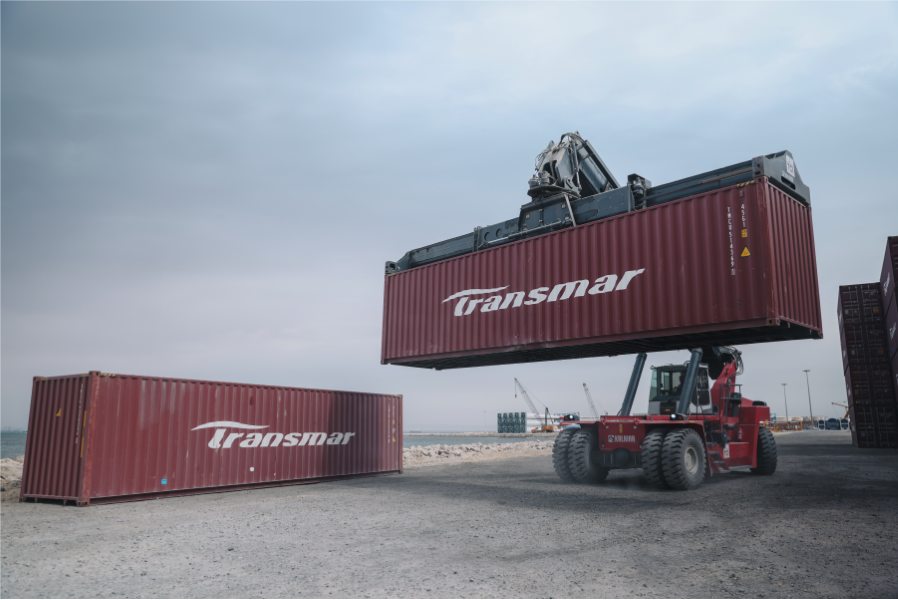
EnterpriseAM Logistics is available without charge thanks to the generous support of our friends at Hassan Allam Utilities and Transmar.
Were you forwarded this email? Tap or click here to get your own copy of EnterpriseAM Logistics.
Want to send us a story idea, request coverage, ask for a correction, or otherwise get in touch? Reach out to us on logistics@enterprisemea.com.
DID YOU KNOW that we also cover Egypt, Saudi Arabia, and the UAE ? ***