Get EnterpriseAM daily

How to unlock Egypt’s upcoming trucking boom

1

WHAT WE’RE TRACKING TODAY

TODAY: Egypt’s trucking sector dilemma

Good morning, folks. We’re wrapping up our week with a look at Egypt’s trucking sector. As the country braces for an economic boom and exports surge, truck sales are booming. But this surge puts pressure on the industry to fix a long-standing problem. Industry insiders tell us all about it in our top story today.

ALSO- Egypt is negotiating to drop the required Israeli component in the Qualifying Industrial Zones (QIZ) from 10.5% to as low as 5%. This could help the country unlock the QIZ’s untapped potential.

Watch this space

RAIL — Turkey seals preliminary backing for Bosphorus rail: Turkey is advancing its Bosphorus rail crossing plan with preliminary agreements with six international lenders for USD 6.8 bn for the Northern Ring Railway Project. The funding framework involves multilateral lenders, including the World Bank, AIIB, ADB, IsDB, EBRD, and the Opec Fund, with Ankara targeting tender completion and site handover this year, clearing the way for construction to start.

The specs: The 125 km line will feature 44 tunnels and 42 bridges and will boost annual freight capacity to 30 mn tons when fully developed.

Why it matters: The project could transform rail freight across the Bosphorus. Currently, rail freight across the Bosphorus Strait is largely dependent on the Marmaray tunnel, with limited daily windows, and the tunnel has moved just 1.7 mn tons in total between 2020 and October 2025.

This sits within Turkey’sbroader push for Iraq’s multimodal Development Road Project, through which Ankara is eyeing a bigger role for the Asia-Europe land-based trade flows. The project outlined a USD 17.9 bn in rail links and USD 2 bn for highways tied to the corridor, which could handle 7.5 mn TEUs a year.


TRADE — India and the Gulf Cooperation Council (GCC) formally kickstarted freetrade agreement talks, building on the terms of reference agreed earlier this month, according to a press release. A framework was greenlit covering goods, services, customs procedures, digital trade, advanced technologies, and investment flows.

Why it matters: The GCC is India’s largest trading partner bloc — with bilateral trade of USD 178.6 bn in FY 2025, growing at a 15.3% annual rate over five years — accounting for over 15% of India’s total global trade. The GCC also accounts for more than USD 31 bn in cumulative FDI into India.


SHIPPING — Saudi oil tanker demand on the rise: Saudi Arabia’s National Shipping Company (Bahri) — the country’s biggest oil shipper — provisionally chartered at least five supertankers, piling into the spot market as rates rip higher, Bloomberg reports, citing brokers with knowledge of the matter. The ships, tracked by Tankers International and confirmed by brokers, are headed for Asia with Saudi barrels.

It’s a tell: Owners usually only dip into the spot market when their fleets can’t keep up with their own cargoes. The oil market closely watches Bahri’s activities for clues about Saudi flows. The Kingdom has recently sold condensate from the Jafurah gas project — part of the LFDP — which would liberate domestic crude previously burned for power.

Rates are doing the talking: Middle East-to-China runs flirted with USD 200k per day this week, the first time since 2020. VLCC earnings are also at their highest in years as geopolitical risk adds a premium, with traders bracing for any disruption tied to US-Iran tensions and oil flows via Hormuz.

What’s next? Saudi plans to ship some 8 mn barrels of crude to China next month, after reducing prices to five-year lows — and the freight market is already front-running it.

Market watch

Oil prices continued their surge as market concerns over a US-Iran military conflict outweighed a buildup in US crude stockpiles, Reuters reports. Brent crude futures gained USD 0.19 to trade at USD 71.04 / bbl as of 04:15 GMT, while US West Texas Intermediate (WTI) increased USD 0.15 to USD 65.57 / bbl.


The Baltic Index eases back: The Baltic Exchange’s dry bulk sea freight index — which tracks rates for the capesize, panamax, and supramax vessel segments — fell 0.4% to 2,121 points on Wednesday. The capesize slid 2.5% to 3,128 points, while the panamax index rose 1.3% to 1,890. Meanwhile, the smaller supramax index climbed 3.1% to 1,255.

***YOU’RE READING EnterpriseAM Logistics, the essential MENA publication for senior execs who care about the industry that connects producers and retailers to global markets. We’re out Monday through Thursday by 9:15am in Cairo and Riyadh and 11:15am in the UAE.

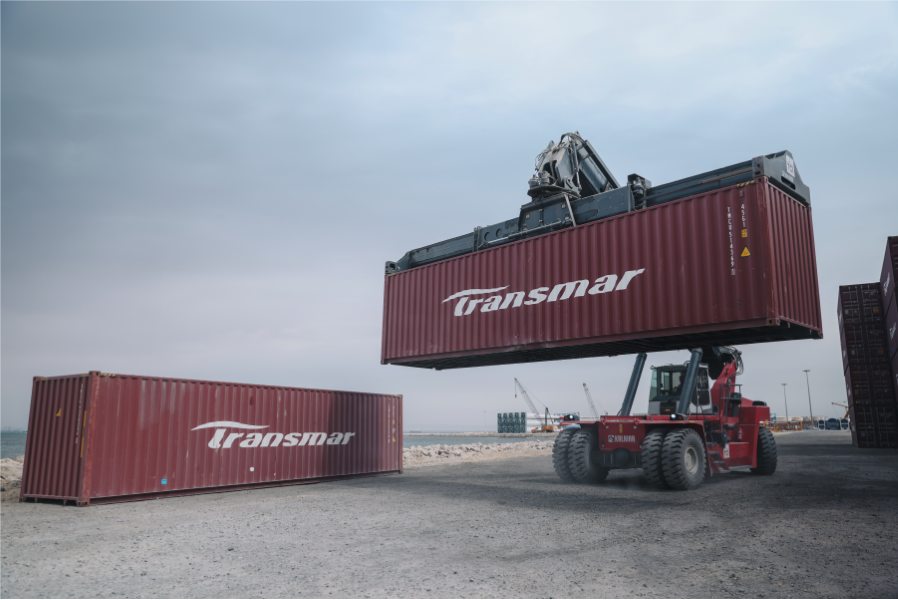
EnterpriseAM Logistics is available without charge thanks to the generous support of our friends at Hassan Allam Utilities, Transmar, and AK-Ships.

Were you forwarded this email? Tap or click here to get your own copy of Enterprise Logistics.

Want to send us a story idea, request coverage, ask for a correction, or otherwise get in touch? Reach out to us on logistics@enterprisemea.com.

DID YOU KNOW that we also cover Egypt, Saudi Arabia, and the UAE ***

This publication is proudly sponsored by

2

The Big Story Today

Egypt’s trucking sector is ready to boom, but there is a key challenge to address

Egypt’s logistics sector is bracing for robust growth, with truck sales volumes surging 108% y-o-y in 2025. The figure indicates that the private sector is more eager than ever to capitalize on an improving macroeconomic climate and upgrade fleets that had stagnated during the post-pandemic years.

However, behind this boom in truck sales lies a critical labor market gap that needs to be addressed. While companies are buying trucks at record rates, the industry is facing a severe shortage of skilled, professional drivers. As the larger economy pivots toward export-led growth, the trucking sector faces a labor-induced bottleneck.

We sat down with industry insiders to understand the state of the country’s trucking sector, the implications of this mismatch between growth and labor supply for the industry, and what can be done about it.

Heavy trucking is the most impacted segment

The driver shortage is most pronounced in the heavy-trucking segment, which does the heavy lifting in moving our goods. To qualify to drive a heavy truck or a trailer, a professional driver must hold a third-class license for three years, then a second-class license for three years before securing a first-class license. “That’s six years before you can drive a heavy truck — or what I call a progression barrier,” Managing Director at Reliance Operations and Management Services (Roms), Omar Ragheb, told EnterpriseAM.

About the company: Roms, a subsidiary of the conglomerate Reliance Egypt, operates a fleet of 330 vehicles and provides fleet management and maintenance services to the wider industry.

And that shortage is not merely about headcount — it is a “skills and incentives mismatch,” the founder of the upcoming logistics asset fractional ownership platform FRCTN Karim Othman told EnterpriseAM. For example, there is a big wave of skilled Egyptian drivers migrating to Saudi Arabia and the Gulf, drawn by massive infrastructure projects, higher pay, and superior and more predictable working conditions, both Othman and Ragheb told us.

In numbers: Roms estimates that the market has a gap of some 8k truck missions a day — essentially 8k loads a day that cannot be moved efficiently due to a lack of available assets or drivers. “You need at least to double the workforce in the industry because you need about two to three drivers for every truck to keep them moving,” Ragheb told us.

Hiring has also become very difficult for operators. Even established companies report a hiring success rate of only 40% at best, Othman told us.

The sector’s informality also complicates efforts to improve working conditions for drivers. About 95% of heavy trucks in the market are owned by individuals or family businesses, with only 5% owned by companies, Othman told us. On average, an individual or a family owns three trucks, “which creates zero economies of scale in maintenance, financing, social and health ins., and training, and leads to high downtime and volatile pricing,” he added.

Why does this matter?

Without drivers, trucks sit idle, and goods arrive late. “Idle time is a key factor in whether a company fails or succeeds because the goal is to maximize throughput. Transport is like a production line; the more throughput you achieve, the more revenue you generate,” Ragheb said.

Besides the common market imperative, the shortage has safety repercussions — it directly causes driver fatigue, Othman told us. With high demand and few drivers, operators often push for 18-hour workdays or 26-day work months. The lack of a new generation of drivers means the current workforce is aging, and the pressure to “over-drive” contributes to road accidents, he added.

What can be done?

One immediate fix is to reform the country’s licensing system. A proposed alternative is to decouple licensing from time served and base it on competency. “The law needs to be revisited to cut the required time to secure a heavy-trucking driver’s license from six to two years,” Ragheb said. To ensure competency, the government could accredit specific training institutions to test and certify drivers. Together, these two changes could immediately inject new, younger blood into the workforce, he added.

It’s not just that — to stop the drain to the Gulf and attract local talent, the profession must be formalized. This includes establishing minimum wage standards, mandating social and health ins., and enforcing maximum working hours to prevent fatigue, Othman and Ragheb told us. Currently, the market operates largely informally, with drivers lacking contracts or safety nets, meaning an injury or accident results in an immediate loss of income. Formalization would create a less volatile career path that is currently missing from the industry.

But how can this be done? Ragheb’s pitch is to introduce a unified industry association. This association can advocate for drivers and the sector by setting up “industry-wide standards for wages, hours, and training” and advancing professional development services for the drivers, he told us.

Technology can also help: While Egypt is far from ready to embrace autonomous trucking, integrating tech solutions can allow operators to achieve efficiencies that can translate into better working conditions for drivers. Policy options include mandating the installation of telematics and GPS tracking for vehicle licensing. This would enable better monitoring of driver behavior (fatigue tracking), fuel management, and route optimization, Othman said.

3

Trade

Egypt moves to add firms to QIZ as negotiations begin on lowering Israeli component

The government is moving to expand participation in the Qualifying Industrial Zones (QIZ) agreement, just as talks begin to reduce the required Israeli component under the framework, a source familiar with the matter tells EnterpriseAM. The push comes at a pivotal moment for Egyptian exporters, who are seeking to seize fresh openings created by the latest shifts in US protectionist trade policies under US President Donald Trump.

Other countries’ loss is Egyptian exporters’ gain: Egyptian exports routed through the QIZ continue to enjoy zero customs duties, even under Washington’s new tariff regime, giving local producers a clear edge over competitors facing steeper barriers, Magdy Tolba, a member of the Apparel Export Council of Egypt, tells us. While rivals like Bangladesh and Turkey grapple with higher US import duties, Egyptian goods enter the market unscathed.

Yet, the agreement’s potential remains largely untapped. Participation has plummeted since the QIZ was launched in 2004, dropping from around 700 active companies to between 150 and 200 today. To entice manufacturers back into the fold, officials have opened talks to aggressively trim the Israeli component — currently at 10.5% — down to a sliding scale of 5-8%. Tolba tells us that after several rounds of talks, Egypt has secured a preliminary nod to begin a phased reduction of the threshold. If finalized, the move would significantly lower the entry barrier for local factories looking to hitch their wagons to the QIZ and capitalize on the shifting US trade environment.

While the QIZ is currently dominated by ready-made garments, there is a strategic push to include other sectors that could benefit from zero tariffs, such as glassware and sports footwear, among other products.

By the numbers: QIZ exports were up 12% last year, reaching USD 1.33 bn, up from USD 1.19 bn in 2024, according to the Ready Made Garments Export Council data. The council is now setting its sights on a USD 2 bn target for QIZ-linked exports this year, which would account for a significant chunk of its USD 5 bn total export goal for 2026, a government official tells us.

While current growth is promising, Tolba argues that the agreement remains “drastically underutilized” compared to its true potential. He suggests that if the government successfully diversifies the product mix and secures lower component ratios, QIZ exports could realistically jump to as much as USD 15 bn annually. “If we secure a reduction in the Israeli component and diversify our [product categories], we will have a golden [window] in the US market under the new tariffs — and that is exactly what we are aiming for this year,” Tolba tells us.

Rising overheads in neighboring markets are also fueling a wave of industrial relocations that are directly benefiting the Egyptian manufacturing base. Spiking inflation and a rising minimum wage in Turkey have pushed at least four major Turkish garment giants, alongside a cluster of SMEs, to move their operations to Egypt, according to Tolba. This influx is about more than just volume — these firms are bringing advanced manufacturing technologies that are expected to significantly upmarket the quality of Made in Egypt products for the global stage.

This global uncertainty has also forced local exporters to get creative with their hedging strategies. Tolba tells us that the current uncertainty has prompted exports to markets including Turkey and Japan as a form of hedging, but argues that Egypt has a bigger opening if it revisits its agreements and brings the business community into shaping the next phase of export-oriented manufacturing.

4

Also on Our Radar

UAE liberalizes pharma distribution rules

UAE overhauls pharma distribution rules

The UAE’s single-agent pharma model has been dismantled. The newly established Emirates Drug Establishment (EDE) is now requiring pharma companies to appoint more than one authorized agent per medical product marketed in the UAE, state news agency Wam reports. The system effectively ends the long-standing single-distributor structure in the pharma industry.

What’s changed? Global manufacturers typically appointed one local agent per product, responsible for import, storage, and distribution — opening up supply lines to fragility. If that sole agent faced operational delays, pricing disputes, or inventory bottlenecks, supply could tighten nationwide. But now, one product will have multiple pipelines. Companies can designate more than one authorized agent, enabling parallel warehousing and distribution routes across emirates, removing the structural chokepoint from the old model.

Why it matters: The EDE says the shift is designed to cut disruption risk, improve inventory responsiveness, and curb quantity-control practices, while “establishing a flexible legislative environment that supports the sustainability of the [pharma] market and the protection of public health,” Chairman Saeed bin Mubarak Al Hajeri said. The broader aim is to strengthen pharma security and ensure continuous product availability nationwide.

Qatar’s Al Mana Holding has another biodiesel project in Egypt

Qatar’s Al Mana Holding is investing USD 15.6 mn to build a facility that will convert used cooking oil into biodiesel, according to a statement from the Environment Ministry. The project is set to be located in the integrated waste management city in Tenth of Ramadan and is designed to process 100 tons per day.

Why it matters: Global aviation mandates are fueling rising demand for sustainable aviation fuel (SAF). By localizing biodiesel production, Egypt is positioning itself as a potential regional hub for SAF feedstock, in line with state efforts to develop dedicated SAF facilities serving international airlines refueling in Cairo.

But the challenge lies in collection. Egypt consumes around 2.8 mn tons of edible oil each year, generating roughly 2.6 mn tons of used cooking oil. The Qatari company plans to compete in the collection market by launching a mobile app that rewards households for safe disposal, while building dedicated storage and logistics networks to collect directly from food manufacturers and fast-food chains.

Indu adds Northern Emirates warehousing capacity in Rakez

Indu expands north with a Rakez warehouse: UAE warehousing and logistics firm Indu has kicked off construction on a 5.8k sqm warehouse in Rakez’s Al Hamra Industrial Zone in Ras Al Khaimah, adding a 12k cbm of planned capacity, with a 4Q 2026 delivery target. The facility will focus on fast-moving consumer goods — including hotel and food supply storage for F&B customers across the Northern Emirates.

IN CONTEXT- Industrial and logistics space rents are going up at an accelerated pace in the Northern Emirates amid a worsening supply shortage in Dubai and Abu Dhabi and a growing hospitality and manufacturing sectors in the north.


2026

FEBRUARY

25-27 February (Wednesday-Friday): Air Cargo Africa, Nairobi, Kenya.

25-27 February (Wednesday-Friday): Air Law Treaty Workshop, Tanzania, Dar es Salaam, Tanzania.

MARCH

5-6 March (Thursday-Friday): CargoIS Forum, Miami, United States.

9-13 March (Monday-Friday): World Cargo Alliance Worldwide Conference, Singapore.

10-12 March (Tuesday-Thursday): World Cargo Symposium, Lima, Peru.

18-19 March (Wednesday-Thursday): IntraLogisteX, Birmingham, United Kingdom.

18-19 March (Wednesday-Thursday): Green Marine Transport Conference, Amsterdam, The Netherlands.

26 March (Thursday): Gulf Ship Finance Forum, Dubai, UAE.

APRIL

12-15 April (Sunday-Wednesday): Saudi Smart Logistics, Riyadh, Saudi Arabia.

16-17 April (Thursday-Friday): Global Supply Chain and Logistics Summit, Amsterdam, The Netherlands.

28-30 April (Tuesday-Thursday): Mediterranean Ports and Logistics, Porto, Portugal.

MAY

12-14 May (Tuesday-Thursday): The Airport Show, Dubai, UAE.

12-14 May (Tuesday-Thursday): Aviation Energy Forum (AEF), Paris, France.

19-21 May (Tuesday-Thursday): Ground Handling Conference (IGHC), Cairo, Egypt.

19-21 May (Tuesday-Thursday): Terminal Operations Conference & Exhibition, Hamburg, Germany.

JUNE

2-4 June (Tuesday-Thursday): ProPak Mena, Cairo, Egypt.

6-8 June (Saturday-Monday): IATA World Air Transport Summit, Rio de Janeiro, Brazil.

22-23 June (Monday-Tuesday): Decarbonizing Shipping Forum, Rotterdam, Netherlands.

Now Playing
Now Playing
00:00
00:00