Get EnterpriseAM daily

Egypt’s FinMin greenlights the customs fast track

1

WHAT WE’RE TRACKING TODAY

TODAY: Egypt’s Kouchouk hits the gas on customs clearance

Good morning, friends, it’s the last issue of 2025 and we have great news for Egypt.

A welcome policy shift leads our news well this morning. Egypt’s Finance Minister Ahmed Kouchouk signed off on sweeping amendments to the executive regulations of the Customs Law earlier this week. We break down whether the new regulations will actually cut the red tape — or just give clearing agents a new set of forms to fill out

ALSO– Don’t miss our talk with container industry analyst Simon Heaney about the wider global impact of a return to the Red Sea..

AND– Our 2025 year in review is here. We take a deep dive into how the region’s aviation industry fared this year on the back of capacity crunches and aggressive expansion.

** A QUICK PROGRAMMING NOTE – EnterpriseAM Logistics will be off tomorrow for New Year’s Day. We’ll be back in your inboxes at the usual time on Monday, 5 January 2026.

Watch this space-

DRY PORTS — Could a new Libyan dry port be the anchor of an Egyptian industrial zone? Cairo and Tripoli are in talks to turn the newly-established Al Jawf Dry Port southwest Libya into the cornerstone of a joint freezone — one designed to unlock West African markets for Egyptian exporters, a government source tells EnterpriseAM.

Why does it matter? It’s a play for industrial dominance. The move isn’t just about transporting goods, but establishing a manufacturing foothold to rival global players. The proposed freezone is Egypt’s strategic countermove to competitors like China, which has already established a massive ceramics factory in Libya’s Misrata to export to Europe, Mohamed El Beheiry, head of the Arab Cooperation Committee at the Federation of Egyptian Industries, tells EnterpriseAM.

Background: Talks on the project launched in May 2024 with the aim of creating a launchpad for Egyptian exports into Libya, as well as wider intra-Africa trade, targeting landlocked Chad and Niger. It’s not clear from the Libyan Transport Ministry’s announcement whether Egypt will play a role in operating the port.

Not the first Egypt-backed project in the Libya-Niger-Chad corridor: The Egyptian government is planning to invest EGP 6 bn (c. USD 124 mn) for the first phase of a new road project connecting Egypt to Libya and Chad. The planned dry port will be located in proximity to this new East Oweinat-Kufra Road, which will stretch 1.7k km across the three countries.


AVIATION –– China’s private carriers are doubling down on Airbus: Juneyao Airlines and Spring Airlines are set to buy 55 A320neo-family jets –– 25 for Juneyao and 30 for Spring –– in combined contracts worth around USD 8.2 bn.

The order cements Airbus’ advantage in China — which is being won on the factory floor rather than the negotiating table. The French planemaker’s second final assembly line in Tianjin gives Airbus a localized capacity and delivery certainty as it works toward assembling 75 A320-family jets per month by 2027. The site plugs China directly into Airbus’s global production system of 10 final assembly lines across Europe, the US, and China.

Disruption watch-

YEMEN — A Saudi-led coalition hit Yemen’s Mukalla port with a limited airstrike, targeting what Riyadh described as weapons and heavy-vehicle shipments aboard two vessels arriving from Fujairah. The first has been identified as the St. Kitts and Nevis-flagged Greenland, a RoRo vessel. “The ships’ crew had disabled tracking devices aboard the vessels, and unloaded a large amount of weapons and combat vehicles in support of the Southern Transitional Council’s (STC) forces,” a statement published by state news agency SPA said. Saudi Arabia made the move to combat the STC’s military advances on its southern border with Yemen, which it deemed a “threat to the national security of the Kingdom.”

UAE to pull its remaining troops in Yemen: Presidential council head of the Aden-based central government Rashad Al Alimi accused the UAE of “pressuring” the STC to “undermine and rebel against the authority of the state.” Al Alimi also announced that Yemen is canceling its defense pact with the UAE. The UAE Foreign Ministry issued a statement refuting claims of contributing to tensions in the country, asserting the targeted vessel didn’t contain any weapons and the vehicles were destined for Emirati forces in Yemen. The statement stressed support for Saudi Arabia’s “sovereignty and national security” and noted that the Aden-based government had requested its presence in the country.

A final withdrawal: A separate Defense Ministry statement reported by Wam said the UAE is pulling its final counter-terrorism teams from Yemen after withdrawing its main military presence in 2019.

Background: The STC — which the UAE has in the past backed — seized power across southern Yemen earlier this month in a major move analysts were concerned could potentially split the country into two states for the first time in decades. A UAE official told Reuters at the time that the UAE’s position on Yemen “is in line with Saudi Arabia in supporting a political process” that is based on UN resolutions.

The UAE no longer has a footprint in Yemeni ports: Dubai’s DP World sold its stake in the company managing Aden Port’s container terminal — the Yemen Gulf of Aden Port Corporation –— back in 2012. This ended a strained relationship between the leading port operator and Yemen’s post-revolutionary government over the port’s management.

Market watch-

Oil prices slightly ticked up this morning — but Brent and WTI closed the year with losses of around 18% to 19%, Reuters reports. Brent crude futures inched by USD 0.11 to trade at USD 61.44 / bbl as of 04:51 GMT, while US West Texas Intermediate (WTI) rose by USD 0.11 to USD 58.06 / bbl.

Data point-

22% — this was the y-o-y growth rate for container volumes at the Aqaba Container Terminal since the start of the year, bringing throughput to 1 mn TEUs. The rise was supported by 602 vessel calls, up from 494 a year earlier.

***YOU’RE READING EnterpriseAM Logistics, the essential MENA publication for senior execs who care about the industry that connects producers and retailers to global markets. We’re out Monday through Thursday by 9:15am in Cairo and Riyadh and 11:15am in the UAE.

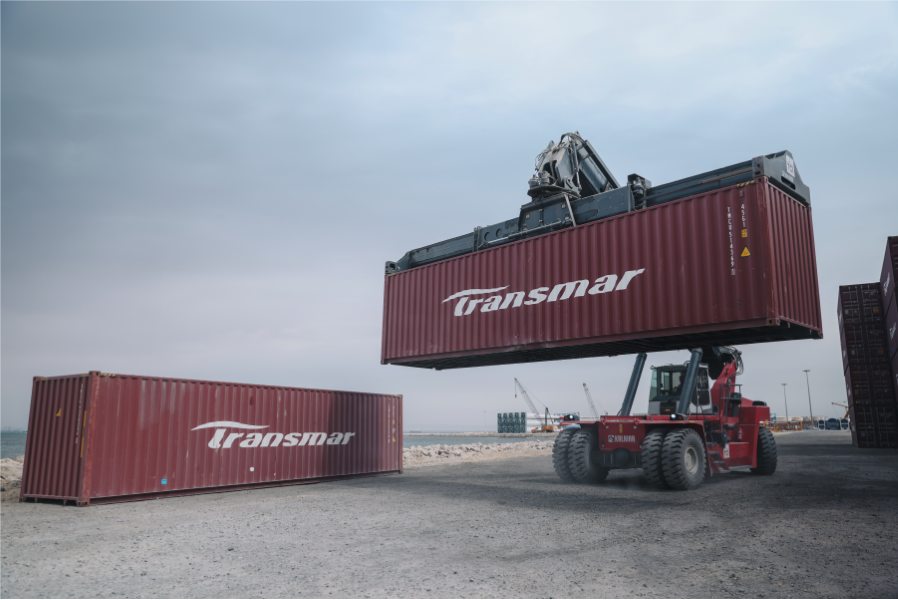
EnterpriseAM Logistics is available without charge thanks to the generous support of our friends at Hassan Allam Utilities, Transmar, and AK-Ships.

Were you forwarded this email? Tap or click here to get your own copy of Enterprise Logistics.

Want to send us a story idea, request coverage, ask for a correction, or otherwise get in touch? Reach out to us on logistics@enterprisemea.com.

DID YOU KNOW that we also cover Egypt, Saudi Arabia, and the UAE ***

This publication is proudly sponsored by

2

The Big Story Today

Egypt’s FinMin signals a pivot toward a “whitelist” economy

Egypt’s Finance Minister Ahmed Kouchouk has approved sweeping amendments to the executive regulations of the Customs Law, according to a document seen by EnterpriseAM.

It’s really smart policy: The move signals a major pivot toward a whitelist economy, where the state trades traditional, inspection-heavy oversight for a risk-based framework that rewards compliant companies. The executive regulations will only become official when published in the Official Gazette.

Here’s the rundown

The liquidity W: Importers can now pay customs duties in installments against bank sureties or ins. policies — a direct response to the high-interest-rate environment that has squeezed working capital for over a year.

A buffer for transit delays: The validity of both Advance Cargo Information Declaration numbers and advance ruling reports has been extended to six months, giving supply chain managers more time to plan for logistics delays at the origin.

Port decongestion…: The fresh regulations introduce stricter limits on storage periods in bonded warehouses in a bid to prevent ports from being used as long-term storage. This, alongside setting the groundwork to expand the Authorized Economic Operator program, will allow for faster customs clearance, specifically for compliant companies. These efforts fall within Investment Minister Hassan El Khatib’s plan to cut down customs clearance times to two days.

…which could be a stimulus for dry ports: By capping storage times at gateways like Alexandria and Sokhna, the ministry is effectively forcing importers to move stagnant cargo inland — turning dry ports, like 6th of October and 10th of Ramadan, into the primary zones for bonded storage.

Consolidated treatment: The amendments unify customs treatment for transit trade and freezones, while allowing the values stipulated in shipping documents to be used as the primary valuation tool — a key step in Egypt’s bid to become a regional logistics hub.

An express lane for trade

Why it matters: By allowing duty installments and extending document validity, the Finance Ministry is rewarding whitelisted companies with an express lane for trade.

This is a continuation of Kouchouk’s trust-building offensive, following the announcement of a second package of tax incentives earlier this month. It also perfectly positions the market for the mandatory rollout of the ACI system for air freight, slated for early January.

3

ONE QUESTION

If we see a return to the Red Sea, are we looking at a localized rate correction or will it have a wider global impact while carriers fight to fill slots?

Could a return to the Red Sea turn a market dip into a crash? Global freight rates are forecasted to slide 16% y-o-y in 2026 — marking two consecutive years of declining rates. We recently sat down with Simon Heaney, container industry analyst at London-based maritime consultancy Drewry, to test the waters.

ENTERPRISEAM: Everyone is watching the order book, but rates remain elevated. What is masking the influx of tonnage right now?

SIMON HEANEY: Overcapacity in the market is being hidden by disruptions — excess supply growth has been buoyed by slower steaming, port congestion, and the Red Sea diversions.

ENTERPRISEAM: If we assume a normalization of the Red Sea route in 2026, does the floor fall out?

SIMON HEANEY: We anticipate a substantial drop in freight rates — and carrier earnings — as those disruptive factors unwind. The drop will factor into carriers’ decisions on how they want to release capacity into the market through going back through the Suez Canal. The speed of return to the Suez Canal will impact the market’s ability to be shielded from the level of overcapacity.

ENTERPRISEAM: Is this purely a supply glut, or is the demand side also softening?

SIMON HEANEY: It is a compounding effect. We forecast supply remaining higher than demand — which is expected to tumble next year as inflation hits consumer confidence and the “front-loading” of cargo from 2025 fades out.

ENTERPRISEAM: How much of this new capacity is already locked in?

SIMON HEANEY: This is the third year in a row of record deliveries — driven by orders placed in 2021 and 2022. While new orders slowed slightly in 2023, hitting the water now is unavoidable.

ENTERPRISEAM: Do carriers have any levers left to pull to stabilize rates?

SIMON HEANEY: The only thing that could change the direction of this would be a structural effort to cap market capacity — but that’s unlikely. There is going to be an uptick in scrapping, more idling of ships, and a continued slowing down of ships.

4

YEAR IN REVIEW

How the region’s aviation industry fared in 2025

2025 was a turbulent year for the region’s aviation sector, driven by tension between strategic ambition and a broken global supply chain. The year began with hopes for a rebound in Boeing and Airbus deliveries, but as those targets slipped, regional players refused to idle. Instead, they shifted their purchasing power to boost local manufacturing and maintenance capabilities to mitigate the delays.

Where we stand on a global scale

Regional carriers are forecasted to deliver the highestnet incomemargin globally at 9.3% — well above the world average of 3.9%. The airlines’ NPs are projected to reach USD 6.9 bn in 2026, driven by strategic investments and policy frameworks.

Beyond the GCC, however, the picture was mixed. Geopolitical instability, blocked funds, and uneven infrastructure held us down in 2025. The Middle East and Africa (MEA) region currently accounts for 93% of the world’s blocked airline funds, with Algeria topping the list.

Unlike its robust passenger outlook, the Middle East’s air cargo traffic is expected to contract by 1.5% in 2025. This decline is primarily driven by geopolitical tensions and easing ocean freight disruptions in the Red Sea. For 2026, the region’s air cargo traffic growth is expected to stagnate.

Despite the volume dip, yields remain resilient. Air cargo rates — which escalated beyond natural patterns due to the shift away from commercial Red Sea shipping — are now normalizing to match global growth trends. Capacity constraints also played a role, with geopolitical hurdles and sporadic airport closures keeping supply tight.

The supply crunch drove market behavior

What changed? The retrofit market surged as airlines ramped up capacity amid industry-wide delivery delays, with the backlog of unfilled aircraft orders stalling at over 17k jets in 2025. Emirates alone enacted a USD 5 bn retrofitting plan earlier this year, aiming to extend the operational life of existing jets as it waits for delayed deliveries.

Freighters on the brain: Mammoth Freighters, a Boeing licensee launched in 2020, specializes in converting passenger 777s into cargo aircraft. Qatar Airways has signed on as the launch customer for Mammoth’s converted 777-200ER model, ordering five jets earlier this year.

Etihad is set to follow suit next year. The Abu Dhabi carrier plans on retrofitting its older Boeing 777 and 787 widebodies effective 2026.

It’s a different story for Riyadh Air: While the newly launched carrier took off in October, the operational narrative focused on how it managed to launch without its own metal — instead leasing a 787-9 for the inaugural London flight and training. The airline finalized an order for 120 engines from CFM International to power its upcoming A321neo fleet.

Delivery drought drove the rise of MRO

At USD 10 bn and rising, the region’s maintenance market has become a strategic hedge against global dysfunction. Operators have pivoted from buying shelf capacity to building local MRO ecosystems, essential for extending the life of older models. Regional MRO demand is now forecast to grow at 5.4% annually — the fastest rate on the planet.

Background: The global MRO market is expected to grow annually by a steady average of 2.7% to reach USD 156 bn in 2035.

Abu Dhabi’s Mubadala-owned Sanad and Dubai’s MBRAH led the charge. Sanad expanded its agreement with GE Aerospace and Safran to provide full MRO for LEAP-1A and 1B engines. It also tapped AerCap for a AED 400 mn order for 6k aircraft components. Dubai South inked a steady stream of agreements, including with Liebherr-Aerospace, IER MRO Industries, and Tim Aerospace. Sanad Group reported 39% y-o-y growth in its top line to reach AED 3.2 bn in 1H 2025 — as the firm’s orderbook swelled to a record AED 38 bn.

Jordan-based, Dubai Aerospace Enterprise (DAE)-backed MRO outfit Joramco also stood out — inking pacts with Iraq’s Global Aviation, World Star Aviation, and Air India, as well as building a USD 30 mn MRO center in Jordan.

The growth of low-cost carriers also hiked up demand on already very busy MRO facilities, prompting new players to explore their own. Budget carrier flydubai broke ground on its USD 190 mn aircraft MRO facility in Dubai South in July, which is scheduled for operations by 4Q 2026.

Up and coming? Saudia’s MRO arm Saudia Technic finalized major engine MRO lines at its Jeddah MRO Village.

Big orders despite supply lags

The widebody lock-in: We saw a massive commitment to capacity across regional airlines. Emirates secured a USD 3.4 bn Airbus order, and flydubai — which traditionally uses narrow-bodies — took its first major step into widebodies with Boeing 787 Dreamliner orders. Qatar Airways dominated the headlines by finalizing a USD 96 bn order with Boeing during US President Donald Trump’s visit.

“Vintage” planes gained popularity: UAE-based aircraft-leasing company DAE acquired 17 used aircraft for USD 1 bn in March. IndiGo, India’s largest air carrier, reportedly entered into wet-lease agreements for seven aircraft — two from Qatar Airways and five Airbus A320s from Turkey-based Freebird Airlines — to support domestic operations. Kuwaiti carrier Jazeera Airways purchased six A320ceo aircraft — which it currently operates under lease — for KDW 55.7 mn.

A privatization push

Egypt moved from theory to execution on airport management. While the immediate news is the Hurghada International Airport tender, the real story is the policy precedent it sets. With the IFC advising on a program that covers 11 airports, the government is effectively building a new asset class for private operators. Local capital is already positioning itself for this shift; Naguib Sawiris is forming a consortium with Italian partners to bid for Hurghada, with an eye on future tenders in Luxor and Sohag.

Saudi Arabia was done experimenting. The General Authority of Civil Aviation (Gaca) ispushing forward with a national privatization program modeled after the success at Prince Mohammed bin Abdulaziz International Airport in Madinah. The Abha International Airport concession will be awarded within three months, Gaca’s President Abdulaziz Al Duailej confirmed on Tuesday, while several consortiums have expressed interest in the Taif International Airport project.

In capital markets, Flynas’ IPO made headlines by successfully pricing its IPO at SAR 80 per share, implying a market cap of SAR 13.7 bn.

What’s next?

Next year expects a move toward localized industrial consolidation — with the partnership between UAE’s Edge Group and Etihad Engineering to solidify their local manufacturing foothold marking the first of many.

Deliveries are expected to recover, with the GCC projected to see between 180-220 aircraft deliveries from Boeing and Airbus, Bauer Aviation Advisory founder Linus Bauer said. However, it’s all still up in the air, as this figure could drop by as much as 20%, he added. Regardless, this figure hangs high above the 43 aircraft delivered by Airbus and 38 jets by Boeing to the Gulf this year.

The delivery roster: Emirates, Qatar Airways, Saudia, Riyadh Air, flydubai, and Air Arabia are “likely to receive the bulk of the year’s deliveries” in 2026, Midas Aviation partner John Grant predicted. Airbus is expected to take the lead, with the A320 being the largest aircraft model entering service, he added. This is good news for low cost-carriers such as flyadeal, flydubai, and Air Arabia, who placed orders for the model this year.

5

Moves

Agility chief executive Tarek Sultan steps down

Kuwait’s DFM-listed Agility Public Warehousing Company’s (Makhazen) chief executive Tarek Sultan (LinkedIn) has stepped down for personal reasons, according to a DFM disclosure (pdf). The board is set to convene to review the exit.

6

Also on Our Radar

Mawani backs Jubail Commercial Port upgrade + another road expansion in Riyadh

Mawani backs Jubail Commercial Port upgrade-

Arabian Chemical Terminals will build storage facilities for the handling and export of chemicals and petrochemicals at the Jubail Commercial Port, after securing a land lease contract worth over SAR 500 mn from the Saudi Ports Authority (Mawani). The development will take place on a 49k sqm plot and will deliver 70k cubic meters in total storage capacity, Mawani said in a statement yesterday.

The project will serve as a gateway for Saudi exports and imports to global markets, supporting King Abdulaziz Port in Dammam.

Riyadh doubles down on road expansion-

Riyadh pressing ahead with phase three of road expansion project: The Royal Commission for Riyadh City (RCRC) has announced the third phase of the Ring Roads and Main Roads Development Program at a budget of SAR 8 bn. The third phase is scheduled for completion in three to four years and involves six projects covering around 60 km.


2026

JANUARY

19-23 January (Monday-Friday): World Economic Forum Annual Meeting, Davos, Switzerland.

21-22 January (Wednesday-Thursday): IOSA Operator Workshop, Dubai, UAE.

FEBRUARY

3-4 February (Tuesday-Wednesday): Middle East Bunkering Convention, Dubai, UAE.

4-5 February (Wednesday-Thursday): Breakbulk Middle East, Dubai, UAE.

4-5 February (Wednesday-Thursday): MRO Middle East, Dubai, UAE.

9-11 February (Monday-Wednesday): Future Warehouses & Logistics, Dubai, UAE.

10-12 February (Tuesday-Thursday): Sustainable Aviation Future MENA, Dubai, UAE.

12 February (Thursday): Technical Seminar on Marine Biofuels, London, UK.

15-17 February (Sunday-Tuesday): World Advanced Manufacturing Logistics Summit and Expo, Riyadh, Saudi Arabia.

20-22 February (Friday-Sunday): Dubai Freight Camp, Dubai, UAE.

24-25 February (Tuesday-Wednesday): Green Shipping Summit, Athens, Greece.

25-27 February (Wednesday-Friday): Air Cargo Africa, Nairobi, Kenya.

25-27 February (Wednesday-Friday): Air Law Treaty Workshop Tanzania, Dar es Salaam, Tanzania.

MARCH

5-6 March (Thursday-Friday): CargoIS Forum, Miami, United States.

9-13 March (Monday-Friday): WCA Worldwide Conference, Singapore.

10-12 March (Tuesday-Thursday): World Cargo Symposium, Lima, Peru.

18-19 March (Wednesday-Thursday): IntraLogisteX, Birmingham, United Kingdom.

18-19 March (Wednesday-Thursday): Green Marine Transport Conference, Amsterdam, The Netherlands.

26 March (Thursday): Gulf Ship Finance Forum, Dubai, UAE.

APRIL

12-15 April (Sunday-Wednesday): Saudi Smart Logistics, Riyadh, Saudi Arabia.

16-17 April (Thursday-Friday): Global Supply Chain and Logistics Summit, Amsterdam, The Netherlands.

MAY

19-21 May (Tuesday-Thursday): Ground Handling Conference (IGHC), Cairo, Egypt.

12-14 May (Tuesday-Thursday): Aviation Energy Forum (AEF), Paris, France.

Now Playing
Now Playing
00:00
00:00