Get EnterpriseAM daily

Egypt mulls USD 200 mn worth of investments across four projects in Morocco

1

What we're tracking today

TODAY: Egypt mulls Moroccan investments + Kuwait’s PMI is in

Good morning, friends. It’s a compact issue this morning with some investment updates from Egypt, what you need to know from Kuwait’s PMI report, and more details on Marsa Maroc’s African expansion. First, a couple of things to look out for…

PSAs-

#1- You now need additional permits for shipping e-waste: Starting January 2025, transporting Waste Electrical and Electronic Equipment (WEEE) or e-waste will require transboundary movement approval from environmental protection agencies in accordance with the Amber Listed waste procedure, Hapag-Lloyd reports. This applies to all export, import, and transit shipments in line with Basel Convention regulations, with shippers required to secure permits, including notifications and consents from all countries involved in the transport process.

#2- Phase Two of Al Nalia app is up and running: The Integrated Transport Center (Abu Dhabi Mobility) has launched the second phase of its maritime services and safety app Al Nalia, it said in a statement. The new features added in this phase include integrated marina berth booking, waterway hazard reporting, weather notices notifications, public water transport services booking, and links to local maritime regulations.

WATCH THIS SPACE-

]#1- Deadline for acceptance of Adia consortium’s bid for Malaysia Airports extended: The deadline for acceptance of the USD 4.1 bn takeover bid for Malaysia Airports, led by a consortium that includes Abu Dhabi Investment Authority (Adia), Global Infrastructure Partners (GIP), and Malaysian state players Khazanah Nasional Berhad and Employees Provident Fund, has been extended to 17 January from the original deadline of 8 January, according to a disclosure (pdf) to the Malaysian bourse. The group now holds a 70.08% stake in Malaysia Airports, up from 40.85% last month, with an additional 5.65% stake still awaiting transfer.

Background: In November, the consortium submitted a formal conditional offer in which Adia and GIP would acquire a 30% stake in Malaysia Airports, while the two Malaysian investors would collectively hold 70%. The consortium aims to upgrade infrastructure, enhance connectivity, and improve services, stating that privatization would better support these objectives.

What’s next? The consortium will reveal the level of acceptance of the offer as of 8 January “in due course,” the statement reads. Financial advisors of the transaction previously described the acquisition offer as “not fair,” but “reasonable,” while some directors of Malaysia Airports recommended rejecting the bid due to valuation concerns.

#2- Saudi low-lying ports are among the most vulnerable to a one-meter rise in sea levels, according to an analysis by The Guardian of a recent report (pdf) by the International Cryosphere Climate Initiative (ICCI). The one-meter rise — now predicted to be inevitable within the decade — will particularly impact the Aramco-operated Yanbu and Ras Tanura, which together are responsible for 98% of the Kingdom’s critical oil exports. Emirati ports in the sea-facing cities of Fujairah and Khor Fakkan would also be impacted.

The global picture: 13 oil ports used by the biggest-sized oil tankers are seriously threatened by the predicted one-meter rise in sea levels, according to the analysis. This includes ports in the US, China, Singapore, South Korea, Russia, and the Netherlands.

MARKET WATCH-

#1- Oil prices continued declining for a second straight session this morning as ample supply and a strong greenback weighed down last week’s rally, Reuters reports. Brent crude futures lost USD 0.28 to USD 76.02 a barrel by GMT 01.48, while US West Texas Intermediate (WTI) shed USD 0.33 to USD 73.23 a barrel. Both benchmarks gained momentum in a five-day streak of gains last week, settling at the highest price points since October on Friday.

#2- Baltic index takes a dip: The Baltic Exchange’s dry bulk sea freight index — which tracks rates for the capesize, panamax, and supramax vessel segments — fell 29 points to 1,043 points on Monday, breaking a five-day positive streak. The capesize index decreased 85 points to 1,290, while the panamax index rose 21 points to 1,061. The smaller supramax index shed 17 points to 867.

#3- Aramco raises crude prices for most regions, but cuts them for the US: Aramco raised its prices for crude oil for next month for Asian buyers, signaling tighter supply in its key market following Opec+ decision to delay production increases until April, Bloomberg reported. The oil major’s main Arab Light crude grade will be sold at a premium of USD 1.50 a barrel to the regional benchmark — an increase of USD 0.6. The Bloomberg survey for traders and refiners penciled in a lower USD 0.1 hike.

In other markets: While there was an increase in the prices of some grades for buyers in the Mediterranean region and Northwestern Europe, prices were cut for US buyers.

DATA POINT-

#1- Cargo transit through Iran surged 31% y-o-y during 9M of the current Iranian calendar year, from 20 March to 20 December 2024, Trend30 reports. Some 16.5 mn tons of goods were transited through the country. Some 10.5 mn tons passed through three major customs points. Shahid Rajai customs accounted for 4.4 mn tons, followed by 3.8 mn tons at Parvizkhan customs, and 2.3 mn tons at Bashmaq customs.

ALSO- Iran’s non-oil exports up 18% in 9M: Iran’s non-oil exports increased 18% y-o-y to USD 43.14 bn in the first nine months of this Iranian calendar year, IRNA reports. The total value of Iran’s imports, including gold bullion, amounted to some USD 50.89 bn in the same period. The weight of non-oil exports increased by 13.7% y-o-y to reach 116.35 mn tons, with the average value per ton of exported goods rising by 3.74% y-o-y. China stood out as the largest importer of Iranian non-oil goods, importing USD 11 bn over the last nine months, followed by Iraq at USD 9.4 bn, the UAE at USD 5.3 bn, and Turkey at USD 5.2 bn. The UAE was Iran’s largest exporter at USD 15.3 bn, followed by China at USD 13 bn, and Turkey at USD 8.9 bn.

***YOU’RE READING EnterpriseAM Logistics, the essential MENA publication for senior execs who care about the industry that connects producers and retailers to global markets. We’re out Monday through Thursday by 9:15am in Cairo and Riyadh and 11:15am in the UAE.

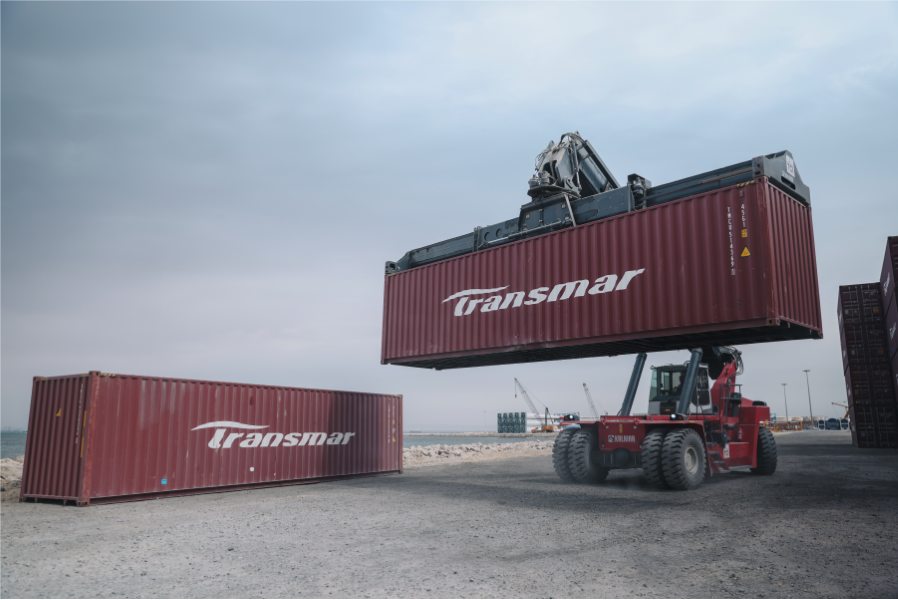
EnterpriseAM Logistics is available without charge thanks to the generous support of our friends at Hassan Allam Utilities, Transmar, and AK-Ships.

Were you forwarded this email? Tap or click here to get your own copy of Enterprise Logistics.

Want to send us a story idea, request coverage, ask for a correction, or otherwise get in touch? Reach out to us on logistics@enterprisemea.com.

DID YOU KNOW that we also cover Egypt, Saudi Arabia, the UAE, and the MENAclimate industry ?
***

CIRCLE YOUR CALENDAR-

Belgium will host the World Cargo Summit from Monday, 27 January to Wednesday, 29 January in Ostend. The event will focus on air cargo economics, strategy, and market trends with a specific focus on how the industry will tackle disruptions and how firms can adapt their business models.

The UAE will host the ShipTek International Conference from Wednesday, 29 January to Thursday 30 January in Dubai. The two-day conference will gather industry experts, including managing director at Hapag-Lloyd Carolin Stumm, CEO Adani Ports Nicolai Friis, VP International Maritime Industries Justin Taylor, CEO Tristra Tim Coffin, and others to discuss new tech and developments in the maritime industry.

The UAE will host the Middle East Bunkering Convention from Monday, 3 February to Wednesday, 5 February in Dubai. The event will focus on the marine fuels sector to address the future of the industry in light of geopolitical issues, environmental regulation, and the future of artificial intelligence and digitalization.

Saudi Arabia will host the Airport Expansion Conference from Tuesday, 4 February to Wednesday, 5 February in Riyadh. The two-day conference will feature over 30 speakers to discuss challenges faced by Saudi Airports and highlight Saudi Arabia’s Vision 2030 with a clear focus on expansion, tech, and strategic partnerships.

The UAE will host the Middle East Breakbulk Conference from Monday, 10 February to Tuesday, 11 February in Dubai. The event gathers giant manufacturers, EPCs, and service providers to discuss the latest solutions in breakbulk and heavy-lift logistics across the Middle East and Africa. The two-day event features an artificial intelligence (AI) seminar, heavy lift workshop, chartering workshop, and a women in breakbulk panel.

Check out our full calendar at the bottom of this email for a comprehensive listing of upcoming news events and news triggers.


This publication is proudly sponsored by

2

Investment Watch

Egypt mulls USD 200 mn worth of investments across four projects in Morocco

Morocco drums up interest from Egyptian companies: A number of Egyptian companies are looking to develop four industrial projects across several industries in Morocco, including oil and gas, industrial zones, and food and beverages, with investments of up to USD 200 mn by 2025, head of the Egyptian-Moroccan Business Council Nizar Abu Ismail told Asharq Business. The council is expected to ink agreements on two or three projects during 1Q 2025, and is currently selecting the Egyptian firms for the projects with Moroccan private or state-owned counterparts, Abu Ismail added.

Trade in mind: The new projects are expected to bolster exports to West African markets on the back of Morocco's trade agreements with several countries in the region, Abu Ismail noted. The volume of trade between Morocco and Egypt amounts to USD 1.3 bn annually, with Egypt exporting nearly USD 819.4 mn during 2023, including exports of iron, ceramics, agricultural crops, and electrical equipment and devices. Morocco’s exports to Egypt in 2022 — which amounted to USD 66.7 mn — included car, coffee, tea extracts, and processed fish.

Boosting investments: Morocco currently has 295 firms operating in Egypt with investments worth nearly USD 230 mn, according to data seen by Asharq Business. Morocco — which ranked as the seventh biggest Arab investor in Egypt in 2022 — invested nearly USD 17 mn in the country at the end of 3Q FY 2021-2022, Morocco World News reported. In 2018, Morocco was ranked as the 40th largest foreign investor in Egypt, with investments totalling USD 80 mn.

3

Purchasing

Kuwait’s non-oil sector business growth dips slightly, but remains healthy

Kuwait’s non-oil sector business growth marginally slowed in December, as rates of expansion in new orders and outputs eased slightly from last month, according to S&P Global’s Kuwait PMI (pdf). The country’s headline figure slipped to 54.1 in December, down from 55.9 in November, still holding well above the 50.0 mark for healthy growth. The figure is still the third-highest on record since the survey launched in 2018.

REMEMBER- The all-important 50.0 mark is the threshold separating contraction from growth. Anything above 50 denotes expansion, while anything below indicates contraction.

New orders continued to surge, albeit at a slightly slower pace, buoyed by effective advertising, price discounts, and an influx of visitors attending the Arabian Gulf Cup. New export orders also continued to rise this month, and output increased at the third-strongest pace on record. Purchasing activity rose sharply and input stock spiked in response to a steady flow of incoming new orders.

Output costs eased for the first time in 16 months as firms looked to remain competitive, offering discounted prices. This was despite a significant increase in input costs, with prices on the uptick for a range of items including advertising, machinery spare parts, stationery, and transportation. Staff costs also grew, but only moderately and at the slowest pace in three months.

Hiring rose for the third month running in December in efforts to address rising workloads, yet eased in comparison to November. Staff shortages resulted in sluggish output times, causing a third consecutive accumulation of work backlogs this month. Suppliers’ delivery times decreased to their lowest level in six months.

Carrying a positive outlook into 2025: Kuwait maintained an optimistic outlook for the next year, with confidence buoyed by marketing plans and competitive pricing. Sentiment jumped up for the fourth month running and was the sharpest increase measured since June.

4

Ports

Marsa Maroc to expand into East and West Africa with new subsidiary

Marsa Maroc to expand in Africa: Moroccan port operator Marsa Maroc has obtained a license to establish their subsidiary Marsa Maroc International Logistics to manage investments and operate new ports in East and West Africa, Asharq Business reports, citing a governmental decree. The subsidiary has an initial capital of MAD 300k (USD 30k).

What we know: Marsa Maroc will invest an undisclosed amount in Damerjog Oil FZE, which is planning to build an oil and gas port on Djibouti’s Gulf of Aden coast, Reuters reports. The aim is to boost the port operator’s presence in East Africa’s supply chain, the decree said. Marsa Maroc International Logistics will run a branch called Marsa Djibouti to oversee the investment. The subsidiary has also created Marsa Benin to operate terminals 1 and 5 at Benin’s port of Cotonou in West Africa.

Background: Morocco’s main port operator took on a delegated management contract for two terminals at Benin’s Cotonou Port in July 2024 and began operating it in October 2024. The port handles approximately 436k metric tons of bulk cargo and 2.9 mn metric tons of break bulk cargo.

Tags:

5

A MESSAGE FROM TRANSMAR

Planning ahead: 2025 supply chain risks

Global trade thrives on efficient shipping and robust supply chains, but these systems are increasingly vulnerable to disruptions at the nexus of geography, politics, and economics. As 2025 approaches, businesses must anticipate and address key risks to safeguard their operations.

Geopolitical developments, such as tariffs or export restrictions, can create significant disruptions. The U.S.-China trade war, for example, spurred companies to diversify supply chains by shifting production to Southeast Asia, increasing operational complexity. With tariffs expected to take center stage under President-elect Trump, the world's largest bilateral trade flow faces potential upheaval.

Critical waterways like the Suez and Panama Canals are increasingly susceptible to instability. In 2024, the Bab el-Mandeb Strait's security risks escalated due to regional conflicts, while severe droughts restricted traffic through the Panama Canal. These disruptions lead to rerouted shipments, higher costs, and delays, emphasizing the fragility of these critical arteries.

Wars and sanctions reshape trade patterns and strain supply chains. The Russia-Ukraine conflict, for instance, has redirected shipping away from the Black Sea, increasing costs and complicating logistics. Maritime insecurity heightens risks, making supply chain resilience more crucial than ever.

Shipping’s dependence on fuel exposes it to fluctuations in energy markets. Tensions in oil-producing regions like the Arabian Gulf drive up oil prices, inflating freight costs. While strategies like slow steaming and fuel-efficient technologies mitigate some impacts, ripple effects permeate global supply chains.

New alliances, such as BRICS and AfCFTA, are reshaping global trade. These agreements create potential infrastructure investments but also introduce competitive pressures and uncertainties as countries realign their trade relationships.

To manage these multifaceted risks, businesses must focus on resilience through diversification and specialization. Diversifying suppliers, from logistics partners to shipping lines, is a key hedge against global uncertainties. Selecting specialized suppliers by geography, scope, or activity ensures a tailored approach to mitigate risks.

2025 is a year to prioritize agility and foresight. By addressing these challenges proactively, companies can navigate turbulent waters and achieve smoother sailing in the global marketplace.

6

Also on Our Radar

UAE’s 7X’s logistics arm EMX adds e-bikes to its fleet

LOGISTICS HANDLING-

UAE’s 7X’s logistics arm EMX added e-bikes to its fleet as part of the company’s strategy to transition to an all-electric fleet, according to a press release. The e-bikes are expected to boost energy efficiency by 16%, offering a 135 km range with a dual battery system. The bikes will be supported by charging infrastructure at EMX hubs nationwide.

Background: EMX was launched by state-owned 7X in February of last year, and expanded internationally in July with its e-commerce delivery platform, EMX International.

OTHER STORIES WORTH KNOWING THIS MORNING-

  • Portsaid Marine + Al Barrak to cooperate on marine projects: Marine for Contracting & Trading has signed a partnership agreement with Kuwait-based Al Barrak Co. to collaborate on various maritime projects including manufacturing boats, constructing piers, and refurbishing marine units. (Al Mal)
7

Around the World

US trade policies remain uncertain as Trump denies mulling scaled-back tariffs

No watered-down tariff plans for Trump? US president-elect Donald Trump denied aWashington Post report published yesterday suggesting his blanket 10%-20% universal tariffs plan would be scaled back to target only critical imports tied to economic and national security. WP later updated its report to redact some of the original content, after being picked up by the Financial Times, Bloomberg, Reuters, the Guardian, among others.

Making the cut: The alleged scaled-back plan would see the incoming US administration focusing tariffs on goods including defense materials, pharma products, and energy materials including solar panels, and batteries, WaPo’s Jeff Stein reported.

Trump insists he’s not backing down from tariff plans: “The story in the WP, quoting so-called anonymous sources, which don’t exist, incorrectly states that my tariff policy will be pared back. That is wrong,” Trump said in a Truth Social post yesterday.

IN CONTEXT- Trump, set to take office on 20 January, has proposed a 60% tariff on Chinese goods, followed by an additional 10%, as well as a 10% tariff on imports from other countries during his 2024 Presidential campaign. Separate tariffs targeting Canadian and Mexican goods have also been suggested, leaving businesses scrambling to adapt to the potential cost increases and supply chain disruptions.

Tariffs might trigger a spike in US inflation, but Powell’s not sweating it — at least not yet: The effect of Trump’s potential tariffs on the economy is not yet a present situation to handle, US Fed Chair Jerome Powell said in December when the Federal Reserve cut rates by 25 bps for the third time last year.

IN OTHER US NEWS- More sanctions on Russian oil tankers coming: The Biden administration is planning to impose more sanctions on Russia and any of its tankers carrying Russian crude oil in response to its war on Ukraine, Reuters reports, citing unnamed sources with knowledge of the matter.

What we know: The sanctions will target people trading and tankers carrying Russian oil sold for more than the Western-imposed cap of USD 60 per barrel, the sources told Reuters. This will affect “two Russian companies, more than 100 tankers, oil traders, Russian ins. companies, etc.,” an unnamed official said. The Biden administration is trying to strengthen its attempts to support Ukraine before Donald Trump’s inauguration on 20 January, as Trump is expected to be less supportive.

REMEMBER- Russian state-owned tanker fleet operator Sovcomflot renamed at least four tankers listed under US sanctions in defiance last year. Sovcomflot was hit with US sanctions in February on the grounds it violated the G7-mandated price cap and other “deceptive activity.”

OTHER STORIES WORTH KNOWING THIS MORNING-

  • South Korea’s Muan Airport still closed as probe continues: South Korea has extended the closure of Muan International Airport until January 10 as investigations continue into the plane crash at the airport on December 29. The airport was initially scheduled to reopen on Tuesday. (Reuters)

JANUARY 2025

20-24 January (Monday-Friday): World Economic Forum Annual Meeting, Davos, Switzerland.

27-29 January (Monday-Wednesday): World Cargo Summit, Ostend, Belgium.

28-29 January (Tuesday-Wednesday): Green Shipping Summit, Rotterdam, The Netherlands.

29-30 January (Wednesday-Thursday): ShipTek International Conference, Dubai, UAE.

FEBRUARY

3-5 February (Monday-Wednesday): Middle East Bunkering Convention, Dubai, UAE.

4-5 February (Tuesday-Wednesday): Seatrade Maritime Qatar, Doha, Qatar.

4-5 February (Tuesday-Wednesday): Airport Expansion Conference, Riyadh, Saudi Arabia.

10-11 February (Monday-Tuesday): Middle East Breakbulk conference, Dubai, UAE.

10-11 February (Monday-Tuesday): MRO Middle East, Dubai, UAE.

10-12 February (Monday-Wednesday): Sustainable Aviation Futures MENA, Abu Dhabi, UAE.

10-12 February (Monday-Wednesday): Japan Kyoto Trade Exhibition, Dubai, UAE.

10-13 February (Monday-Thursday): Future Warehouses & Logistics, Dubai, UAE.

18-19 February (Tuesday-Wednesday): Argus Green Marina Fuels Asia Conference, Singapore.

18-19 February (Tuesday-Wednesday): Middle East Procuretech Summit, Dubai, UAE.

19-21 February (Wednesday-Friday): Air Cargo Africa, Nairobi, Kenya.

20-22 February (Thursday-Saturday): Dubai Freight Camp, Dubai, UAE.

25 February - 1 March (Tuesday-Saturday): WCA Worldwide Conference, Dubai, UAE.

MARCH

No events announced at the moment.

APRIL

2-4 April (Wednesday-Friday): Global Supply Chain and Logistics Summit, Amsterdam, The Netherlands.

3-4 April (Thursday-Friday): Africa Supply Chain Optimization, Johannesburg, South Africa

10 April (Thursday): Gulf Ship Fiance Forum, Dubai, UAE.

14 April (Monday): CargoIS Forum, Dubai, UAE.

15-17 April (Tuesday-Thursday): Transport Middle East 2025, Aqaba, Jordan.

15-17 April (Tuesday-Thursday): IATA World Cargo Symposium, Dubai, UAE.

16-17 April: Global Ports Forum, Dubai, UAE.

MAY

6-8 May (Tuesday-Thursday): Airport Show, Dubai, UAE.

12-15 May (Monday-Thursday): Saudi Smart Logistics, Riyadh, Saudi Arabia.

13-14 May (Tuesday-Wednesday): Global Ports Forum, Dubai, UAE.

20-22 May (Tuesday-Thursday): Seamless Middle East, Dubai, UAE.

27-29 May (Tuesday-Thursday): Saudi Warehousing & Logistics Expo, Riyadh, Saudi Arabia.

JUNE

1-3 June (Sunday-Tuesday): Annual General Meeting & World Air Transport Summit 2025, Delhi, India.

2-4 June (Monday-Wednesday): Propak MENA, Cairo, Egypt.

5-6 June (Thursday-Friday): Supply Chain & Logistics Innovation Summit, Amsterdam, Netherlands.

11-13 June (Wednesday-Friday): Sustainability World Summit, Frankfurt, Germany.

17-19 June (Tuesday-Thursday): Terminal Operations Conference & Exhibition, Rotterdam, Netherlands.

19 June (Thursday): East Med Maritime Conference, Athens, Greece.

25-26 June (Wednesday-Friday): Decarbonizing Shipping Forum, Hambury, Germany.

JULY

1-3 July (Tuesday-Thursday): ASEAN Ports and Logistics, Jakarta, Indonesia.

SEPTEMBER

24-26 September (Wednesday-Friday): Routes World, Hong Kong.

OCTOBER

1-2 October (Wednesday-Thursday): Saudi Maritime & Logistics Congress, Dammam, Saudi Arabia.

14-15 October (Tuesday-Wednesday): Investing in Africa Conference and Expo, London, UK.

NOVEMBER

3-6 November (Monday-Thursday): ADIPEC Maritime and Logistics Exhibition and Conference, Abu Dhabi, UAE.

4-6 November (Tuesday-Thursday): Air Cargo Forum, Abu Dhabi, UAE.

17-21 November (Monday-Friday): Dubai Airshow, Dubai, UAE.

EVENTS WITH NO SET DATE

Mid-2025: Iraq will complete phase one of the construction of the Grand Faw Port.

DHL and Aramco’s logistics and procurement hub in Saudi Arabia will commence operations.

AD Ports-operated Safaga Port’s multi-purpose terminal will become operational.

Phase 3 of APM Terminals Tangier MedPort to be complete and operational.

1Q 2025: Sadr Park’s Logistics Center in Riyadh to be completed.

1Q 2025: Phase two of Jafza Logistics Park to be completed.

2026

2026 UNCTAD Global Supply Chains Forum, Saudi Arabia.

2027

4Q 2027: Oman’s Musandam Airport construction to be completed.

Now Playing
Now Playing
00:00
00:00