Get EnterpriseAM daily

DP World + Rumo will build a new grain and fertilizer terminal at Santos Port

1

What we're tracking today

TODAY: More Americas expansion for DP World + Baltimore bridge collapses

Good morning, ladies and gents. We have a meaty issue this morning with more DP World expansion news, somber news developing state-side in the wake of a major ship collision, and a deep dive into how shipping emissions are affecting the Arctic. But first…

A quick programming note: Enterprise Logistics will be taking a publication holiday tomorrow and will be back in your inboxes at the usual time on Monday morning.

THE BIG LOGISTICS STORY OUTSIDE THE REGION- A Sri Lanka-bound Maersk-chartered container ship, dubbed Dali, collided with a bridge in Baltimore causing it to collapse. Six workers are missing and presumed dead due to frigid water conditions after the massive cargo ship reportedly lost power and rammed into the bridge. Search-and-rescue operations were suspended about 18 hours after the accident, US Coast Guard and Maryland State Police officials said. Eight people were on the bridge when the collision happened, Maryland’s transport secretary said a few hours after the incident. Rescuers pulled two survivors out of the water.

What happened? The Dali was exiting Baltimore’s port when it reported a problem with power and signaled a “mayday” before striking Baltimore’s Francis Scott Key Bridge. Footage of the incident shows the vessel hitting one of the bridge’s columns, causing it to collapse into the water in seconds, with some parts of the bridge falling onto the Dali and resulting in a fireball.

Baltimore’s closure is bad news for US supply chains: The port is the largest import point for cars into the US, handling upwards of 750k vehicles last year It is also the largest importer of farm and agricultural machinery, and agricultural products. Tthe bridge’s collapse has stranded some 40 vessels within the port with another 30 vessels signaling the port as their destination.

The story grabbed a lot of ink in the international press: Reuters | AP | The Washington Post | The Financial Times | The New York Times | BBC | CNN | The Guardian

WATCH THIS SPACE-

#1-Boeing needs a “strong engineering lead” after its upper management shuffle, Emirates president Tim Clark told the National. “Whether, yet again, this changing of the guard will resolve Boeing’s issues, only time will tell, but time, unfortunately, is not on their side,” Clark added. Emirates is a leading customer for Boeing, and Clark had previously hinted at the need for a shakeup in the aircraft maker’s leadership to remedy persistent quality problems and delays in deliveries, the National said. Analysts also agree that Boeing’s next chief must be an experienced aerospace engineer, the outlet also said.

ICYMI- Boeing’s top management is facing a reshuffle, with CEO Dave Calhoun set to step down by the end of the year. Former Qualcomm CEO Steve Mollenkopf has been tapped to serve as Boeing’s new chairman and will begin searching for Calhoun’s replacement.

#2- A seventh tanker, sanctioned by the US, hauling a cargo of Russian Sokol oil was set to arrive at China’s Tianjin port yesterday to discharge its cargo, clearing a backlog of the crude grade that was stored on ships, Reuters reports, citing LSEG and Kpler tracking data. Six other sanctioned tankers carrying Sokol oil arrived at the port earlier this month. A spike in US sanctions targeting Russian tankers have seen Russia “struggling with a Sokol glut,” the newswire said, with some 10 mn barrels of the crude grade stuck in floating storage amid payment difficulties due to the sanctions. India withdrew from Sokol purchases in a bid to avoid being hit by sanctions itself, giving way to China to uptake the fuel grade, in place of more expensive Iranian crude, the newswire said, citing traders and shipping data.

DISRUPTION WATCH-

Houthis have carried out six attacks with drones and missiles in the Red Sea and Gulf of Aden over 72 hours, Reuters reports, citing the Iranian-backed group’s military spokesperson Yahya Sarea. The group targeted Maersk Saratoga, APL Detroit, Huang Pu — identified as US or British — and Pretty Lady enroute to Israel, Sarea said. Attacks also targeted two US destroyers in the Red Sea, and Eilat in Israel, he added. Maersk later rebutted Houthi claims that the Saratoga was attacked, which is currently continuing its journey, the newswire added, citing company statements.

DANGER ZONE-

Turkey and Egypt are mired with oil spills: Egypt and Turkey are among the worst hotspots for oil slicks — spills of liquid petroleum hydrocarbons into the marine ecosystem — by ships despite their strategic maritime locations and reliance on tourism, The Financial Times reports. Through the use of satellite imagery and AI, researchers have identified over 2.7k oil slicks globally as a result of cheap fuel filtering and improper waste disposal, mostly located in Southeast Asia, the FT explains. Countries like Egypt and Turkey, need to monitor and report these violations more effectively, FT suggests. Experts are also calling for stringent enforcement of maritime laws to curb the pollution.

MARKET WATCH-

#1- Baltic index hits a three-month low: The Baltic Exchange’s dry bulk sea freight index — which tracks rates for the capesize, panamax, and supramax vessel segments — was down 3.3% to 2,123 points on Monday, driven by falling rates in the capesize and panamax vessel segments, Reuters reports. The larger capesize subindex dropped 5.4%, at 3,295 points, hitting its lowest since 27 February, while panamax dipped 2.1% at 2,120 points. Meanwhile, the smaller supramax segment inched up to 1,386 points, the newswire said.

#2- Oil prices held steady on Tuesday, as investors factored a more nuanced view of supply disruptions in Russia on the back of Ukrainian attacks, and a weaker USD buoyed the market, Reuters reports. Front-month Brent crude futures shed USD 0.11 to USD 86.64 a barrel by 14.15 GMT, while US West Texas Intermediate (WTI) futures gained USD 0.06 to USD 82.01 a barrel, meanwhile Brent futures for June notched down USD 0.04 to USD 86.04 a barrel, the newswire said. Ukrainian attacks have seen some 14% of Russia’s refining capacity taken offline, Reuters said citing its own calculations, while a restoration to 2023 capacity is not expected until this year’s second half, FGE analysts said. “The impact of refining disruptions on crude prices is mixed, with a bearish effect from the decline in refinery demand and a bullish effect from the potential reduction in Russia oil exports,” the newswire said citing a Goldman Sachs analyst.

#3- LNG shipping stocks dipped last week: The UP World LNG Shipping Index (UPI), which tracks share prices for companies that specialize in shipping LNG, shed 0.83% last week to close at 155.02 points, UP Indices reports. The same period saw the S&P 500, which tracks US companies, rally 2.29%.

CIRCLE YOUR CALENDAR-

The UAE will host Abu Dhabi Mobility Week from Wednesday, 24 April to Wednesday, 1 May in Abu Dhabi. The event, organized by The Department of Municipalities and Transport – Abu Dhabi (DMT), will feature announcements, forums, and introduce a mobility strategy for the emirate.

Iran will host the second Iran-Africa International Summit from Wednesday, 24 April through to Friday, 26 April in Tehran. The event will see Iran receive trade ministers from more than 40 African countries.

Saudi Arabia will host a special World Economic Forum event from Sunday, 28 April through to Monday, 29 April in Riyadh. The event will focus on global collaboration and energy.

The UAE will host the 23rd edition of the Airport Show from Tuesday, 14 May through to Thursday, 16 May in Dubai. The 23rd Airport Show will see representation from airport suppliers, airport service providers, aviation executives, and regional decision makers. The event will highlight current innovations and new technologies, while emphasizing this year’s "Sustainability and Innovation," theme.

The UAE will host The Electric Vehicle Innovation Summit from Monday, 20 May to Wednesday, 22 May in Abu Dhabi. The event will see industry leaders come together to discuss sustainable mobility and tapping into groundbreaking advancements in electric vehicles while engaging with key decision-makers.

Check out our full calendar at the bottom of this email for a comprehensive listing of upcoming news events and news triggers.


This publication is proudly sponsored by

2

Ports

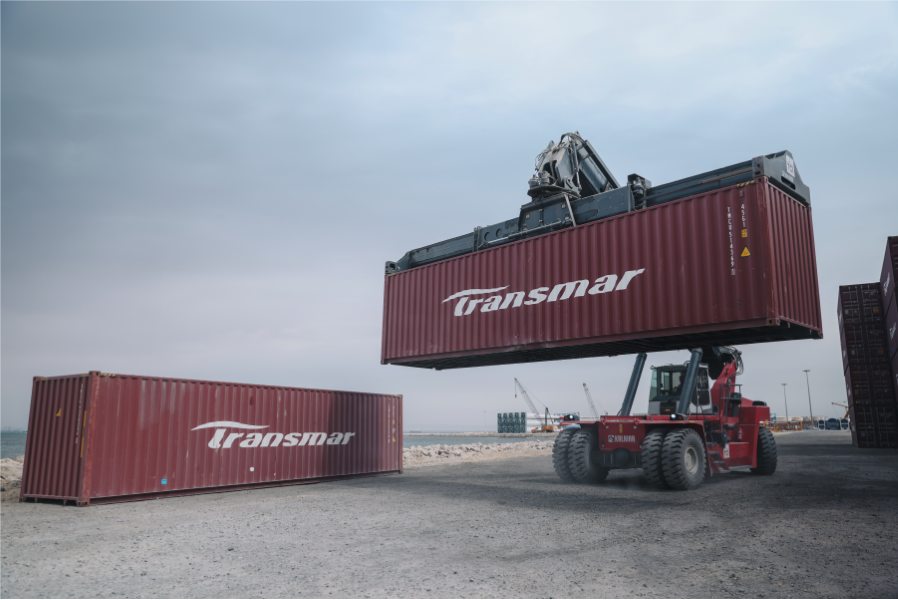
DP World + Rumo to build new grain and fertilizer terminal at Brazil’s Santos Port

DP World has inked an agreement with Brazil’s leading railway operator Rumo to establish a new terminal for grains and fertilizers at Port Santos, according to a statement. The agreement will boost the port’s handling capacity by some 12.5 mn tons per year — including 9 mn tons of grains and 3.5 mn tons of fertilizer — in a bid to boost Brazil’s long-term agricultural competitiveness. Rumo will pour USD 500 mn of investment into the project.

The details: The new terminal will be developed in DP World’s private-use terminal on Santos’ left bank, the statement said. The agreement's initial operating period is for 30 years, with an option to extend subject to DP World’s approval. DP World will overlook port operations, including cargo movement.

The timeline: Construction is expected to take some 30 months, upon fulfillment of precedent conditions such as government approvals, the statement also said.

On a roll: DP World invested some USD 50 mn as part of a larger USD 85 mn terminal expansion project to boost its container operations at the port, acquiring 21 new port assets to increase capacity to some 1.7 mn TEU, according to a separate statement released last week.

What they said: “The railway mode is structurally the most effective, secure, competitive, and low-carbon logistics solution for moving large volumes of commodities for export, as well as for imported cargo, with inputs that increase the productive capacity of Brazilian agribusiness. Combined with the State Railway of Mato Grosso, which we are building to expand rail reach in the Midwest, the new terminal reinforces the prominence of the Port of Santos as the main logistics corridor for agriculture, and consequently a lever of competitiveness for the country's economy,” Rumo CEO Pedro Palma said.

3

IPO Watch

Could Tristar revive its IPO process?

Dubai-based energy logistics firm Tristar is reportedly kicking off a fresh push to sell stakes in the company, in a bid to capitalize on a recent surge in revenues, Bloomberg reported earlier this week, citing sources with knowledge of the matter. Tristar has reportedly tapped deNovo Partners to work on the sale process, with the pair looking to bring aboard another advisor to assist, the sources said. Details on the valuation and stake on offer have not been disclosed.

What’s next? Tristar’s investors are looking to bank on the company’s improved performance, on the back of its expansion to 29 countries, compared to the 21 countries it operated in during a previous round of IPO talks which fell through in 2021. Current IPO talks are ongoing, but could break down, the sources said.

More on the ditched IPO: Tristar withdrew its 24% offering on DFM “largely due to a mismatch in valuation expectations and investor education,” Chief Executive Eugene Mayne had told Bloomberg. Tristar’s withdrawal was seen as a setback for Dubai’s financial markets in 2021, with the city seeing a years-long dry spell in listings. The firm had initially planned a London listing, but withdrew after a fraud case involving London-listed NMC Health stoked anxieties about governance and transparency vis-a-vis GCC-based firms.

ICYMI- Tristar saw its revenues surge 78.3% y-o-y to USD 554 mn in 1H 2023, according to a press release.

About Tristar: Tristar is 65% owned by Kuwait’s Agility, with Gulf Investment Corp holding a 20% stake, and Mayne owning the remainder, Bloomberg said. The firm describes itself as a fully integrated energy logistics outfit serving downstream oil and gas sectors, and is active in maritime and road transport, bunkering, fuel storage, and other fields, according to its website.

Tristar’s recent activities: The firm inaugurated a new 10k sqm trucking staging station facility in Qatar in September 2023, and inked an agreement with Turkish Akdeniz Shipyard to build a hybrid bunker barge for the UAE’s Port of Fujairah, scheduled for commission in 1Q 2025.

4

Enterprise Explains

Enterprise Explains: How global shipping is impacting the Arctic’s battle against climate change

The Arctic is becoming increasingly navigable for ships as sea ice melts due to rising global temperatures opening new trade routes. The shift in shipping routes is accelerating the release of CO2 and black carbon (BC) from oil-based fuels used in ships using heavy fuel oils (HFOs), according to a statement released last week, prompting Canada, Norway, and the Clean Arctic Alliance (CAA) — an alliance of some 20 environmental groups — to push for the adoption of emission control areas (ECAs) in the region.

The International Maritime Organization (IMO) approved two new ECAs in the Canadian Arctic waters and Norwegian Sealast week, during a Marine Environment Protection Committee (MEPC) session held in London, CAA Lead Advisor Sian Prior told Enterprise Logistics. The two proposals will be sent to MEPC 82 for adoption, taking place between 30 September and 4 October, Prior added.

The move is set to ensure expanded protection from air emissions in Canadian Arctic waters and the Norwegian Sea, by limiting emissions of sulfur oxides and nitrogen oxides from international shipping. The ECAs have the “potential to drive broad positive change, especially if the shipping sector complies with the designation by switching to low-sulfur distillate fuels or other cleaner non-fossil fuels,” Prior told us.

Why focus on black carbon particles? “Black carbon constitutes 20% of the shipping sector’s global climate impact, and it is five times more potent a climate disruptor when emitted in the Arctic region,” Prior said. Black carbon particles, which are emitted into the environment via the exhaust fumes of ships burning HFOs, contribute to the accelerated warming of the Earth’s atmosphere, according to a CAA report. Arctic shipping has caused BC emissions to grow by 85% between 2015 and 2019 in the region and 8% globally over the past decade, according to data cited in the report.

IMO regulatory measures are falling short: The IMO has established guidelines for mitigation measures to reduce the risks of using and carrying for use of HFO in Arctic waters, according to a statement released earlier this week. The international body’s PPR11 regulation, which bans the use and carriage of HFO in Arctic waters, takes effect 1 July. However, “exemptions and waivers means that company’s can still circumvent the legislation until 1 July 2029,” Prior told us. She stresses that the “IMO continues to delay on taking short-term measures such as regulating the reduction of black carbon emissions and commencing discussions of a strengthened carbon intensity indicator to reduce greenhouse gas emissions.”

“We need to reduce the impact of black carbon in the Arctic by 2030,” Prior told us.At present, the IMO has no mandatory legislation regulating black carbon in the Arctic region, instead there is just guidance. “Ideally a black carbon regulation should apply throughout the whole Arctic,” which Prior notes is challenging at the moment given rising geopolitical tensions.

Arctic routes are poised to see a surge in traffic: Russia is looking to develop a year-round route that crosses the Arctic, with the North Sea Route (NSR) running from Murmansk near the Russian-Norwegian border to the Bering Strait near Alaska now accessible due to the melting of Arctic Sea ice. Russia welcomed global investment into the initiative during the 2023 Belt and Road Forum in Beijing last October, Reuters reported. “Starting [2024], navigation for ice-class cargo ships along the entire length of the Northern Sea Route will become year-round,” Vladimir Putin said.

Russia also boosted its forecast for NSR volumes 50% to 224 mn tons by 2030, with between 74 mn and 81 mn targeted for this year, Reuters reported last October, citing Russia’s Kommersant newspaper. This will be dependent on the integration of key energy projects along the route. Just the month prior Russian energy giant Gazprom delivered its first cargo of LNG to China via the Arctic Northern Sea Route, Reuters reported citing LSEG data.

What does this mean? Transit routes through the Northern sea have significantly changed since 2022 due to international sanctions on Russian crude oil, Prior told Enterprise. “Traffic instead of coming from Russia to the West, is going from Russia to the east,” said Prior, which is leading to longer transit times and the increased movement of shipping in a direction that hasn’t been experienced at this volume in the past, she said.

Regional players are also venturing in: UAE port operator DP World entered into a USD 10.3 mn joint venture with Russian nuclear agency Rosatom to develop container shipping through the Arctic last October, Reuters reported. DP World’s Russian unit will own 49% of the joint venture, with 51% held by Rosatom, the newswire said. The agreement seeks to complete the design of infrastructure facilities and calculate the volume of investments needed, and represents a big win for Putin’s drive to attract global investors in NSR, the newswire also said.

In part two of this explainer, we will look at how proposed regulations will impact the global shipping industry and the impact it might have on our region’s burgeoning alternative fuels industry.

5

Also on Our Radar

GAFI hands out six new golden licenses, Egypt’s Abu Qir Port gets new cranes, UAE’s civil aviation deploys CARDS

INVESTMENT WATCH-

Egypt’s General Authority for Investment and Freezones (GAFI) has issued six new golden licenses for projects in the country, with a total value of EGP 5.6 bn, according to a statement. The National Egyptian Railway Industries Company will establish and operate a factory for rail supplies and parts in the Suez Canal Economic Zone with an investment of EGP 3.6 bn and Hassan Allam has received a golden license to establish, manage, operate, and maintain a strategic warehouse in Luxor with an Investment of EGP 1.5 bn, according to the statement. Enviroprocess, Nilos Residential, Nilos Hotel, and Ice Linx were also issued licenses for smaller projects.

What is a golden license? The golden license is a comprehensive license for all permits required for the set up, operation and management of companies in Egypt. The granting of these golden licenses brings the total number to 29 licenses granted so far, GAFI said. Check out Enterprise Egypt’s explainer on how golden licenses work here.

AVIATION-

The UAE’s General Civil Aviation Authority (GCAA) launched a new cargo monitoring platform, dubbed the Cargo Data Reporting System (Cards), providing data analysis to government agencies, airlines, ground handling agents, and express service providers, Wam reports. The platform will provide an analytical view of air cargo movements to, from, and through the UAE, analyzing performance of national airlines, ground handling agents, and express service providers. The system will allow stakeholders to identify their strengths and weaknesses to boost their competitiveness, the UAE’s Economy Minister Abdullah bin Touq Al Marri said.

Riyadh Air is now part of the United Nations Global Compact (UNGC) initiative — a corporate sustainability initiative focused on promoting sustainable development goals, according to a statement. In a formal letter to UN Secretary General Antonio Guterres, the PIF-owned airline pledged to adhere to the UN Global Compact’s ten principles on sustainable practices in environment, labor, and anti-corruption. The airline also plans to release its inaugural sustainability report prior to its inaugural flight scheduled for mid-2025.

EQUIPMENT-

Alexandria’s Abu Qir sea port has acquired five quay cranes including large STS, Al Mal reports, citing sources it says have knowledge of the matter. The port received two giant STS dock winches, two mobile cranes, as well as an RTG yard winch. Three large quay cranes and six RTG yard cranes have been delivered for use by the Chinese Hutchison Port Company, an international operator of container terminals. Abu Qir Port, Egypt’s deepest in the Mediterranean, features a berth draft of up to 22 meters and a 6.25k-meter linear length, as well as a 650-meter sea dock boasting a 17-meter draft.

OTHER STORIES WORTH KNOWING THIS MORNING-

  • Jordan Airmotive + National Airlines expand partnership: US cargo airline National Airlines is set to receive a second CF6-80C2B5F engine from engine maintenance, repair, and overhaul (MRO) company Jordan Airmotive. (Statement)
  • Royal Jordanian Airlines expands cargo fleetRoyal Jordanian Airlines has added an A321 freighter to its cargo fleet, the first of its kind for the region. (Statement)
6

Around the World

ONE eyes 3 mn TEU capacity by 2030 + Alibaba calls of IPO of logistics arm Cainiao

Japanese carrier Ocean Network Express (ONE) has an “aggressive growth plan”to expand its fleet to some 3 mn TEU by 2030, a 66% increase from its current fleet of 1.8 mn TEU at a growth rate of 10% per year, container shipping industry data provider Linerlytica said in its latest weekly report. ONE will pour in some USD 25 bn in capital investments and an additional USD 10 bn in associated assets over the next five years, which may see it also transfer some of its assets to shareholders NYK, MOL, and K Line. The move “represents a belated attempt to regain market share, after successive years of sub-par growth,” Linerlytica said.

Who’s in the 3 mn TEU club? Mediterranean Shipping Company (MSC), AP Moller-Maersk, CMA CGM, and Cosco Shipping have capacity exceeding the 3 mn TEU mark, according to Lloyds List. ONE currently operates over 1.8 mn TEU, and has an additional 30% on order, meaning it needs to add 700k TEU over the next five to six years, not counting retiring ships, according to LLoyds.


Chinese e-commerce platform Alibaba has called off an IPO for its Hong Kong-based logistics arm Cainiao, which was forecasted to raise as much as USD 1 bn, Bloomberg reports. Alibaba, which owns 64% of Cainiao, has announced plans to buy out the rest of the stock in the company held by employees and investors for USD 3.75 bn. The firm has chosen to postpone the transactions due to Kong Kong’s poor market conditions, but may revive the IPO should the market bounce back, sources familiar with the matter told Bloomberg. The company’s Q4 2023 earnings failed to meet expectations of a 5% y-o-y rise to its top-line, which is explained by the loss of market share to e-commerce competitors like Chinese tech company ByteDance Ltd, the outlet said.


APRIL

24 April- 1 May ( Wednesday-Wednesday): Abu Dhabi Mobility Week, Abu Dhabi.

24 April- 26 April (Wednesday-Friday): The second Iran-Africa International Summit, Tehran, Iran.

27 April- 1 May (Saturday-Wednesday): Iran Expo 2024, Tehran International Permanent Fairground, Iran.

28 April - 29 April (Sunday - Monday): World Economic Forum, Riyadh, Saudi Arabia.

29 April- 2 May(Monday-Thursday): GLA Global Logistics Conference, Dubai, UAE.

30 April- 2 May(Tuesday-Thursday): Autonomous E-mobility Forum, Doha, Qatar.

April: Driftx. Abu Dhabi, UAE.

MAY

2-3 May (Thursday-Friday): Geneva Dry, Hotel President Wilson, Geneva, Switzerland.

2-4 May(Thursday-Saturday): The International Conference on Logistics Operations Management: smart, sustainable and green logistics (GOL), Marrakesh, Morocco.

3-5 May (Friday-Sunday):2024 IEEE 15th international conference on Logistics and Supply Chain Management, University of Sousse, Tunisia, Tunis.

7-9 May (Tuesday-Thursday): Annual Investment Meeting (AIM) Congress, Abu Dhabi, UAE.

14-15 May (Tuesday-Wednesday): Seamless Middle East, Dubai World Trade Centre, UAE.

14-16 May (Tuesday-Thursday): Airport Show, DWTC, Dubai, UAE.

20-22 May (Monday-Wednesday): The Electric Vehicle Innovation Summit (EVIS), Abu Dhabi, UAE.

21-23 May (Tuesday-Thursday): WAGA 2024, Riyadh, Saudi Arabia.

JUNE

2-4 June (Sunday-Tuesday):IATA Annual General Meeting (AGM) and World Air Transport Summit, Dubai, UAE.

19-21 June (Wednesday-Friday): World Freezones Organization’s Annual International Conference and Exhibition, Bari, Italy.

OCTOBER

6-8 October (Sunday-Tuesday): Routes World 2024, Bahrain.

8-10 October (Tuesday-Thursday): The Global Rail Transport Infrastructure Exhibition and Conference(Global Rail), Abu Dhabi.

7-9 October (Monday-Wednesday): AFSIC – Investing in Africa, London, UK.

22-24 October (Tuesday-Thursday): Asean Ports and Logistics 2024, Johor, Malaysia.

NOVEMBER

11-14 November (Sunday-Thursday): ADIPEC Maritime and Logistics Exhibition and Conference, Abu Dhabi.

13-15 November (Wednesday-Friday): The Bahrain International Airshow, Sakhir Airbase, Bahrain.

18-20 November (Monday-Wednesday): The Heavy Equipment and Truck (HEAT) Show, Dhahran Expo, Damman, Saudi Arabia.

DECEMBER

10-12 December (Tuesday-Thursday): Middle East Business Aviation, Dubai World Central, Dubai, UAE.

20 December (Wednesday): The 5th Iran-Senegal Joint Economic Cooperation Commission, Dakar, Senegal.

EVENTS WITH NO SET DATE

1Q 2024: Construction of phase 3 of Agility’s logistic park in Abidjan, Côte d'Ivoire to be completed.

1Q 2024: Egypt’s Transport Ministry to launch pre-qualification tender for Cairo-Alex freight railway.

1H 2024: Civil Construction subcontracts for construction firms in Oman for implementation of the Abu Dhabi - Suhar rail link to be announced.

2H 2024: Bahri’s barges for Saline Water Conversion Corporation (SWCC) to begin initial and commercial operation.

King Salman Energy Park is set to become operational.

The Cross-Border Digital Trade Forum, Dubai.

2025

Mid-2025: Iraq will complete phase one of the construction of the Grand Faw Port.

DHL and Aramco’s logistics and procurement hub in Saudi Arabia will commence operations.

AD Ports-operated Safaga Port’s multi-purpose terminal will become operational.

Phase 3 of APM Terminals Tangier MedPort to be complete and operational.

1Q 2025: Sadr Park’s Logistics Center in Riyadh to be completed.

1Q 2025: Phase twoof Jafza Logistics Park to be completed.

2027

4Q 2027: Oman’s Musandam Airport construction to be completed.

Now Playing
Now Playing
00:00
00:00