Get EnterpriseAM daily

Damac heads state-side to invest USD 20 bn in a data center expansion

1

What we're tracking today

TODAY: Damac plans USD 20 bn data center expansion in the US

Good morning, nice people. It’s a busy morning on the regional logistics front with a pile of updates coming in from Damac, Egypt, Algeria and Tunisia cutting across nearly every subsector. But before we dive into the news…

A HAT TIP TO DP WORLD- The UAE port operator’s total container handling capacity has grown 33% over the last decade surpassing a milestone of 100 mn TEUs handling capacity recently, according to a statement. The firm attributes the increase to over USD 11 bn in investments. DP World’s container handling capacity jumped 5% y-o-y in 2024, bringing its share of the global container market to 9.2%.

WATCH THIS SPACE-

#1- Oman to set up ship recycling yards: Oman’s Ministry of Transport, Communications, and Information Technology (MTCIT) has plans to establish advanced green ship recycling and dismantling yards, Muscat Daily reports. The initiative aims to extract reusable parts and raw materials such as scrap metal while supporting Oman’s sustainability goals.

There’s more bubbling in Oman’s maritime sector: Public auctions will also be held to court private sector engagement in operating and developing Shannah and Masirah ports. Concession agreements have been signed with leading international port management firms, and licenses have been granted for marine dock operations outside main ports.

#2- Morocco to import rice to make up for production drop amid drought: Morocco has authorized the import of 55k tons of rice to address a severe shortfall in domestic production caused by ongoing drought, Morocco World News reports. The first shipments are expected to arrive in January. The Moroccan Trade Ministry suspended customs duties and value-added tax on rice imports effective 1 January to stabilize market prices and protect citizens’ purchasing power.

A rough drought: Domestic rice production has plummeted from 55k tons in 2023 to 7k tons in 2024, a drastic decline from the 74k-ton average recorded in 2021 and 2022. The six-year-long drought, exacerbated by climate change, has devastated cereal farming, including wheat, maize, and barley.

#3- The US temporarily lifts some sanctions on Syria: The US Treasury Department has issued temporary exemptions to allow transactions with government institutions, the oil sector, and personal transfers in Syria, Asharq Business reports, citing an official statement. The license, valid for six months, expands authorizations for activities and transactions in Syria following the end of Bashar al-Assad’s rule.

Syria needs capital to keep its transport sector running: Syria needs USD 100-200 mn to maintain its current state of transport and logistics operations, Transport Minister Bahaa Eddin Sharm told CNBC Arabia in an interview. Sharm highlighted the challenge in estimating the ministry’s revenues for the next two or three months despite plans to transport goods from Asia to Europe, as well as from Turkey to Jordan and the Gulf.

Where would the funds go? Syria has plans to develop train tracks with speeds of 120 km/hour in the first phase, Sharm says, followed by 300 km/hour. There is also a need for new ports with a depth of 17 meters to accommodate large ships, he added. Efforts are underway to set up a freezone for used cars at the port of Latakia within the next few days, adding that the zone will have capacity for 5k cars, with the potential for expansion. Syria is also planning to reduce transport tariffs by 20% on certain routes.

#4- Airbus facing financial impact following year-end delivery rush: Airbus is assessing the financial impact of last-minute concessions made to airlines to address a series of minor quality issues, following the rush to deliver a total of 123 jets in December, Reuters reports, citing industry sources. Weak supply chains are forcing planemakers to compensate airlines for cosmetic defects or fork out for extra maintenance if airlines are willing to take on aircrafts before deadlines, insiders said. Airbus has reportedly made financial pledges or offered commercial incentives, dubbed concession letters, to make several December deliveries, they added. Airbus has declined to comment.

Hitting its targets: As it stands, the manufacturing giant’s end-of-year rush increased its preliminary 2024 deliveries by 4% y-o-y to reach 766 jets. This figure is yet to face internal audits, which could cut the aircraft by one or two jets before the final data is disclosed tomorrow, sources told the newswire.

REMEMBER- Although Airbus started the year on a high — ending 2023 with a record 2k orders for new aircraft and a total order backlog of 8.5k — it had to cut its end-of-year target back in June from 800 to 770 and postponed its target of producing 75 A320 jets a month from 2026 to 2027. The firm was rushing to speed up deliveries in December as it hoped to meet promised delivery targets despite persistent production delays and supply chain disruptions.

MARKET WATCH-

#1- Oil prices rose in early morning trade on the back of tightened supply from Opec members and Russia, compounded by an unexpected expansion in US economic activity, Reuters reports. Brent crude futures gained USD 0.28 to USD 77.33 a barrel by GMT 04.15, while US West Texas Intermediate (WTI) rose USD 0.40 to USD 74.65 a barrel.

Behind the numbers: Opec’s crude output dropped in December by 120k bbl / d to 27.05 mn bbl / d, primarily on the back of supply cuts from the UAE, according to a Bloomberg survey. The UAE slashed its production to about 3.2 mn bbl / d and trimmed oil exports to an 18-month low. The decline in these allocations is expected to continue throughout January and February, companies set to receive the shipments told Bloomberg.

REMEMBER- State-run Abu Dhabi National Oil Company (Adnoc) reportedly decreased crude oil cargo allocations for certain Asian customers, cutting volumes by up to 230k bbl / d across various grades, in a bid to adhere to Opec+’s strategy to stabilize market prices. A plan to hike the UAE’s quota by an additional 300k bbl/d was also postponed to April 2025, after Opec+ decided to delay a planned increase in production last month. The UAE has been hoping to increase its capacity, and is on track to hit its 5 mn barrels per day (bbl / d) oil capacity target — originally set for 2027 — by the end of 2025 or early 2026.

#2- Baltic index continues dipping: The Baltic Exchange’s dry bulk sea freight index — which tracks rates for the capesize, panamax, and supramax vessel segments — fell 2.7% to 1,015 points on Tuesday. The capesize index decreased 72 points to 1,218, while the panamax index stayed steady at 1,061 points. The smaller supramax index shed 11 points to 856.

#3-The volume of global crude exports dropped 2% y-o-y in 2024 on the back of weak demand growth and geopolitical tension in Ukraine and MENA, Reuters reports. Middle East oil exports to Europe dipped 22% y-o-y last year, while shipments of US and South American oil to Europe rose. Oil refineries in Europe halted operations due to the continued attacks on Red Sea shipping.

Shifting tides: Russian crude, which previously went to Europe, has been redirected to China and India. The US increased its share of the global oil trade to 9.5%, exporting some 4 mn bpd, falling just behind Saudi Arabia and Russia. China’s crude imports dipped some 3% y-o-y, driven by gains in EV and plug-in hybrid cars as well as the shift to LNG in its heavy trucking sector.

Moving forward: Fuel demand in major consumption hubs like China is expected to continue to fall in 2025 as countries shift away from oil towards gas and renewable energy usage increases. “In the past, you could always say there will be healthy long-term demand growth, and that solves a lot of problems over time. That can’t really be taken for granted anymore” due to reduced demand in China and Europe, ship brokering firm Poten & Partners consulting manager Erik Broekhuizen told the newswire.

DATA POINT-

#1- Egyptian exports reached USD 40 bn in 2024, according to a statement. The historic milestone is part of the Egyptian government’s objective to achieve USD 145 bn in exports by 2030. Egypt’s Investment and Foreign Trade Ministry also plans to expand the country’s presence in Africa by mitigating export risks and setting up logistical hubs in key African cities.

On the flipside: Egypt’s wheat imports surged by 40% in 2024, reaching 14 mn tons, Al-Arabiya reports. The country consumes around 20.6 mn tons of wheat annually, producing around 9 mn tons domestically. Private sector wheat imports jumped 63% last year, accounting for 7.5 mn tons of the total, exceeding the private sector’s five-year average by 50%.

#2- Turkish cargo and freight operations saw an 11% y-o-y increase in 2024 reaching nearly 5 mn tons, AGBI reports. International flights accounted for the majority of cargo, handling just over 4 mn tons, while domestic routes transported some 918k tons.

***YOU’RE READING EnterpriseAM Logistics, the essential MENA publication for senior execs who care about the industry that connects producers and retailers to global markets. We’re out Monday through Thursday by 9:15am in Cairo and Riyadh and 11:15am in the UAE.

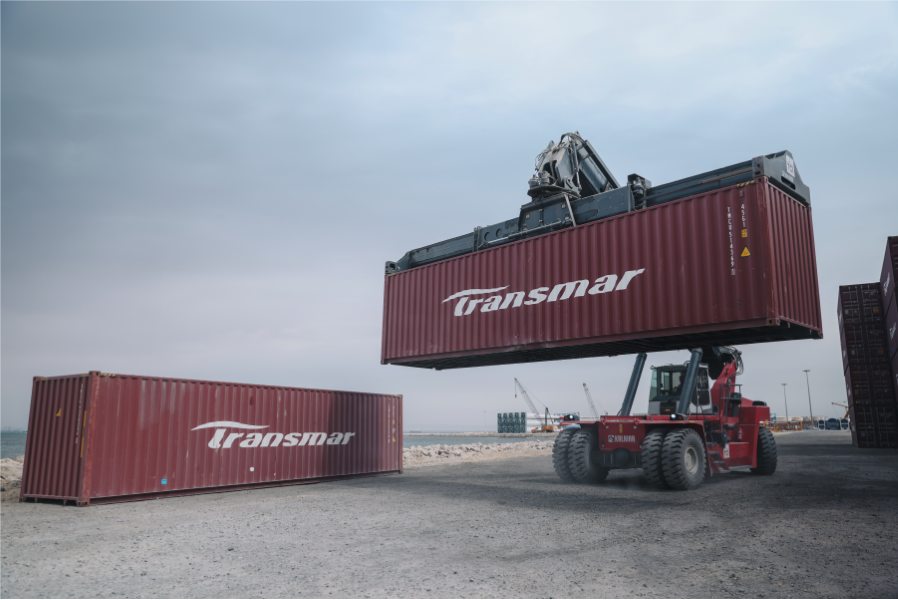
EnterpriseAM Logistics is available without charge thanks to the generous support of our friends at Hassan Allam Utilities, Transmar, and AK-Ships.

Were you forwarded this email? Tap or click here to get your own copy of Enterprise Logistics.

Want to send us a story idea, request coverage, ask for a correction, or otherwise get in touch? Reach out to us on logistics@enterprisemea.com.

DID YOU KNOW that we also cover Egypt, Saudi Arabia, the UAE, and the MENAclimate industry ?
***

CIRCLE YOUR CALENDAR-

Belgium will host the World Cargo Summit from Monday, 27 January to Wednesday, 29 January in Ostend. The event will focus on air cargo economics, strategy, and market trends with a specific focus on how the industry will tackle disruptions and how firms can adapt their business models.

The UAE will host the ShipTek International Conference from Wednesday, 29 January to Thursday 30 January in Dubai. The two-day conference will gather industry experts, including managing director at Hapag-Lloyd Carolin Stumm, CEO Adani Ports Nicolai Friis, VP International Maritime Industries Justin Taylor, CEO Tristra Tim Coffin, and others to discuss new tech and developments in the maritime industry.

The UAE will host the Middle East Bunkering Convention from Monday, 3 February to Wednesday, 5 February in Dubai. The event will focus on the marine fuels sector to address the future of the industry in light of geopolitical issues, environmental regulation, and the future of artificial intelligence and digitalization.

Saudi Arabia will host the Airport Expansion Conference from Tuesday, 4 February to Wednesday, 5 February in Riyadh. The two-day conference will feature over 30 speakers to discuss challenges faced by Saudi Airports and highlight Saudi Arabia’s Vision 2030 with a clear focus on expansion, tech, and strategic partnerships.

The UAE will host the Middle East Breakbulk Conference from Monday, 10 February to Tuesday, 11 February in Dubai. The event gathers giant manufacturers, EPCs, and service providers to discuss the latest solutions in breakbulk and heavy-lift logistics across the Middle East and Africa. The two-day event features an artificial intelligence (AI) seminar, heavy lift workshop, chartering workshop, and a women in breakbulk panel.

Check out our full calendar at the bottom of this email for a comprehensive listing of upcoming news events and news triggers.


This publication is proudly sponsored by

2

Investment Watch

Damac Properties to invest USD 20 bn in US data center expansion

Damac to invest USD 20 bn in US data centers: Dubai-based Damac Properties committed USD 20 bn in data centers across the US, US president-elect Donald Trump and Damac Founder Hussain Sajwani said at a press conference (watch, runtime: 2:04) yesterday. The project will focus on supporting AI and cloud businesses, with the first phase covering Texas, Arizona, Oklahoma, Louisiana, Ohio, Illinois, Michigan, and Indiana.

What we know: The developer is eyeing 2 GW capacity over the next four years in the US, with the possibility of “doubling” its investment depending on market demand and opportunity, according to a statement from Damac. The first phase will see Damac strike up joint ventures with partners and acquire land banks and existing data centers.

Damac has been eyeing the US for a while: Damac has “been waiting four years to increase our investments in the US to a very large amount of money,” Sajwani said, adding that Trump’s election came as “amazing news” for him and his family.

The story got a lot of ink in the foreign press: AP | Bloomberg | Reuters | CNBC | NYT

REMEMBER- Damac is making a big push into data centers globally:

  • Southeast Asia: The company revealed plans last month to invest approximately USD 3 bn in establishing data centers across Southeast Asia through its subsidiary Edgnex over the next three to five years, primarily targeting Malaysia, Indonesia, and Thailand.
  • Saudi Arabia: Edgnex is also investing USD 600 mn in data centers in Dammam and Riyadh in Saudi Arabia, expected to launch this year. The company also signed a MoU with Salam, Cinturion, and Emaar, Economic City, to develop a digital infrastructure hub in Jeddah.
  • Turkey + Greece: Edgnex allocated USD 100 mn with Vodafone Turkey for a 6 MW data center in Izmir, also set to go online this year, as well as a separate initial USD 150 mn investment for a data center in Spata, Greece.

IN CONTEXT- Damac had been planning to invest USD 5 bn to 7 bn globally over the next few years to expand its operations and address rising demand for digital infrastructure, Danish Nayar, senior vice president of investments and acquisition at Damac Group, told Bloomberg previously.

3

M&A Watch

DAE fully acquires Irish aircraft leasing company Nordic Aviation Capital

DAE takes over Nordic Aviation: Dubai Aerospace Enterprise (DAE) inked a definitive agreement to acquire 100% of Irish aircraft leasing company Nordic Aviation Capital (NAC) for an undisclosed amount, according to a statement. DAE plans to bankroll its latest transaction using a mix of internal resources and committed debt financing.

What’s next? The transaction is subject to regulatory approvals and shareholder approval from NAC Holdings, with completion expected in 1H 2025.

What DAE is getting: NAC’s fleet comprised 252 owned and committed assets as of September last year, leased to some 60 airline customers in 40 countries. The acquisition will bring DAE’s total fleet size to about 750 aircraft worth USD 22 bn, leased to 170 airlines in 70 countries.

ADVISORS- Allen Overy Shearman Sterling and KPMG advised DAE on the transaction.

4

Debt Watch

AfDB loans Tunisia EUR 80.16 mn loan for road infrastructure upgrade

The African Development Bank (AfDB) has extended a loan of EUR 80.16 mn to Tunisia for the upgrade the road infrastructure in seven of its governorates, according to a statement. The works are part of the third phase of the country’s Road Infrastructure Modernization Programme,

Details: AfDB’s loan will be used to upgrade 188.9 km of road in the governorates of Kef, Kasserine, Sousse, Sfax, Kairouan, Siliana, and Gafsa. Phase three of the Road Infrastructure Modernization Programme has a total cost of EUR 86.21 mn, with EUR 80.16 mn provided by AfDB and the remaining EUR 6.05 mn contributed by the Tunisian government.

ICYMI- Tunisia received EUR 123 mn from the European Investment bank and EUR 122 mn from the AfDB in April 2024 for the construction of the 2.07 km, 56-meter-high Bizerte bridge project.

5

Ports

Algeria is planning USD bns expansion in Djen Djen port

Algeria to expand Djen Djen port: Algeria’s Transport Ministry is planning on increasing the capacity of the country’s Djen Djen seaport in the state of Jijel to c.26 mn tons of goods and 5 mn TEUs annually, Algerian news outlet El Djazair el Djadida reported earlier this week. The port needs DZD 310 bn (c. USD 2.29 bn) investments to extend the main breakwater by 3.1k meters and build a secondary 1.3k-meter-long breakwater and a 3k-meter-long, 20-meter-deep dock within 48 months.

About the port: Located on the country’s northeastern coast, Djen Djen is Algeria’s biggest seaport, Euro News reported last year (watch, runtime: 8:01). It plays a key role in exporting the country’s growing construction materials sector including materials like clinker and cement, with exports increased 12x over the last five years. The country exported USD 1.2 bn worth of construction material in 2023, and aims to triple that figure, Algerian Trade Minister Tayeb Zitouni told the news outlet.

REMEMBER: Algeria is a major exporter of LNG and is also set to play an essential role in any future green hydrogen flows into the EU, according to a government statement. The country was the second-largest exporter of LNG via pipelines to Europe in 2023 after Norway, supplying the continent with 19% of its total LNG imports, according to a government statement.

Tags:

6

Projects

Medlog moves forward with Tenth of Ramadan dry port project

Medlog takes a final step towards Tenth of Ramadan dry port project: Egypt’s Transport Ministry’s Public Authority for Land and Dry Ports inked a more final agreement with Medlog — the cargo subsidiary of Italy’s Mediterranean Shipping Company (MSC) — to develop a dry port and logistics hub in the Tenth of Ramadan City under a public-private partnership, a statement from the ministry reads. The project will be set up with investments amounting to USD 130 mn, with infrastructure work on the project to begin this month, Al Borsa reports, citing unnamed officials from the Public Authority for Land and Dry Ports.

We’ve been on the lookout for news from the project for the last few months: The agreement, which includes designing, constructing, operating, and maintaining the facility, comes months after unconfirmed reports suggested the final contract would be signed in November following parliamentary approval.

Remember: Medlog first inked an agreement with the government to develop the new dry port in August 2023. The 250-feddan project will be carried out under a 30-year PPP contract and is expected to serve the industrial area in Badr, Ain Sokhna, East Port Said, the New Capital, and the Tenth of Ramadan.

7

Purchasing

Lebanon’s private sector grows for second month running, while Qatar stays steady

How Lebanon and Qatar’s private sector performed in December: Purchasing manager indices (PMI) tracking the non-energy private sector in Lebanon and Qatar told a refreshingly positive tale in December. Lebanon’s headline figure increased for the second consecutive month as the Israel-Hezbollah ceasefire buoyed confidence, albeit still settling below the 50.0 mark, while Qatar held well above the threshold.

REMEMBER- The all-important 50.0 mark is the threshold separating contraction from growth. Anything above 50 denotes expansion, while anything below indicates contraction.

Lebanon’s troubles ease significantly: Lebanon’s headline figure rose to an eight-month high of 48.8 in December, up from 48.1 in November, according to Blominvest Bank’s Lebanon PMI (pdf). The country’s non-oil private sector activity saw the softest deterioration in market conditions since April, as rates of contraction in new orders and output eased.

New export orders declined at their slowest pace in 10 months, indicating a cooling of the contraction in international customer demand. The decline in purchasing activity also cooled in December, with private sector firms only making slight cutbacks. Similarly, input stocks were unaltered on the month, with some firms even bolstering their holdings to respond to stronger demand, signalling stable inventory levels.

Employment was stable with staffing capacity showing no change in December, while input costs increased at the slowest pace in three months despite persistent cost pressures and growth in supplier charges. Private sector firms continued to lean on their clients to share the costs of higher operating expenses, albeit the rate of output rise inflation slowed to a three-month low.

Meanwhile, it’s more of the same in Qatar: Qatar’s non-energy private sector indicated sustained expansion in business conditions in December, with a jump in employment, new orders, and output, according to Qatar Financial Center PMI (pdf). The nation’s headline figure remained the same, staying steady at 52.9 in December.

New orders increased in December on the back of an expanded appetite for goods and services, causing order backlogs to rise for the third time in the last four months. Outputs grew at a fast rate, pushing purchasing activity to increase at their third-fasted rate on record.

Hiring surged once again with employment and wages rose at the fastest pace on record over the last four months. This growth was attributed to efforts to improve services, gain new businesses, and address outstanding workloads. Wage pressures continued to persist in December.

Input price inflation slowed from October’s four-year high, with prices for goods and services dipping for the fifth consecutive month as firms provided discount prices amid rising competition.

Lebanon’s entering 2025 on a high note: Business confidence spiked in December, with sentiment surging to a survey record driven by strong optimism in the wake of the Israel-Hezbollah ceasefire. Respondents also expressed hopes for the upcoming Lebanese presidential elections, to be held 9 January, and the formation of a new government.

Qatari companies continue to harbour a confident outlook for the year ahead, expecting activity and new contracts to expand amid stable market conditions, construction, and tourism demand.

8

Also on Our Radar

Ports and aviation updates from UAE and Syria

PORTS-

Rak Ports is now PMSC certified: UAE’s Rak Ports, a group of five ports in Ras Al-Khaima, has become the first in the region to achieve compliance with the UK’s port marine safety code (PMSC), Marine Link reports. The compliance statutes were confirmed following an audit by UK-based marine consultancy ABPmer, which assessed the ports’ adherence to PMSC principles and the effectiveness of their marine safety management system.

(** Tap or click the headline above to read this story with all of the links to our background and outside sources.)

AVIATION-

#1- Syria resumes flights to the UAE: Syria’s Damascus International Airport resumed international flights yesterday for the first time since the fall of Bashar Al Assad’s regime on 8 December with a flight to Sharjah, Syrian state news agency Sana reports. Qatar Airways also resumed flights to Damascus following a 13-year hiatus, while flights to Dubai were also set to resume as of yesterday, AFP reports.

#2- Air Arabia adds Ethiopia flights: Air Arabia is launching non-stop flights to Ethiopia’s capital starting 30 January, the Sharjah-based budget airline stated. The new route will connect Sharjah International Airport with Addis Ababa Bole International Airport, running three weekly flights in both directions on Tuesdays, Thursdays, and Saturdays.

OTHER STORIES WORTH KNOWING THIS MORNING-

  • Iraq-Syria border to reopen: The main border between Iraq and Syria is expected to reopen within 10 days, following weeks of closure with the collapse of Syria’s Assad regime. Officials say traffic will resume given the improved stability on the Syrian side and the absence of significant security concerns. (Middle East Monitor)
  • Iranian cargo vehicles exempt from Uzbek transit fees: Uzbekistan has revised its transit fee structure for 2025, exempting Iranian cargo vehicles and charging Afghan vehicles USD 50. The rate for other countries will remain at USD 400. (Trend30)
  • Etihad Cargo lands in Paris: Etihad Cargo has added Paris Charles de Gaulle Airport as the 12th destination in its freighter network, with the inaugural flight landing yesterday. The new weekly service provides over 100 tons of additional cargo capacity, offering main deck connections via Abu Dhabi to major hubs such as Ezhou, Shanghai, Beijing, Hong Kong, Hanoi, and Zhengzhou. (LinkedIn)
9

Around the World

South Sudan to restart flow of crude to Port Sudan after Sudan lifts force majeure

Sudan removes force majeure on oil shipments to Port Sudan: Sudan has removed a 10-month force majeure on the transport of crude oil from South Sudan to a port on the Red Sea amid improving security conditions, Reuters reported earlier this week, citing a letter from Sudan’s Energy and Petroleum Minister Mohiedienn Saied to his counterpart in South Sudan Puot Kang Chol. The nation had halted crude transportation through the main pipeline, the Petrodar pipeline, linking the two neighbours last March. The decision comes after Sudan formed a new security agreement with Juba and Sudanese pipeline operator BAPCO. South Sudan offered crude cargoes for delivery in January to contracted traders via a tender last month, according to an email seen by the newswire.

(** Tap or click the headline above to read this story with all of the links to our background and outside sources.)

Background: South Sudan was pumping some 150k bpd through Sudan for export prior to the forced majeure. The Petrodar pipeline runs some 1.5k km from South Sudan’s upper Nile state, Melut Basin, to Sudan’s Red Sea coast, Port Sudan. It was established by a consortium including Malaysia’s Petronas and China’s Sinopec and CNPC.


Container shipping rates from Asia to the US West Coast increased by 50% as of 1 January, jumping to USD 6k per 40-ft container, up from around USD 4k a month prior, Bloomberg reports, citing data from Oslo-based freight platform Xeneta. Shipping rates from Asia to the US East Coast spiked 31% m-o-m to reach USD 7.1k per 40-ft container. Rates are on the rise amid growing concerns over potential US tariffs and port strikes, which threaten to halt operations at entry points responsible for nearly half the country’s seaborne trade.

Looking ahead: “2024 was an extremely challenging year for shippers and life isn’t getting any easier as we head into 2025,” Xeneta senior shipping analyst Emily Stausbøll told the news outlet. The market is therefore constricting amid “a lot of uncertainty,” Stausbøll added.

OTHER STORIES WORTH KNOWING THIS MORNING-

  • Indonesia joins BRICS: BRICS member states have approved Indonesia’s entry into the group by consensus. The Indonesian Foreign Ministry said that “BRICS membership is a strategic way to increase collaboration and partnership with other developing nations.” (Reuters)

JANUARY 2025

20-24 January (Monday-Friday): World Economic Forum Annual Meeting, Davos, Switzerland.

27-29 January (Monday-Wednesday): World Cargo Summit, Ostend, Belgium.

28-29 January (Tuesday-Wednesday): Green Shipping Summit, Rotterdam, The Netherlands.

29-30 January (Wednesday-Thursday): ShipTek International Conference, Dubai, UAE.

FEBRUARY

3-5 February (Monday-Wednesday): Middle East Bunkering Convention, Dubai, UAE.

4-5 February (Tuesday-Wednesday): Seatrade Maritime Qatar, Doha, Qatar.

4-5 February (Tuesday-Wednesday): Airport Expansion Conference, Riyadh, Saudi Arabia.

10-11 February (Monday-Tuesday): Middle East Breakbulk conference, Dubai, UAE.

10-11 February (Monday-Tuesday): MRO Middle East, Dubai, UAE.

10-12 February (Monday-Wednesday): Sustainable Aviation Futures MENA, Abu Dhabi, UAE.

10-12 February (Monday-Wednesday): Japan Kyoto Trade Exhibition, Dubai, UAE.

10-13 February (Monday-Thursday): Future Warehouses & Logistics, Dubai, UAE.

18-19 February (Tuesday-Wednesday): Argus Green Marina Fuels Asia Conference, Singapore.

18-19 February (Tuesday-Wednesday): Middle East Procuretech Summit, Dubai, UAE.

19-21 February (Wednesday-Friday): Air Cargo Africa, Nairobi, Kenya.

20-22 February (Thursday-Saturday): Dubai Freight Camp, Dubai, UAE.

25 February – 1 March (Tuesday-Saturday): WCA Worldwide Conference, Dubai, UAE.

MARCH

No events announced at the moment.

APRIL

2-4 April (Wednesday-Friday): Global Supply Chain and Logistics Summit, Amsterdam, The Netherlands.

3-4 April (Thursday-Friday): Africa Supply Chain Optimization, Johannesburg, South Africa

10 April (Thursday): Gulf Ship Fiance Forum, Dubai, UAE.

14 April (Monday): CargoIS Forum, Dubai, UAE.

15-17 April (Tuesday-Thursday): Transport Middle East 2025, Aqaba, Jordan.

15-17 April (Tuesday-Thursday): IATA World Cargo Symposium, Dubai, UAE.

16-17 April: Global Ports Forum, Dubai, UAE.

MAY

6-8 May (Tuesday-Thursday): Airport Show, Dubai, UAE.

12-15 May (Monday-Thursday): Saudi Smart Logistics, Riyadh, Saudi Arabia.

13-14 May (Tuesday-Wednesday): Global Ports Forum, Dubai, UAE.

20-22 May (Tuesday-Thursday): Seamless Middle East, Dubai, UAE.

27-29 May (Tuesday-Thursday): Saudi Warehousing & Logistics Expo, Riyadh, Saudi Arabia.

JUNE

1-3 June (Sunday-Tuesday): Annual General Meeting & World Air Transport Summit 2025, Delhi, India.

2-4 June (Monday-Wednesday): Propak MENA, Cairo, Egypt.

5-6 June (Thursday-Friday): Supply Chain & Logistics Innovation Summit, Amsterdam, Netherlands.

11-13 June (Wednesday-Friday): Sustainability World Summit, Frankfurt, Germany.

17-19 June (Tuesday-Thursday): Terminal Operations Conference & Exhibition, Rotterdam, Netherlands.

19 June (Thursday): East Med Maritime Conference, Athens, Greece.

25-26 June (Wednesday-Friday): Decarbonizing Shipping Forum, Hambury, Germany.

JULY

1-3 July (Tuesday-Thursday): ASEAN Ports and Logistics, Jakarta, Indonesia.

SEPTEMBER

24-26 September (Wednesday-Friday): Routes World, Hong Kong.

OCTOBER

1-2 October (Wednesday-Thursday): Saudi Maritime & Logistics Congress, Dammam, Saudi Arabia.

14-15 October (Tuesday-Wednesday): Investing in Africa Conference and Expo, London, UK.

NOVEMBER

3-6 November (Monday-Thursday): ADIPEC Maritime and Logistics Exhibition and Conference, Abu Dhabi, UAE.

4-6 November (Tuesday-Thursday): Air Cargo Forum, Abu Dhabi, UAE.

17-21 November (Monday-Friday): Dubai Airshow, Dubai, UAE.

EVENTS WITH NO SET DATE

Mid-2025: Iraq will complete phase one of the construction of the Grand Faw Port.

DHL and Aramco’s logistics and procurement hub in Saudi Arabia will commence operations.

AD Ports-operated Safaga Port’s multi-purpose terminal will become operational.

Phase 3 of APM Terminals Tangier MedPort to be complete and operational.

1Q 2025: Sadr Park’s Logistics Center in Riyadh to be completed.

1Q 2025: Phase two of Jafza Logistics Park to be completed.

2026

2026 UNCTAD Global Supply Chains Forum, Saudi Arabia.

2027

4Q 2027: Oman’s Musandam Airport construction to be completed.

Now Playing
Now Playing
00:00
00:00