Get EnterpriseAM daily

China’s Boway Alloy gears up to invest USD 150 mn in Morocco’s Nador Port

1

What we're tracking today

TODAY: China’s Boway Alloy eyes Nador port industrial base + How to ramp up rail freight targets in Egypt

Good morning, friends. We’re getting closer to the weekend with another busy issue, featuring investment, rail, and earnings updates from across the region. PLUS: We also explore how the private sector can help Egypt achieve its rail freight targets with wider adoption of fixed-schedule services. But first, an update from US airports…

THE BIG LOGISTICS STORY- US flights disruptions continue, but with less severity: Airlines canceled 1.2k flights and delayed another 1.7k on Tuesday, in a slight improvement from Monday that saw 2.4k cancelations and 9.6k delays. The improvement came despite the Federal Aviation Administration’s (FAA) decision to move ahead with raising its reductions of travel air capacity at 40 of the nation’s busiest airports from 4% to 6% as planned starting Tuesday.

What’s behind the improvement? More airport personnel appear to be reporting in after the US congress advanced a bipartisan bill to end the shutdown, which passed the Senate and now awaiting the House’s vote. US President Donald Trump has also recently threatened to slash the paychecks of absent workers, adding that he welcomed their “resignations.”

What now? If the House fails to pass the current bill, FAA’s reductions are set to increase to 8% on 13 November, and 10% by 14 November. Even with government reopening, it will take some time to return to normal. “The airplanes are in the wrong cities and so forth… So a good deal of the responsibility will be the carriers getting their schedules and the aircraft and personnel back in the right positions to resume normal flying,” former FAA administrator Randy Babbitt said.

The story continued to receive a lot of ink from the int’l press: Reuters | Associated Press | NBC | CBS | NPR


Have you checked out EnterpriseAM MENA <> India? It’s our newest briefing tracking one of the world’s most dynamic trade, investment, and cultural corridors. Every Monday, Wednesday, and Friday, we’ll track the transactions, trends, and market moves connecting these two dynamic regions. The flow of capital, talent, and trade between MENA and the Indian subcontinent is one of the most important economic stories in the world — and we’re telling as only we can.

If you’re investing, trading, or scouting for your next big move in MENA or India, subscribe to EnterpriseAM MENA <> India by tapping here to get the strategic intelligence you need.


WATCH THIS SPACE-

#1- An energy terminal project at Oman’s Sezad in the works: Oman Tank Terminal Company (OTTCO) and Royal Vopak are currently working on a master plan for a new energy storage and terminal project planned at Duqm Special Economic Zone (Sezad) in Oman, OTTCO’s Operations Vice President Ali Al Maamari told Oman Observer. The new project will be developed through a JV, with OTTCO (51%), a subsidiary of the Omani state energy firm OQ group, and Dutch liquid storage operator Royal Vopak (49%).

What’s in the books? The facility will handle both green and traditional fuels, with green ammonia handling targeted in the first phase. Green hydrogen uptake, however, is not currently in the mix, mainly due to costs and technical challenges.

REMEMBER- Ottco already operates Oman’s largest energy terminal, Ras Markaz at Duqm port, which specializes in petroleum products.


#2- Qatar reroutes Pakistan-bound LNG cargoes: QatarEnergy has reportedly agreed to divert 24 LNG cargoes previously earmarked for Pakistan to other buyers in 2026, Pakistani outlet The Express Tribune reports, citing unnamed sources. The parties have reached an agreement whereby if Doha sells off the cargoes in the open market below the contract price, Islamabad will bear the loss under a net proceeds differential formula.

Not a first: Islamabad canceled 21 LNG cargoes planned for 2026 and 2027 after reaching an agreement with Italy’s Eni, Reuters reported last week.

IN CONTEXT- Pakistan has been in extended talks with several of its LNG suppliers to halt or defer planned cargoes as its demand for the super-chilled fuel continues to slump. The country had previously secured long-term LNG agreements in recent years when it was facing major energy shortages, which have since significantly improved due to higher renewable energy generation — from solar and hydropower production — and lower industrial demand.

DISRUPTION WATCH-

The Houthis signal an end to Red Sea attacks: Yemen’s Houthis have indicated that their attacks on Israeli-linked commercial vessels in the Red Sea have ended, the Financial Times reports, citing a letter published by the Yemeni militant group. The letter to the Al Qassam Brigades vows to resume attacks should Israel continue its aggression in the Gaza Strip following last month’s ceasefire agreement.

The scourge of the Red Sea: The Yemeni group has launched attacks on Israeli-linkedcommercial vessels traversing the Red Sea in response to Israel’s genocide in Gaza. The most recent attack claimed by the group occurred in September on a Liberian-flagged, Israeli-owned tanker near Saudi Arabia’s Yanbu.

MARKET WATCH-

Baltic index is on a downward slope: The Baltic Exchange’s dry bulk sea freight index — which tracks rates for the capesize, panamax, and supramax vessel segments — dropped 0.6% to 2,072 on Tuesday, buoyed by the bigger-size segment. The capesize was down by 2.2% to 3,192, while the panamax index increased 1.1% to 1,865. The smaller supramax index was up 17 points to 1,344.

***YOU’RE READING EnterpriseAM Logistics, the essential MENA publication for senior execs who care about the industry that connects producers and retailers to global markets. We’re out Monday through Thursday by 9:15am in Cairo and Riyadh and 11:15am in the UAE.

EnterpriseAM Logistics is available without charge thanks to the generous support of our friends at Hassan Allam Utilities, Transmar, and AK-Ships.

Were you forwarded this email? Tap or click here to get your own copy of Enterprise Logistics.

Want to send us a story idea, request coverage, ask for a correction, or otherwise get in touch? Reach out to us on logistics@enterprisemea.com.

DID YOU KNOW that we also cover Egypt, Saudi Arabia, and the UAE ***

CIRCLE YOUR CALENDAR-

The UAE will host the Dubai Airshow on Monday, 17 November until Friday, 21 November in Dubai. The event will host over 1.5k exhibitors and 148k industry experts from over 150 countries to discuss air mobility, new MRO breakthroughs, sustainable aviation, startups, and new tech for aircraft simulations.

Saudi Arabia will host the ShipTek International Conference and Awards on Tuesday, 18 November in Al Khobar. The conference will host policymakers, organizations, suppliers, and experts on maritime, offshore, and oil and gas.

Egypt will host the International Procurement Supply Chain Conference on Saturday, 6 December in Cairo. The event will gather over 1k delegates, more than 400 organizations, and over 30 global speakers to discuss the future of trade through keynotes and panel discussions. The discussions will center on Egypt’s transformation in the logistics sector, the future of smart ports and supply chains, as well as digital ecosystems.

Morocco is hosting the Rail Industry Summit on Tuesday, 9 December until Wednesday, 10 December in El Jadida. The two-day event will gather 130 exhibitors, 250 companies, and over 900 participants from 15 countries. It will feature business meetings, high-level conferences, and workshops focused on new market trends and future strategies.

Saudi Arabia is hosting the Saudi Airport Exhibition on Tuesday, 16 December until Wednesday, 17 December in Riyadh. Upwards of 10k global attendees are expected to participate in the event from over 100 countries. The two-day event will focus on airport-related innovation, and will feature participation from Saudia, SolitAir, and Amadeus.

Check out our full calendar at the bottom of this email for a comprehensive listing of upcoming news events and news triggers.


This publication is proudly sponsored by

2

Investment Watch

China’s Boway Alloy to funnel USD 150 mn to set up industrial base in Morocco’s Nador zone

Chinese industrial conglomerate Boway Group is planning to invest USD 150 mn to set up an alloys production base at Nador port in northeastern Morocco, Moroccan outlet Sabah Agadir reports. Spanning an area of 188k sqm, the project reportedly produces 30k tons a year of alloy plates and strips, targeting the American and European markets.

More details: Construction is scheduled to start in October 2026, with completion planned for 2029. Boway Group is reportedly working on establishing a Moroccan unit to carry out the project under the name Boway Alloy New Materials, Morocco.

Boway’s move could be part of a growing trend of Chinese industrial expansion in Morocco and our region at large, as they seek lower shipping costs and tariff-friendly gateways to European and African markets amid global trade volatility. Chinese wind turbine developer Aeolon has set up a USD 340 mn industrial base in Nador’s industrial city earlier last year to manufacture wind energy components, with reports then indicating that the company’s choice of location was motivated by faster and cost-effective access to European markets.

REMEMBER- Morocco is building a climate-resilient economic zone called Betoya Industrial and Logistic Zone at Nador West, with the backing of multinational financial institutions like European Bank for Reconstruction and Development (EBRD).

3

Rail

More details on Alstom’s multi-mn-EUR Borg El Arab complex

What’s the latest on Alstom’s Borg El Arab complex? French rolling stock company Alstom has upped the investment ticket for its Borg El Arab railway manufacturing complex to up to EUR 100 mn, Alstom Egypt Managing Director Ramy Salah Eldeen told EnterpriseAM on the sidelines of TransMEA yesterday.

REMEMBER- Alstom inked a land usufruct agreement with the General Authority for Land and Dry Ports for the project in April — a time when the project had a EUR 80 mn price tag.

About the complex: It will feature two factories — the first for manufacturing electrical and signaling systems for local projects and exports. Exports from the plant are expected to hit EUR 50-70 mn annually.

Production timeline: The first factory will go online by the end of 2026, while the metro car factory will go online mid-2026, Salah Eldeen said.

Freight wagons could be next in line: While the focus is currently on metro cars, Alstom is open to producing freight wagons once production at the new complex stabilizes, Salah Eldeen said. “We’ll study this step later once we’ve expanded our current output and the facility is ready to meet demand efficiently.”

A hub for smart rail exports to Africa: Alstom aims to turn the complex into a manufacturing and export base for smart rail systems in Africa, leveraging Egypt’s strategic location and industrial development to expand into regional markets, Salah Eldeen said.

4

Coffee with...

Sky Port’s Tarek Hussein on how SCZone projects support Egypt's trade and logistics sector

Coffee with Sky Ports Chairman Tarek Hussein: EnterpriseAM sat down with Tarek Hussein (LinkedIn), Chairman of Sky Ports, on the sidelines of this year’s TransMEA forum. As the Egypt-based firm ups its presence in ports under the jurisdiction of SCZone — we got Hussein’s insights on their projects in SCZone ports, and how his firm is navigating the regional logistics market amid global trade uncertainty.

About the company: Sky Ports is a business unit of Sky Logistics, a subsidiary of of Sky Investments Holding, that specializes in operating multipurpose terminals. The company has well-established presence across Egyptian ports, providing terminal operations, cargo handling, and bonded warehouses services.

EnterpriseAM: What are some milestone projects your company is scheduled to kick off or close over the coming year (2026)?

Tarek Hussein (TH): Over the coming year, Sky Ports will commission its bulk cement export hub at East Port Said. We are also in negotiations to launch a new multi-purpose terminal in Sokhna — both agreements are set to expand our projects in the zone.

The cement silos project at East Port Said will have a major impact on the economy — through opening entirely new export lanes for Egyptian cement. It comprises eight concrete silos of 20k tons each, designed to handle up to 20k tons per day and around 4-5 mn tons per year of bulk cement for export.

This project is especially built to meet international standards that could enable [Egypt] unlock new markets we have never reached before for this product, such as the United States, which will have a positive impact on Egyptian exports.

In parallel, we have plans for a new multi-purpose terminal in Sokhna on the Red Sea. We continue to scale our terminal in East Port Said, building on a trial year that saw around 9.6 mn tons handled, reduced vessel waiting times to 4-5 hours, and delivered tangible savings for exporters and importers, We will keep adding equipment, systems, and services to ensure East Port Said remains one of the most efficient bulk and general cargo terminals in the region.

EnterpriseAM: What regulatory or policy shift would you like to see to support more growth in Egypt’s national logistics sector?

TH: The Egyptian authorities have taken major steps over the past years toward turning Egypt into a global logistics hub for trade, especially in infrastructure and investment facilitation. Yet, there are still important steps ahead to fully achieve that goal.

Some ideas include extending and standardizing single-window systems — in a bid that port community platforms (PCS), customs, and economic zones eventually share one digital platform, viewing cargo status, clearances, vessel schedules — cutting dwell times and paperwork across all Egyptian gateways.

Targeted incentives for specialized export infrastructure would also help. For example, clear and long-term incentives for investments in projects built to suit destination-market standards, like our cement silos project, would help Egyptian products unlock new markets, such as the US and Europe, by meeting the needed technical requirements. It would also help support compliance with emerging carbon and product regulations. This combination would cut dwell times, lower costs, and give investors the confidence to keep scaling Egypt as a global logistics hub.

EnterpriseAM: What are some exciting developments you see happening in the regional logistics sector, and how is your company capitalizing on these?

TH:The SCZone is rapidly emerging as a single industrial–logistics platform, with growing flows on both the Mediterranean and Red Sea legs, driven by significant efforts from Egyptian authorities, particularly the Transport Ministry and Investment Ministry. Sky Ports is capitalizing on this by pairing a proven high-efficiency terminal at East Port Said, and dedicated cement export silos, which opens high-value markets for Egyptian producers.Our terminal at East Port Said is an integral part of this success story, as it works towards meeting a rising demand for compliant and value-added export solutions.

EnterpriseAM: Who are the largest external investors in Egypt’s logistics sector at the moment, and do you expect this to remain the same in the long run?

TH:Global port and logistics leaders — such as DP World and Hutchison — are currently among the largest external investors in Egypt’s logistics sector, alongside growing Gulf and Asian capital. We expect these players to remain central in the long run, while Egyptian operators like Sky Ports add local expertise, jobs, and innovation, making the overall ecosystem stronger and more resilient.

EnterpriseAM: How do you expect the volatile global trade environment to impact the local logistics sector?

TH:Route volatility and geopolitical risk, including disruptions in and around the Red Sea, are reinforcing the value of reliable, well-located hubs on the Suez corridor. This increases the strategic importance of assets like East Port Said and Sokhna for cargo owners and shipping lines.

Egypt and Sky Ports need to focus on building terminals that can consistently cut waiting times, raise productivity, and offer integrated “port-to-plant” solutions that will attract both cargo and investments, even in turbulent times.

5

Earnings Watch

Adnoc L&S + Agility Global post strong financials in 3Q, 9M periods

ADNOC L&S-

Abu Dhabi National Oil Company Logistics and Services (Adnoc L&S) saw its bottom line rise 20% y-o-y to USD 211 mn (c. AED 773 mn) in 3Q 2025, according to an earnings release. The firm’s top line also saw robust growth, surging 36% y-o-y to roughly USD 1.3 bn for the same period.

In 9M terms: Adnoc L&S’s net income rose 9% y-o-y to USD 631 mn in 9M 2025, while revenues for the period surged 39% y-o-y to USD 3.7 bn.

By the segment:

  • The firm’s integrated logistics segment saw its revenues rise 17% y-o-y to around USD 2 bn, on the back of higher chartering activity, high utilization, and favorable rates for jack-up barges, along with improved margins under the Integrated Logistics Solution Platform;
  • Meanwhile, the company’s shipping segment’s top line rose 99% y-o-y to around USD 1.5 bn due to the consolidation of returns from Navig8’s tanker fleet;
  • Lastly, the services division saw revenues increase 7% y-o-y to USD 269 mn on the back of higher volumes handled at the Borouge Container Terminal and the bigger returns from Navig8’s bunkering services.

Future and outlook: Adnoc L&S is holding firm on its 2025 financial targets for revenue and net income, thanks to the ongoing growth of its Integrated Logistics segment and the sustained performance of the shipping market, despite persistent global volatility. The company expects to close the year with annual revenue growth in the high 20%s and annual net income growth in the low-to-mid double digits.

AGILITY GLOBAL-

ADX-listed Kuwaiti logistics firm Agility Global saw its net income attributable to equity holders rise roughly 40.2% y-o-y — as per our calculation — to USD 52 mn for 3Q 2025, according to an earnings release. The firm’s revenues surged 6.7% y-o-y to USD 1.3 bn in 3Q 2025.

On a 9M basis, revenues rose 10.2% y-o-y to USD 3.7 bn for 9M 2025, while the bottom line attributable to shareholders for the period reached USD 97 mn.

Segment breakdown:

  • Agility’s aviation subsidiary Menzies Aviation saw its top line rise 13.6% y-o-y in 3Q 2025, reaching some USD 800 mn on the back of its acquisition of US-based G2 Secure Staff and from higher volumes and improved yields in Ground Handling and Cargo services;
  • The fuel logistics unit Tristar saw revenues rise 16% in 9M 2025, with solid contribution from its retail fuel business in Sri Lanka;
  • Agility Logistics Parks’ revenues saw an 8.2% rise to USD 14.3 mn in 3Q 2025, with strong demand in the KSA’s warehousing market contributing most of the returns, raising occupancy rates above 90%.

The latest from Agility: Agility was informed by Kuwait’s Directorate General of Civil Aviation that its ground handling arm Menzies Aviation will no longer be operating ground handling services at Kuwait International Airport after its current contract ends. Despite the cancelation, the company remained confident in its medium-term outlook, it said in the release.

AIR ARABIA-

Air Arabia’s net income rose 16% y-o-y in 3Q 2025, reaching AED 656 mn, according to its financials (pdf). Revenues climbed 14% y-o-y to AED 2 bn. Over 5.9 mn passengers traveled across Air Arabia’s hubs in the UAE, Morocco, Egypt, and Pakistan during the quarter, up 16% y-o-y, with the average load factor rising four points to 85%, according to a separate earnings release (pdf).

On a nine-month basis, net income increased 13% y-o-y to AED 1.4 bn, while revenues climbed 10% to AED 5.5 bn. Passenger numbers rose 14% y-o-y to 16 mn during 9M 2025, with a stable 855 average seat load factor. Growth was supported by network expansion — 12 new routes launched year-to-date — and an expansion to its fleet, which now includes 88 Airbus A320 and A321 aircraft.

6

Spotlight

Wider adoption of fixed-schedule services could help Egypt achieve its rail freight targets

Egypt’s ambition to modernize its logistics relies on shifting some freight capacity away from roads and onto its extensive, yet underutilized, railway network. The recent launch of a privately operated fixed rail freight service can serve as a blueprint for how to move more cargo on tracks, moving away from the current ad-hoc, customer-specific model towards predictable rail services.

This shift is currently being led by the private sector: G3A, a company founded in 2023 after a merger involving Gharably Integrated Engineering Company and 3A International, secured a 15-year concession to operate all cargo rail services to support the government in achieving its rail freight targets, G3A’s Chief Operating Officer Noha Awad told EnterpriseAM.

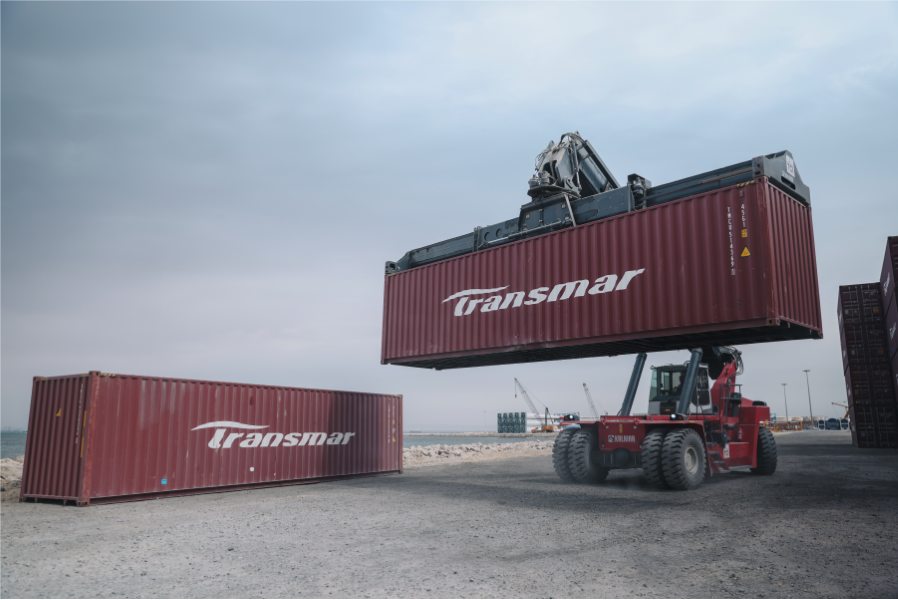
Egypt’s first fixed-schedule rail freight service was launched by G3A and our friends at regional multimodal logistics firm Transmar in the summer, featuring two weekly trips at a total capacity of 200 TEUs. The service connects Al Robaiky Industrial City to Adabiya Port, where Transmar and its sister company, Transcargo International, have a well-established operational presence.

In perspective: Despite boasting over 10k km of tracks, the rail system currently handles only around 6% of the country’s inland freight, leaving supply chains highly dependent on trucking via riskier and less reliable road networks. To address this gap, the government is plotting to boost rail freight capacity by some 63% to transport 13 million tons by 2030 — a significant surge from the reported 2024 figures, though sharply down from an initial 30 million ton target.

But G3A is hopeful they can go beyond these targets: When G3A took over the cargo sector from the Egyptian National Railways (ENR), rail handled around 3 mn tons per year, Awad told us. Over a single year, the company was able to double this figure to 6 mn tons in 2024, and it is now targeting 12 mn tons of handled cargo by the end of 2025. “We expect the cargo we handle to be duplicated every year throughout the 15-contract,” she added.

Achieving this target does not rely solely on laying new tracks — it requires a shift in the customers’ mindset to view rail as more reliable and make the switch, Awad told EnterpriseAM. Historically, the governmental operator (ENR) had not promoted the cargo service, with its usage limited primarily to military services and the transit of empty containers between ports, Awad said. Unfamiliar with the service, customers are “worried that if they put their container on the train, it would arrive after a week, while trucks would arrive within six or seven hours,” she added.

Changing the mindset would also require a fundamental shift in the operational model from an ad-hoc system to reliable, fixed-schedule rail services, Transmar’s General Manager Ahmed Al Ahwal told EnterpriseAM. Historically, the traditional rail freight system has operated based on customers having to request and fill an entire train. A customer who only needs to move a few containers a week must either wait until they have enough cargo to fill a whole train or pay for the entire reserved capacity, including the costly empty return trip.

But a fixed-schedule service helps remove this major cost constraint. The financial commitment required to book an entire train, plus the necessity of coordinating that train’s return journey, meant that small-to-medium shippers historically avoided rail altogether, Al Ahwal explained. Fixed-schedule services eliminate the need to book an entire train, plus the necessity of coordinating that train’s return journey, he added.

Beyond reliability and fixed scheduling, the subsequent hikes of fuel prices in Egypt are also making rail freight a more affordable option, Awad told us. This is largely because trucking is more sensitive to fuel prices, rising by 15%-20% on average with every hike, she explained. This dynamic translates into inherent cost savings for rail, which now costs 20% to 30% less than trucking, Awad added.

International studies agree with Awad on this. Rail operations are generally less exposed to fluctuating global fuel prices because fuel accounts for approximately 15% of rail haulage costs — compared to roughly 30-40% of the cost base for road transport, according to a 2019 study (pdf) conducted by Menarail Transport Consultants (MTS) and commissioned by the World Bank and ENR.

REMEMBER- Rail services generally also offer concrete benefits that directly counter the challenges and unpredictability inherent in road transport. Rail can offer long-term contracts lasting a year or more, providing shippers with predictable costs, according to the 2019 MTS study. It can provide 24/7 operations, whereas truck movements can be constrained by local restrictions. It also allows for higher legal weight limits per container compared to road, which mitigates the risk of fines associated with overloaded trucks.

Sustainability is another benefit: “[Another] major reason to shift to rail is to have a more environmentally friendly method to move stuff, which has now become attractive for most international players,” Awad said.

While fixed-scheduling and fuel prices are key for the shift, training workers and proper management and investments in the sector’s infrastructure are equally important, Awad explained. So far, G3A has established four multimodal stations across Egypt in major industrial areas. The government is also ramping up its investments in the sector, with plans for developing four multimodal logistics corridors across the nation.

The government is also actively pursuing the localization of locomotives and wagon manufacturing, Al Ahwal told EnterpriseAM, adding that this governmental localization plan will be pivotal for the country’s rail freight targets, as it would eliminate the need to depend on imports to ramp up the sector’s handling capacity as more customers turn to it for shipping.

REFRESHER- French rolling stock company Alstom is jump-starting a railway manufacturing complex in Borg El Arab, with two EUR 80 mn plants. The National Egyptian Railway Industries Company (Neric) is also developing an industrial complex for railway manufacturing in the East Port Said industrial zone. The complex will feature two production lines — one for metro cars with 35-40% local components and another for railway cars with 65% local content — with output planned to serve both the domestic market and export to regional markets, particularly in Africa.

7

Also on Our Radar

Updates on trucking and zones from the UAE and Oman

TRUCKING-

Euro6 trucks land in Emirates SkyCargo’s fleet: Emirates SkyCargo — in collaboration with Allied Transport Company and MAN Trucks — has integrated 40 advanced Euro6 trucks to its Dubai road fleet — which are set to replace older models and enhance cargo flow between Dubai International Airport and Al Maktoum International Airport, according to a press release.

ZONES-

Oman to establish Salalah’s first car plant: Salalah Freezone operator Salalah Global City Company has inked a cooperation agreement with China’s Jiangsu Changhong Intelligent Equipment to set up the first car factory in Salalah, the Oman News Agency reported on Monday. The geographical location and infrastructure are reportedly conducive to establishing a regional center for making and exporting cars to the Middle East and African markets. The investment ticket and capacity of the facility were not disclosed.

Paying attention to Salalah Freezone: Oman’s state-owned OQ Group broke ground on a OMR 47 mn strategic fuel storage project earlier this year. The project entails a fuel reserve facility in the Salalah freezone, along with a pipeline linking the pumping station at Salalah Port to the storage facilities in the freezone.

8

Around the World

China suspends sanctions on Hanwha Ocean

China has suspended sanctions imposed on US-linked South Korean shipbuilder Hanwha Ocean, according to a statement. This eases immediate commercial and supply-chain disruptions in US-Korea shipbuilding ties. China had previously sanctioned five US subsidiaries of South Korea’s Hanwha Ocean in mid-October — banning transactions and causing Hanwha’s shares to drop 8% following the announcement.


NOVEMBER

11-13 November (Tuesday-Thursday): Freightcamp, Bangkok, Thailand.

17-21 November (Monday-Friday): Dubai Airshow, Dubai, UAE.

18 November (Tuesday): ShipTek International Conference and Awards, Al Khobar, Saudi Arabia.

DECEMBER

6 December (Saturday): International Procurement Supply Chain Conference, Cairo, Egypt.

9-10 December (Tuesday-Wednesday): Rail Industry Summit, El Jadida, Morocco.

16-17 December (Tuesday-Wednesday): Saudi Airport Exhibition, Riyadh, Saudi Arabia.

JANUARY 2026

19-23 January (Monday-Friday): World Economic Forum Annual Meeting, Davos, Switzerland.

27-28 January (Tuesday-Wednesday): SkyMove Air Cargo MENA, Riyadh, Saudi Arabia.

27-28 January (Tuesday-Wednesday): Middle East ProcureTech Summit, Dubai, UAE.

FEBRUARY 2026

4-5 February (Wednesday-Thursday): Breakbulk Middle East, Dubai, UAE.

4-5 February (Wednesday-Thursday): MRO Middle East, Dubai, UAE.

15-17 February (Sunday-Tuesday): World Advanced Manufacturing Logistics Summit and Expo, Riyadh, Saudi Arabia.

25-27 February (Wednesday-Friday): Air Cargo Africa, Nairobi, Kenya.

MARCH 2026

10-12 March (Tuesday-Thursday): World Cargo Symposium, Lima, Peru.

Now Playing
Now Playing
00:00
00:00