Get EnterpriseAM daily

Adnoc inks 15-year supply agreement with IndianOil

1

What we're tracking today

TODAY: Another supply agreement for Adnoc + Dnata expands European footprint

Good morning, friends. It’s a brisk read this morning with news flowing in across all subsectors of the region, chief among the players is Adnoc who secured yet another supply agreement for its Ruwais LNG project. First, let’s check in on the bidding war for DB Schenker…

WATCH THIS SPACE-

#1- Adia-backed consortium sweetens bid for DB Schenker: The Abu Dhabi Investment Authority-backed consortium — which also includes CVC and Singapore’s GIC — vying for DB Schenker have reportedly sweetened the bid with the addition of a EUR 1 bn guarantee to the German government in the event of an IPO, should the government stay on as an investor, Reuters reports, citing a letter it says it has seen. The consortium requested fair assessment of its bid, the newswire added.

REMEMBER- The consortium had submitted two separate bids for Deutsche Bahn’s logistics subsidiary: one valuing it at EUR 14 bn, and another worth EUR 16 bn that would see the German government reinvest with a minority stake.

The consortium is competing against a rival bid from Danish transport firm DSV, which Reuters reported was slightly ahead in the bidding race last week.

#2- Folk Maritime debuts new liner service to India: Saudi shipping firm Folk Maritime is launching a new liner service connecting Jeddah Islamic Port to India’s Mundra and Nhava Sheva, according to a statement. Slated to start this month, the 10-day service will deploy a 1.8k TEU vessel under a vessel sharing agreement (VSA) with Oman’s Asyad Line.

Folk Maritime has been doubling down on liner services: Folk Maritime recently announced it was launching new services connecting India with the Red Sea and the Arabian Gulf in 4Q 2024. French shipping giant CMA CGM partnered with Folk Maritime back in March to launch an upgraded service connecting ports in the Red Sea. The Saudi Port Authority (Mawani) has added a new shipping service by Folk Maritime connecting Jeddah Islamic Port with Port Sudan.

#3- More Israeli gas for Egypt? Egypt’s Oil Ministry is reportedly looking to increase its Israeli gas imports by the equivalent of 150 mn cf/d to reach 1.1 bn by October, Al Arabiya Business reports, citing a government official with knowledge of the matter. Egypt’s daily imports of gas from Israel reportedly rose to 950 mn cf/d at the beginning of September, up from 870 mn during the previous month, the official said.

Remember: The Israeli Energy Ministry greenlit an agreement in February to increase its gas exports to Egypt from Chevron’s offshore Tamar field three-fold starting July 2025 and carrying on for the next 11 years. Israeli exports of natural gas to Egypt were reportedly set to rise to 1.5 bn cf\d starting from 2H 2025.

#4- Oman’s Civil Aviation Authority (CAA) has launched a tender for the design of three new domestic airports, Oman Observer reported on Friday. The tender seeks companies interested in supervising the master-planning and design of the proposed airports at Al Jabal Al Akhdar, Masirah Island, and Suhar. The sultanate is planning to build six new airports by 2028-2029, with design work kicking off this year, as part of a drive to attract 50 mn passengers at its airports by 2040.

#5- Tunisia’s books take a hit: The closure of the Ras Jedir crossing between Tunisia and Libya has cost some USD 60 mn in trade losses and may cross the USD 100 mn threshold in losses by year-end, Al Sharq Al Awsat reported last week, citing a report from Tunisia’s National Institute of Business Leaders. The crossing reopened in July after the two nations inked a security agreement, but commercial trade has not returned to its normal pace.

Background: Tunisia and Libya closed the crossing amid armed clashes in March. The crossing was attacked by “outlaws,” and security forces were dispatched to the site to combat smuggling and to restore security, Libya’s interior ministry said at the time. The crossing is a key hub for bilateral trade, with the value of Tunisian exports to Libya via the crossing reaching USD 160 mn in 2023 alone, Al Sharq reports, citing official data.

MARKET WATCH-

#1- Oil prices dipped in early morning trading on the back of weak demand from China offset concerns of supply chain disruption due to Tropical Storm Francine, Reuters reports. Brent crude futures dipped USD 0.04 to USD 72.80 a barrel by 03.34 GMT, while US West Texas Intermediate (WTI) shaved off USD 0.10 to trade at USD 68.60 a barrel.

Traders change oil price outlook: Global commodity traders — Switzerland-based Gunvor and Singapore trading giant Trafigura Group — are expecting oil prices to range between USD 60-70 a barrel on the back of weak Chinese demand and continuous oversupply, Reuters reports, citing executives during the Asia Pacific Petroleum Conference. Oil’s fair value stands at USD 70 per barrel given that more oil is produced than consumed.

What does it look like for Opec+? S&P Global is expecting Opec+ to increase production for the first time in two years in 2025, Reuters reports, citing S&P VP of research Jim Burkhard during APPEC.

Oil oversupply? Opec+ has agreed to suspend its planned output hike for October and November, largely on the back of overproduction by Iraq, the leading offender in exceeding Opec+ limits, The National reports. Iraq’s Oil Ministry revealed plans to produce 6 mn bpd by 2028, while its compensation plan involves cutting some 100k bpd below the target for the rest of the year.

#2- Baltic index stays upbeat: The Baltic Exchange’s dry bulk sea freight index — which tracks rates for the capesize, panamax, and supramax vessel segments — was up for a third consecutive day by 0.9% to 1,958 points on Monday. The capesize index rose 1.4% to 3,404 points and the panamax index increased by 0.6% settling at 1,302 points. The smaller supramax index lost one point logging 1,259 points.

HAPPENING TODAY-

The UAE-India Business Forum is kicking off today in Mumbai with discussions covering bilateral trade, investments, and partnerships, Wam reports. The event will focus on cooperation within healthcare, biotechnology, renewable energy, sustainability, artificial intelligence, logistics and supply chains, and agricultural technology.

***YOU’RE READING EnterpriseAM Logistics, the essential MENA publication for senior execs who care about the industry that connects producers and retailers to global markets. We’re out Monday through Thursday by 9:15am in Cairo and Riyadh and 11:15am in the UAE.

EnterpriseAM Logistics is available without charge thanks to the generous support of our friends at Hassan Allam Utilities and Transmar.

Were you forwarded this email? Tap or click here to get your own copy of Enterprise Logistics.

Want to send us a story idea, request coverage, ask for a correction, or otherwise get in touch? Reach out to us on logistics@enterprisemea.com.

DID YOU KNOW that we also cover Egypt, Saudi Arabia, the UAE, and the MENAclimate industry ?
***

CIRCLE YOUR CALENDAR-

Saudi Arabia will host SkyMove MENA on Tuesday, 10 September and Wednesday, 11 September in Riyadh. The event will gather global industry stakeholders, experts, and service providers to discuss challenges in the regional cargo industry.

The UAE will host the Intelligent Transport Systems World Congress from Monday, 16 September to Friday, 20 September in Dubai. The Congress is expected to welcome 20k participants to explore innovations in smart mobility and transportation technology.

Saudi Arabia will host the Saudi Maritime and Logistics Congress on Wednesday, 18 September and Thursday, 19 September in Dammam. The event will gather international industry leaders in the maritime sector to discuss a range of topics including interconnected logistics, supply chains, digitalization, decarbonization and workforce development.

Check out our full calendar at the bottom of this email for a comprehensive listing of upcoming news events and news triggers.


This publication is proudly sponsored by

2

Trade

Adnoc inks 15-year supply agreement with IndianOil

Abu Dhabi National Oil Company (Adnoc) inked a 15-year LNG heads of agreement to supply 1 mn metric tonnes of LNG annually to state-owned IndianOil, according to a statement. The LNG will be sourced mainly from Adnoc’s Ruwais LNG project in Abu Dhabi, which is expected to go live in 2028 and more than double Adnoc’s LNG production capacity to 15 mn metric tons per annum from 6 mn tons.

The latest in a flurry of agreements: Adnoc agreed to supply Japan’s Osaka Gas with 0.8 mn metric tons of LNG annually in August, at which point it said it had secured off-take agreements for 70% of Ruwais LNG’s capacity. The oil giant also inked an agreement to supply 1 mn tons per year to Shell, a supply agreement for 0.6 mn tons to Mitsui, and other agreements with China’s ENN, SEFE Marketing & Trading Singapore, and Germany’s Energie Baden-Württemberg.

REMEMBER- Adnoc completed its sale of 40% worth of stakes in the USD 7 bn Ruwais project to UK oil and gas giant Shell, French TotalEnergies, BP, and Japan’s Mitsui in July, with each firm acquiring 10%. The oil giant holds the remaining 60% stake in the project. An additional 5% stake could also be sold to a different partner, Reuters reported at the time, without providing further details.

Tags:
3

Aviation

Dnata to oversee EasyJet’s operations at Zurich Airport

Dnata secures EasyJet contract at Zurich Airport: UAE-based air services provider dnata landed a multi-year ground handling contract with EasyJet at Zurich Airport, according to a statement. Financial details of the deal were not disclosed.

What we know: Under the contract, dnata will oversee EasyJet’s passenger, ramp, and baggage services.

Lots of movement in Switzerland: Dnata operates at airports in Zurich and Geneva, providing cargo and ground handling services to over 30 airlines, the statement notes. The company oversaw the movement of over 90k tonnes of cargo at both airports in the FY 2023-2024 alone. Dnata inked a multi-year contract with Air India in July to provide passenger, ramp, and baggage services for Air India’s four weekly flights at Zurich Airport. Dnata will service over 200 flights annually.

Busy in Europe: Dnata inked an agreement with Swiss International Air Lines along with Lufthansa, Austrian Airlines, and Air Dolomiti back in May to provide passenger and ramp services at Amsterdam Schiphol Airport.

Part of a larger expansion plan: The company has been looking to expand its international footprint by holding talks with 40 companies, and has a slew of international mergers and acquisitions in the pipeline.

4

The Big Read

Can deploying smart port operations be a game-changer for the industry?

The rise of smart ports in MENA: Integrating advanced technologies and data-driven approaches to ports has been a rising industry trend as the shipping sector shifts track towards efficiency and sustainability, according to a recently published white paper (pdf) by AD Ports, but how far along are MENA ports in leveraging big data and digitalization?

What is a smart port, Enterprise? A smart port — as defined by AD Ports — is a digitally capable port that is able to deliver enhanced operational efficiency, safety, and sustainability through the use of data-driven solutions and innovative technologies. The technologies include the internet of things, blockchain and artificial intelligence, digital twin tech, and big data.

How smart can your port go? Advanced technologies can be used to automate machinery and equipment, streamline port operations, and reduce manual intervention, according to the white paper. Data generation and capture can be used to record and monitor real-data data from several port activities to provide an accurate view of operations. Integrating advanced analytics that can convert data into actionable insights that is able to make informed decisions for enhanced port management.

Legislation is helping wider adoption: Global ports have been required as of January 2024 to operate maritime single windows (MSWs) for the electronic exchange of necessary information regarding vessel’s arrivals, waiting time, and departures, according to the paper. Failure by “a substantial number of ports” to meet such a requirement “will be a competitive disadvantage to more forward-thinking rivals.”

Some challenges persist: The process of digitization involves several obstacles, including incompatible software systems, cybersecurity threats, limited resources, and resistance towards automation, according to consulting firm Frost & Sullivan.

AD Ports’ track record so far: AD Ports introduced a vessel traffic management information system (VTMIS) at Khalifa Port, Zayed Port, Free Port, Musaffah Port, and Al Dhafra Port to help ensure the interconnection of all aspects in port and maritime environment. Abu Dhabi’s Khalifa Port started using MENA’s first semi-automated container terminal back in 2022, and integrated 42 automated stacking cranes, aerial drones, a 360-degree sensory system, and automatic terminal operations.

Part of the movement: GCC nations, particularly the UAE and KSA, are at the forefront of intelligent port incorporation, Frost & Sullivan write. The UAE — especially in its flagship Jebel Ali Port in Dubai — is integrating advanced tech, including blockchain-based logistics, AI-driven traffic management systems, and IoT for real-time monitoring. While KSA is gradually onboarding King Abdullah Port with advanced digital tech in line with its Vision 2030 in a bid to position itself as a global logistics hub.

Smart ports are giving back: Smart ports’ integration in the GCC is slated to significantly enhance regional trade and economics, according to Frost & Sullivan. The implementation of automation is driving swift processing times and reduced operational costs, which is improving competitiveness of GCC ports worldwide. Smart ports are also providing more room for investors and trade partnerships and reducing carbon emissions in line with GCC’s environmental responsibility.

Other regional ports are on their way: Saudi Ports Authority (Mawani) signed an agreement in June with Port of Marseille Fos to cooperate in developing smart ports under Mawani’s efforts to exchange expertise, promote innovation, and develop the Kingdom’s ports. Egypt’s Alexandria Port and China’s Port of Chengdu signed a cooperation agreement last year to explore port management strategies, and green and smart ports. Jeddah Islamic Port also deployed the Smart Ports Initiative, which automates operations through 5G technology. The Saudi Transport and Logistics Services Minister signed an MoU with his Chinese counterpart last year to exchange expertise on modern transportation methods, smart shipping, and smart ports. Similarly, Mawani and Rotterdam Port inked an agreement last year to collaborate on smart ports development.

Looking east, some ports are at the top of the game: China’s port operator Tianjin Port Group along with tech giant Huawei deployed smart port solutions to help foster an efficient and innovative system. The smart port solution implemented at one of the world’s largest ports entail integrated intelligent twins, autonomous driving, 5G, cloud computing, and the internet of things (IoT). This has led to a 60% reduction in work personnel and the further deployment of autonomous trucks, helping cut costs by 30%. The solution also helped the port become greener by producing its own renewable energy to add to other traditional power sources, helping the port achieve a 17% less energy consumption.

Enter intelligent port brain: Huawei and Tianjin developed an intelligent horizontal transportation system to streamline cargo transportation at the port, including automating loading and unloading plans, managing equipment, and optimizing the dispatch process. The horizontal shoreline terminal — which can accommodate large-scale operations — currently has the largest driverless fleet seen of 76 vehicles.

5

A MESSAGE FROM TRANSMAR

Fresh Produce: The Lifeline of Global Trade and Food Security

Fresh produce — fruits, vegetables, and herbs — is a cornerstone of the global food supply chain, fueling food security, economic stability, and livelihoods. With health trends, a booming population, and evolving diets driving demand, maritime shipping has become pivotal in maintaining global food security. By transporting large volumes of fresh produce across continents, shipping ensures markets remain well-supplied year-round.

Boosted Demand for Fresh Produce

The global fresh produce market, valued at USD 1.1 tn in 2023, is set to reach USD 1.5 tn by 2027, growing at a CAGR of 8.2%. This underscores maritime shipping’s significance in global food security, transporting large volumes of fresh produce efficiently and ensuring consumers access throughout the year.

The Role of Maritime Transportation

Maritime transportation handles about 70% of shipments, valued at over USD 770 bn in 2023. It offers a smart, budget-friendly solution for moving mass quantities over long distances. While air freight costs USD 1.50-USD 4.50 per kilogram, covering 10% of shipments, and inland freight handles 20%, sea transport offers unmatched scalability and savings. In 2024, the value of fresh produce shipped by sea is set to hit USD 850 bn, driven by technological advancements in shipping and logistics.

Egypt’s Fresh Produce Triumph

Egypt’s fresh produce exports shine, due to its favorable climate, fertile soil, and strategic location. As a major supplier to Europe and the GCC, Egypt serves as a hub for fresh produce exports. By the end of June 2024, Egypt exported 3.5 mn tons of fresh produce, valued at USD 2.1 bn, marking a 7% y-o-y increase. Key exports include potatoes, onions, garlic, oranges, grapes, and strawberries.

Initiatives to Enhance Export Processes

To bolster its export capabilities, Egypt has launched several initiatives:

  • Cold Chain Infrastructure: Investing in the “National Program for the Development of the Cold Chain” to construct and upgrade cold storage facilities, reducing post-harvest losses.
  • Green Corridor Initiative: Streamlining the export process for fresh produce by fast-tracking customs clearance and providing logistical support, slashing clearance times by 30%.
  • Export Standards and Certifications: Programs like “Egyptian Good Agricultural Practices (EGAP)” ensure produce meets international standards, gaining traction in Europe and the GCC.
  • Dedicated Export Facilities: Expanding facilities at key ports, including a USD 30 mn perishable goods terminal at Alexandria Port, with a handling capacity of 200 k tons annually.
  • Strategic Partnerships and Trade Agreements: Agreements like the “Egypt-EU Trade Agreement” and the “Egypt-GCC Free Trade Agreement” lower tariffs and streamline trade flows, boosting exports.

Transmar’s Impact on Trade Connectivity

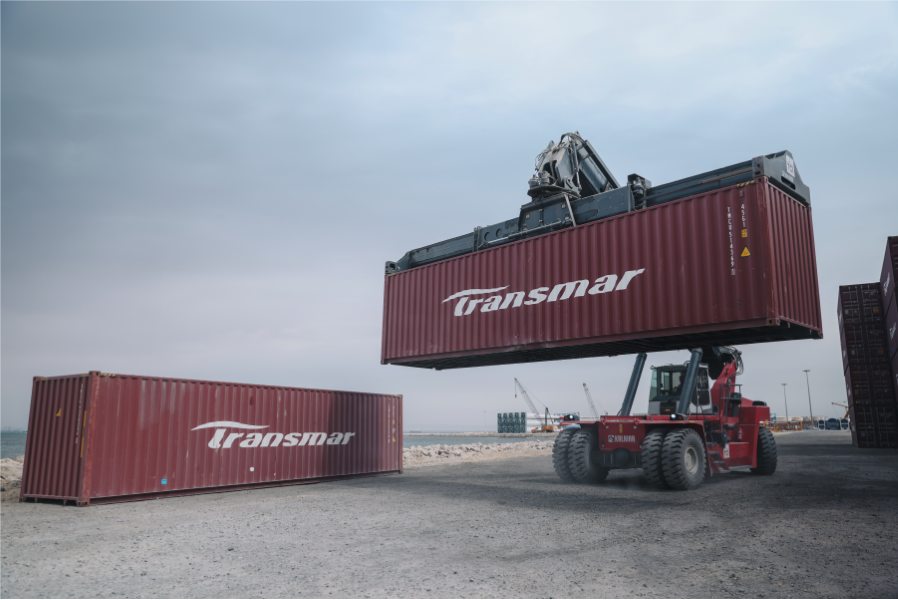
Transmar boosts trade connectivity in the Red Sea region with reliable maritime services that help producers reach international markets. Their advanced logistics, featuring state-of-the-art refrigerated containers and optimized shipping routes, ensure produce remains fresh and the supply chain remains efficient and reliable.

Wrapping It Up

Fresh produce is vital for health, economic stability, and food security. Rising demand underscores the critical role of maritime shipping in global trade. Egypt’s success in fresh produce exports highlights the impact of strategic agricultural and efficient logistics. As a major export hub, Egypt benefits from robust logistics partners like Transmar, ensuring a steady supply of fresh produce to global markets.

6

Also on Our Radar

Updates on ports, aviation and manufacturing from UAE, Oman, and Morocco

PORTS-

DP World’s Southampton container terminal to receive 14 hybrid straddle carriers: DP World Southampton has inked an agreement with heavy material handling services provider Kalmar for the supply of 14 hybrid straddle carriers at its UK container terminal, according to a statement.

More details: Delivery is slated for 2Q 2025, the statement notes. The integration of hybrid straddles should reduce fuel consumption, carbon emissions, and operational costs at the facility. The order is set to bring up the overall number of Kalmar straddle carriers at the terminal to 82.

M&A WATCH-

OQ seeking USD 2 bn from exploration unit IPO: Oman’s state-owned OQ Saoc is looking to raise some USD 2 bn by selling a 25% stake in OQ Exploration & Production (OQEP) in an initial public offering (IPO), Bloomberg reports. The deal would estimate the total value of OQEP at approximately $8 billion, the outlet said, citing two anonymous sources. The Omani firm plans to pay out USD 600 mn in annual dividends from 2024 through 2026. The company also plans to pay a performance-linked dividend equal to 90% of clash flow after investments in 2025 and 2026.

INVESTMENT WATCH-

Chinese textile giant to invest MAD 4.1 bn in Morocco: Chinese textile firm Sunrise plans to plug MAD 4.1 bn into Morocco’s textile sector within three years by developing industrial textile complexes, MAP reports. Morocco’s textile sector is a key national industry and accounts for 32.2% of the nation’s production output, Morocco World News reports, citing comments by central bank governor Abdellatif Jouahri.

OTHER STORIES WORTH KNOWING THIS MORNING-

  • Emirates terminating Singapore to Melbourne route: The UAE’s flagship carrier Emirates Airways is discontinuing its Singapore to Melbourne route, which had been operating since 1996. (The Straits Times)
7

Around the World

China opens an anti-dumping probe into Canadian rapeseed oil imports

China has launched a one-year-long anti-dumping probe into Canadian rapeseed, evaluating imports from 1 January to 31 December 2023, Reuters reports, citing a statement by China’s Commerce Ministry. “Canada’s canola exports to China have increased significantly and are suspected of dumping, reaching USD 3.47 bn in 2023, with a 170% y-o-y increase in volume and a continuous decline in price,” a spokesperson for China’s Ministry of Commerce said in a statement last week. The move comes after Canada announced plans to impose a 100% tariff on EVs and a 25% tariff on steel imports from China.

China calls on Spain to ease EU trade tensions: Chinese President Xi Jinping encouraged visiting Spanish Prime Minister Pedro Sanchez to take a “constructive role” in easing the strained relationship between Beijing and the European Union, Reuters reports. In response, Sanchez expressed hope that the EU could avoid a trade war with China, despite Brussels considering tariffs on Chinese-made electric vehicles.

Tension has been brewing: Beijing warned earlier this year that tensions with the EU over its proposal to impose tariffs of up to 36.3% on Chinese EVs could lead to a trade dispute, according to Reuters. This came shortly after China initiated a retaliatory anti-dumping investigation into European pork imports.

ON A WIDER SCALE- Chinese export growth likely slowed in August to its slowest pace in four months, caused by a slump in global demand and rising trade barriers, according to a Reuters poll. Trade data is expected to report outbound shipments rising at 6.5% y-o-y in August, down from 7.0% in July. China’s inbound shipments are expected to have grown by 2% in August, falling from July’s 7.2% growth rate.


SEPTEMBER

10-11 September (Tuesday-Wednesday): SkyMove MENA, Riyadh, Saudi Arabia.

12 September (Wednesday): Deadline for companies to submit bids for expansion and operation of Baghdad’s International Airport.

18-19 September (Wednesday-Thursday): Saudi Maritime & Logistics Congress, Dammam, Saudi Arabia.

23-25 September (Monday-Wednesday): WorldFreezonesOrganization’s Annual International Conference and Exhibition (AICE), Dubai, UAE.

23-26 September (Monday-Thursday): Freight Summit Global Conference, Dubai, UAE.

25-26 September (Wednesday-Thursday): Global Aerospace Summit, Abu Dhabi, UAE.

30 September – 2 October (Monday-Wednesday): African, Middle East & Islamic Finance Aviation 100 Awards, Dubai, UAE.

OCTOBER

6-8 October (Sunday-Tuesday): Routes World 2024, Bahrain.

8-10 October (Tuesday-Thursday): The Global Rail Transport Infrastructure Exhibition and Conference(Global Rail), Abu Dhabi, UAE.

7-9 October (Monday-Wednesday): AFSIC – Investing in Africa, London, UK.

8-10 October (Tuesday-Thursday): AntwerpXL Expo, Antwerp, Belgium.

12-14 October (Saturday-Monday): Global Logistics Forum 2024, Riyadh, Saudi Arabia.

13 October (Sunday): International Transport Workers’ Federation (ITF) Congress, Marrakesh, Morocco.

16-17 October (Monday-Tuesday): Global Airport & Aviation Forum, Jeddah, Saudi Arabia.

21-22 October (Monday-Tuesday): Smart Ports & Logistics Transformation Summit, Riyadh, Saudi Arabia.

22-24 October (Tuesday-Thursday): Asean Ports and Logistics, Johor, Malaysia.

22-24 October (Tuesday-Thursday): Global Ports Forum, Singapore.

26-27 October (Saturday-Sunday): International Conference on Tourism, Transport, and Logistics, Dubai, UAE.

NOVEMBER

11-12 November (Monday-Tuesday): World Advanced Manufacturing Logistics Summit & Expo, Riyadh, Saudi Arabia.

11-12 November (Monday-Tuesday): Saudi Airport Exhibition, Riyadh, Saudi Arabia.

11-14 November (Monday-Thursday): ADIPEC Maritime and Logistics Exhibition and Conference, Abu Dhabi, UAE.

13-15 November (Wednesday-Friday): The Bahrain International Airshow, Sakhir Airbase, Bahrain.

13-15 November (Wednesday-Friday): ITC North-South – New Horizons, Astrakhan, Russia

18-20 November (Monday-Wednesday): The Heavy Equipment and Truck Show, Damman, Saudi Arabia.

19-21 November (Tuesday-Thursday): Saudi International Maritime Forum, Dammam, Saudi Arabia.

18-19 November (Monday-Tuesday): G20 Summit, Rio de Janeiro, Brazil.

20-21 November (Wednesday-Thursday): Saudi Rail Exhibition, Riyadh, Saudi Arabia.

DECEMBER

2-3 December (Monday-Tuesday) Wings of Change Middle East, Riyadh, Saudi Arabia.

10-11 December (Tuesday-Wednesday): Rail Industry Summit, Casablanca, Morocco.

10-12 December (Tuesday-Thursday): Middle East Business Aviation, Dubai, UAE.

20 December (Wednesday): The Iran-Senegal Joint Economic Cooperation Commission, Dakar, Senegal.

EVENTS WITH NO SET DATE

IATA Annual General Meeting (AGM) and World Air Transport Summit, New Delhi, India.

1H 2024: Civil Construction subcontracts for construction firms in Oman for implementation of the Abu Dhabi – Suhar rail link to be announced.

2H 2024: Bahri’s barges for Saline Water Conversion Corporation (SWCC) to begin initial and commercial operation.

King Salman Energy Park is set to become operational.

The Cross-Border Digital Trade Forum, Dubai.

2025

FEBRUARY

4-5 February (Tuesday-Wednesday): Seatrade Maritime Qatar, Doha, Qatar.

APRIL

16-17 April: Global Ports Forum, Dubai, UAE.

Mid-2025: Iraq will complete phase one of the construction of the Grand Faw Port.

DHL and Aramco’s logistics and procurement hub in Saudi Arabia will commence operations.

AD Ports-operated Safaga Port’s multi-purpose terminal will become operational.

Phase 3 of APM Terminals Tangier MedPort to be complete and operational.

1Q 2025: Sadr Park’s Logistics Center in Riyadh to be completed.

1Q 2025: Phase twoof Jafza Logistics Park to be completed.

NOVEMBER

4-6 November: The International Air Cargo Association TIACA’s Air Cargo Forum 2025, Abu Dhabi, UAE.

2026

2026 UNCTAD Global Supply Chains Forum, Saudi Arabia.

2027

4Q 2027: Oman’s Musandam Airport construction to be completed.

Now Playing
Now Playing
00:00
00:00