Logistics (MENA)
  Egypt Edition
  UAE
UAE  Saudi Edition
  MENA <> India Corridor
  Climate (MENA)

 Share Issue





Good morning, folks. The week has finally come to an end, and we’re slipping into the weekend with some M&A and investment news from the UAE along with a couple of updates from Egypt’s trade and maritime front.
WATCH THIS SPACE-
#1- Egypt sets its sights on the European gas market: Egypt is set to re-export Cypriot gas shipments to Europe after they are treated at Egyptian liquefaction stations, President Abdel-Fattah El-Sisi said in a speech (watch, runtime: 18:35).
Sound familiar? French energy company TotalEnergies announced in September plans to potentially supply gas from its fields in Cyprus to Egypt for liquefaction and re-export as LNG or to be fed directly into the grid. Egypt and Cyprus also took “serious steps” the same month to reach an agreement to build a 90-km marine natural gas pipeline to connect the two countries.
#2- UAE, Malaysia could finalize trade agreement next week: Malaysia plans to sign a trade agreement with the UAE next week, Malaysia’s Investment, Trade and Industry Minister Tengku Zafrul Aziz told Asharq Business. UAE Foreign Trade Minister Thani bin Ahmed Al Zeyoudi concluded negotiations with Aziz in October regarding an economic partnership between the two countries. The agreement aims to eliminate or reduce tariffs, decrease trade barriers, and boost mutual investments.
#4- Pressure from Iran sanctions expected to boost tanker earnings: Recent efforts to strengthen sanctions on Iranian and Russian oil exports are expected to boost earnings for crude-carrying vessels, Frontline Management CEO Lars Barstad told Bloomberg on Tuesday. Efforts by ports in China's Shandong province to refuse ships under sanctions could have a substantial effect on trade flows, Barstad added.
The context: China’s Shandong Port Group wants to ban US sanctioned ships coming from Iran, Russia, and Venezuela from docking in its ports in the eastern Chinese province, Reuters reports, citing unnamed traders. If the ban is fully enforced, it would increase shipping costs for independent refiners in Shandong, who are the main buyers of the discounted sanctioned crude from the three countries.
Iran wants its oil back: Iran is pushing to retrieve 25 mn barrels of oil, worth USD 1.75 bn in today’s prices, stranded in Chinese ports for the past six years due to sanctions imposed by Donald Trump, Reuters reports, citing sources familiar with the matter.
The details: The stranded oil was delivered to leased tanks in the ports of Dalian and Zhouzhan in eastern China back in October 2018, by the National Iranian Oil Company (NIOC), the newswire writes. The waivers granted by Trump for the delivery were canceled in 2019, and the oil was not bought or cleared by Chinese customs and remained in the leased tasks. PDA Energy, which runs oil tanks in Dalian, has asked Iran to pay more than USD 450 mn in storage fees accumulated since 2018.
#5- EU gears up for Trump’s trade war: The EU’s new industry chief indicated that the bloc is ready to deploy both defensive and offensive measures if incoming US President Donald Trump goes forward with his tariff threats, noting “the end of European complacency” in defending its firms, Bloomberg reports. EU industry chief Stephane Sejourne said he hopes to persuade Trump that a trade war would be harmful for all parties, indicating that the EU is home to over 450 mn consumers.
The offensive has been in the works: The EU was weighing options back in November to appease Trump as it braces for US tariffs and other trade threats as well as difficult discussions on how to handle China.
REMEMBER- Trump has warned that the EU would have to “pay a big price” for not buying enough American exports. A second US presidential term for Trump could also usher in a 10% tariff on all imports into the US and a 50% tariff on goods from top trading partner China. The tariffs would likely spark retaliation from US trading partners — even political allies such as countries in Europe, Japan, South Korea, and India — who could place tariffs of their own on US imports.
MARKET WATCH-
#1- Oil prices dipped for the second day in early morning trade on the back of a buildup in US inventories, Reuters reports. Brent crude futures fell USD 0.08 to USD 76.08 a barrel by GMT 04.09, while US West Texas Intermediate (WTI) lost USD 0.11 to USD 73.21 a barrel. Both benchmarks lost nearly 0.1% from the previous session.
#2- Baltic index hits its lowest point since July 2023: The Baltic Exchange’s dry bulk sea freight index — which tracks rates for the capesize, panamax, and supramax vessel segments — fell 4.8% to 966 points on Wednesday. The capesize index decreased 118 points to 1,100, while the panamax index dropped 24 points to 1,037. The smaller supramax index shed 10 points to 846.
#3- The size of Saudi Arabia’s freight and logistics market reached USD 55.3 bn in 2024 and is set to hit USD 84.6 bn in revenues by 2033, according to market researcher IMARC Group. The kingdom’s position as a regional trade hub is a driver behind the growth, with the expansion of e-commerce fueling demand for durable and protective packaging options. Cross-border trade and the need for temperature-sensitive packaging in industries such as food and pharma equipment continue to broaden the market’s scope and offerings.
#4- Shell cautions of decline in LNG and oil trading for 4Q 2024: Shell revised down its LNG production forecast for 4Q 2024 yesterday and said its oil and gas trading results are anticipated to be considerably lower compared to 3Q 2024, Reuters reports. The world's leading oil and gas companies experienced a drop in earnings throughout 2024, following record earnings in the past two years, as energy prices stabilized and global oil demand weakened.
The forecast: The company revised its 4Q LNG production forecast to 6.8-7.2 mn metric tons, down from the earlier estimate of 6.9-7.5 mn tons, attributing the reduction to lower feedgas deliveries to liquefaction facilities and a decrease in cargo shipments. Trading in its chemicals and oil products division is also projected to be considerably lower compared to the previous quarter due to reduced seasonal demand.
DATA POINT-
The Iraqi Port Authority has reported an 11.6% increase in ships berthing at Umm Qasr North Port in 2024, reaching some 1.3k ships, according to a statement. The number of imported containers reached approximately 510k units, an increase of approximately 14.86%, while exported containers totaled 452k, an increase of 10.78%.
Get Enterprise daily
The roundup of news and trends that move your markets and shape corporate agendas delivered straight to your inbox.
***YOU’RE READING EnterpriseAM Logistics, the essential MENA publication for senior execs who care about the industry that connects producers and retailers to global markets. We’re out Monday through Thursday by 9:15am in Cairo and Riyadh and 11:15am in the UAE.
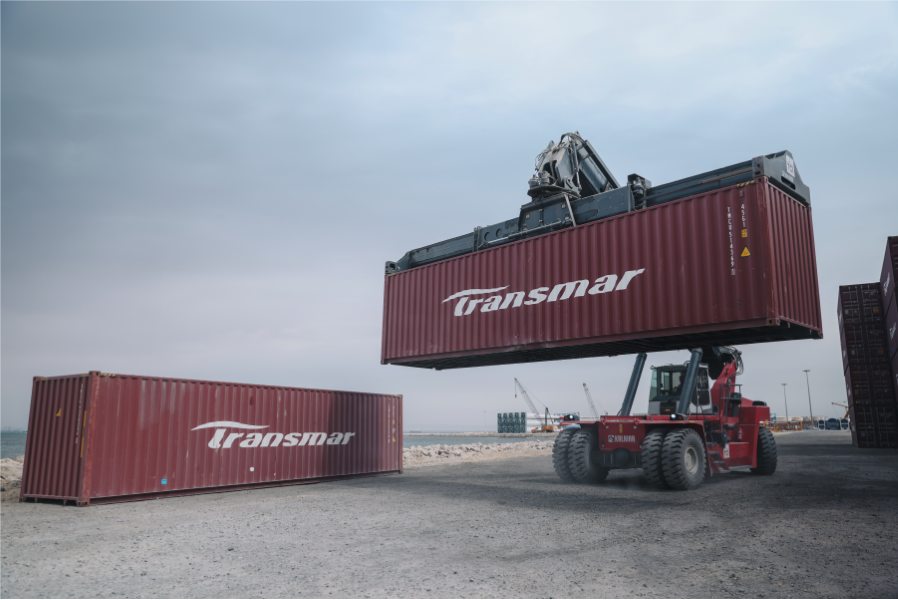
EnterpriseAM Logistics is available without charge thanks to the generous support of our friends at Hassan Allam Utilities, Transmar, and AK-Ships.
Were you forwarded this email? Tap or click here to get your own copy of Enterprise Logistics.
Want to send us a story idea, request coverage, ask for a correction, or otherwise get in touch? Reach out to us on logistics@enterprisemea.com.
DID YOU KNOW that we also cover Egypt, Saudi Arabia, the UAE, and the MENAclimate industry ?
***
CIRCLE YOUR CALENDAR-
Belgium will host the World Cargo Summit from Monday, 27 January to Wednesday, 29 January in Ostend. The event will focus on air cargo economics, strategy, and market trends with a specific focus on how the industry will tackle disruptions and how firms can adapt their business models.
The UAE will host the ShipTek International Conference from Wednesday, 29 January to Thursday 30 January in Dubai. The two-day conference will gather industry experts, including managing director at Hapag-Lloyd Carolin Stumm, CEO Adani Ports Nicolai Friis, VP International Maritime Industries Justin Taylor, CEO Tristra Tim Coffin, and others to discuss new tech and developments in the maritime industry.
The UAE will host the Middle East Bunkering Convention from Monday, 3 February to Wednesday, 5 February in Dubai. The event will focus on the marine fuels sector to address the future of the industry in light of geopolitical issues, environmental regulation, and the future of artificial intelligence and digitalization.
Saudi Arabia will host the Airport Expansion Conference from Tuesday, 4 February to Wednesday, 5 February in Riyadh. The two-day conference will feature over 30 speakers to discuss challenges faced by Saudi Airports and highlight Saudi Arabia’s Vision 2030 with a clear focus on expansion, tech, and strategic partnerships.
The UAE will host the Middle East Breakbulk Conference from Monday, 10 February to Tuesday, 11 February in Dubai. The event gathers giant manufacturers, EPCs, and service providers to discuss the latest solutions in breakbulk and heavy-lift logistics across the Middle East and Africa. The two-day event features an artificial intelligence (AI) seminar, heavy lift workshop, chartering workshop, and a women in breakbulk panel.
Check out our full calendar at the bottom of this email for a comprehensive listing of upcoming news events and news triggers.