

 Logistics (MENA)
  Egypt Edition
  UAE Edition
  Saudi Edition
  MENA <> India Corridor
  Climate (MENA)

 Share Issue




Good morning, folks. The news cycle is picking up some steam as we head into the weekend, leaving us with an issue packed with port and rail projects’ updates.
On the side of ports, AD Ports is making a move on Matidi port in the DRC, inking an agreement exploring a new terminal development. Meanwhile, Morocco hit the brakes on the tender for the widely-followed LNG terminal and pipelines project.
Over in Algeria, rail is the star of the day. The North African country has been ramping up its rail connectivity lately — and the recent launch of the Western Mining Railway is a case in point. The 950 km rail will link the iron ore-rich southwestern Algeria to industrial hubs and ports in the north, and is part of Algeria’s push to capitalize on its resource-rich economy.
Watch this space
LNG — Morocco has frozen the tender process for its USD 1 bn LNG import terminal and pipeline corridor at Nador West Med Port, after projections from the Finance Ministry, Reuters reports, citing an informed source and a ministry memo it has seen. A new tender may be in the works, but no timeline was given by Moroccan officials.
Bureaucratic infighting? The memo shows the Finance Ministry criticizing the release of the tender — which the Energy Ministry launched last month — without its sign-off on the project’s eligibility for a public-private partnership status and pointing to a lack of clarity on which government agency should lead the project. The ministry also raised concerns about “budget sustainability” and an “unbalanced allocation of risks between the private operator and the public entity,” Reuters reports.
Or shifting market dynamics? The country’s Energy Ministry is framing the suspension as driven by the need to review the project’s “parameters and assumptions” in light of shifting market conditions and price volatility, the Energy Ministry’s Senior Official for Renewables and Energy Efficiency Mohamed Ouhmed told Bloomberg.
Background: The project is part of a bigger picture plan by Morocco to shore up its status as a regional energy hub, as well as meet rising local demand for natural gas — which is forecast to hit 8 bn cbm by 2027, up from 1.2 bn cbm. The pipelines are designed to ultimately connect to the 6.8k African-Atlantic Pipeline — a USD 25 bn pipeline project currently under consideration that will link West Africa and Morocco, with a targeted capacity to move up to 30 bn cbm of gas annually.
INVESTMENT — Saudi is planning to invest in a new privately-held airline in Syria, head of the Syrian Investment Authority Talal Al Helali told Reuters on the sidelines of the World Government Summit in Dubai. The airline is expected to launch with over a dozen aircraft, two unnamed sources said. Contracts to develop Aleppo International Airport are also in the cards.
What else we know: The investment will be part of a multi-bn-USD Saudi investment package for the country’s reconstruction set to be announced on Saturday, marking the largest economic commitment to the country since the US lifted sanctions. The investment will also cover projects in “telecommunications, and real estate, especially in the old towns,” Al Helali said.
To encourage Saudi investors, the Kingdom might also provide ins. coverage to incentivize more local companies to enter the Syrian market, an unnamed senior Syrian businessman told the newswire. The Kingdom has been a close friend of Syria ever since Assad was toppled in late 2024, brokering agreements worth as much as SAR 24 bn through the Saudi-Syrian Investment Forum held in July.
DISRUPTION WATCH- US downs Iranian drone as negotiations continue: The simmering US-Iran situation saw a minor flare-up after US forces shot down an Iranian drone approaching an aircraft carrier in the Arabian Sea yesterday. US military officials claim the strike was in self-defense, as the drone approached the USS Abraham Lincoln aggressively. Diplomatic talks between Washington and Tehran, however, are still ongoing, US President Donald Trump confirmed.
The tensions were not exclusive to airspace: Iranian gunboats attempted to board the US-flagged commercial chemical tanker the Stena Imperative near the Hormuz Strait just outside Iranian waters yesterday. The tanker was eventually escorted by the US Navy in the sea lane, which moves about a quarter to a third of the world’s oil volumes.
Market Watch
Oil prices went up this morning amid rising US-Iran tensions after the US downed an Iranian drone and averted a seizure of a US-flagged vessel near Hormuz, Reuters reports. Brent crude futures rose USD 0.56 to trade at USD 67.89 / bbl as of 04:00 GMT, while US West Texas Intermediate (WTI) surged USD 0.63 to USD 63.84 / bbl.
The Baltic Index extends losses: The Baltic Exchange’s dry bulk sea freight index — which tracks rates for the capesize, panamax, and supramax vessel segments — declined 4.5% to 2,028 points on Tuesday, with bigger vessels dragging. The capesize dipped 7% to 3,175 points, while the panamax index slipped 1.4% to 1,724. Meanwhile, the smaller supramax index gained 1% to hit 1,083.
Data point
56.3 — that’s the seasonally adjusted purchasing managers’ index figure for Saudi Arabia in January, according to the Riyad Bank Saudi Arabia PMI (pdf). The figure maintains the country’s non-oil private sector in expansion territory, albeit at a slower rate for the second consecutive month, and from December’s reading of 57.4. Overall, the January reading saw growth hit a six-month low. While the reading remains comfortably above the 50.0 mark that separates expansion from contraction, it fell just short of the 56.9 long-run average.
The breakdown: Output and new business continued to rise at a robust clip, with 23% of companies reporting growth linked to resilient domestic and international demand. New orders picked up, as export orders surged at the quickest pace since October 2025 due to increased activity from the GCC and Asian markets.
Meanwhile, companies ramped up purchasing to build inventories and benefited from improved lead times, but the rate of job creation slowed to a 12-month low. Simultaneously, input price inflation climbed as fuel, metal, and technology prices rose alongside higher wages, forcing firms to raise their selling prices at a rate well above the historical average.
Get Enterprise daily
The roundup of news and trends that move your markets and shape corporate agendas delivered straight to your inbox.
***YOU’RE READING EnterpriseAM Logistics, the essential MENA publication for senior execs who care about the industry that connects producers and retailers to global markets. We’re out Monday through Thursday by 9:15am in Cairo and Riyadh and 11:15am in the UAE.
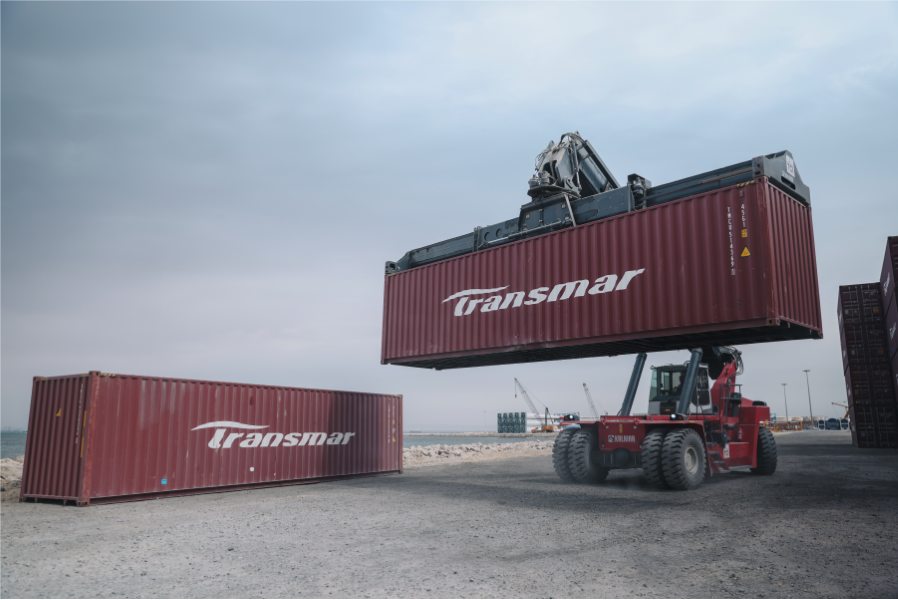
EnterpriseAM Logistics is available without charge thanks to the generous support of our friends at Hassan Allam Utilities, Transmar, and AK-Ships.
Were you forwarded this email? Tap or click here to get your own copy of Enterprise Logistics.
Want to send us a story idea, request coverage, ask for a correction, or otherwise get in touch? Reach out to us on logistics@enterprisemea.com.
DID YOU KNOW that we also cover Egypt, Saudi Arabia, and the UAE ***





 Algeria is building a mine-to-port iron ore lane. This week, Algeria


