Get EnterpriseAM daily

A four-way consortium to set up USD 220 mn solar production complex at China-Egypt Teda zone

1

What we're tracking today

TODAY: Teda zone’s new solar manufacturing complex + Adnoc inks another LNG agreement with India Oil Corp

Good morning, nice people. We’re ending the month with an issue full of investments and trade updates from across the region and the globe. But first, a quick look at the impact of US tariffs on India after they came into effect yesterday…

THE BIG LOGISTICS STORY- The US’ 50% tariffs on India entered into effect yesterday, in a move that aims to punish India for its Russian crude imports. India slammed the move as “unfair, unjustified, and unreasonable,” with Indian Prime Minister Narendra Modi urging a newwave of self-reliance, “not out of desperation, but out of pride.”

The impact would be big: India exported some USD 87 bn of goods to the US last year — with nearly 55% of these exports likely to be impacted by the new tariffs. “It's a tricky situation. Some product lines will simply become unviable overnight,” Federation of Indian Export Organizations Director General Ajay Sahai said. The tariffs could “potentially lock India out of key markets even after [they] are rolled back,” New Delhi-based Global Trade Research Initiative founder Ajay Srivastava said.

Any silver linings? Select key industries will be exempt — including electronics and pharma exports. India’s electronics sector saw 38% of its total exports go to the US last year, standing out as the sector “most exposed” to tariffs, lead economist at Oxford Economics Alexandra Hermann told CNBC earlier this month. Similarly, India’s pharma sector exported around USD 10.5 bn — about 35% of its total exports — to the US in FY 2024-2025.

Pivoting to the East? India and Russia had agreed last week to bolster their annual trade by 50% to USD 100 bn over the next five years. Modi is also expected to land in China this week in his first visit since 2018 for the Shanghai Cooperation Organisation, where he is set to also meet the Russian President Vladimir Putin.

REMEMBER- Russian crude oil imports make up 40% of India's total load — given its lower price compared to competing grades from African and Middle Eastern suppliers. Indian refiners are reportedly saving some USD 3.5 bn annually by uptaking lower-priced Russian oil.

The story picked up a lot of ink in int’l outlets: Reuters | Bloomberg | The New York Times | The Financial Times | NPR | CNN | NBC News | Politico | The Hindu | The Guardian | BBC

WATCH THIS SPACE-

#1- Corrosion-resistant steel exports from the UAE to the US will be hit with an anti-dumping duty of 7.2% to 16.4%, according to a statement. The decision — which comes after a year-long anti-dumping probe — is expected to impact some USD 2.9 bn in imports from the UAE, Turkey, Taiwan, Australia, Brazil, Canada, Mexico, the Netherlands, South Africa, and Vietnam.

The steel industry is a red line for the US: A 50% tariff on all steel imports into the US entered into effect lastJune, after the US administration cited Section 232, allowing it to impose tariffs on a national security basis pending investigations. Despite the signing of several trade agreements lowering tariffs with several trading partners, steel was often singled out from these reduced rates. Only the UK secured a lower rate of 25% for its steel exports — still much higher than the 10% granted to other UK products.

ALSO FROM UAE- The country’s trade and economic partnership agreement with New Zealand has entered into force, with annual bilateral trade projected to reach over USD 5 bn by 2032, according to a press release. Signed in January, the trade and economic partnership agreement will eliminate tariffs on UAE imports and minimize tariffs on imports from New Zealand, expedite customs procedures, and strengthen private-sector collaboration between the two. New Zealand will provide 100% dutyfree access to UAE imports, while the UAE will grant 98.5% access.

REMEMBER- The UAE has signed 28 trade and economic partnership agreements since 2021, with partners including India, Turkey, Australia, and South Korea.

#2- Beijing is seeking Riyadh’s support to revive trade talks with the Gulf Cooperation Council, where progress has stalled amid concerns that cheap Chinese imports could disrupt Saudi’s strategy to build up domestic industry, Reuters reports.

The setting: The news comes after Saudi Investment Minister Khalid Al Falih met Chinese Commerce Minister Wang Wentao in Beijing, where they both discussed scaling bilateral trade, capital markets cooperation, and joint ventures in new energy and industrial supply chains. Talks also touched on aligning China’s Belt and Road Initiative with Vision 2030.

What’s in it for China? Tightening commercial ties with Gulf partners is now increasingly strategic for the world’s second-biggest economy as it faces trade frictions on two fronts with the US and European Union, both of which have raised tariffs on Chinese exports over cost and oversupply fears.

#3- Syrian crude to set sail: Dutch energy and commodity trading major Vitol Group is set to load Syria’s first shipment of crude oil since Western sanctions were lifted on the country, Bloomberg reports, citing sources in the know. The shipment is set to be transported to a refinery in Italy, the sources added. Both Vitol and Syria’s Energy Ministry declined to comment on the matter.

More to come? The cargo does not seem to signal the start of a steady supply stream, two sources told the news outlet. Still, Syria is looking to sell more of its crude after Syria’s Energy Ministry issued a tender to sell nearly 500k barrels of medium-density crude oil last month, according to a statement.

MEANWHILE- South Sudan crude flows were disrupted, as the UAE’s decision to bar vessels originating from Sudanese ports from docking in its ports took effect. A crude-laden, named the Pola, was recently unable to call in Fujairah, according to data compiled by Bloomberg and shipping agreements. The Pola — which carries 80k tons of Dar Blend crude — could be forced to dock in the straits of Singapore instead.

Fujairah is usually a steady destination for Dar Blend: Dar Blend cargos — which originate from landlocked South Sudan and are shipped through Sudanese ports — have been shipped to three destinations over the past two months, including Singapore, Malaysia, and Fujairah, the news outlet reports, citing Vortexa data. Fujairah usually clinches one to two shipments each month.

Background: The update comes after a diplomatic rift between Sudan and the UAE reportedly led AD Ports to issue a decision stopping its ports from handling cargo destined for, or coming from, Port Sudan came earlier this month, according to documents seen by the news outlet and a CMA CGM statement.

MARKET WATCH-

#1- Oil prices took a dip this morning amid expectations of lower demand due to US tariffs on India, as well as summer approaching its end, Reuters reports. Brent crude futures fell by USD 0.63 to reach USD 67.43 / bbl by 05.02 GMT, while US West Texas Intermediate (WTI) went down by USD 0.62 to trade at USD 63.55. / bbl.

Meanwhile, Goldman Sachs expects Brent crude futures to slide into the low USD 50s / bbl by late 2026, citing a widening oil surplus that could average 1.8 mn bbl / d between 4Q 2025 and 4Q 2026, Reuters reports, citing a client note. The surplus could lead to an estimated 800 mn bbl rise in global stocks by the end of next year.

Chinese demand could drive growth: A potential increase in Chinese stock growth to 800k bbl / d — up from 400k bbl / d so far this year — would lift its 2026 Brent forecast by USD 6 / bbl to USD 62 / bbl.

REMEMBER- Goldman lowered Brent crude forecasts by USD 2 to USD 3 a barrel to average USD 60 / bbl for this year and USD 56 / bbl in 2026. This expectation came before the decision to fully unwind Opec+’s voluntary cuts by September.

#2- Baltic index on an upwards trajectory: The Baltic Exchange’s dry bulk sea freight index — which tracks rates for the capesize, panamax, and supramax vessel segments — was up 0.3% to 2,046 points on Wednesday. The capesize segment fell 1.4% to 2,989 points, while the panamax index increased between 0.3% to 7% to 2,046 points, its highest since 8 August. The smaller supramax index went up by 0.7% to 1,447 points.

PSA-

Hapag-Lloyd postpones LWS: Shipping giant Hapag-Lloyd is postponing its USD 1k-per-TEU low water surcharge (LWS) on cargo to and from Brazil’s Manaus Port on the back of Amazon River water levels receding slower than expected, according to statement. The LWS will take effect on 15 September for cargo transported to and from Asia, Africa, the Middle East, and Europe.

***YOU’RE READING EnterpriseAM Logistics, the essential MENA publication for senior execs who care about the industry that connects producers and retailers to global markets. We’re out Monday through Thursday by 9:15am in Cairo and Riyadh and 11:15am in the UAE.

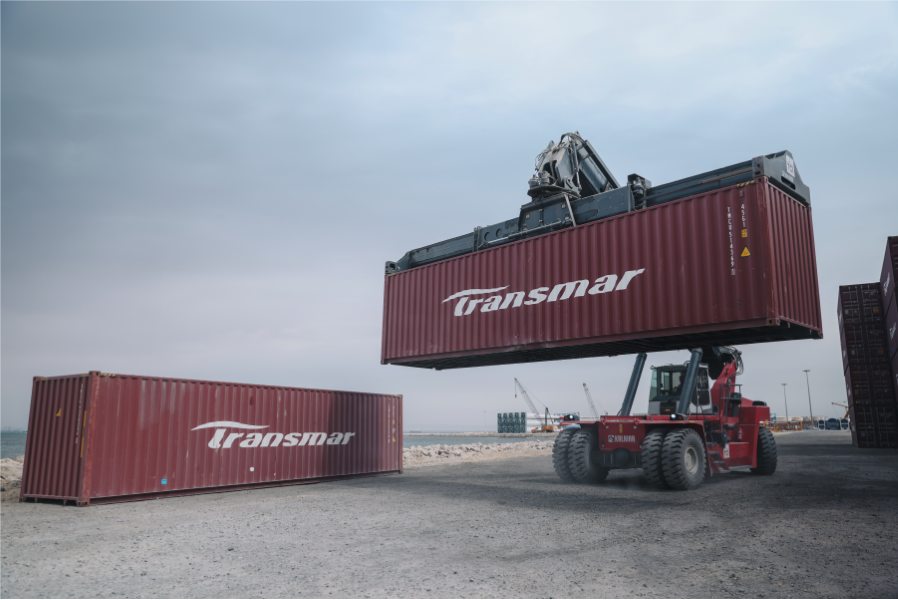
EnterpriseAM Logistics is available without charge thanks to the generous support of our friends at Hassan Allam Utilities, Transmar, and AK-Ships.

Were you forwarded this email? Tap or click here to get your own copy of Enterprise Logistics.

Want to send us a story idea, request coverage, ask for a correction, or otherwise get in touch? Reach out to us on logistics@enterprisemea.com.

DID YOU KNOW that we also cover Egypt, Saudi Arabia, and the UAE ***

CIRCLE YOUR CALENDAR-

Bahrain will host the Syria Recovery and Investment Forum on Sunday, 1 September and Monday, 2 September in Manama. The forum will host global industry leaders, policymakers, and stakeholders to discuss Syria's most urgent rebuilding needs — and attract investments — across key sectors including education, energy, housing, smart cities, ports, and metro systems.

Oman will host Transport Middle East on Monday, 1 September until Wednesday, 3 September in Salalah. The conference will host 35 international speakers and over 50 exhibitors from the maritime sector to discuss global transportation and logistics.

Saudi Arabia will host the Sustainable Maritime Industry Conference on Wednesday, 3 and Thursday, 4 September in Jeddah. The event is set to gather over 60 speakers and more than 3k participants to discuss maritime decarbonization, digital transformation, regulatory frameworks, capacity building, and sustainable practices.

Algeria will host the Intra-African Trade Fair on Thursday, 4 September until Wednesday, 10 September in Algiers. The fair will host over 75 countries and 2k exhibitors across several sectors to explore investment prospects and exchange information on trade between B2B and B2G.

Oman will host the Comex Global Technology Show on Sunday, 7 September and run till Wednesday, 10 September in Muscat. The event will host over 360 participants and 133 tech startups to show achievements in eGovernment, fintech, smart cities, health tech, agritech, and cybersecurity.

Saudi Arabia will host the Smart Ports and Logistics Transformation Summit on Monday, 15 September and Tuesday, 16 September in Jeddah. The summit will host over 40 global and local speakers, industry experts, and policymakers to explore smart port solutions, port operations, and logistics within Saudi Arabia.

Check out our full calendar at the bottom of this email for a comprehensive listing of upcoming news events and news triggers.


This publication is proudly sponsored by

2

Investment Watch

A heap of investments in Egypt’s zones around Suez Canal

TEDA is getting another solar power component production complex: Egyptian, Chinese, Bahraini, and Emirati investors signed a land usufruct to set up a USD 220 mn industrial complex for solar energy components in the China-Egypt Teda industrial zone, according to a statement. The project’s production will be used for both local markets and export.

Meet the players: The investors are comprised of Chinese manufacturer of solar components JA Solar, Bahraini PE Infinity Capital, Emirati resources investment firm Global South Utilities, and Egyptian AH Group. The Chinese side will act as the technical investor, while the other partners’ roles in the project were not disclosed.

The details: The industrial complex — dubbed Atom Solar Egypt — will include three factories with a combined production capacity of 2 GW of solar cells — all of which will be exported — 2 GW of solar modules — which will feed the domestic and regional markets — and a 1 GWh energy storage systems plant. The project will be completed within 3 years.

We had an idea this was coming: GSU inked an MoU with JA Solar in November to establish two solar power factories — a solar cells plant and a solar panels plant

Not the first of its kind: Earlier this summer, China’s Sunrev Solar inked a contract with the China-Egypt TEDA trade zone to build a USD 200 mn integrated industrial complex for solar energy components.

REMEMBER- Both complexes align with Egypt’s broader strategy to localize 12 strategic industrial components, which include solar cells, alongside electric motors, control panels, and elevators and others. The strategy aims to not only reduce the country’s import bill — and resultant strain on FX resources — but also to export these components.

There’s more to the story: Chinese solar power component manufacturers have been moving their production facilities to Egypt and the rest of the MENA region as they face pressure in their home market due to ongoing trade wars and geopolitical friction. We dive deeper into this trend in a Going Green published last month — check it out here.

IN OTHER EGYPT UPDATES-

More investors land in Qantara West: A heap of new foreign investments totaling more than USD 140 mn are coming to Egypt’s Qantara West Industrial Zone, with new projects from Chinese, German, and Greek firms landing in the zone, according to statements here, here, and here.

#1- China’s Everfar Textile Egypt is investing USD 130 mn to set up a textile and ready-made garments facility at the Qantara West Industrial Zone, according to a Suez Canal Economic Zone (SCZone) statement. The project aims to produce over 7.5 mn tons of processed fabrics, more than 20 mn meters of garment fabrics, some 3.6 mn ready-made garments, and large quantities of garment accessories annually. All output will be exported, with the factory expected to create more than 3.2k jobs.

#2-Greek textile firm Tzanidakis Miaxah Marinos (Murphy) is setting up a USD 4 mn, 7k sqm ready-made garments factory in Qantara West, marking the first Greek industrial investment in the Suez Canal Economic Zone (SCZone). The facility will export 70% of output and create 1k jobs, according to an SCZone statement.

#3- German home furniture firm Sun Garden will invest USD 7 mn in a new factory for home furnishings, mattresses, and outdoor furniture in Qantara West, marking the first German industrial investment in West Qantara, the Suez Canal Economic Zone said in a statement. The project will create 500 direct jobs and earmark 90% of production for export.

What’s next: The Suez Canal Authority will roadshow in Turkey at the end of September to drum up fresh investment.

DATA POINT- Qantara West has nabbed the majority of Egypt’s foreign investments — hosting 37 projects with a combined investment cost of nearly USD 1 bn. The contracted projects, which cover nearly 2.4 mn sqm, are projected to create 53k direct jobs.

3

Trade

Adnoc inks 15-year LNG supply agreement with Indian Oil Corp

Adnoc signed a 15-year liquefied natural gas (LNG) sales-and-purchase agreement (SPA) with Indian Oil Corporation, according to a statement. Adnoc will supply up to 1 mn tons per annum (mtpa) from its Ruwais LNG project. This agreement — which formalizes a previously signed heads of agreement — comes months after the pair signed another 14-year SPA agreement for up to 1.2 mtpa of LNG from Adnoc’s Das Island facilities.

DATA POINT- Indian Oil is now set to be Adnoc’s largest LNG offtaker with a total capacity of 2.2 mpta starting in 2029.

Adnoc 💚 India: Adnoc Gas signed a 10-year LNG supply agreement with India’s Hindustan Petroleum Corporation for 0.5 mpta of LNG earlier this month. It also inked a 10-year SPA last year with Indian state-owned natural gas company Gail for 0.52 mpta of LNG.

India’s demand for LNG is not expected to cool down anytime soon, as the country plans to more than double its LNG imports to 64 bn cbm (or 45-46 mtpa) annually by 2030. India is currently the world’s fourth-largest LNG buyer.

Meanwhile, Adnoc’s LNG capacity is up for a boom: The oil giant is currently developing its LNG project in AlRuwais Industrial City, Al Dhafra region, which is set to add 4.8 mtpa to its LNG capacity when it launches in 2028. Once fully operational, the project is expected to more than double Adnoc’s UAE LNG production capacity to 15 mtpa. Adnoc is also close to adding another 7.5 mtpa of LNG capacity to its roster through its USD 19 bn takeover offer for Australian gas player Santos.

Tags:
4

Spotlight

Egypt’s warehousing market is big, but there’s still plenty of room to grow

Egypt’s local warehousing market is forecast to grow at 7% y-o-y over the next five years amid rising demand driven by new industrial zones and expanding e-commerce operations, according to a statement (pdf) from Egyptian Global Logistics (EGL).

The local market already leads the region in overall market value, but ranks third after Saudi Arabia and the UAE in terms of growth rates, EGL Marketing and Contracts Manager Mohamed El Kady told EnterpriseAM. While not leading the region in terms of growth, Egypt’s booming e-commerce sector, solid industrial base, growing tech sector, and strategic geographic position continue to “drive robust warehousing and logistics growth,” he added.

(Tap or click the headline above to read this story with all of the links to our background as well as external sources.)

Egypt currently has around 1.8k large warehouses and an additional 25k medium and small facilities scattered nationwide, according to estimates from EGL.

Many of the new warehousing facilities are smarter and more efficient than before. Across key warehousing zones — namely Cairo, Giza, Alexandria, Ain Sokhna, and around the Suez Canal — modern facilities are becoming increasingly technology-driven. This includes the integration of automation, robotics, AI-powered warehouse management systems, and IoT-enabled sensors, which “are transforming efficiency, visibility, and cost control,” El Kady said.

Logistic park builders are also responding to demand for more eco-friendly and sustainable warehousing, with projects like Yanmu East Logistics Park — a JV between Hassan Allam Utilities and Kuwait’s Agility Logistics Park — securing EDGE Advanced certification for its warehouses. Three of the park’s warehouses have achieved the certification with savings of 49% in energy, 53% in water, and 59% in carbon emissions, giving warehouse occupants cheaper running costs and boasting rights to a greener supply chain, which can be an important leverage in financing and other negotiations.

The logistics sector is also expanding into new areas outside of traditional hubs. EGL identified Tarboul Industrial City in the Eastern Desert south of Cairo as an agricultural logistics and trade hub for Upper Egypt that benefits from its proximity to Cairo and the Suez Canal. The company also views Al Dabba Industrial City on the North Coast as a promising zone that will serve as a logistics anchor for the new under-construction cities like Ras El Hekma in the area — drawing on the UAE’s “Jebel Ali-style model,” EGL said.

Like other warehousing companies, EGL is expanding “aggressively,” with investments in some 350k sqm of warehousing capacity across Egypt’s logistics hubs in Alexandra, Dekheila, Sokhna, Abu Rawash, and Safaga.

LOOKING AHEAD-

Regional demand could be the next growth driver for our warehouse market amid rising costs and shortages elsewhere. For example, UAE warehouse rents are projected to rise between 5-10% this year amid heightened demand paired with shortages of vacant warehouses and industrial land. With its strategic location, cheaper labor and facilities, and an abundance of land resources, Egypt is well-positioned to attract UAE-based players with global operations seeking more affordable and available options.

But to bring companies’ warehousing operations over to Egypt, the infrastructure needs to be put in place. While Egypt imposes “no legislative barriers to foreign logistics operators in warehousing,” infrastructure availability is still a “primary challenge, [which] the government has prioritized to resolve,” El Kady told us. “Dated road, port, and transportation infrastructure” was also highlighted as one of three major obstacles for advancing the promising warehouses sector in Egypt, according to Agility.

Egypt also needs to focus more on integrating warehouses with advanced technology — known in the business as Grade A warehouses — Agility says. The report stresses that this would play an essential role in propelling the expansion of our warehouse sector and competitiveness in the region.

To this end, the government has committed some EGP 14 bn to develop seven state-of-the-art storage complexes — spanning around 1.3 mn sqm — dedicated to storing strategic commodities, according to EGL.

“Complex regulations and customs procedures” are also holding back the sector, according to Agility. To address this, the Finance Ministry finalized new amendments in June related to customs facilitation measures, seeking to reduce customs clearance time to two days from eight in the initial phase, which could take 9-12 months. Eventually, clearance could happen within hours.

5

Also on Our Radar

Updates on zones, diplomacy, and trade from across the region

DIPLOMACY-

Oman inked an MoU with Saudi firms to boost bilateral trade and expand cooperation markets, ONA reports. Representatives from several Omani and Saudi factories met to discuss promoting both parties’ trade and industrial ties and expanding cooperation across key sectors including construction, packaging, and medical distribution. The agreement was overseen by Oman’s Ministry of Commerce, Industry, and Investment Promotion Ministry and the Saudi Export Development Authority.

Trade in numbers: Oman’s industrial exports to Saudi Arabia went up 35.7% y-o-y to OMR 538 mn in 1H 2025. Trade between the two countries hit OMR 2.18 bn in 2024.

ZONES-

Milaha lands in Libya: Qatar Navigation (Milaha) has launched its services to Libya’s Misurata FreeZone Port — deploying its Al Bid’ah vessel, according to a statement. The move is part of Milaha’s plan to expand its services across North Africa.

TRADE-

#1- Syria to digitalize services for traders, investors: The Damascus Chamber of Commerce has launched a platform to digitalize services and procedures for traders and investors — specifically tailored for Syrians abroad and non-resident investors, Shafaq News reports, citing the chamber’s Media Director Nizar Al Miqdad. The platform aims to expedite administrative processes while decreasing the amount of paperwork. The pilot phase will begin soon — though a specific date remains undisclosed — and will include all of Syria’s chambers of commerce.

#2- Pakistan is reportedly looking to delay Qatari LNG deliveries scheduled for the next five years, amid weaker-than-expected demand for the super-chilled gas, Bloomberg reports, quoting sources familiar with the matter. Pakistani officials currently in Qatar are set to request delaying the deliveries, which were slated to begin next year with two shipments per month. In doing so, Pakistan could defer up to 177 cargoes, impacting some USD 5.6 bn earmarked in liabilities until after 2031, local media Daily Times reported.

IN CONTEXT- The move comes as the South Asian country grapples with cooling demand for the fuel, after hiking power rates to cap utility debts to secure loans from the International Monetary Fund. Expanding renewables capacity and the availability of cheaper energy sources for electricity have also dented the demand for LNG, signifying a market shift for a country that suffered severe LNG shortages a few years ago. The country consumes some 510 mcf/d of LNG — falling short of its 800 mcf/d in contracted commitments.

Where do we stand? Pakistan currently imports nine LNG cargos per month from Qatar and one from Italian energy giant Eni. Qatar already approved the deferral of five contracted LNG cargos back in December — without financial penalty — to now begin from 2026. Pakistan also requested that Eni divert its scheduled deliveries.

6

Around the World

Hanwha Shipping orders 10 MR tankers from its US shipyards

Hanwha Shipping has ordered the construction of 10 medium-range (MR) oil and chemical tankers from its US-based shipyards, along with one LNG carrier, according to a statement. The move marks what Hanwha says is the biggest commercial vessel order placed at a US-based yard in over 20 years. The first MR tanker is scheduled for delivery in early 2029, while the delivery timeline for the LNG vessel was not disclosed.

Will Trump’s shipbuilding dreams come true? Unlikely. The picture looks bleak for the US, despite its efforts to spur its own dwindling industry and crack down on China-built, owned, and operated vessels. The US produces just 0.1% of the world’s merchant vessels — down from 5% over 50 years ago — indicating the scarcity of supply chains or shipyards aside from a few naval facilities. High production costs and the lack of skilled labor are two other major issues.

South Korea has leveraged its shipbuilding industry to gain favor with Trump amid his tariff crusade. The South Asian industrial giant has secured a 15% tariff rate for its US-bound exports earlier in July, and, with its latest investment pledges in the US — including a mega Boeing order — the country could be set for a steady trade relationship with the US.

ICYMI- Hanwha Philly Shipyard secured a USD 250 mn order to develop an LNG carrier with 174k cbm capacity for Hanwha Shipping back in July, marking the US’ first LNG vessel order in almost 50 years. Still, most of the construction is slated to take place in Hanwha Ocean’s Geoje shipyard in South Korea.


At least 30 countries have suspended parcel shipments to the US, after the latter ended duty exemptions — known as de minimis — for packages worth USD 800 or less entering the country, CNN reports. Since last week, some 22 European countries, including Austria, Belgium, Denmark, France, Germany, Russia, Norway, Spain, and the UK, have suspended shipments to the US. They were joined by countries in Asia and the Pacific, namely Japan, South Korea, Taiwan, Australia, India, Singapore, Thailand, and New Zealand. The Trump administration had already halted the exemption for packages from China and Hong Kong back in May, The Guardian reports.

De minimis? De minimis is a legal term referring to matters too small to concern the courts and whose impact is arguably negligible. The Latin phrase directly translates to "the law does not concern itself with trifles.


AUGUST

25-29 August (Monday-Friday): Africa Procurement and Supply Chain Leaders’ Conference, Dubai, UAE

31 August (Sunday): GCC Forum for Green Mobility, Salalah, Oman.

SEPTEMBER

1-2 September (Monday-Tuesday): Syria Recovery and Investment Forum, Manama, Bahrain

1-3 September (Monday-Wednesday): Transport Middle East 2025, Salalah, Oman.

3-4 September (Wednesday-Thursday): Sustainable Maritime Industry Conference, Jeddah, Saudi Arabia.

4-10 September (Thursday-Wednesday): Intra-African Trade Fair, Algiers, Algeria.

7-10 September (Sunday-Wednesday): Comex Global Technology Show, Muscat, Oman.

15 September (Monday): Logistics Leaders Saudi 2025, Riyadh, KSA

15-16 (Monday-Tuesday) September: Smart Ports and Logistics Transformation Summit, Jeddah, KSA

23 September (Tuesday): TradeWinds Shipowners Forum Greece 2025, Athens, Greece

24 September (Wednesday): Syria Recovery & Investment Forum, Abu Dhabi, UAE

24-26 September (Wednesday-Friday): Routes World, Hong Kong.

25 September (Thursday): World Maritime Day.

30 September-2 October (Monday-Thursday): Global Rail Transport Infrastructure Exhibition and Conference, Abu Dhabi, UAE.

OCTOBER

The International Maritime Organization (IMO) is set to formally adopt the Net-zero Framework this month, stipulating new fuel standards for ships and a global pricing mechanism for emissions.

1-2 October (Wednesday-Thursday): Saudi Maritime and Logistics Congress, Dammam, Saudi Arabia.

6-8 October (Monday-Wednesday): Maritime Cyprus Conference 2025, Limassol, Cyprus.

7-8 October (Tuesday-Wednesday): Global EV and Mobility Technology (GEMTECH) Forum, Riyadh.

13-17 October (Monday-Friday): The Marine Environment Protection Committee’s second extraordinary session, London, UK.

14-15 October (Tuesday-Wednesday): Investing in Africa Conference and Expo, London, UK.

15 October (Wednesday): Global Trade Review, Cairo, Egypt

28-30 October (Tuesday-Thursday): Borneo International Maritime Week, Sarawak, Malaysia.

NOVEMBER

3-6 November (Monday-Thursday): ADIPEC Maritime and Logistics Exhibition and Conference, Abu Dhabi, UAE.

4-6 November (Tuesday-Thursday): Air Cargo Forum, Abu Dhabi, UAE.

9-11 November (Sunday-Tuesday): TransMea Expo, Cairo, Egypt

17-21 November (Monday-Friday): Dubai Airshow, Dubai, UAE.

24-26 November (Monday-Wednesday): World Advanced Manufacturing Logistics Summit & Expo, Riyadh, Saudi Arabia.

DECEMBER

9-10 December (Tuesday-Wednesday): Rail Industry Summit, El Jadida, Morocco.

16-17 December (Tuesday-Wednesday): Saudi Airport Exhibition, Riyadh, Saudi Arabia.

JANUARY 2026

19-23 January (Monday-Friday): World Economic Forum Annual Meeting, Davos, Switzerland.

Now Playing
Now Playing
00:00
00:00