Get EnterpriseAM daily

Rail gains ground

1

WHAT WE’RE TRACKING TODAY

TODAY: SAR's new 22-km railway to Dammam

Good morning, wonderful people. Today's issue is all about keeping things moving. Saudi Arabia is pushing ahead with a key industrial rail link, and the UAE is finding ways to keep oil exports flowing despite pressure on Hormuz. Plus: AD Ports is moving closer to a full rollout of its Safaga Terminal after kicking off trial operations.


Inline Image

You’ve spent decades building wealth, and the question now isn’t how to make money — it’s how to make sure it survives you, works across borders, and doesn’t quietly erode while you’re not looking. The rules have changed. Egyptian real estate, once a near-guaranteed store of value, is competing with markets in Greece, Spain, and Dubai.

Whether it’s art as an asset, crowdfunding or the tax implications quietly stacking up behind that second passport, the toolkit for serious capital deployment has expanded faster than most conventional advice — or most advisors— have.

In Issue 3 of EnterpriseAM Money Matters, we cover the decisions that matter most when you’re at the stage where capital preservation is just as important as capital growth — and where getting it wrong is no longer something you can simply recover from.

Tap or click here to subscribe to the Egypt edition, delivered to your inbox today, 11 AM Egypt & KSA.


Testing the waters

AD Ports has kicked off trial operations at Noatum Ports’ Safaga Terminal, with the UAE port operator’s USD 200 mn Red Sea terminal set for a full launch later this year. The terminal is designed to handle 450k TEUs, 5 mn tons of dry bulk and general cargo, 1 mn tons of liquid bulk, and 50k CEUs of Ro-Ro cargo once fully operational.

The Red Sea gateway has come a long way. AD Ports secured the 30-year Safaga concession in 2023, tapped Hassan Allam Construction for infrastructure works, brought in new STS and RTG cranes earlier this year, and locked in USD 115 mn project financing from IFC and NBK Egypt to push the terminal toward completion.

Safaga has already been pulled into Egypt’s Red Sea pressure test, with the port handling 4.2k shipments in the first half of March — up 75% y-o-y — as shippers leaned harder on Egypt’s Red Sea network during regional disruption.

The northern exit

Iraq is looking to raise crude exports through routes that bypass Hormuz, with plans to increase export capacity via Turkey’s Ceyhan terminal to around 650k bbl / d, the Arabic press reports. Iraq has few operational alternatives to the Gulf export routes — positioning the northern corridor as a hedge against disruption.

For now, the workaround is mostly Ceyhan: Baghdad sees Ceyhan as its most immediate workaround for potential Hormuz constraints, with a restart potentially restoring around 250k bbl / d from Kirkuk and a further 200k bbl / d from the Kurdistan region as northern exports are rebuilt. The country is also studying routes through Syria’s Baniyas and Jordan’s Aqaba.

No end to the waiting

Airbus’ backlog bites again: Airbus has started notifying some customers that delivery delays on some A321neo aircraft will now extend into 2028, as persistent shortages of engines, avionics, and other critical components continue to disrupt production.

REMEMBER- The delay notice comes after Airbus spent the first part of the year trying to close a delivery gap. The French planemaker deliveries were down 16% y-o-y in 1Q, before the shortfall narrowed to 6% by April, as it worked to protect its 2026 delivery target.

Market watch

Oil prices rose this morning on escalating Middle East tensions and lower US crude stockpiles, Reuters reports. Brent crude futures gained USD 0.66 to trade at USD 92.11 / bbl by 04.06 GMT, while US West Texas Intermediate (WTI) increased USD 0.60 to USD 88.80 / bbl.


The Baltic Index remains on a downward trend: The Baltic Exchange’s dry bulk index — which tracks rates for the capesize, panamax, and supramax vessel segments — fell 3.4% to 2,818 points on Tuesday. The capesize index dipped 5.9% to 4,441 points, while the panamax index was down 0.6% to 2,205 points. The smaller supramax index inched up 1.1% to 1,614 points.

PSA

Maersk hikes Egypt import customs filing fee: Danish shipping firm Maersk will raise its Customs Additional Item (CAI) charge on imports into Egypt by 40% to EGP 1.4k per bill of lading from EGP 1k, effective 15 June. The fee, subject to 14% VAT, will apply to all imported shipments and be reflected in upcoming invoices. The shipping company linked the increase to efforts to enhance service delivery through Egypt's customs platform.

*** YOU’RE READING EnterpriseAM Logistics, the essential MENA publication for senior execs who care about the industry that connects producers and retailers to global markets. We’re out Monday through Thursday by 9:15am in Cairo and Riyadh, and 10:15am in the UAE.

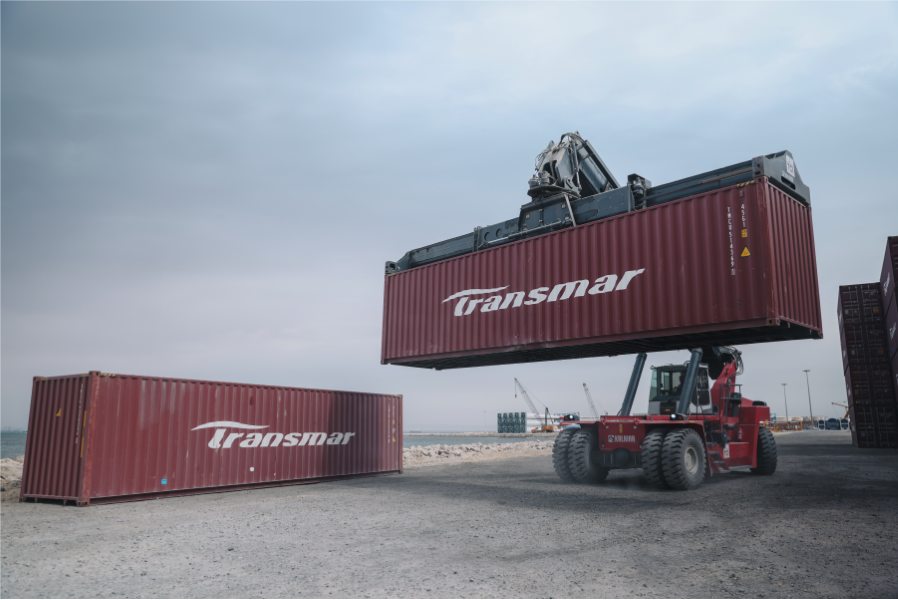
EnterpriseAM Logistics is available without charge thanks to the generous support of our friends at Hassan Allam Utilities and Transmar.

Were you forwarded this email? Tap or click here to get your own copy of EnterpriseAM Logistics.

Want to send us a story idea, request coverage, ask for a correction, or otherwise get in touch? Reach out to us on [email protected].

DID YOU KNOW that we also cover Egypt, Saudi Arabia, and the UAE? ***

This publication is proudly sponsored by

2

The Big Story Today

SAR awards contract for Dammam industrial city rail link

A new freight artery for Saudi industry: Saudi Arabia Railways (SAR) has awarded the contract for the Dammam Second Industrial City rail connection to a joint venture between OHL Arabia and Hassan Allam Construction, advancing a long-planned freight link designed to connect one of the Kingdom's largest industrial zones directly to the national rail network, according to a statement (pdf).

The details: The project will deliver a 22.7 km single-track railway, with the scope covering earthworks, civil foundations, track construction, rail systems, signaling, telecommunications, and network integration works. The package also includes a 265-meter bridge crossing Highway 615 and a 118-meter bridge spanning the Aramco pipeline corridor.

The case for rail: “This rail link addresses a practical logistics issue of directly connecting a major industrial production area into the national rail freight network,” Martin Tillman, founder and transport mobility planning specialist at TMP Consult, tells EnterpriseAM. “For manufacturers and logistics operators, the main benefit is likely to be improved reliability, reduced dependence on long haul trucking for suitable cargo types, and greater flexibility in how goods move between the industrial city, ports, inland markets, and distribution centers,” he adds.

Positioned for connectivity: “The project could strengthen the logistics relationship between Dammam’s industrial base, King Abdulaziz Port, and Riyadh Dry Port by making rail a more practical option for manufacturers and logistics operators,” Tillman says.

IN CONTEXT- The Dammam link also sits inside Saudi Arabia’s wider rail-and-logistics push, including the USD 7 bn Saudi Landbridge program connecting the Red Sea side of the Kingdom to the Gulf side. That project includes upgrades and extensions around Jubail, Dammam, Riyadh, Jeddah, King Abdullah Port, and Yanbu.

Beyond Dammam, there is a national rail buildout: SAR has already rolled out five Gulf-to-inland freight routes linking Gulf ports with the Kingdom’s central and northern logistics spine. The Kingdom is also activating a joint committee with Jordan to study a rail line through Syria, including route options and technical alignment. Saudi Arabia has also commissioned studies on a Saudi-Turkey rail link through Jordan and Syria — creating a possible northbound corridor route toward Mediterranean ports.

Inline Image

3

Trade

UAE oil exports are rising even as Gulf shipping faces pressure

The UAE is showing it can keep crude moving even with Hormuz under strain, despite its second pipeline bypassing the strait still being under construction. Bloomberg’s tanker data indicates exports held at about 2.6 mn bbl / d in May — not too far from its 3.1 mn bbl / d exports last year — and that’s thanks to a series of moves by Adnoc ranging from spot sales and flexible delivery options to braving the strait in the dark.

Adnoc sold at least 14 mn barrels of crude to Asian buyers through a spot tender, the business information service says, citing traders in the know. The cargoes — comprising Upper Zakum, Umm Lulu, and Das Blend crude — were placed with refiners across China, Japan, South Korea, and India, reportedly at premiums a few greenbacks above the Dubai benchmark. This is a sign that buyers are willing to pay up for crude that can be delivered despite logistical and security complications.

The sale follows the June-September loading tender we reported on last week, which allowed buyers to bid for up to 2 mn bbl per cargo on a cost-and-freight basis. The scale of the offering suggested Adnoc was prepared to market substantial volumes despite ongoing disruption to Gulf shipping routes.

The tenders are not just premiums — they are also about keeping buyers anchored. “With Gulf transits this thin, any reliably deliverable barrel commands a premium, and spot tenders let Adnoc capture that rather than locking it into term pricing,” Aditya Saraswat, MENA research director, tells EnterpriseAM.

More barrels are on the way — and delivery is looking very different. Adnoc launched a second tender offering the same crude grades for June-August loading, closing on 11 June, Reuters reports. Buyers can bid for up to 2 mn bbl per cargo, with crude available from Fujairah storage, Zirku Island, Das Island, or via ship-to-ship transfers between Fujairah and Sohar. That builds on earlier flexibility offered to term customers, who were told May cargoes could be lifted through alternative delivery points on a case-by-case basis.

Fujairah is the UAE’s Hormuz workaround. “The UAE has a Hormuz-independent export node in Fujairah, fed by Adcop at 1.8 mn bpd nameplate capacity. No other Gulf exporter except Saudi (via the East-West line to Yanbu, itself now exposed to Houthi threats) has anything comparable,” Saraswat says. “That’s why UAE crude exports have held near 60% of pre-conflict levels while purely Hormuz-dependent flows collapsed toward zero,” he adds.

Tags:

Inline Image

4

Also on Our Radar

Pattern scales up Dubai warehousing operations

Pattern adds room for MENA growth

Pattern is adding more Dubai fulfillment muscle: Nasdaq-listed e-commerce accelerator Pattern has launched a new warehouse and office facility in Dubai Investment Park — expanding it into a site six times larger than its previous location, AlBayan reports. The temperature-controlled hub combines storage, fulfillment, and office functions, while incorporating conveyor automation, automated labeling, API integrations, and connections to more than 60 global marketplaces.

5

Logistics in the News

Strong demand can't protect airlines from rising fuel costs

How can airlines be filling more seats yet earning less? IATA expects global airline net income to fall to USD 23 bn in 2026 — almost half its earlier USD 41 bn forecast and well below the USD 45 bn expected for 2025 — as conflict-driven disruptions in the Middle East and surging fuel prices squeeze the industry, according to a report. Net margins are forecast to shrink to just 2%, while income per passenger falls to USD 4.5 — highlighting how thin the sector's buffer has become against any additional cost pressures.

The margin shock lands in fuel

Airline fuel costs are expected to jump nearly 40% to USD 350 bn in 2026, up from USD 252 bn last year. IATA forecasts jet fuel to average USD 152 per barrel this year — almost 70% above 2025 levels — while Brent is expected to average USD 95 per barrel — leaving airlines exposed to a record USD 57 from the premium of jet fuel over crude.

That makes this fuel cycle nastier: “While the sector has experienced high fuel prices before, the difference this time is that the crack spread for jet fuel has also been reaching all-time highs in certain regions,” Garth Lund, aviation consultant, tells EnterpriseAM.

This is not a demand problem: Total fuel consumption is expected to remain flat at 104 bn gallons, meaning airlines are not necessarily burning more fuel. The higher bill is likely a price story — as a result, fuel's share of total operating expenses is projected to rise to 31.4% from 25.4% in 2025, transforming it from a routine cost line into the sector's primary earnings swing factor.

The fuel shock hits harder when mixed with operational disruption: “The point is that a fuel shock, combined with weak margins, debt, aircraft issues or intense competition, can turn an already difficult situation into a survival crisis,” Wouter Dewulf, professor of air transport management and economics at the University of Antwerp, tells EnterpriseAM.

Hedging can only soften the blow. Airlines have hedged roughly one-third of expected 2026 fuel consumption, which could help smooth short-term volatility, but doesn’t protect the sector from a sustained reset in prices. The crack spread also matters because many airlines hedge crude rather than jet fuel directly, leaving them exposed when refinery economics and product shortages drive jet fuel above crude.

Higher fares do not fully close the gap: “Airlines have typically communicated a recapture rate of around 30-60% in terms of passing on higher fares to offset higher fuel expenses. That said, most airlines have also trimmed some capacity to remove flights which may not be economically viable with higher input costs,” Lund says.

The Middle East bears the brunt

Middle Eastern airlines are expected to swing to a collective USD 4.3 bn loss in 2026 — making the region the only major airline market expected to slip into the red this year.

The downturn reflects pressure across the entire operating chain — airspace closures, flight cancellations, longer routings, weaker connecting traffic, and sharply higher fuel costs. IATA expects regional passenger demand to decline 11.4%, while capacity is projected to contract 4.4%.

Gulf carriers depend heavily on east-west transfer flows through Dubai, Doha, and Abu Dhabi, which makes lost connectivity more expensive than a normal demand dip.

The Gulf has the fuel problem plus the conflict: “The Gulf region faces additional challenges in terms of the impact of the Iran conflict on demand and airspace. However, the likes of Etihad or Emirates are now starting to approach their pre-conflict level of capacity,” Lund argues.

IN CONTEXT- Gulf carriers’ reliance on east-west transfer traffic through hubs such as Dubai, Doha, and Abu Dhabi means disruptions to connectivity can have an outsized impact on earnings. While that has created a near-term opening for rivals including IAG, Lufthansa, Air France-KLM, and Cathay Pacific on long-haul routes linking Asia and Africa, Bloomberg reports industry executives as saying that the shift in demand is likely to prove temporary as Emirates, Qatar Airways, and Etihad restore capacity and passengers return to their usual transit options.

Emirati airlines are also preparing for more growth. Etihad is placing a double-digit order for more widebody aircraft and expects to be flying about 8% more than it was a year ago by mid-June, while Emirates — which is heavily hedged on fuel — had three-quarters of its flights operating at pre-conflict capacity as of May.


JUNE

10-11 June (Wednesday-Thursday): Black Sea Ports and Logistics, Istanbul, Turkey.

21-24 June (Sunday-Wednesday): Saudi Smart Logistics, Riyadh, Saudi Arabia.

22-23 June (Monday-Tuesday): Decarbonizing Shipping Forum, Rotterdam, Netherlands.

AUGUST

30 August-1 September (Sunday-Tuesday): Air Cargo Middle East, Riyadh, Saudi Arabia.

30 August-1 September (Sunday-Tuesday): Saudi Warehouse and Logistics Expo, Riyadh, Saudi Arabia.

SEPTEMBER

16-17 September (Wednesday-Thursday): Saudi Maritime & Logistics Congress, Dammam, Saudi Arabia.

22-24 September (Tuesday-Thursday): Seamless Middle East, Dubai, UAE.

28-30 September (Monday-Wednesday): Transport Logistics Middle East, Riyadh, Saudi Arabia.

OCTOBER

12-14 October (Monday-Wednesday): The Airport Show, Dubai, UAE.

21-22 October (Wednesday-Thursday): Global Ports Forum, Singapore.

26-29 (Monday-Thursday): Air Cargo Forum, Miami, US.

27-29 October (Tuesday-Thursday): Routes World, Riyadh, Saudi Arabia.

NOVEMBER

2-5 November (Monday-Thursday): ADIPEC Maritime and Logistics Exhibition and Conference, Abu Dhabi, UAE.

Now Playing
Now Playing
00:00
00:00