Get EnterpriseAM daily

Adnoc doubles down on Fujairah amid regional maritime chokepoints

1

WHAT WE’RE TRACKING TODAY

TODAY: UAE expands crude export bypass via Fujairah

Good morning, ladies and gents — today’s issue has a clear UAE flavour. On deck: Adnoc accelerating its West-East pipeline plans, AD Ports expanding further into Europe and launching the UAE’s first shipbuilding consortium, and Alpha Wave Global weighing an Adani Airport stake.


In a market defined by geopolitical risk, inflation, currency volatility, and declining interest rates, knowing how to manage your money has never been more important, and yet few people are really good at it.

The default in Egypt has traditionally been to dollarize, buy real estate, or stash your extra cash in a high-yield certificate of deposit, but that playbook is dying.

With an illiquid real estate market, the era of ultra high-yield deposits coming to an end, and a rapidly expanding ecosystem of digital investment options, investors are looking for new, smarter opportunities.

In this four-part series, EnterpriseAM Money Matters will walk you through smart personal finance decisions regardless of your age, income, or starting point.

Subscribe to our Egypt edition and take the first step toward making your money work harder — delivered to your inbox tomorrow, May 20.


Watch this space

INVESTMENT — UAE’s International Holding Company subsidiary Alpha Wave Global is weighing a potential USD 1.3 bn investment in Adani Airport Holdings alongside Singapore’s Temasek, The Economic Times reports, citing unnamed sources. The transaction, which would be the first external equity raise for the group’s airport unit, values India’s largest private airport operator at an estimated USD 18-20 bn.

There are still caveats to iron out: Negotiations for the Adani Airport investment are still ongoing, with conflicting valuation expectations emerging as a key hurdle. Adani Group is reportedly seeking a premium valuation exceeding USD 20 bn, while some investors are pushing for structured returns — terms the group has resisted.

Adani Airports operates eight airports, including Mumbai and Navi Mumbai, handling roughly 23% of India’s passenger traffic. The group is accelerating expansion, with INR 400 bn (USD 4.8 bn) in planned capex through FY 2027. Strong traffic growth expectations underpin investor interest despite rising leverage and balance-sheet pressures.


CORRIDORS Another Oman-UAE corridor? Sharjah launched an integrated logistics corridor linking the emirate to Omani ports through land border crossings, with Sohar positioned as the main entry point alongside Duqm and Salalah. The first shipments left Port Khalid bound to Sohar through the Khatmat Malaha crossing in Kalba, with two-way cargo movement now live after operations began on 14 May.

The corridor enables customs clearance to be handled directly at Sharjah’s border crossings, eliminating extra transfer stages while reducing processing times, cargo release delays, and land transport costs. This is supported by fast-track shipment lanes, pre-processed cargo data, and direct transport under customs supervision, with a joint Sharjah-Oman team coordinating operations and data mechanisms.

Market watch

Oil prices fell 2% this morning after US President Donald Trump paused a planned attack on Iran to allow Middle East peace talks, Reuters reports. Brent crude futures declined USD 2.26 to trade at USD 109.84 / bbl by 03.52 GMT, while US West Texas Intermediate (WTI) slipped USD 1.22 to USD 107.44 / bbl.


The Baltic Index retreats again: The Baltic Exchange’s dry bulk index — which tracks rates for the capesize, panamax, and supramax vessel segments — was down 1.9% to 3,092 points on Monday, buoyed by declines in larger vessel segments. The capesize dipped 3.1%% to 5,013 points, while the panamax index slipped 0.4% to 2,511. The smaller supramax inched up 0.3% to 1,570 points.

***YOU’RE READING EnterpriseAM Logistics, the essential MENA publication for senior execs who care about the industry that connects producers and retailers to global markets. We’re out Monday through Thursday by 9:15am in Cairo and Riyadh, and 10:15am in the UAE.

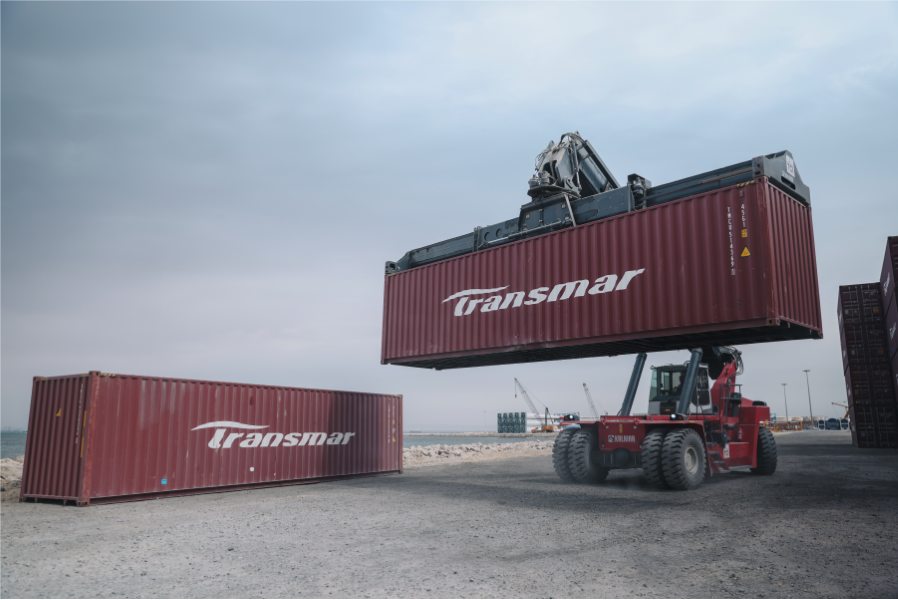
EnterpriseAM Logistics is available without charge thanks to the generous support of our friends at Hassan Allam Utilities and Transmar.

Were you forwarded this email? Tap or click here to get your own copy of EnterpriseAM Logistics.

Want to send us a story idea, request coverage, ask for a correction, or otherwise get in touch? Reach out to us on logistics@enterprisemea.com.

DID YOU KNOW that we also cover Egypt, Saudi Arabia, and the UAE ? ***

This publication is proudly sponsored by

2

The Big Story Today

Is the UAE building for a post-Hormuz Gulf?

The UAE's bypass infrastructure is turning into a core export strategy: Adnoc is accelerating plans to boost the amount of crude it can export from Fujairah, increasing oil flows outside the Strait of Hormuz in a project that could nearly double the UAE’s bypass export capacity by next year, the company said in a statement over the weekend. The project is currently under construction.

We already knew about the pipeline: Adnoc previously said it was developing a USD 3 bn,1.5 mn bbl / d crude oil pipeline to link its Ruwais Jebel Dhanna terminal with Fujairah, scheduled for completion next year.

The existing Habshan-Fujairah pipeline, known as the Abu Dhabi Crude Oil Pipeline (Adcop), already forms the backbone of the UAE’s alternative export infrastructure. The pipeline can currently transport up to 1.8 mn bbl / d from Abu Dhabi’s oil fields to Fujairah on the Gulf of Oman, with the expanded system set to nearly double capacity to 3.3 mn bbl / d.

Fast fact: This would still be around half of what Saudi Arabia can export outside Hormuz via its own East-West pipeline network, which can move around 7 mn bbl / d to the Red Sea port of Yanbu, with 5 mn bbl / d earmarked for export.

The expansion could reshape which grades the UAE can reroute: During the disruptions, Adnoc exported most of its flagship Murban crude through Adcop, but expanded capacity could eventually exceed Murban production. This gives Adnoc the land-based capacity to reroute other grades, such as Upper Zakum, through Fujairah. While this significantly extends optionality for some of the UAE’s most commercially vital export barrels, further infrastructure upgrades would be required.

It also comes as Adnoc plans to ramp up production capacity in the wake of its exit from Opec. Without Opec’s production quotas, the UAE might hit 6 mn bbl / d of capacity in the medium term if it accelerates investments in oil and gas, according to some analyst estimates. Adnoc has been planning to boost capacity to 5 mn bbl / d by next year for a few years now, up from a current capacity of around 4.6-4.9 mn bbl / d.

In another hedge

The UAE and India are also building redundancy through storage. Adnoc agreed to increase its crude storage presence in India to as much as 30 mn barrels — nearly triple the roughly 11 mn barrels-equivalent it already leases there through India’s strategic reserve system, according to a statement. The two countries are also exploring potential crude storage agreements in Fujairah, as part of India’s strategic reserve system.

Not the first country to eye Emirati crude stockpiles: Japan secured a commitment from the UAE earlier this month to increase joint crude oil stockpiles, while South Korea enjoys a storage agreement with Adnoc that gives the company access to storage in Northeast Asia.

The logic is the same as the pipeline push — distribute risk before the next disruption hits. Strategic reserves are increasingly treated less as static emergency stockpiles and more as geographically flexible logistics tools. This shift allows operators to position barrels closer to alternative routes, refining centers, and safer export corridors outside immediate chokepoint exposure.

Doubling down on Fujairah: Recent attacks and drone strikes have periodically disrupted local operations, dragging the UAE’s estimated oil export revenue down by more than USD 174 mn y-o-y in March amid slumping bunkering demand and minimal ship-to-ship transfers. Against this backdrop, Fujairah is increasingly being treated as critical infrastructure, with Abu Dhabi firmly positioning the port at the center of its long-term resiliency strategy and folding it into Asia’s energy security architecture.

The Gulf’s “portfolio of corridors” era is here

This is how Gulf energy trade is being reorganized around chokepoint resilience: We argued a month ago that the region is moving away from dependence on a single optimal route and toward a “portfolio of corridors” model built around redundancy, inland logistics, storage, pipelines, and alternative ports.

It also says something about how exporters view risk: Oil exporters used to optimize around the shortest and cheapest route to market, but the new model prioritizes survivability under stress, even if it costs more with less capacity.

3

M&A Watch

AD Ports to take over Germany’s MBS Logistics

AD Ports is tightening its grip on the global freight business with a EUR 70 mn acquisition that positions it squarely at the heart of Europe’s logistics network, according to a press release (pdf). The group signed an agreement to buy 100% of Germany-based MBS Logistics’ core business, a transaction expected to close in 2H pending EU regulatory approvals.

What’s ahead: AD Ports will fold the freight forwarder into its growing Noatum Logistics platform. MBS Logistics adds 26 offices to Noatum Logistics’ existing network of 80 offices across 26 countries. AD Ports took over Noatum back in 2023 for USD 680 mn.

MBS Logistics? The firm’s top line reached EUR 205 mn (c.AED 870 mn) last year, bringing with it an asset-light freight forwarding business for air, sea, road, and rail movement. Its operations span Germany, Central Europe, China, Vietnam, and the US.

ICYMI- AD Ports fully acquired Spain’s Balenciaga Astilleros shipyard in January — one of the few yards manufacturing specialized components for offshore wind farms — giving the port operator an access point into a supply chain facing a potential bottleneck.

The group is heavily expanding beyond Europe too: In Africa, AD Ports has recently signed an agreement to explore developing and operating a multipurpose terminal at the DRC’s Matadi Port, a critical maritime gateway for the regional trade hub. Its existing logistics portfolio in Africa also includes Egypt, Angola, Tanzania, and the Republic of Congo. AD Ports is also looking to secure access across the Middle Corridor, eyeing investments in Azerbaijan’s logistics infrastructure and in a key European gateway port in Romania. It has also inked a 30-year concession agreement to operate and develop Jordan’s Aqaba terminal on the Red Sea.

The bigger picture: With the regional war throwing supply chains into chaos, UAE players like AD Ports have been looking to secure footholds in alternative access routes, along with strengthening existing ones.

4

Earnings Watch

Air Arabia, Asyad Shipping post 1Q earnings

Airspace closures drag on Air Arabia’s 1Q earnings

Air Arabia’s earnings drag: UAE budget carrier Air Arabia’s 1Q 2026 earnings were weighed down by regional geopolitical tensions — which triggered temporary airspace closures, flight rerouting, rescheduling, and cancellations and sent fuel prices up. The company saw its net income attributable to shareholders fall 18.7% y-o-y to AED 248.2 mn in 1Q 2026, according to its financial release (pdf). Meanwhile, its revenue edged up 1.2% y-o-y to AED 1.8 bn during the quarter.

Asyad Shipping posts mixed 1Q earnings

A mixed bag for Asyad: Omani shipping group Asyad Shipping saw its net income rise 41.2% y-o-y to OMR 16.1 mn in 1Q 2026, according to its financial release (pdf). The group’s gross revenue fell 7.8% y-o-y to OMR 77.3 mn during the quarter.

On the operations front: Asyad acquired three newly built VLCCs under construction, took the delivery of two secondhand Newcastlemax dry bulk vessels, and delivered four LNG carriers to their new owner. Its operating fleet stood at 42 owned vessels, four co-owned vessels, and 31 chartered vessels as of 31 March — compared with 44 owned, four co-owned, and 32 chartered vessels at the end of 2025.

5

Also on Our Radar

One flag, many docks

One banner for the UAE’s shipbuilding industry: AD Ports Group launched the Consortium of UAE Shipbuilders — the country’s first coordinated platform for the shipbuilding industry. The initial group includes AD Port Group, Safeen Drydocks, Premier Marine Engineering Services, Dubai Shipbuilding & Engineering, Al Seer Marine, Dutch Oriental, Jome Engineering, Saudee, Blue Gulf Ship Builders, and MBK Marine Industries.

Why it matters: The consortium is designed to improve visibility across project pipelines, streamline procurement, and better coordinate execution throughout the maritime value chain. Additionally, it aims to provide small and mid-sized shipyards with greater access to larger projects and a more active role within the industry ecosystem.

Noatum gets the control room: The initiative will be led by Noatum Maritime, part of AD Ports’ Maritime & Shipping Cluster. It already sits at the center of AD Ports’ shipbuilding and repair strategy through Safeen Drydocks — the joint venture with Premier Marine Engineering Services, where AD Ports holds a 51% stake and Premier Marine Engineering Services holds 49%.


MAY

19-21 May (Tuesday-Thursday): Ground Handling Conference (IGHC), Cairo, Egypt.

19-21 May (Tuesday-Thursday): Terminal Operations Conference & Exhibition, Hamburg, Germany.

JUNE

2-4 June (Tuesday-Thursday): ProPak Mena, Cairo, Egypt.

4-5 June (Thursday-Friday): Supply Chain and Logistics Summit, Amsterdam, Netherlands.

6-8 June (Saturday-Monday): IATA World Air Transport Summit, Rio de Janeiro, Brazil.

10-11 June (Wednesday-Thursday): Black Sea Ports and Logistics, Istanbul, Turkey.

21-24 June (Sunday-Wednesday): Saudi Smart Logistics, Riyadh, Saudi Arabia.

22-23 June (Monday-Tuesday): Decarbonizing Shipping Forum, Rotterdam, Netherlands.

AUGUST

30 August-1 September (Sunday-Tuesday): Air Cargo Middle East, Riyadh, Saudi Arabia.

30 August-1 September (Sunday-Tuesday): Saudi Warehouse and Logistics Expo, Riyadh, Saudi Arabia.

SEPTEMBER

16-17 September (Wednesday-Thursday): Saudi Maritime & Logistics Congress, Dammam, Saudi Arabia.

22-24 September (Tuesday-Thursday): Seamless Middle East, Dubai, UAE.

28-30 September (Monday-Wednesday): Transport Logistics Middle East, Riyadh, Saudi Arabia.

OCTOBER

12-14 October (Monday-Wednesday): The Airport Show, Dubai, UAE.

21-22 October (Wednesday-Thursday): Global Ports Forum, Singapore.

26-29 (Monday-Thursday): Air Cargo Forum, Miami, US.

27-29 October (Tuesday-Thursday): Routes World, Riyadh, Saudi Arabia.

NOVEMBER

2-5 November (Monday-Thursday): ADIPEC Maritime and Logistics Exhibition and Conference, Abu Dhabi, UAE.

Now Playing
Now Playing
00:00
00:00