Logistics (MENA)
  MENA+ Edition
  Egypt Edition
  UAE Edition
  Saudi Edition
  MENA <> India Corridor
  Climate (MENA)

 Share Issue





Good morning, friends. We shift focus to aviation today — breaking down which airline models can best withstand a prolonged regional war and how the fallout could ripple through operations and hit emerging carriers.
Watch this space
SHIPPING — Iran is trying to play toll keeper: Tehran’s parliamentary security committee approved a Strait of Hormuz management plan that would impose an IRR-denominated toll system on vessels using the waterway while also codifying security, ship safety, environmental, and financial rules around transit.
Who’s out now? The plan also bars US and Israeli vessels, extends restrictions to countries participating in unilateral sanctions on Iran, and sketches out cooperation with Oman on the legislative framework — with Iran reportedly favoring countries that maintain bilateral channels or friendly relations, including China, Russia, India, and Pakistan. Malaysia appears to fall into that camp after Kuala Lumpur said yesterday that its tankers would be exempted from Iran’s Hormuz toll following diplomatic engagement with Tehran.
TRADE — Will Tanzania become the gateway for Egyptian goods to East Africa? Egypt and Tanzania will soon ink an MoU to establish a multi-purpose terminal at Dar es Salaam Port, a shipping line between Egyptian Red Sea ports and Dar es Salaam, and reciprocal logistics zones in both countries, according to a statement from the Transport Ministry.
The planned terminal at Tanzania’s largest city will open access to six landlocked nations, with the jointly developed port providing a path for Egyptian goods to more easily make it to Malawi, Zambia, the Democratic Republic of Congo, Burundi, Rwanda, and Uganda. Feeding the terminal is a proposed maritime line from Egypt, linking the Tanzanian port with the Red Sea ports of Sokhna and Safaga.
The upcoming agreement solidifies the proposal we heard about in December to set up a Tanzanian logistics zone in Egypt and vice versa, modeled after a similar agreement with Rwanda. The zones would help increase bilateral investments, support joint industrial work, and better connect the two countries economically. The zone planned for Tanzania is also set to join up with the country’s high-speed rail network to help deliver goods.
CUSTOMS — The Finance Ministry is activating the pilot phase of the Advanced Cargo Information (ACI) system for express couriers today, a move that will become mandatory on 1 May for all airport-based courier firms, a government official told EnterpriseAM.
Under the new regulations, parcels exceeding 50 kg will require a unique ACID number to ensure “tight control” and market protection against substandard goods as the Nafeza platform evolves into a unified trade hub for all Egyptian ports, our source added.
While the full electronic export system has seen its April launch slightly deferred to finalize procedural organizing, the Finance Ministry is simultaneously preparing legislative amendments aimed at reducing customs disputes and slashing clearance times to boost the competitiveness of local exports, according to our source.
KITKAT HEIST — Have a break, steal a Kitkat truck? Around 12 tons of Kitkat chocolate bars were stolen from a truck while transiting between the company’s factory in central Italy and their destination in Poland, according to a statement on X. The truck — still missing at this time — was carrying nearly 414k units of Kitkat’s new chocolate range, the company said.
Not an isolated break-in (literally): Kitkat noted that the incident follows a recent jointreport (pdf) by the International Union of Marine Ins. and the Transported Asset Protection Association, which identified a significant increase in cargo theft and freight fraud involving increasingly sophisticated deceptive practices.
Market watch
Oil prices rose 1% this morning as Middle East jitters outweighed easing war fears, Reuters reports. Brent crude futures increased USD 1.40 to trade at USD 105.37 / bbl by 04.30 GMT, while US West Texas Intermediate (WTI) increased USD 1.59 to USD 102.97 / bbl.
Meanwhile, the latest oil spike is testing US airlines’ ability to absorb the price shock. Jet fuel has jumped to USD 4.2 per gallon from around USD 2.5, with some large carriers now modeling Brent at USD 175 / bbl in a worst-case scenario and above USD 100 through 2027.
The Baltic Index slipped again: The Baltic Exchange’s dry bulk index — which tracks rates for the capesize, panamax, and supramax vessel segments — fell 1.1% to 1,995 points on Tuesday, in its second straight daily drop. The capesize declined 1.9% to 2,947 points, while the panamax index edged up 0.1% to 1,744. The smaller supramax eased by 1 point to 1,202 points.
Get Enterprise daily
The roundup of news and trends that move your markets and shape corporate agendas delivered straight to your inbox.
***YOU’RE READING EnterpriseAM Logistics, the essential MENA publication for senior execs who care about the industry that connects producers and retailers to global markets. We’re out Monday through Thursday by 9:15am in Cairo, 10:15am in Riyadh, and 11:15am in the UAE.
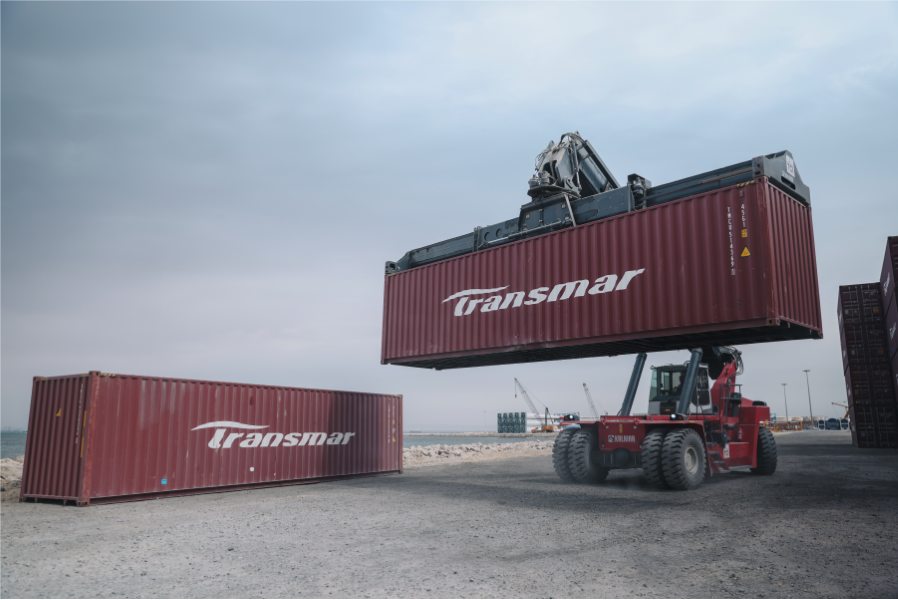
EnterpriseAM Logistics is available without charge thanks to the generous support of our friends at Hassan Allam Utilities and Transmar.
Were you forwarded this email? Tap or click here to get your own copy of EnterpriseAM Logistics.
Want to send us a story idea, request coverage, ask for a correction, or otherwise get in touch? Reach out to us on logistics@enterprisemea.com.
DID YOU KNOW that we also cover Egypt, Saudi Arabia, and the UAE ? ***