Get EnterpriseAM daily

Israel finally green-lights USD 35 bn natural gas supply agreement with Egypt

1

What we're tracking today

TODAY: Israel finally green-lights USD 35 bn gas pact with Egypt

Good morning, friends. We’re heading into the weekend with a relatively packed issue, led by news that Egypt’s neighbors to the east have signed-off on a long-delayed USD 35 bn natural gas export agreement.

The agreement comes at a tense time for the Egypt-Israel diplomatic relations, but it is also set to locks-in regular supply at a favourable price for the energy-hungry Egyptian economy. It’s good for business, good for households, good for the wider economy — and could help boost export receipts, too. What do we use for a “hold your nose” emoji?

ALSO- We also take deep dives what Marsa Maroc’s and AD Ports latest acquisitions of port operators abroad mean for each of the players. Let’s dive right in.

Watch this space-

PORTS: AD Ports Group has entered Tajikistan through a 51% stake in a new joint venture set to manage freight and logistics operations alongside Avesto Group, which owns the remaining 49%, according to a statement. The JV will start operations as an asset-light freight forwarder — holding the exclusive right to manage all freight and logistics operations for subsidiaries under Avesto Group’s umbrella. The JV will also serve third-party clients in the market.

The move will give AD Ports a new base in the landlocked Central Asian country, which is set to be a key bridge in the planned Middle Corridor — a 7k km multimodal logistics corridor linking China and the West, while bypassing Iran and Russia.


WAREHOUSES: The KSA warehouse squeeze is bringing in the internationals: Germany’s Garbe Industrial Real Estate and Saudi developer Artar are forming a JV to build Grade A warehouses in Riyadh, Jeddah, and Dammam. The venture plans to deliver its first facilities by 1Q 2026.

The market context: The Kingdom’s warehouses closed in on 100% occupancy rates in 1H 2025, driven by steady e-commerce growth, boosted investments, and government initiatives, according to data from Knight Frank. Riyadh recorded a 16% y-o-y hike in warehouse rents, averaging SAR 208 per sqm during the same period. Meanwhile, demand is going hot on higher quality warehousing, as only under 10% of the facilities in Saudi Arabia align with global Grade A specifications.


AVIATION: Is Naguib Sawiris trading villas for runways? Egypt’s second-richest person is forming a consortium with Italian partners to bid for the management and operation of the Hurghada International Airport, which began accepting bids last week (watch, runtime; 32:11). Luxor and Sohag airports may be next in his sights, he suggested. The move came as Sawiris appears to be pivoting away (for now) from the Egypt’s cooling real estate market citing high interest rates and market cooling.

We’ll keep a close eye on the shortlist: Several regional and international players have previously expressed interest in the country’s airport privatization drive before the tender was rolled out. Names included Hassan Allam Holding, France’s Groupe Aéroports de Paris, China Communications Construction Company (CCCC), the French concessions and construction company Vinci, as well as a few unnamed Kuwaiti firms.


AVIATION: What will it take to rebuild Syria’s aviation sector? Revitalizing Syria’s embattled aviation industry could take three to five years, as the country galvanizes the necessary funding, expertise, and external assistance, the International Air Transport Association’s (IATA) regional VP for Africa and the Middle East Kamil Al Awadhi reportedly said.

What the doc ordered: Damascus needs to invest in its aviation infrastructure and equipment and work out regulatory issues, the IATA found earlier this year.

But there’s a catch: Rebuilding the country’s aviation sector would require imports of tech and equipment that may still be out of Syria’s reach, as the country remains on the US State Sponsors of Terrorism list, which bans listed countries from procuring dual-use tech — many of which include navigation equipment necessary for the sector.

Market Watch-

Oil prices rose this morning amid the blockade on Venezuela’s oil tankers and reports of possible US sanctions on Russia if a Ukraine peace pact is not reached, Reuters reported. Brent crude futures went up by USD 0.44 to trade at USD 59.38 / bbl as of 02:56 GMT, while US West Texas Intermediate (WTI) rose USD 0.42 to USD 60.10 / bbl.


Baltic index on a downward spiral: The Baltic Exchange’s dry bulk sea freight index — which tracks rates for the capesize, panamax, and supramax vessel segments — was down 3.8% to 2,121 points on Wednesday. The capesize dipped 3.7% to 3,694, while the panamax index shed 6.2% to 1,480 points, and the smaller supramax index declined by 27 points to 1,308.

***YOU’RE READING EnterpriseAM Logistics, the essential MENA publication for senior execs who care about the industry that connects producers and retailers to global markets. We’re out Monday through Thursday by 9:15am in Cairo and Riyadh and 11:15am in the UAE.

EnterpriseAM Logistics is available without charge thanks to the generous support of our friends at Hassan Allam Utilities, Transmar, and AK-Ships.

Were you forwarded this email? Tap or click here to get your own copy of Enterprise Logistics.

Want to send us a story idea, request coverage, ask for a correction, or otherwise get in touch? Reach out to us on logistics@enterprisemea.com.

DID YOU KNOW that we also cover Egypt, Saudi Arabia, and the UAE ***

This publication is proudly sponsored by

2

The Big Story Today

Israel advances USD 35 bn natural gas export agreement with Egypt

Egypt locked in a long-term energy backstop after Israeli Prime Minister Benjamin Netanyahu signed off overnight on the stalled USD 35 bn natural gas export agreement. The agreement will see Chevron and its partners in the Leviathan gas field, NewMed Energy and Ratio Energies, export 130 bcm of gas to Egypt between 2026 and 2040, Netanyahu said in a televised statement overnight (watch, runtime: 5:30). The agreement is the largest in Israel’s history, Netanyahu noted.

Why it matters

The supply agreement will play a critical role in stabilizing Egypt’s natural gas supply, which has struggled to balance rising domestic demand and with a fall in local production supply, thanks in large part to technical challenges with the massive offshore Zohr field. That’s had Egypt importing more and more LNG to keep the lights on and prevent a return to the days of rolling blackouts.

It will also curb our natural gas import bills: The Madbouly government had earlier securedLNG supply through 2026 at a total estimated cost of USD 8 bn after signing agreements with six international energy companies, a government source in the energy sector previously told EnterpriseAM.

Why Israel, you may wonder? It’s cheap (so less pressure on Egypt’s FX reserves) and the infrastructure is already in place (so no time delay to build or rent infrastructure — and no capex or leasing costs). The volume we’ll be importing from Israel could come in as much as USD 28 bn cheaper than had we bought the same volumes on the spot LNG market at current prices, Al Arabiya suggests.

And Egypt’s LNG re-export ambitions will get a shot in the arm, allowing us to use existing liquefaction plants to re-export the gas as LNG to Europe. Liquefying and exporting as much as 60% of the gas we import from Israel could generate c. USD 22 bn in revenue here in Egypt, Al Arabiya reports.

BACKGROUND- Egypt and Israel first inked an agreement in early August that would see flows first increase from 4.5 bn cubic meters in 2025 to 6.5 bn cubic meters as early as 2026. Netanyahy then froze the agreement in September amid rising Israeli-Egyptian tensions over the war in Gaza and Cairo’s military deployments in Sinai. The deadline to obtain an export permit from Israel’s Energy Ministry for the project was later pushed to 31 December.

3

Investment Watch

Qatar’s Al Mana, Egypt ink USD 200 mn for SAF plant at SCZone

Qatar’s Al Mana Holding is establishing a foothold in the Suez Canal’s logistics value chain, deploying USD 200 mn to establish a sustainable aviation fuel (SAF) plant in Ain Sokhna. This marks the first Qatari industrial investment in the SCZone and the opening move in a broader USD 2-2.5 bn industrial play from the Qatari private sector and government, a government source tells EnterpriseAM.

What we know: The project will be managed by Al Mana’s subsidiary Green Sky Capital via the project vehicle SAFFly Egypt. The facility will span 100k sqm — with 30k sqm dedicated specifically to Sokhna Port for export infrastructure — and is expected to produce 200k tons of SAF and bio-byproducts annually by the end of 2027, all derived from refined used cooking oil (UCO).

REMEMBER- The project achieved a big milestone last week after securing long-termagreement to purchase the full production of the project, providing certainty for investors that are long-wary of the lack of offtake agreements for alternative fuels production projects.

SAFFly could plug into a new government-backed collection system for used cooking oil, the feedstock for SAF. The Madbouly government has been working to formalize the supply chain for used cooking oil, having recently launched a collection system that targets 500k tons by 2030 and 730k tons by 2035.

Competition for spent French-fry oil? The state’s own planned USD 530 mn SAF complex in Alexandria — which is being developed with technology licensing from Honeywell — also needs cooking oil as feedstock.

This is the Qatari diversification play going live. Until now, the Qatari pipeline has been top-heavy with real estate assets — like the USD 3.5 bn Alam El Roum project. The new plant unlocks a high-value investment track targeting the logistics industry.

4

M&A Watch

Marsa Maroc makes first entry into Europe with EUR 80 mn stake in Spain’s BMT

Marsa Maroc has landed a 45% stake in a Spanish port operator, marking the Moroccan giant’s first venture outside Morocco and the African continent. When closed, the transaction — an EUR 80 mn bid for 45% of Boluda Maritime Terminals (BMT) — would give Marsa Maroc 45% voting rights in BMT, shy short of a decision-making majority.

More about the assets: BMT operates nine terminals strategically positioned between the Iberian Peninsula and the Canary Islands that specialize in temperature-sensitive perishable products. BMT’s network handled around 1 mn TEUs in 2024.

Why the Spain-Morocco corridor matters

Spain serves as the main gateway to Morocco’s largest trading partner, Europe, with total trade between the two nations reaching EUR 22.7 bn in 2024.

The Iberian neighbor is also the primary gateway for Moroccan agricultural exports, with Morocco accounting for almost a quarter of Spain’s food and agricultural imports — and BMT terminals provide landing pads for refrigerated cargo moving between the two countries.

ALSO- It may not be just about the assets: BMT’s terminals are the physical backbone for Boluda’s shipping service — which operates 10 vessels serving 11 routes connecting Spain to Northern Europe, Italy, and West Africa, including lines that call at Agadir port in Morocco. The company provides more than 1.5k frozen high-cube containers, for the export of Moroccan perishable products.

Background

Marsa Maroc is expanding beyond Moroccan shores: The acquisition — which is carried out by the subsidiary Marsa Maroc International Logistics — would expand Marsa Maroc’s footprint to cover 34 terminals across 20 ports, including new ventures in East and West Africa. The company is investing in the development of an oil and gas port on Djibouti’s Gulf of Aden, and began operating two terminals in Benin’s Cotonou Port in late 2024.

It is also on its way to expand Morocco's capacity with the formal launch of Nador West Med by late 2026, which will feature two terminals with an initial combined capacity of 5.2 mn TEUs.

5

Enterprise Explains

Why AD Ports is launching an MTO for Alexandria Container and Cargo Handling

ADQ is consolidating its holdings of Alexandria Container and Cargo Handling Company (ALCN on the EGX) in one platform — is it a prelude to something bigger? The stripped-down language in regulatory filings often doesn’t tell the full story:

The headline: AD Ports Group is launching a mandatory tender offer for EGX-listed ALCN, a move that would give the Abu Dhabi ports operator direct majority control of one of Egypt’s largest container terminal operators.

What it really means: AD Ports kinda-sorta already has control of the company — the MTO is just making it official. AD Ports bought a 19.3% stake in ALCN last month from the PIF’s Saudi Egyptian Investment Company. Alpha Oryx, a sister company of AD Ports under their shared parent ADQ, owns 32%. That effectively means Abu Dhabi’s premier sovereign wealth fund already controls ALCN through two vehicles. The tender will consolidate those holdings under one roof — AD Ports.

Why it’s going down this way: Under Egyptian securities law, any shareholder that wants to acquire 33% or more of a listed company has to launch an MTO for up to 100% of the company’s shares. The Madbouly government, which holds 40%, isn’t selling — it’s in Alex Containers for the long term, waiting for the asset to appreciate before monetizing further, we’re told.

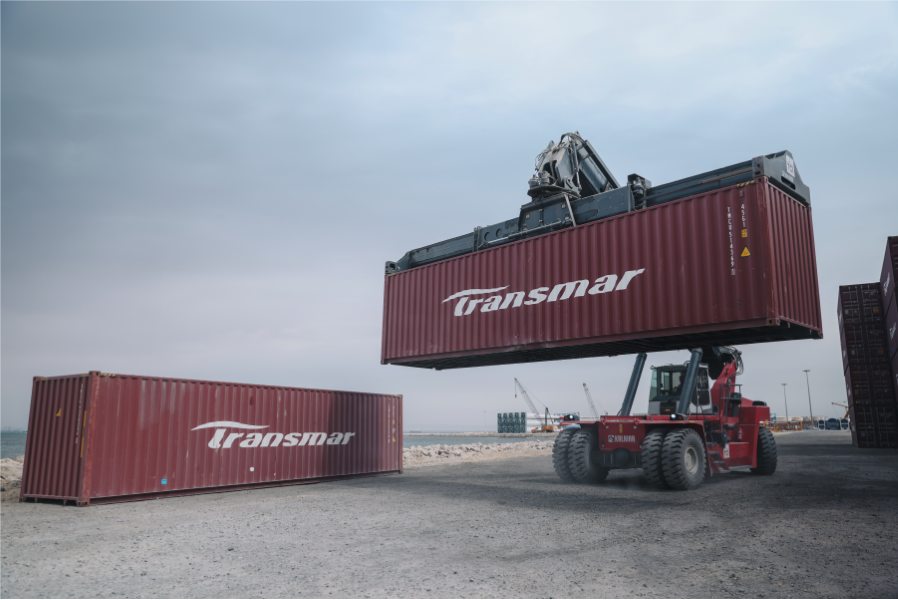
Why it matters: ALCN operates Alexandria and El Dekheila ports (which account for c. 60% of the Alexandria region’s container capacity) and handles about 1.1 mn TEUs annually. And ALCN is a cash-machine, having turned in an EGP 8.37 bn top line last year, with an adjusted EBITDA margin of 64%. The transaction would also add to AD Ports’s expanding portfolio in the country, which already owns majority stakes in our friends at Transmar (the nation’s premier shipping line) and its stevedoring sister company Transcargo International.

What to watch: Does ALCN become a standalone investment or the anchor of an integrated Egyptian (or African) ports platform?

6

Also on Our Radar

Saudi preps wider airport privatization rollout

KSA takes airport privatization into higher gear

The Saudi General Authority of Civil Aviation (Gaca) is moving Saudi’s airport privatization from proof of concept to a nationwide rollout, with the 30-year concession for Abha International Airport set to be awarded by March, Gaca President Abdulaziz Al Duailej confirmed on Tuesday. The project — which aims to scale capacity from 1.5 mn to 13 mn passengers over three phases — marks the start of a pipeline that includes Taif, Qassim, and Hail.

The Madinah model is the blueprint: GACA is doubling down on the success of the Tibah Consortium (Al Rajhi Holding + Turkey’s TAV Airports) at Madinah’s Prince Mohammed bin Abdulaziz International Airport. Since taking over in 2012, Tibah has tripled capacity to 9.4 mn passengers and pays GACA a staggering 54.5% of gross revenues — an arrangement expected to net the regulator USD 7 bn over the concession term. Tibah has pledged USD 275 mn in March last year to raise capacity to 18 mn and renewed its initial 25-year concession to 2041.

The Pipeline: With some 100 companies reportedly eyeing the Abha concession, Gaca is already prepping Taif, Qassim, and Hail airports as the next assets to hit the block.

German lender doubles down on Moroccan rail

Germany’s KfW is providing EUR 200 mn to help the country build a logistics and mobility platform in Casablanca-Settat. This is the second major rail-focused tranche from the German lender since August (following a EUR 202 mn facility) and matches the World Bank’s USD 350 mn backing to the sector. The capital — part of a wider EUR 450 mn German package — is aimed squarely at the country’s biggest logistics headache: expanding rail capacity to move goods through the congested Casablanca-Settat industrial corridor.


2026

JANUARY

19-23 January (Monday-Friday): World Economic Forum Annual Meeting, Davos, Switzerland.

21-22 January (Wednesday-Thursday):IOSA Operator Workshop, Dubai, UAE.

FEBRUARY

3-4 February (Tuesday-Wednesday): Middle East Bunkering Convention, Dubai, UAE.

4-5 February (Wednesday-Thursday): Breakbulk Middle East, Dubai, UAE.

4-5 February (Wednesday-Thursday): MRO Middle East, Dubai, UAE.

9-11 February (Monday-Wednesday): Future Warehouses & Logistics, Dubai, UAE.

10-12 February (Tuesday-Thursday): Sustainable Aviation Future MENA, Dubai, UAE.

12 February (Thursday): Technical Seminar on Marine Biofuels, London, UK.

15-17 February (Sunday-Tuesday): World Advanced Manufacturing Logistics Summit and Expo, Riyadh, Saudi Arabia.

17-19 February (Tuesday-Thursday): World Legal Symposium (WLS), Warsaw, Poland.

20-22 February (Friday-Sunday): Dubai Freight Camp, Dubai, UAE.

24-25 February (Tuesday-Wednesday): Green Shipping Summit, Athens, Greece.

25-27 February (Wednesday-Friday): Air Cargo Africa, Nairobi, Kenya.

25-27 February (Wednesday-Friday): Air Law Treaty Workshop Tanzania (Third Edition), Dar es Salaam, Tanzania.

MARCH

5-6 March (Thursday-Friday): CargoIS Forum, Miami, United States.

9-13 March (Monday-Friday): WCA Worldwide Conference, Singapore.

10-12 March (Tuesday-Thursday): World Cargo Symposium, Lima, Peru.

18-19 March (Wednesday-Thursday): IntraLogisteX, Birmingham, United Kingdom.

18-19 March (Wednesday-Thursday): Green Marine Transport Conference, Amsterdam, The Netherlands.

26 March (Thursday): Gulf Ship Finance Forum, Dubai, UAE.

APRIL

12-15 April (Sunday-Wednesday): Saudi Smart Logistics, Riyadh, Saudi Arabia.

16-17 April (Thursday-Friday): Global Supply Chain and Logistics Summit, Amsterdam, The Netherlands.

MAY

19-21 May (Tuesday-Thursday): Ground Handling Conference (IGHC), Cairo, Egypt.

12-14 May (Tuesday-Thursday):Aviation Energy Forum (AEF), Paris, France.

Now Playing
Now Playing
00:00
00:00