Get EnterpriseAM daily

FAB joins several banks in a USD 150 mn syndicated loan for Adani Airports

1

What we're tracking today

TODAY: FAB backs Adani Airports + Egypt has high electricity trade ambitions

Good morning, nice people. It’s a brisk read today as we head into the weekend, with debt, trade, and aviation updates from the UAE, Egypt, and Iraq. But first, an update on Airbus as its UK workers announce a looming strike…

THE BIG LOGISTICS STORY- Airbus UK workers call in September strike over pay: Some 3k fitters and engineers at Airbus UK will be going on strike starting next September over a pay dispute with the European planemaker. The strike — planned to total 10 days during the month — will begin with a two-day interval on 2 September in Airbus’ factories in Broughton and Filton. Unite — the trade union that represents upwards of 3k fitters and engineers — said the strike would be called off if an improved compensation package is proposed by management.

The strike will impact wing production for Airbus’ commercial and military aircraft, hampering the planemaker’s ability to produce wings for its commercial A320, A330, and A350 jets. However, the company said it is still confident that it will achieve its year-end delivery targets.

The story got some attention in the int’l press: Reuters | Bloomberg | BBC | The Guardian

WATCH THIS SPACE-

#1- Mosul Int’l airport attracts 12 foreign bids: Twelve companies — among them Turkish airport operator IGA and other unnamed firms from Turkey, the UK, the UAE, and Oman — have submitted bids to run Iraq’s Mosul International Airport, The National reports, citing an unnamed Iraqi Civil Aviation Authority official. A final bid selection is expected by the end of August, the source said.

REFRESHER- Iraq’s Mosul International Airport — out of service since 2014, when it was destroyed in battles with ISIS — was officially rebuilt and inaugurated last month, and is expected to be fully operational by September. Based in the Nineveh Governorate, the airport will reportedly handle up to 630k passengers and 30k tons of cargo per year. Its new runway was extended to 3k meters, with a width of 45 meters.

An eventful year for Iraq’s airport developments: Baghdad is currently working on several airport upgrades besides Mosul. The country is planning to inaugurate two other airports this year — the Nasiriyah International Airport and Karbala International Airport. Iraq is also shopping for investors to develop and manage its biggest airport, Baghdad International Airport, in a USD 400-600 mn revamp plan put together with the International Finance Corporation.

#2- Masdar is shifting away from green hydrogen production toward powering AI data centers, Bloomberg reports, citing CEO Mohamed Jameel Al Ramahi. The decision comes as high production costs stifle demand, forcing companies around the world to scale back or cancel projects. “Today, green hydrogen is under pressure, and the market is shrinking. A lot of people who went into this venture are out,” Al Ramahi said.

What now? Masdar will redirect energy from its USD 6 bn mega solar and battery project from green hydrogen production to power AI, but its subsidiary, Masdar Green Hydrogen, will still remain in the game, developing some projects approved by its investment committee.

REMEMBER- Masdar, Infinity, Hassan Allam, UAE’s Masdar, and global energy giant BP signed an agreement to set up a USD 14 bn green hydrogen project in the Suez Canal Economic Zone last year. The project has been in the feasibility studies phase and is planned to be fully operational in ten years if an investment decision is finalized.

MARKET WATCH-

#1- Oil prices surged this morning on the back of reports of robust US demand, Reuters reports. Brent crude futures rose by USD 0.27 to reach USD 67.11 / bbl by 04.42 GMT, while US West Texas Intermediate (WTI) increased USD 0.29 to trade at USD 63.00 / bbl.

Meanwhile, Saudi Arabia’s crude exports dipped to 6.14 mn bbl / d in June, down from 6.19 mn bbl / d in May and marking the lowest in three months, Reuters reports, citing Joint Organizations Data Initiative (JODI) figures. Crude exports for June were previously estimated to be around 6.36 mn bbl / d.

The drop in shipments came despite higher crude output, which rose to 9.75 mn bbl / d in June from 9.18 mn bbl / d in May. Domestic refinery intake edged down slightly to 2.7 mn bbl / d from 2.72 mn bbl / d a month earlier, while direct crude burning jumped by 185k bbl / d to 674k bbl / d.

REMEMBER-Opec+ members have been steadily raising production since April, starting with 138k bbl / d increase, followed by larger-than-planned hikes of 411k bbl / d in May, June, and July. The group raised output by 548k bbl / d in August and has set a 547k bbl / d increase for September.

ALSO- Indian Oil (IOC) and Bharat Petroleum have resumed imports of Russian barrels for September and October delivery after a brief pause in July, Bloomberg and Reuters report, citing unnamed sources. Purchases picked up as discounts widened — about USD 3/bbl — Reuters said, citing two officials, adding that IOC also took in other grades, including Varandey and Siberian Light.

The resumption comes alongside a volley of criticism from Trump administration officials. White House Trade Adviser Peter Navarro wrote in the Financial Times this week that India’s rising purchases were fueled by “profiteering by India’s Big Oil lobby” rather than domestic energy needs. US Treasury Secretary Scott Bessent added to the pressure, arguing that “the richest families in India” were the main beneficiaries of discounted Russian crude, Bloomberg reported.

More of a secondary option than a direct competitor: When Indian state refiners paused Russian purchases earlier this month, they turned to spot barrels from the Middle East — including Abu Dhabi’s Murban — to fill the gap. Middle Eastern grades — such as Murban — remain a strategic option, giving refiners flexibility in their crude slate due to their medium-sour quality, geographical proximity, and readily available cargoes — a reliable buffer against pricing shifts or geopolitical swings.

#2- Baltic index falls again: The Baltic Exchange’s dry bulk sea freight index — which tracks rates for the capesize, panamax, and supramax vessel segments — fell 1.9% to 1,927 points on Wednesday, its lowest since 5 August. The capesize dropped 5.2% to 2,867 points, while the panamax index gained 1.7% to 1,665 points. The smaller supramax index went up by 1.4% to 1,388 points.

DATA POINT-

Trade between Syria and Jordan is seeing a revival, with some 200-250 trucks now crossing from Jordan into Syria every day, the Jordan Times reports, citing Jordanian Industry, Trade, and Supply Minister Yarub Qudah. Activity at Jordan’s Port of Aqaba also surged on the back of increased Syria-bound exports, recording a 30% rise in container traffic overall, the Jordan Times reported citing AlMamlakaTV.

REMEMBER- Jordan lowered fees for Syrian trucks from 5% to 2% back in June to expedite transit traffic and the flow of goods between the two countries.

PSA-

Hapag-Lloyd updates SE3 service rotation: German shipping giant Hapag-Lloyd has added a stop in Gwangyang, Korea, to its SE3 shipping service between Asia and the Mediterranean, according to a statement. The rotation starts in China’s Qingdao and passes through Gwangyang to Ningbo, Malaysia’s Tanjung Pelepas, Egypt’s Port Said, and Turkey’s Izmit and Istanbul before turning back to Port Said, Singapore, and ending in Qingdao. The addition will be implemented starting 9 September.

***YOU’RE READING EnterpriseAM Logistics, the essential MENA publication for senior execs who care about the industry that connects producers and retailers to global markets. We’re out Monday through Thursday by 9:15am in Cairo and Riyadh and 11:15am in the UAE.

EnterpriseAM Logistics is available without charge thanks to the generous support of our friends at Hassan Allam Utilities, Transmar, and AK-Ships.

Were you forwarded this email? Tap or click here to get your own copy of Enterprise Logistics.

Want to send us a story idea, request coverage, ask for a correction, or otherwise get in touch? Reach out to us on logistics@enterprisemea.com.

DID YOU KNOW that we also cover Egypt, Saudi Arabia, and the UAE ***

CIRCLE YOUR CALENDAR-

The UAE will host the Africa Procurement and Supply Chain Leaders’ Conference on Monday, 25 August until Friday, 29 August in Dubai. The conference will host global industry leaders, policymakers and stakeholders to discuss how AI is changing procurement and supply chain efficiency, sustainability and risk management.

Bahrain will host the Syria Recovery and Investment Forum on Sunday, 1 September and Monday, 2 September in Manama. The forum will host global industry leaders, policymakers, and stakeholders to discuss Syria’s most urgent rebuilding needs — and attract investments — across key sectors including education, energy, housing, smart cities, ports, and metro systems.

Oman will host Transport Middle East on Monday, 1 September until Wednesday, 3 September in Salalah. The conference will host 35 international speakers and over 50 exhibitors from the maritime sector to discuss global transportation and logistics.

Saudi Arabia will host the Sustainable Maritime Industry Conference on Wednesday, 3 and Thursday, 4 September in Jeddah. The event is set to gather over 60 speakers and more than 3k participants to discuss maritime decarbonization, digital transformation, regulatory frameworks, capacity building, and sustainable practices.

Algeria will host the Intra-African Trade Fair on Thursday, 4 September until Wednesday, 10 September in Algiers. The fair will host over 75 countries and 2k exhibitors across several sectors to explore investment prospects and exchange information on trade between B2B and B2G.

Oman will host the Comex Global Technology Show on Sunday, 7 September and run till Wednesday, 10 September in Muscat. The event will host over 360 participants and 133 tech startups to show achievements in eGovernment, fintech, smart cities, health tech, agritech and cybersecurity.

Saudi Arabia will host the Smart Ports and Logistics Transformation Summit on Monday, 15 September and Tuesday, 16 September in Jeddah. The summit will host over 40 global and local speakers, industry experts and policymakers to explore smart port solutions, port operations and logistics within Saudi Arabia.

Check out our full calendar at the bottom of this email for a comprehensive listing of upcoming news events and news triggers.


This publication is proudly sponsored by

2

Debt Watch

FAB joins several banks in syndicated loan for Adani Airport

Adani Group’s airport unit has secured a USD 150 mn syndicated loan backed by First Abu Dhabi Bank (FAB), Bloomberg reports, citing people it says are familiar with the matter. The syndicated FCY-denominated loan — provided by a consortium also including Barclays, DBS, and Mitsubishi UFJ Financial Group (MUFG) — was priced at approximately 300 bps over SOFR at a four-year tenor.

We knew this was coming: We first heard that Adani Airports were in talks with FAB and other international lenders over a syndicated loan back in April. The figure was put then at USD 750 mn.

There’s more: Adani Ports & Special Economic Zone separately closed a USD 125 mn bilateral facility with MUFG. The loan also comes with a tenor of four years, but was priced at a lower rate of 215 bps over SOFR.

IN CONTEXT- Adani’s airport unit has been raising plenty of funds this year to expand capacity and refinance debt. In June, it secured USD 750 mn from global investors led by Apollo Global to refinance existing debt for India’s second-largest airport, with some USD 250 mn in additional funding for capex and capacity expansion needs. The funding signals confidence in Adani despite ongoing controversy over potential fraud that had kept it under scrutiny.

REMEMBER- Indian conglomerate Adani Group is reportedly planning to publicly list its airport unit by March 2027. This listing would come as Adani Group looks to mobilize financing for its planned USD 100 bn investment push across energy, logistics, and infrastructure within the next five to six years.

3

Trade

Egypt to ramp up its electricity trade capacity to 3.9 GW by 2026

Egypt is planning to boost its electricity interconnection capacity to 3.9 GW by the end of 2026, up from 790 MW last year, a government source told EnterpriseAM. The increase will be backed by the completion of multiple regional interconnection projects.

The Egypt-Jordan-Iraq interconnection, which passes through Syria and Lebanon, is expected to reach 550 MW next fiscal year, up from the 500 MW originally planned. Capacity is set to rise to 2.2 GW by the fiscal year 2029-2030 and to 2.7 GW at a later stage. The expansion of this line, along with higher capacities on the Egypt-Jordan line, awaits financing from international institutions to cover equipment costs, according to our source.

REMEMBER- Electricity Minister Mahmoud Esmat said last year that the government was exploring the possibility of exporting electricity to Syria through its interconnection link with Jordan.

The USD 1.8 bn, 3 GW Egypt-Saudi interconnection is also moving ahead, with an Egyptian delegation recently concluding a one-week visit to the Kingdom to review progress, according to our source. Meanwhile, construction is being finalized on the conversion station in Badr City in Egypt, a key pillar of the project, which is expected to enter trial operations this fiscal year. Trial operations of the interconnection were originally slated for April.

The Egypt-Greece Interconnector (GREGY) will add 1 GW to its capacity next year as the first phase of an agreement covering 3-6 GW, according to the source. Esmat has recently met with the head of Greece’s Copelouzos Group — which is implementing the interconnection project — to follow up on the updates and expand cooperation on renewables.

There’s more: Egypt will also boost its interconnection with Libya to 150 MW next year, the source added.

The government aims to cement its position as a regional energy hub through electricity interconnection. Private sector participation will be central, the source said, noting that the private sector has already invested USD 3.6 bn in renewables.

IN OTHER ENERGY-TRADE RELATED NEWS-

Egypt Kuwait Holding plans Saudi gas expansion: The Egypt Kuwait Holding Company (EKH) is looking to expand into Saudi Arabia by supplying gas to the Dammam Third Industrial Zone at an investment cost of SAR 60 mn after clinching a license to do so, Managing Director John Rokk told Asharq Business (watch, runtime: 7:49). The company expects to serve around 30 clients by the end of the year and expand into more zones in the future.

We knew this was coming: It was first announced inMay that Egypt Kuwait Holding was preparing to enter the Saudi oil and gas sector after securing most of the project’s capital expenditures.

About Egypt Kuwait Holding: The company’s portfolio spans energy, petrochemicals, fertilizers, power, and financial services. Among the firms investments in downstream is a stake is NatEnergy, which consolidated NatGas, Fayum Gas, Nubaria, Kahraba and Gas Chill,

according to its website.

4

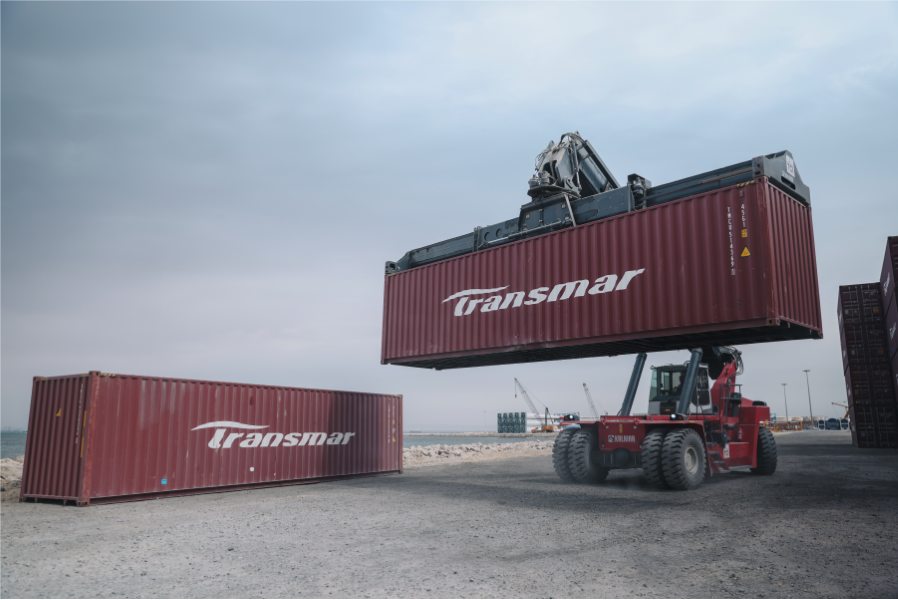
A MESSAGE FROM TRANSMAR

Upper Egypt’s logistics overhaul could be a game-changer for exports

Upper Egypt is getting a logistics overhaul, and it could be the key to unlocking the region’s export potential. A sweeping infrastructure push is underway, with new roads, rail links, and dry ports designed to better connect the region’s mineral-rich interior to Red Sea ports including Safaga and Adabiya.

The region is sitting on a treasure trove of minerals — think phosphate, limestone, gold, and quartz — and is already home to a sizable chunk of Egypt’s industrial base, including cement and fertilizer production. With better infrastructure, the government is betting that Upper Egypt can become a major export hub, particularly for bulk cargo. That’s good news for maritime shipping players, who stand to benefit from higher volumes and increased demand for port services and inland logistics.

The Qena Golden Triangle is one of the flagship projects driving this transformation. The zone — a 6k km² industrial zone linking Qena, Safaga, and Quseir — is being positioned as a magnet for heavy industry, mining, and export-oriented manufacturing, with integrated logistics hubs baked into the plan.

Beyond trade, the infrastructure buildout is expected to create thousands of jobs in transport, warehousing, and mining, which comes as a potential bonus for inclusive economic development in a region that has long lagged behind.

With the right mix of infrastructure, industrial policy, and private-sector buy-in, Upper Egypt could emerge as a key growth corridor for Egypt’s export economy, and a rising star in the regional logistics landscape.

5

Kudos

Adnoc L&S honors first female officer at ship-naming ceremony

Adnoc L&S honors first female officer at ship-naming ceremony: Sharifa Almulla (LinkedIn) — the UAE’s first female officer to serve on Adnoc Logistics and Services (Adnoc L&S) vessels — was honored at a ceremony on 14 August, TradeWinds reported on Tuesday. Almulla was given the privilege of naming two new gas carriers at China’s Jiangnan Shipyard near Shanghai.

Almulla started her career as a marine cadet, working at Namma Shipping Lines and ZMI Holdings before joining Adnoc L&S in 2021. She took on the role of marine officer at the company last May.

6

Also on Our Radar

Updates on shipping and ports from Turkey and Oman

SHIPPING + MARITIME-

Turkish player buys two Montenegrin bulk carriers: A Turkish buyer has reportedly acquired two bulk carriers from the bankrupt Montenegrin state-owned shipping company Crnogorska Plovidba, TradeWinds reports. The identity of the buyer and the selling price have not been disclosed, although unconfirmed reports cited by local media indicate that each vessel was sold for EUR 9 mn. The loss-making firm has been barred by Montenegrin authorities from investing additional funds, and has resorted to selling off its last remaining vessels to clear outstanding debts.

PORTS-

Suwaiq Port expansions are underway: Asyad Ports — the ports and terminals management arm of Asyad Group — has invited consultants to submit technical bids for the Suwaiq Port expansion project, Zawya reports. The port operator is looking to conduct a site exploration over the project’s 60.2 hectares, assess collected soil samples and their properties, and acquire environmental permits to check ground quality. The deadline for submissions is 11 September.

REFRESHER- Asyad has plans to expand Suwaiq Port to 360k sqm to expand services to new international shipping lines and meet Oman’s growing food security needs. The company will develop and manage Al Suwaiq Port for 40 years, adding a 500-m-long, 14-m-deep sea berth to accommodate several vessel sizes and handle all types of cargo. Preliminary studies for the expansion are almost complete.

ROADS-

The Riyadh Municipality broke ground on 14 projects worth SAR 245 mn to upgrade roads throughout the capital, it said on X this week. The projects cover roads in high and medium-density neighborhoods and unpaved roads, focusing on improving traffic safety, creating access points to new areas, and reducing dust and water pooling.

7

Logistics in the News

AI data centers' surge drives up electricity demand

Implementing AI has created more demand for energy-intensive data centers that can train and run the systems, more than doubling the need for new electricity capacity from 460 TWh in 2022 to 1k TWh by 2026, according to a report from the Economist Impact. High compute density stable electricity voltages and constant liquid cooling — both energy-intensive — are necessary for AI-compatible data centers and are usually not integrated in most existing data centers.

The hold-up: Lack of sufficient investments in energy generation, transmission, and distribution has also created a hold-up for using AI. A new data centre can be built in 18 months, but new power transmission lines can take four to eight years to build, executive VP at Schneider Electric Pankaj Sharma told the Economist.

How much power does AI need? A prompt to ChatGPT requires nearly tenfold the amount of energy a Google search needs to run, according to the International Energy Agency (IEA) (pdf). This means that global data centers will need to double their electricity usage by 2030 to accommodate AI models, accounting for a third of global electricity demand by the same year.

The UAE is in the lead in the data center race: The UAE currently hosts over 250 MW of operational data centers capacity and an additional 500 MW are in development, with 150 MW set to go live by end-2025. Abu Dhabi and Dubai have worked on rapid infrastructure rollout, competitive infrastructure costs, fast-track approvals, and accelerating demand tied to AI and cloud expansion. UAE AI giant G42 will build a 5 GW US-UAE data center complex, across 10 square miles in Abu Dhabi, for several unnamed, large UAE enterprises. Khazna partnered up with Nvidia to develop AI factories across the Middle East and Africa, including AI clusters with a capacity of up to 250 MW

Saudi Arabia is also catching up,, with their data center capacity to reach 1.3GW by 2030. PIF-backed Humain and Qualcomm Technologies will collaborate on next-gen AI data centers. The Kingdom is also planning a USD 100 bn AI push to rival the UAE. Saudi tech company DataVolt and Neom signed a USD 5 bn agreement to develop a 1.5 GW data center in the Oxagon industrial complex using renewable energy and zero-emission cooling technologies.

8

Around the World

China + India resume direct flights, trade ties

Can China + India be friends again? China and India have agreed to relaunch direct flights after a five-year hiatus, as both countries work to restore their bilateral trade amid trade tensions with the US, Reuters reports. The agreement comes after a border dispute — that culminated in a military clash in 2020 — triggered a diplomatic rift between two of the world’s biggest economies. The details and timeline for resuming flights remains unclear, though another round of talks is expected soon.

Shoring up allies? The move comes after the US doubled its tariffs on India to 50% — a hike scheduled to take effect starting 27 August — as punishment for purchasing Russian oil. This caused Chinese refiners to ramp up purchases of Russia’s crude, taking advantage of reduced pricing for Russian cargoes. The US has also threatened to double tariffs on steel and aluminum imports to 50% to reduce reliance on Chinese metals.


SFL + Maersk lock in chartering pact: International shipping and chartering company SFL Corporation and Maersk have agreed to a five-year charter extension for three of SFL’s 9.5k TEU container ships, with the new charters set to begin in 2026, according to the company’s latest quarterly report. The move will add roughly USD 225 mn to SFL Corporation’s backlog from 2026 through 2031.


AUGUST

25-29 August (Monday-Friday): Africa Procurement and Supply Chain Leaders’ Conference, Dubai, UAE

31 August (Sunday): GCC Forum for Green Mobility, Salalah, Oman.

SEPTEMBER

1-2 September (Monday-Tuesday): Syria Recovery and Investment Forum, Manama, Bahrain

1-3 September (Monday-Wednesday): Transport Middle East 2025, Salalah, Oman.

3-4 September (Wednesday-Thursday): Sustainable Maritime Industry Conference, Jeddah, Saudi Arabia.

4-10 September (Thursday-Wednesday): Intra-African Trade Fair, Algiers, Algeria.

7-10 September (Sunday-Wednesday): Comex Global Technology Show, Muscat, Oman.

15 September (Monday): Logistics Leaders Saudi 2025, Riyadh, KSA

15-16 (Monday-Tuesday) September: Smart Ports and Logistics Transformation Summit, Jeddah, KSA

23 September (Tuesday): TradeWinds Shipowners Forum Greece 2025, Athens, Greece

24 September (Wednesday): Syria Recovery & Investment Forum, Abu Dhabi, UAE

24-26 September (Wednesday-Friday): Routes World, Hong Kong.

25 September (Thursday): World Maritime Day.

30 September-2 October (Monday-Thursday): Global Rail Transport Infrastructure Exhibition and Conference, Abu Dhabi, UAE.

OCTOBER

The International Maritime Organization (IMO) is set to formally adopt the Net-zero Framework this month, stipulating new fuel standards for ships and a global pricing mechanism for emissions.

1-2 October (Wednesday-Thursday): Saudi Maritime and Logistics Congress, Dammam, Saudi Arabia.

6-8 October (Monday-Wednesday): Maritime Cyprus Conference 2025, Limassol, Cyprus.

7-8 October (Tuesday-Wednesday): Global EV and Mobility Technology (GEMTECH) Forum, Riyadh.

13-17 October (Monday-Friday): The Marine Environment Protection Committee’s second extraordinary session, London, UK.

14-15 October (Tuesday-Wednesday): Investing in Africa Conference and Expo, London, UK.

15 October (Wednesday): Global Trade Review, Cairo, Egypt

28-30 October (Tuesday-Thursday): Borneo International Maritime Week, Sarawak, Malaysia.

NOVEMBER

3-6 November (Monday-Thursday): ADIPEC Maritime and Logistics Exhibition and Conference, Abu Dhabi, UAE.

4-6 November (Tuesday-Thursday): Air Cargo Forum, Abu Dhabi, UAE.

9-11 November (Sunday-Tuesday): TransMea Expo, Cairo, Egypt

17-21 November (Monday-Friday): Dubai Airshow, Dubai, UAE.

24-26 November (Monday-Wednesday): World Advanced Manufacturing Logistics Summit & Expo, Riyadh, Saudi Arabia.

DECEMBER

9-10 December (Tuesday-Wednesday): Rail Industry Summit, El Jadida, Morocco.

16-17 December (Tuesday-Wednesday): Saudi Airport Exhibition, Riyadh, Saudi Arabia.

JANUARY 2026

19-23 January (Monday-Friday): World Economic Forum Annual Meeting, Davos, Switzerland.

Now Playing
Now Playing
00:00
00:00