Get EnterpriseAM daily

MGX reportedly eyes USD 25 bn in external funding to support data centers push

1

What we're tracking today

MGX new fundraising move? + A flurry of PMI reports

Good morning, nice people. The news cycle has picked up some vigor as we inch closer to the weekend, with data center investment updates from the UAE leading the pack today. We also have the latest PMI readings, earnings, and trade diplomacy updates from across the region. Let’s get the ball rolling.

WATCH THIS SPACE-

#1- Neom’s planned logistics JV with Danish giant DSV faces further delays and will not contribute to this fiscal year’s earnings, DSV said in its latest 1H earnings release (pdf). The USD 10 bn JV — which is set to have exclusive rights to manage logistics and transport services in Neom — was first announced in October 2023 and was originally expected to be operational in 2Q 2024. PIF-backed Neom holds a majority 51% share, while DSV retains the remaining 49% stake.

Where do we stand? DSV capped estimated spending on the project at USD 100 mn this year as part of its USD 2.45 bn committed investment in the JV, according to a DSV investor presentation (pdf) made back in April. The JV is still forecasted to launch operations in 2025, DSV says, without offering further details.

REMEMBER- Neom is reportedly undergoing a “comprehensive review” to reassess budgets and progress, as the Kingdom reviews some of its megaprojects’ scope and viability. The review could see up to 1k employees laid off and another 1k relocated.

#2- Alpha Dhabi eyes data center builds via Trojan: Alpha Dhabi Holding is exploring windows to tap into the UAE’s growing data center market through its construction arm, Trojan Group, Chief Strategy Officer Derek Nicholson told The National. While the ADX-listed firm has no direct investment plans, it’s weighing indirect exposure by building infrastructure for the increasingly in-demand sector. “[They are] going to be the construction projects of the future,” he said, adding, “We’re actively exploring opportunities.”

#3- Chinese car interior supplier eyes Morocco-based facility: Chinese automotive interior materials supplier Kuntai is looking to establish a car mat and carpets facility in Morocco at an investment cost of RMB 100 mn (c. USD 13.7 mn), Morocco World News reports. Kuntai is reportedly eyeing Morocco to benefit from its proximity to strategic markets and its exports’ dutyfree status, which will lower arrival costs and the effects of anti-dumping measures targeting Chinese players. Data from the company — cited in Kuntai’s announcement — reportedly shows that shipping from Morocco to Europe cuts distance by 80% and logistics costs by more than 60% compared to shipping from China.

MARKET WATCH-

#1- Oil prices surged this morning as the market braces for possible tighter supply as the US escalates threats of secondary sanctions on buyers of Russian oil, Reuters reports. Brent crude futures rose by USD 0.43 to reach USD 68.07 / bbl by 03.30 GMT, while US West Texas Intermediate (WTI) futures increased by USD 0.40 to trade at USD 65.56 / bbl.

#2- Baltic index down for second day in a row: The Baltic Exchange’s dry bulk sea freight index — which tracks rates for the capesize, panamax, and supramax vessel segments — fell 2.5% to 1,921 points on Tuesday, its lowest since 16 July. The capesize dropped 4.8% to 3,006 points, while the panamax index dipped 0.5% to 1,625 points. The smaller supramax index inched up 0.7% to 1,279 points.

***YOU’RE READING EnterpriseAM Logistics, the essential MENA publication for senior execs who care about the industry that connects producers and retailers to global markets. We’re out Monday through Thursday by 9:15am in Cairo and Riyadh and 11:15am in the UAE.

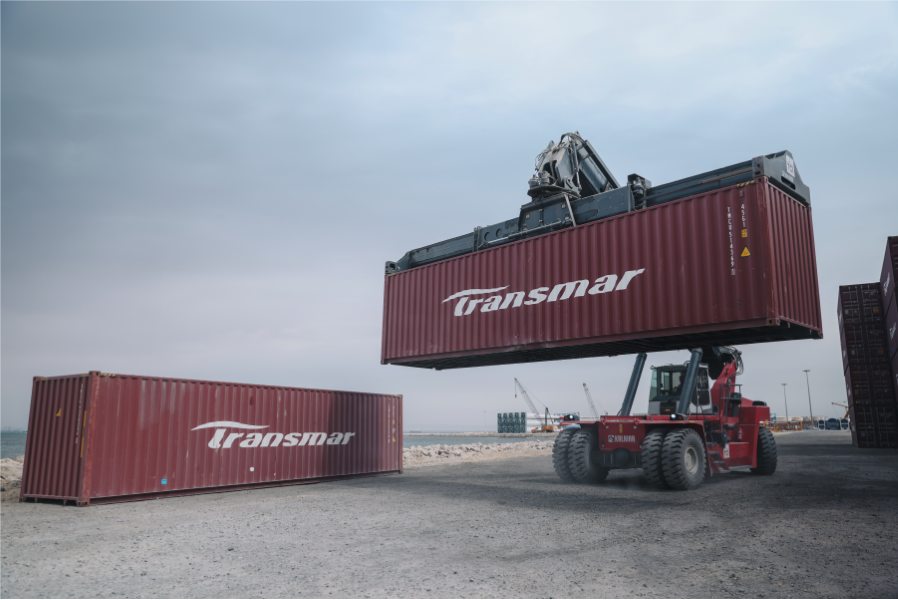
EnterpriseAM Logistics is available without charge thanks to the generous support of our friends at Hassan Allam Utilities, Transmar, and AK-Ships.

Were you forwarded this email? Tap or click here to get your own copy of Enterprise Logistics.

Want to send us a story idea, request coverage, ask for a correction, or otherwise get in touch? Reach out to us on logistics@enterprisemea.com.

DID YOU KNOW that we also cover Egypt, Saudi Arabia, and the UAE ***

CIRCLE YOUR CALENDAR-

The UAE will host the Africa Procurement and Supply Chain Leaders’ Conference on Monday, 25 August until Friday, 29 August in Dubai. The conference will host global industry leaders, policymakers and stakeholders to discuss how AI is changing procurement and supply chain efficiency, sustainability and risk management.

Oman will host Transport Middle East on Monday, 1 September until Wednesday, 3 September in Salalah. The conference will host 35 international speakers and over 50 exhibitors from the maritime sector to discuss global transportation and logistics.

Saudi Arabia will host the Sustainable Maritime Industry Conference on Wednesday, 3 and Thursday, 4 September in Jeddah. The event is set to gather over 60 speakers and more than 3k participants to discuss maritime decarbonization, digital transformation, regulatory frameworks, capacity building, and sustainable practices.

Algeria will host the Intra-African Trade Fair on Thursday, 4 September until Wednesday, 10 September in Algiers. The fair will host over 75 countries and 2k exhibitors across several sectors to explore investment prospects and exchange information on trade between B2B and B2G.

Oman will host the Comex Global Technology Show on Sunday, 7 September and run till Wednesday, 10 September in Muscat. The event will host over 360 participants and 133 tech startups to show achievements in eGovernment, fintech, smart cities, health tech, agritech and cybersecurity.

Saudi Arabia will host the Smart Ports & Logistics Transformation Summit on Monday, 15 September and Tuesday, 16 September in Jeddah. The summit will host over 40 global and local speakers, industry experts and policymakers to explore smart port solutions, port operations and logistics within Saudi Arabia.

Check out our full calendar at the bottom of this email for a comprehensive listing of upcoming news events and news triggers.

This publication is proudly sponsored by

2

Investment Watch

MGX is reportedly eyeing USD 25 bn in external investments to invest in AI infrastructure

Abu Dhabi AI investor MGX is considering launching a fund to raise up to USD 25 bn to accelerate its investments in AI infrastructure, potentially making it among the largest of its kind globally, sources familiar with the matter told Bloomberg. The investment firm is exploring raising capital from financial and strategic investors, both in Abu Dhabi and in other locations.

MGX has plenty of funding commitments in its pipeline: The AI investor is contributing to the initial USD 100 bn phase of the Stargate AI infrastructure fund, a JV formed between OpenAI, SoftBank Group, Oracle, and MGX to invest in AI infrastructure. It is also pledging initial investments in the USD 30-50 bn planned data centers in France, and backing a USD 30 bn AI infrastructure fund launched by BlackRock and Global Infrastructure Partners. The AI investor is planning to invest USD 8-10 bn annually in AI infrastructure and companies, with a focus on the US market. It has a goal of reaching USD 100 bn in assets.

A play for external funding would signal a shift in the funding strategy of UAE state-owned entities. It’s rare for Abu Dhabi state-owned entities to raise external investments, though there have been signs that this could be changing. Mubadala received outside equity for the first time last year, when it acquired a 42% stake in Silver Rock Financial and brought in three new equity owners — Silver Rock CEO Carl Meyer, co-founder Michael Haberkorn, and M-Cor Capital. US-based investment firm TWG Global also acquired a 5% stake in Mubadala for USD 2.5 bn, with the option to increase its stake as the partnership evolves.

3

Purchasing

A look at Kuwait, Qatar and Lebanon's non-oil private sector performance in July

Breaking down non-oil private sector performance in Kuwait, Qatar, and Lebanon in July: Purchasing manager indices (PMI) tracking non-energy sectors brought mixed results across the three countries. Kuwait sustained solid growth, and Qatar also continues to expand, but at a slower pace. In contrast, Lebanon remained under pressure amid deteriorating business conditions.

REMEMBER- The all-important 50.0 mark is the threshold separating contraction from growth. Anything above 50 denotes expansion, while anything below indicates contraction.

KUWAIT-

Non-oil private activity in Kuwait maintained solid growth in July, supported by a strong increase in new orders and business activity, according to S&P Global’s PMI (pdf). The country’s headline reading inched up to 53.5 in July from 53.1 in June. While July reading puts Kuwait above the 50.0 mark for healthy growth for its eleventh consecutive month, it is still below April’s 54.2 reading — the highest headline figure for the nation in over five months.

New orders increased sharply during the month, extending the expansion streak that began in February 2023. This rise was attributed to increased advertising and price discounting. While new export orders also rose, their growth rate slowed to its lowest level in three months. This increase in new orders, along with export,s helped bolster the sector’s output again during the month.

Output price inflation eased in July, reaching a four-month low. Some firms noted that efforts to secure new orders through price discounting curbed the extent to which rising input costs were passed to customers. Meanwhile, inflationary pressures softened at the start of 2H 2025, with purchase prices and staff costs rising at the slowest pace in six and four months, respectively.

Firms maintained staffing levels broadly unchanged during July, following a record high in the previous month. While some companies hired new staff to complete projects on time, others delayed recruitment due to cost concerns. A combination of subdued hiring amid a sharp rise in new orders led to another increase in backlogs of work during the month. “Firms will have been cheered by a softening of inflationary pressures during the month, but the reluctance to hire extra staff did mean that backlogs of work accumulated again,” S&P Global’s Andrew Harker said. However, the rate of accumulation was modest and the slowest recorded since January.

Strong optimism persists as firms embrace digital strategies: Competitive pricing helped bolster firms’ confidence in the 12-month outlook for output, with some companies announcing plans to adopt diverse marketing strategies — particularly through using digital channels. Although sentiment dipped to a three-month low, businesses remained strongly optimistic about output growth in the year ahead.

Positive business outlook: "The prospects for further expansions in new business in the months ahead appear bright, and we'll hopefully see this reflected in renewed hiring activity soon,” Harker noted.

Kuwait on top: “The only Gulf economy to record an improvement in its PMI last month was Kuwait, where it increased from 53.1 in June to 53.5. In the round, the PMIs suggest that activity in non-oil sectors across the Gulf cooled off at the start of 3Q,” Capital Economics’ James Swanston wrote in a recent research note seen by EnterpriseAM.

What’s next for the Gulf overall? “We think that activity in non-oil sectors across much of the Gulf will continue to soften over the coming quarters. Low oil prices will more than offset rising output volumes and, in turn, export receipts will be weaker this year than last. Current account and budget balances will deteriorate, prompting officials to make fiscal policy less supportive,” Swanston noted.

QATAR-

Non-oil activity in Qatar continued to grow in July, but at a slower pace, with the S&P Global PMI (pdf) remaining above the no-change mark of 50.0 for the 19th consecutive month. Qatar’s headline fell to 51.4 in July, from 52.0 in June, with the moderation in the headline driven by a faster decline in new orders, weaker output growth, and faster suppliers' delivery times, though these were partially offset by higher employment growth and increasing input inventories.

Demand weakened in July, leading to a weaker outlook: New business volumes dipped during the month, with demand contracting for the fifth time in 2025. July’s demand dip, which was the steepest since February, was particularly noted in the services and construction sectors, although new work did rise in manufacturing and wholesale and retail. The sustained fall in new orders led to a moderation in the year-ahead outlook.

Employment in the non-energy private sector rose at the second-strongest rate on record, with the only higher rate posted in February. Job creation in July was rapid in three of the four monitored sectors, with construction companies reporting a more modest increase. This strong employment growth contributed to a sharp increase in wages, which was the third-highest on record despite easing slightly from June.

Non-oil activity increased, leading to a rise in input stocks: Purchasing activity grew for the third time in four months as firms sought to replenish their inventory levels. As a result, the level of inputs held in stock rose for the first time in three months. Meanwhile, backlogs of work increased for the eighth consecutive month.

Falling charges offset rising purchase prices and wages: Purchasing price inflation rose in July, accelerating from June's 11-month low. This, combined with the sharp increase in wages — which was the third-highest on record, put upward pressure on costs. Despite these cost pressures, companies reduced their prices at the fastest rate in 10 months, continuing a trend of falling prices for the 12 consecutive months.

Outlook moderated but remained positive: Firms remained optimistic about the year ahead outlook for activity. However, the strength of this sentiment was the weakest in a year. This outlook was supported by anecdotal evidence linking positive sales forecasts to factors like investment, tourism, and government initiatives.

OVER IN LEBANON-

The Lebanese non-energy private sector continued to face deteriorating business conditions in July, according to Blominvest Bank’s Lebanon PMI (pdf). The nation’s headline figure dropped to 48.9 in July, from 49.2 in June, indicating a slightly faster decline in operating conditions. Despite this, the PM reading remained above its long-term average of 46.9, signalling a marginal contraction overall. “This result was not unexpected as the economy lacked any meaningful demand stimulus: the government does not have any money to spend and the private sector is not able and willing to spend,” Blominvest Bank’s Ali Bolbol wrote in the report.

New orders fell at the quickest pace since March: New orders declined for the fifth consecutive month, with the pace of July’s contraction being the sharpest since March. This was largely due to a sharper reduction in new orders from non-domestic customers. The decline in new export business was the steepest since November of the previous year. Regional insecurity and conflicts across the Middle East led to a decline in tourism and caused foreign clients to refrain from placing orders with local companies, according to the report.

Firms curbed purchasing to reduce costs: Private sector companies reduced their purchasing volumes in July. This reduction, the sharpest in eight months, was part of an effort by firms to save costs. Despite this decrease in buying activity, stocks of purchases still saw a fractional increase.

Negative outlook: Businesses remained pessimistic about the year-ahead outlook for activity. This is primarily due to concerns about a potential escalation of conflict and tensions across the region, along with broader security concerns.

Not all gloom, with signs of economic flexibility emerging: “The only good news is that the resulting economic implications could have been worse, which indicates a glimmer of hope regarding the economy’s flexibility and potential,” Bolbol noted.

4

Earnings Watch

KSA’s Aramco records a dip in 2Q earnings

Lower oil revenues weigh down on Aramco’s results: Saudi Aramco’s net income dipped 22% y-o-y to just above SAR 85 bn (USD 22.7 bn) in the second quarter, slightly underperforming the median estimate of 17 analysts at USD 23.7 bn, according to an earnings release (pdf).

The decline in net income came as revenue and sales income decreased 13.4% to SAR 407.1 bn (USD 108.6 bn), compared to the same period last year. Lower operating expenses and Zakat taxes helped cushion the blow.

The drivers: The world’s largest oil company said the waning revenues were due to lower prices for crude oil, which logged an average realized price of USD 66.7/bbl, significantly down from USD 85.7/bbl in the same period last year. Lower prices of refined and chemical products also weighed down on income, but were partially offset by higher sales.

The impact was expected: US tariffs and Opec+ hikes are starting to hit Aramco’s numbers this quarter. Saudi’s oil revenues were down 29% y-o-y in 2Q.

First half performance: Net income for the oil giant reached SAR 182.6 bn (USD 48.7) bn in 1H 2025, down 13.6% y-o-y. Revenue and sales income inched down 7.8% to just shy of SAR 836.8 bn (USD 223.1 bn).

Supply and demand to pick up in 2H? “Market fundamentals remain strong, and we anticipate oil demand in the second half of 2025 to be more than 2 mn barrels per day higher than the first half,” CEO Amin Nasser said in the release. Crude output is slated to increase in 2H after Opec+ completed the unwinding of 2.2 mn bpd in output instituted in 2023 this week, bringing Saudi Arabia’s quota to 9.75 mn bbl/d in its meeting.

5

Diplomacy

Egypt, Vietnam to boost trade to USD 1 bn, work towards comprehensive partnership

Egypt and Vietnam have agreed to boost trade to reach USD 1, Vietnamese President Luong Cuong said during the joint presser held following a meeting with Egyptian President Abdel Fattah El Sisi (watch runtime: 19:35). The new target comes after both nations agreed to upgrade ties between the two nations to a comprehensive partnership and opening up the Egyptian and Vietnamese markets for agricultural products from both sides, according to a statement.

DATA POINT- Trade between Egypt and Vietnam inched up to USD 634 mn in 2024, up from USD 606 mn the year before, according to official figures from state statistics agency Capmas seen by EnterpriseAM. Egypt’s exports to Vietnam stood at USD 52 mn, while imports came in at USD 582 mn.

A broad-based agenda of cooperation: The two sides agreed to step up public and private cooperation in areas including trade, investment, agriculture, and manufacturing — apparel, electronics, fertilizers, food, chemicals, meds, renewables, and EVs, El Sisi said. El Sisi emphasized the untapped potential in bilateral trade and investment and positioned Egypt as “a gateway for Vietnam to the Middle East and Africa,” while suggesting that Vietnam could help Egypt reach new markets in Southeast Asia.

Implementing the new partnership framework: Prime Minister Moustafa Madbouly also met with Cuong to discuss implementing the comprehensive partnership agreed upon, according to a statement. Cuong said he would appoint a coordinator and establish a plan for implementing the partnership, while Madbouly reiterated Egypt’s support for expanding cooperation in key sectors.

Two MoUs were signed between the two sides — one on economic development signed and the other on local development.

6

Also on Our Radar

Updates on storage, warehousing, aviation, and last-mile delivery from across the region

STORAGE + WAREHOUSES-

Rasmala lands in the Netherlands, again: Dubai-based investment manager Rasmala Holdings launched its newly-built EUR 38 mn robotics-powered distribution facility in the Dutch municipality of Almelo, according to a statement. The 312k sq ft facility — which took more than a year to build — boasts an automated warehouse and is located next to another Rasmala-managed warehouse, marking the company’s third investment in the Netherlands. The hub is leased for a 15-year period to an NYSE-listed fashion firm, in a bid to streamline production shipment across Europe and the MENA region.

About Rasmala: Founded over 25 years ago, the outfit provides long-term investment solutions to Gulf-based investors, including banks, retirement funds, and government institutions, according to its LinkedIn.

STARTUP WATCH-

Boxy closes USD 1.5 mn pre-seed round: Iraq-based logistics aggregator Boxy secured USD 1.5 mn from UAE venture capital fund EQIQ in a pre-seed round, Wamda reports. The tie-up will give the startup access to EQIQ’s network and resources for growth to scale up its digital infrastructure.

Boxy is Iraq’s first AI-powered logistics aggregation platform focusing on last-mile delivery, according to its website. It helps e-commerce merchants optimize their shipping by routing each shipment to the optimal courier using a data-driven approach, linking merchant preferences with courier performance. Boxy aims to integrate over 1.5k last-mile couriers in Iraq into a single platform. By establishing a one-stop-shop for logistics players, the startup aims to reduce the risks of reliance on a single carrier.

EQIQ? Abu Dhabi Global Market-based EQIQ is a VC outfit focused on Iraq’s tech ecosystem, according to its website. Its portfolio includes social commerce platform Fedshi, fintech startup Wayl, and ed-tech player Corrsy.

AVIATION-

Menzies JV secures contract for newly launched Iraqi airport: Agility Logistics’ ground handling subsidiary Menzies Aviation is set to provide ground, air cargo, and fueling services at Mosul International Airport via Masil — a four-way JV with Iraqi Airways, Air BP, and Al Burhan Group, according to a press release. Masil will operate in the airport under a 10-year contract.

Masil? The JV — initially formed by Menzies Aviation and Iraqi Airways in 2021 — delivers ramp services, load control, flight operations, cargo and mail services, and support services including "into-plane” fueling, according to its website. Masil is also active at Baghdad International Airport.

REMEMBER- Mosul International Airport officially reopened last month, after it shut its doors for over a decade following its destruction during the fight against the Islamic State. A specialized company will have the facility fully operational by September. The airport was originally scheduled to open in 2024 before being delayed to 10 June of this year. Based in the Nineveh Governorate, Mosul International will reportedly handle up to 630k passengers and 30k tons of cargo per year. Its new runway was extended to 3k meters with a width of 45 meters.

LAST-MILE-

Ajex expands regional operations: Saudi-based Ajex Logistics Services has extended its B2C last-mile, tech-based delivery services to Qatar, Oman, and Kuwait, according to a statement. The newly-added countries complete the firm’s expansion across the GCC — granting them access to services including cross-border order processing, customs clearance, banknotes on delivery, return management, and ins.

7

Around the World

DHL’s earnings see bottom line surge, revenues dip

Freight forwarding giant DHL’s net income rose 9.6% y-o-y to EUR 815 mn in 2Q 2025, according to an earnings release (pdf). Revenues dipped 3.9% y-o-y to EUR 19.8 bn in the same period, with management attributing the drop to exchange rate effects and slower growth in trade volumes.

The firm’s been weathering 1H’s geopolitical shockwaves, and expects market volatility to continue into 2H. Meanwhile, DHL “adjusted [its] capacities to the volume development and achieved structural cost improvements”, group CFO Melanie Kres said, adding that the combination “has significantly contributed to earnings growth.”

In 1H terms: DHL’s bottom line surged 7.9% y-o-y to EUR 1.6 bn in 1H 2025, while its top line flagged 0.6% to record EUR 40.6 bn in the same period, according to a separate statement (pdf).


AUGUST

25-29 August (Monday-Friday): Africa Procurement & Supply Chain Leaders’ Conference, Dubai, UAE

SEPTEMBER

1-3 September (Monday-Wednesday): Transport Middle East 2025, Salalah, Oman.

3-4 September (Wednesday-Thursday): Sustainable Maritime Industry Conference, Jeddah, Saudi Arabia.

4-10 September (Thursday-Wednesday): Intra-African Trade Fair, Algiers, Algeria.

7-10 September (Sunday-Wednesday): Comex Global Technology Show, Muscat, Oman.

15-16 (Monday-Tuesday) September: Smart Ports & Logistics Transformation Summit, Jeddah, KSA

24-26 September (Wednesday-Friday): Routes World, Hong Kong.

25 September (Thursday): World Maritime Day.

30 September-2 October (Monday-Thursday): Global Rail Transport Infrastructure Exhibition and Conference, Abu Dhabi, UAE.

OCTOBER

The International Maritime Organization (IMO) is set to formally adopt the Net-zero Framework this month, stipulating new fuel standards for ships and a global pricing mechanism for emissions.

1-2 October (Wednesday-Thursday): Saudi Maritime & Logistics Congress, Dammam, Saudi Arabia.

6-8 October (Monday-Wednesday): Maritime Cyprus Conference 2025, Limassol, Cyprus.

7-8 October (Tuesday-Wednesday): Global EV & Mobility Technology (GEMTECH) Forum, Riyadh.

13-17 October (Monday-Friday): The Marine Environment Protection Committee’s second extraordinary session, London, UK.

14-15 October (Tuesday-Wednesday): Investing in Africa Conference and Expo, London, UK.

15 October (Wednesday): Global Trade Review, Cairo, Egypt

28-30 October (Tuesday-Thursday): Borneo International Maritime Week, Sarawak, Malaysia.

NOVEMBER

3-6 November (Monday-Thursday): ADIPEC Maritime and Logistics Exhibition and Conference, Abu Dhabi, UAE.

4-6 November (Tuesday-Thursday): Air Cargo Forum, Abu Dhabi, UAE.

9-11 November (Sunday-Tuesday): TransMea Expo, Cairo, Egypt

17-21 November (Monday-Friday): Dubai Airshow, Dubai, UAE.

24-26 November (Monday-Wednesday) The World Advanced Manufacturing & Logistics Saudi Expo, Riyadh, Saudi Arabia.

DECEMBER

1-3 December (Monday-Wednesday): INTRALOGISTICS Powered by CeMAT, Riyadh, KSA

2 December (Tuesday): European Commission issues its decision on Adnoc’s Covestroc acquisition.

15-16 December (Monday-Tuesday): Supply Chain And Logistics Conference 2025, Riyadh, KSA.

2026

27-29 January (Tuesday-Thursday) Transport Middle East 2026, Abu Dhabi, UAE.

4-5 February (Wednesday-Thursday): Breakbulk Middle East, Dubai, UAE.

28-30 April (Tuesday-Thursday) Mediterranean Ports and Logistics, Porto, Portugal.

12-13 May (Tuesday-Wednesday): IntraLogistex, Abu Dhabi, UAE

24-26 June (Wednesday-Friday) Transport Logistic & Air Cargo 2026, Shanghai, China.

7-9 July (Tuesday-Thursday) Asean Ports and Logistics, Kuala Lumpur, Malaysia.

17-19 November (Tuesday-Thursday) Intermodal Africa 2026, Luanda, Angola.

UN Trade and Development Global Supply Chain Forum to take place in Saudi Arabia.

2027

4Q 2027: Oman’s Musandam Airport construction to be completed.

Now Playing
Now Playing
00:00
00:00