Get EnterpriseAM daily

Marsa Maroc set to develop NadorWest Med Eastern Container Terminal

1

What we're tracking today

TODAY: Port news from Morocco. Dubai Investments ventures into Angola

Good morning,

WATCH THIS SPACE-

#1- AD Ports inks another MoU to upgrade Bangladesh’s ports: AD Ports Group inked an MoU with Bangladesh-based power plant equipment supplier Saif Powertec Ltd to cooperate on ports, container depots, and logistics facilities projects in Chattogram, Mongla, and Dhaka, Bangladesh, Wam reports. The agreement will see the entities establish a joint working group to facilitate expertise, strategy, and technical assistance sharing, and the implementation of joint activities.

REFRESHER- AD Ports inked an MoU with Bangladesh’s Chittagong Port Authority last month to explore the development and operation of the multi-purpose port in Chittagong.

#2- Israel will expand the Leviathan gas field in a bid to more than double its gas exports, Reuters reports, citing Israeli Energy Minister Eli Cohen. The partners in the Israeli gas field — which primarily exports to Egypt and Jordan — will invest upwards of USD 500 mn for expansions. “Demand for natural gas in Israel and regional markets is rising and as such we are preparing to expand production at the Leviathan project," Ratio Energies CEO Yigal Landau told the newswire.

A boon for Egypt? Egypt needs to import some USD 1.18 bn worth of mazut fuel oil and natural gas to end ongoing daily power cuts, Reuters reported earlier this week, citing comments by Egyptian Prime Minister Mostafa Madbouly at a press conference. Egyptian state-owned gas firm EGAS is reportedly looking to acquire seven shipments of LNG cargoes in July, six more in August, and four more in September. The country saw a week-long extension of power outages due to a gas field in a “neighboring country” being offline for a 12-hour period.

Israel exported 8.6 bcm of gas to Egypt in 2023, a 39% increase from 2022. However, Israel halted gas exports to Egypt last October on the back of the war on Gaza, which resulted in worsening blackouts for the country amid consecutive heat waves.

FOR A DEEPER DIVE- EnterpriseAM Egypt spoke to a number of industry insiders for an in-depth look into how the power cuts are affecting domestic industry and businesses.

#3- Former Chinese science and technology minister Wan Gang — considered the father of the Chinese EV industry — says the EU tariffs are politically motivated and not supported by a number of EU states, Bloomberg reports. “Confrontation isn’t the way to go — it’s especially pointless to go against technological innovation. The most important thing is to keep negotiating,” Wan said at the World Economic Forum’s Summer Davos event in Dalian, China this week.

Trade between the two sides has taken a hit for years: Part of the tension coming from the bloc is due to Chinese foreign investment not keeping up with the volume of exports, Wan said. The Comprehensive Agreement on Investment between China and the EU has been stalled since 2021 due to geopolitical frictions over human rights issues in Xinjiang, Bloomberg writes.

The number of active shipyards globally has jumped 17.7% in the last two years, Splash reports, citing a report (pdf) from Greek maritime analysts Xclusiv Shipbrokers. The orderbook-to-feet ratio has risen across the board over the last two years, with bulk carriers increasing by 43%, tankers by 72%, and gas carriers by 48%. Container vessel orders have bounced back this year with 64 ships ordered to date after dipping in the second half of last year, the news outlet reports, citing data from maritime analyst Alphaliner. Global order books for shipyards’ have exceeded 133 mn cgt.

Looking forward: Shipyard capacity demand is forecasted to decline by as much as 25% by 2040, according to a Danish Ship Finance report cited by Splash.

MARKET WATCH-

Oil prices dipped in early morning trading driven by fears of a decrease in demand due to US stockpiling, Reuters reports. Brent crude futures eased to USD 84.97 a barrel while US West Texas Intermediate futures dropped to USD 80.59 by GMT 03.10. "An expected increase in US inventories of crude oil and gasoline are weighing on the market due to fears of weakening demand … but the market is in a tug-of-war situation, underpinned by the prospect that an escalation in the battle between Israel and Hezbollah may hinder supply," NLI Research Institute senior economist Tsuyoshi Ueno told the newswire.

US crude oil imports surged to 3.1 mn barrels bpd in May 2024, rising to a nearly two-year high despite tepid demand ahead of the summer season, Reuters reports, citing Kpler tracking data. Imports for June are at around 2.9 mn bpd to date.

Baltic index sees weekly fall: The Baltic Exchange’s dry bulk sea freight index — which tracks rates for the capesize, panamax, and supramax vessel segments — was down on Tuesday 2.4% to 1,926 points, hitting a two-week low impacted by low rates in capesize and panamax segments, Reuters reports. Capesize fell 3.3% to 2,990 points, while the panamax index dipped 3.2% to 1,735 points. The smaller supramax index edged up 0.5% to 1,412 points.

CIRCLE YOUR CALENDAR-

Lebanon will host the East Med Maritime Conference on Thursday, 27 June in Beirut. The event will gather industry leaders to discuss the latest developments in shipping, maritime, and offshore industries to discuss industry innovations, alternative fuels, and decarbonizing emissions in the maritime sector and ports.

Turkey will host the ACI Europe Annual Congress on Tuesday, 2 July to Thursday, 4 July in Istanbul. The event will bring together 500 C-level airport executives, as well representatives from businesses engaged with airports, airlines, aircraft manufacturers, and other stakeholders. The event will highlight discussions on the current state of the airport industry, geopolitics, the Turkish market, resilience, sustainability, and the diversification of revenues.

Check out our full calendar for a comprehensive listing of upcoming news events and news triggers.

This publication is proudly sponsored by

2

Ports

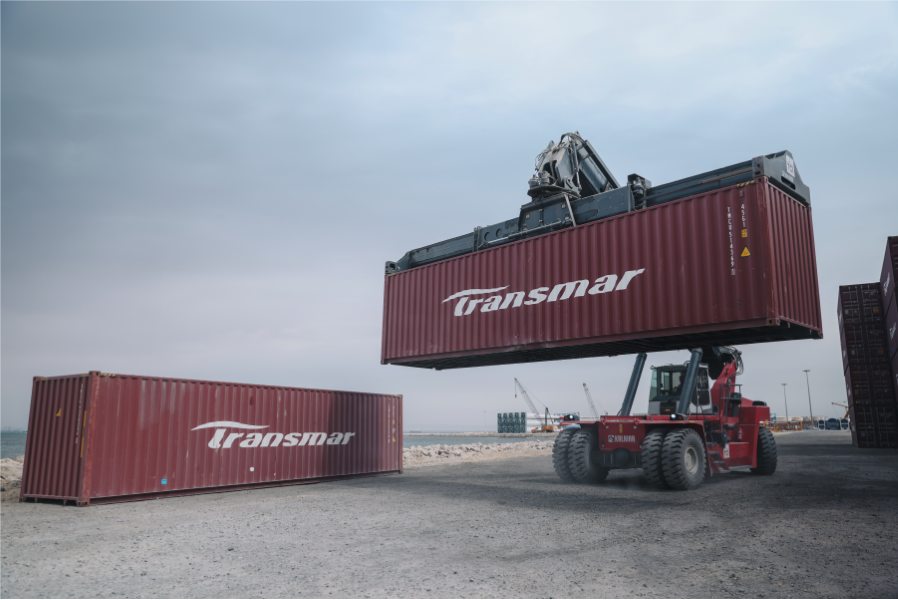
Marsa Maroc set to develop NadorWest Med Eastern Container Terminal

Morocco's main port operator Marsa Maroc has inked a 25-year concession agreement with Nador West Med (NWM) for the NWM Eastern Container Terminal, according to a press release (pdf). Marsa Maroc will invest EUR 200 mn in developing the first phase of the terminal, which is expected to be operational by 2027.

What we know: The new terminal will have a 3.4 mn TEU capacity and will be equipped with 15 ship-to-shore cranes and 45 rubber-tyred gantry cranes. It will extend over an area of 70 hectares and have a water depth of 18 meters as well as 1.5k meters of quay.

A big boost for Marsa’s operations: The expansion will increase the port operator’s container handling capacity up to 6.5 mn TEUs with almost 5 mn TEUs dedicated to container transshipment, according to the statement.

Background: Marsa Maroc currently manages 24 terminals across 10 ports, handling some 57 mn tonnes in 2023. The port operator also manages Morocco’s Tangier Med Port’s Container Terminal 3 (CT3) with German-shipping giant Hapag-Lloyd, Eurogate International GmbH, and Contship Italia. CT3 has reached its full capacity of 1.5 mn TEUs.

REMEMBER- There’s more from Marsa on the horizon: Morocco is lining up a tender for a floating LNG terminal at NWM port this summer. The operator is looking to close a financial agreement on the project in 2025 with construction, commissioning, and commercial operations due to begin in 2026. Several Moroccan government bodies inked an MoU in April to develop an LNG terminal at NWM Port as part of plans to boost LNG transport, storage, regasification, and trade infrastructure in the country.

3

Zones

Dubai Investments breaks ground on Angola’s first integrated economic zone

UAE-based investment firm Dubai Investments has kicked off construction of a mixed-use economic zone covering 2k hectares in Angola’s Dande province, according to a statement. The investment ticket and timeline of the project have not been disclosed.

The details: The project — called Dubai Investments Park Angola (DIP Angola) — will include industrial, commercial, residential, and recreational spaces, in efforts to become a strategic hub for various sectors such as manufacturing, logistics, technology, retail, and tourism. The economic park is set to become Angola’s first fully integrated economic zone, strategically located some 23 km from a major seaport.

Angola has been gaining a lot of attention from UAE players: Abu Dhabi-based port operator AD Ports has secured a 20-year concession with Angola’s Luanda Port Authority to operate and upgrade the Luanda multipurpose port terminal back in April. AD Ports’ concession at the terminal is extendable for a further 10-year period. AD Ports has also set up joint ventures with two Angola-based logistics and transport players to operate the terminal and serve the facility.

Tags:

4

Enterprise Explains

Enterprise Explains: How will autonomous technology impact the global shipping industry?

Enterprise Explains: How will autonomous technology impact the global shipping industry? From autonomous self-driving cargo vessels to delivery drones, technological breakthroughs are driving a leap into autonomous shipping at a faster-than-expected pace, provoking questions about how conventional shipping will be impacted. The shift will likely eventually lead to job losses in an industry that employs some 1.89 mn seafarers globally, but how much effort is going into integrating autonomous technology at an industry scale?

What does autonomy look like? Autonomous shipping refers to vessels that are operated remotely and require limited human intervention. The level of autonomy can vary from a vessel with automated processes and decision support with a full seafarer team operational onboard, to a fully autonomous ship with an operating system that can make decisions and determine actions independently, according to a report by the International Maritime Organization (IMO).

Records have been broken: The cargo tanker Eidsvaag Pioner successfully completed a record breaking 13-hour, 160 mile journey off the coast of Norway while being managed and monitored from a remote operating center on land last year. A crew was on board the vessel, but the ship autonomically undocked itself and was autonomously managed. The Eidsvaag was supported by the EU-funded EUR 30 mnAutoship research project, which aims to develop the next generation of autonomous vessels.

And longer voyages have been completed: Hokuren Maru No. 2, a Ro-Ro vessel operated by Japanese shipping line Kawasaki Kasen Kaisha (K-Line), completed a 1.6k km roundtrip using an autonomous navigation system last November. The system proposed routes and controlled steering to avoid other vessels.

On a smaller scale, there’s movement regionally: Electric seaglider manufacturer Regent Craft inked an MoU with Abu Dhabi Mobility last April to develop and construct all-electric seagliders for cargo transportation at the Smart and Autonomous Vehicle Industry (SAVI) cluster in Masdar City. Regent will supply all-electric aircraft to operate dock-to-dock over-water routes. UAE-based maritime and shipping company Gulfnav signed an MoU in January with eVtol outfit Wings Logistics Hub to deploy their drone services in various operations across UAE ports, including the transport of light and heavy cargo, firefighting, and mapping and surveillance.

There’s still a lot to figure out: “There are a lot of things that do have to be figured out. Regulatory safety issues, piracy, any of the issues that are always dealt with by these cargo ships need to be cleared,” Savills North America Supply Chain Consulting head JC Renshaw told CNBC, “Learning via mistake in a cargo ship environment can be costly … There needs to be some element of human intervention that enables the technology to learn without the peril of learning via mistake,” Renshaw said. “It’s going to take a while to make this pivot. I don’t think it’s going to be something that is an overnight game changer.”

On the flipside, it's safer for humans: Autonomous shipping could provide a long-term solution for safety concerns affecting commercial shipping crews, such as piracy in the Horn of Africa or ongoing Houthi-led attacks on vessels in the Red Sea. Cutting the number of personnel aboard and boosting automated processes would limit threats to human life in the event of an attack.

And cutting down on carbon emissions: Using AI for sea navigation could reduce carbon emissions from the shipping industry by 47 mn tonnes per year, according to a report by autonomous shipping startup Orca AI. By improving situational awareness and real-time alerts, AI tech would reduce the need for route deviations and sharp maneuvers to avoid close contact with high-risk marine targets like vessels, sea mammals, and buoys, Reuters reports. This could cut down an estimated 38.2 mn nautical miles per year from trips and save some USD 100 mn in fuel costs per vessel, according to the report.

Regulatory barriers persist: The IMO is currently looking to integrate new technologies into its regulatory framework to adapt to the fast-paced changes in the industry, according to a report. The IMO aims to strike a balance between benefiting from new tech and ensuring safety and security as well as taking into account the impact on personnel and the environment. Convincing maritime regulators to get on board with autonomous shipping is the biggest hurdle, Kongsberg Maritime’s Remote and Autonomous Solutions VP Ville Vihervaara told CNBC. The application of traditional legal product liability regulation to autonomous shipping will also need to be evaluated, as this will have a knock-on effect on the way in which maritime liability and ins. is applied, according to a Rolls-Royce report (pdf).

Do we have a timeline? Based on the current pace of tech development, remote controlled unmanned ocean-going ships are forecasted to be in application as soon as 2030 and autonomous unmanned ocean-going ships in 2035, a Rolls Royce-led study on Advanced Autonomous Waterborne Applications Initiative (AAWA) report (pdf) finds.

What’s next: “As disruptive as the smartphone, the smart ship will revolutionize the landscape of ship design and operations,” Rolls-Royce President Mikael Mäkinen said in the report. Vessels will be able to monitor their own health, distinguish and communicate with their surroundings and make clear decisions based on this information. Advancing sensor technology — found in existing autonomous vehicle technology — in vessels, control algorithms for navigation, and boosting connectivity between the ship and its operational crew on land are all areas being currently explored, according to the report.

5

Also on Our Radar

Aviation and equipment updates from UAE and KSA

AVIATION-

Etihad Cargo has expanded its partnership with China’s SF Express Co, operating two weekly freighter routes between the UAE’s Abu Dhabi and China’s Ezhou mega hubs starting 15 July, according to a statement. The airline is also launching a freighter service linking Abu Dhabi and Shenzhen. China-based delivery services and logistics giant SF Express’ cargo arm SF Airlines will add another freighter flight between Ezhou and Abu Dhabi to its roster, increasing the total to five weekly flights. The boost to flight frequency is forecasted to add 200 tonnes of capacity to the freighter route, bringing the total weekly capacity to 630 tonnes.

EQUIPMENT-

China’s XCMG adds new service center in Saudi Arabia: Chinese-owned manufacturing firm XCMG has launched a new service center in Dammam, according to a statement. The company also opened a transit warehouse, a component warehouse, and a training center. XCMG currently operates in Riyadh, Jeddah, and Tabuk, and is involved in the construction of several projects in the Kingdom.

ZONES-

SCZone inks agreement with China’s Befar: The Suez Canal Economic Zone (SCZone) inked a framework agreement with Chinese chemicals manufacturer Befar Group to set up an integrated chemicals production complex dubbed Green Marine in China’s special economic zone TEDA, according to a statement.

Investing big in phase one: Green Marine’s first phase will see a hefty investment of USD 250 mn to build a 300k sqm facility in TEDA. This phase aims to produce 100k tons of caustic soda, 50k tons of hydrochloric acid, 40k tons of bleaching agents and decolorizing products for textiles, and 10k tons of bromine and its derivatives annually. The complex is expected to generate annual revenues of USD 230 mn and create 795 jobs.

OTHER STORIES WORTH KNOWING THIS MORNING-

  • SalamAir flies to Chennai: Oman’s budget airline SalamAir is operating two weekly flights to India’s Chennai International Airport starting 11 July. (Statement)
  • Etihad Airways flying directly to Bali for first time: Etihad Airways will launch its first direct flight to Bali’s Denpasar International Airport, which will operate four times a week. (Wam)
  • Etihad Cargo named Best Air Cargo Carrier: Etihad Cargo has bagged Best Air Cargo Carrier in the Middle East award from the Asian Freight, Logistics, and Supply Chain (Aflas) Awards hosted by Asia Cargo News. (Statement)
6

Around the World

FedEx share price surges amid positive 2025 forecasts + Maersk debuts its first low GHG emissions warehouse

FedEx’s plans are going well: FedEx share prices increased by 14% after the company forecast 2025 profits exceeding market expectations and said it plans to buy back USD 2.5 bn of its stock over the next year, Bloomberg reports. The courier adjusted its earnings for the 2025 fiscal year to between USD 20 and USD 22 a share, beating market analysts’ expectations of a USD 20.85 average, according to data compiled by the news outlet. FedEx is currently in the process of reorganizing and cutting costs by consolidating the Express, Ground and Services units in a major shift from the two-network system the company has run for decades. It expects a USD 2.2 bn permanent cost reduction this year, and is considering a potential divestiture of its freight business as it assesses the unit’s performance in its portfolio.


Maersk debuts its first low GHG emissions warehouse in Denmark: Maersk has launched its first low GHG emissions warehouse in Taulov Dry Port in Denmark on Monday as part of the company’s efforts to achieve net-zero CO2 emissions by 2040, according to a press release. The warehouse — which is a joint venture between Maersk and Taulov Dry — is built according to BREEAM Excellent standards and is equipped with solar panels and electrified equipment. Battery-driven trucks will be used for operations and hydrogen stations are planned to be built 150 meters from the site.

Industry executives believe US tariffs on Chinese imports would push up inflation and hurt the US freight sector, The Financial Times reports. New tariffs on Chinese goods entering the country, including a 100% levy on EVs, were announced by President Biden last month, and presidential candidate Donald Trump is promising a 60% tax on Chinese products and 10% for the rest of the world. The Cass freight shipment index, which measures shipments within North America, dropped to a near four-year low in May. “We’re in what we in the industry call a ‘freight recession’,” said Integrated Logistics president Dave Broering.

What they said: “Any time you reduce what’s coming into the country and what we ultimately ship it will have a negative impact on the business,” said Peninsula Truck Lines president Tim Vander Pol. This was echoed by American Trucking Associations chief economist and senior VP Bob Costello, who said the tariffs would essentially be a “tax on consumers, which certainly hurts the industry.”

Looming strikes at US ports are adding to the industry’s concerns, with players urging President Biden to facilitate the resumption of talks between port operators and East and Gulf coast dockworkers, Bloomberg reports. With Red Sea disruptions already placing a huge strain on global maritime trade, “the last thing the supply chain, companies and employees — all of which rely on the movement of goods, both imports and exports, through our East Coast and Gulf Coast ports — need is a strike or other disruptions because of an ongoing labor negotiation,” over 150 groups wrote in a letter to President Biden this week. Talks between the two parties broke down earlier this month.


JUNE

26-27 June (Wednesday-Thursday): Decarbonizing Shipping Forum, Rotterdam, Netherlands.

27 June (Thursday): East Med Maritime Conference, Beirut, Lebanon.

29 June (Saturday): The Investment Conference in cooperation with the European Union, Brussels.

JULY

2-4 July (Tuesday-Thursday): ACI Europe Annual Congress, Istanbul, Turkey.

14 July (Friday): AI Integration and Autonomous Mobility, Berlin, Germany.

AUGUST

21-22 August (Wednesday-Thursday): Rex Fuels Global Expo & Conference 2024- Bitumen, Petrochemicals & Products, Dubai, UAE.

SEPTEMBER

18-19 September (Wednesday-Thursday): Saudi Maritime & Logistics Congress, Dammam, KSA.

23-25 September (Monday-Wednesday): WorldFreezonesOrganization’s Annual International Conference and Exhibition (AICE) , Dubai, UAE.

OCTOBER

6-8 October (Sunday-Tuesday): Routes World 2024, Bahrain.

8-10 October (Tuesday-Thursday): The Global Rail Transport Infrastructure Exhibition and Conference(Global Rail), Abu Dhabi, UAE.

7-9 October (Monday-Wednesday): AFSIC – Investing in Africa, London, UK.

8-10 October (Tuesday-Thursday): AntwerpXL Expo, Antwerp, Belgium.

21-22 October (Monday-Tuesday): Smart Ports & Logistics Transformation Summit, Riyadh, Saudi Arabia.

22-24 October (Tuesday-Thursday): Asean Ports and Logistics, Johor, Malaysia.

22-24 October (Tuesday-Thursday): Global Ports Forum, Singapore.

26-27 October (Saturday-Sunday): International Conference on Tourism, Transport, and Logistics, Dubai, UAE.

NOVEMBER

11-12 November (Monday-Tuesday): World Advanced Manufacturing Logistics Summit & Expo, Riyadh, Saudi Arabia.

11-14 November (Monday-Thursday): ADIPEC Maritime and Logistics Exhibition and Conference, Abu Dhabi, UAE.

13-15 November (Wednesday-Friday): The Bahrain International Airshow, Sakhir Airbase, Bahrain.

18-20 November (Monday-Wednesday): The Heavy Equipment and Truck Show, Damman, Saudi Arabia.

18-19 November (Monday-Tuesday): G20 Summit, Rio de Janeiro, Brazil.

DECEMBER

10-12 December (Tuesday-Thursday): Middle East Business Aviation, Dubai, UAE.

20 December (Wednesday): The Iran-Senegal Joint Economic Cooperation Commission, Dakar, Senegal.

EVENTS WITH NO SET DATE

IATA Annual General Meeting (AGM) and World Air Transport Summit, New Delhi, India.

1H 2024: Civil Construction subcontracts for construction firms in Oman for implementation of the Abu Dhabi - Suhar rail link to be announced.

2H 2024: Bahri’s barges for Saline Water Conversion Corporation (SWCC) to begin initial and commercial operation.

King Salman Energy Park is set to become operational.

The Cross-Border Digital Trade Forum, Dubai.

2025

APRIL

16-17 April: Global Ports Forum, Dubai, UAE.

Mid-2025: Iraq will complete phase one of the construction of the Grand Faw Port.

DHL and Aramco’s logistics and procurement hub in Saudi Arabia will commence operations.

AD Ports-operated Safaga Port’s multi-purpose terminal will become operational.

Phase 3 of APM Terminals Tangier MedPort to be complete and operational.

1Q 2025: Sadr Park’s Logistics Center in Riyadh to be completed.

1Q 2025: Phase twoof Jafza Logistics Park to be completed.

2026

2026 UNCTAD Global Supply Chains Forum, Saudi Arabia.

2027

4Q 2027: Oman’s Musandam Airport construction to be completed.

Now Playing
Now Playing
00:00
00:00