Get EnterpriseAM daily

It’s PMI week

1

What we're tracking today

TODAY: King Abdullah port sets container handling record + Saudi Arabia cuts oil output, threatening supply squeeze in 2H 2023

Good morning, friends. We have a brisk issue for you this morning, with the single big story being how non-oil private sector activity did in May in Qatar, UAE, KSA and Egypt.

ALSO- Don’t miss our Coffee With… interview with Schenker Egypt’s CEO, Khaled Morsy, who talked to us about how Egypt can boost its logistics performance and accelerate exports, and what it needs to do to improve its transit trade.


ENTERPRISE IS LOOKING FOR SMART, TALENTED PEOPLE of all backgrounds to help us build some very cool new things. Enterprise — the essential morning read on all the important news shaping business and the economy in Egypt and the region — is looking for writers, reporters and editors to help us build out new publications. Today, we run four daily Egypt and MENA-focused publications, five weekly industry verticals, and a weekend lifestyle edition designed to make our readers feel just a bit smarter.

We have tons more in the pipeline — come help us build new publications. We offer the chance to work in a fast-paced newsroom on a broad range of topics and in a variety of formats. Our goal is simple: To create value for our growing community of >250k daily readers by telling stories that matter.

Journalists looking to explore business, finance and economic stories are welcome. So are recent journalism school graduates.

That said, we're looking for gifted story-tellers from all walks of life and across all professions, as long as they show a keen interest in learning to write about the stories, topics, businesses, and figures moving markets. Egyptian and foreign nationals alike are welcome to apply. So are job-switchers: If you’re an equities analyst tired of the rat race, we’re a great place to come work.

NEVER WORKED IN A NEWSROOM BEFORE? We have the Enterprise Business Writing Development Program. Whether you are a recent graduate, an industry vet, or looking to switch careers, the Enterprise Business Writing Development Program will give you the tools you need to tell the most important stories to our audience of C-suite officials, government ministers, diplomats, financiers, investors and entrepreneurs.

During the program you will learn:

  • The key news stories and trends shaping business and the economy in Egypt and the region, across various sectors;
  • Business and finance for non-finance people: Whether it's industry jargon or key concepts or simply how to read a balance sheet;
  • How to construct an Enterprise story: From idea formulation down to the structure, style and tone of writing;
  • How to develop sources that will give you the key insights needed to tell a complete story;
  • How to communicate these stories with the confidence and language of an insider.

Not an internship program — a career: The three-month program will see full-time, paid participants take part in workshops and lectures from veteran business journalists, while also working on and filing stories that will run on any of our publications. Those who have successfully completed the program, will then be given long-term job offers.

Apply directly to jobs@enterprisemea.com and mention “writing development program” in your subject line.


HAPPENING TODAY-

DATA POINT #1- Iran saw a 57% y-o-y rise in imports during May, amounting to USD 4.9 bn worth of goods,according to customs data cited byIran International. China, the UAE, Turkey, Germany, and Russia were the country’s top exporters. Non-oil exports rose 6.1% y-o-y during the same period to USD 3.8 bn. The non-oil trade balance saw a USD 1.1 bn deficit, compared with a USD 558 mn surplus a month earlier.

DATA POINT #2- The Dubai Airport Freezone’s (DAFZ) logistics movement management system DAFZ-WAYsaw a 197% y-o-y rise in transactions in 2022, according to a press release. It also witnessed a 44% increase in the number of companies employing the solution during the same period. The DAFZ-WAYsystem allows customers, cargo handlers, and local companies to move goods through the freezone’s gate using a QR-code-based pass.

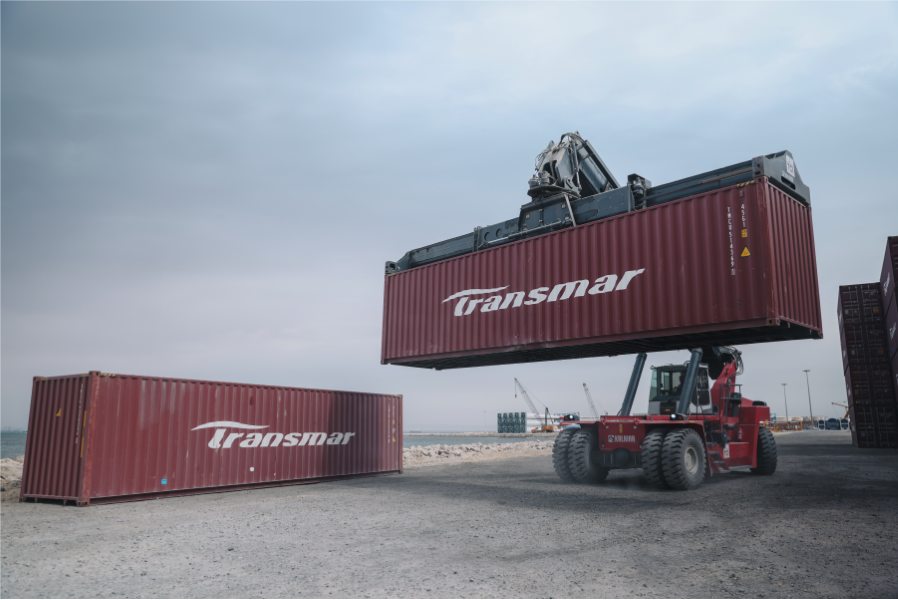
DATA POINT #3- KSA’s King Abdullah Port sets container handling record: King Abdullah Port in Saudi Arabia has set a record for the highest number of containers handled during a single call at a Saudi port, according to a statement, which did not disclose the exact date the record was set. The port handled a little over 20.1k containers on the 13.1k TEU container ship MSC Renee within a span of 77.46 hours.

DATA POINT #4- Qatari ports handled 227 vessels in May, a 6% y-o-y increase, according to a Mwani Qatar statement. The month saw Qatari ports process over 95k TEUs of containers and almost 83k tonnes of cargo. Livestock volumes grew by 727% and building materials by 95% compared to the same period last year.

MARKET WATCH-

Saudi Arabia will voluntarily cut oil production by 1 mn barrels per day (bbl / d), the country’s Energy Ministry said in a statement, after the OPEC+ group of oil producers failed to agree on new curbs during a tense meeting in Vienna yesterday. The reduction comes on top of its 500k bbl / d voluntary cut in April, and will see the kingdom’s production fall to its lowest level in several years. Speaking following the meeting, Saudi Energy Minister Prince Abdulaziz bin Salman said the kingdom “will do whatever is necessary” to stabilize the market. April’s supply cut has failed to support oil prices, which have been on a downward trend in recent weeks on fears of a global economic slowdown.

This could ultimately affect tonnage supply in the crude tanker market: If OPEC+ maintains production cuts, there may be a supply shortage in 2H 2023, driven by increasing demand from China, Drewry writes. Falling oil prices and concerns over the global economy had caused Brent prices to dip below USD 75 per barrel earlier this year, but prices have been on the rise over the past few weeks following OPEC+’s surprise oil production cut in April. If the market remains in deficit, OPEC+ may lift the production curbs, raising the risk of Russian crude prices surpassing the G7's USD 60 / bbl cap, Drewry anticipates.

It could also add to the risks rising from a surge in “gray trade”: The possibility of a surge in gray trade and a rise in ship-to-ship transfers “cannot be ruled out,” Drewry writes. This will tighten the already tight supply of tonnage in the crude tanker market, the maritime research consultancy says.

CIRCLE YOUR CALENDAR-

The IATA Annual General Meeting and World Air Transport Summit kicked off on Sunday at Hilton Bomonti Hotel in Istanbul, Turkey and will end today. The event gathered airline leaders from across the globe to discuss post-pandemic aviation, sustainability in aviation, operational challenges from the past year and the future of the industry, according to the event program (pdf).

Bidding for the project developer contract for the joint Jordan-Iraq economic citybegan on 30 May, according to Jordan News Agency (Petra). The door will remain open for bidding until 29 June. The project, which will provide integration across an array of fields and sectors, is located on the borders of the two countries, according to Petra. The industries and products in the economic zone will benefit from Jordan’s trade agreements with other countries, Petra reported earlier.

Deadline for design bids for Al Ghuwaifat Customs Clearance Center is coming up: The Abu Dhabi Investment Office and the Department of Municipalities and Transport are inviting proposals for the design, construction, maintenance and operation of Al Ghuwaifat Customs Clearance Center in Abu Dhabi, Construction Week reports. The deadline for proposal submissions is 3 July.

Check out our full calendar at the bottom of this email for a comprehensive listing of upcoming news events and news triggers.


This publication is proudly sponsored by

2

Purchasing

Non-oil private sector activity across GCC and MENA countries show positive signs of growth in May

Non-oil private sector activity in Qatar grew at ever-faster rates, while UAE and KSA saw slower growth as Egypt’s shows positive signs of improvement: Purchasing Manager Indices (PMI) tracking non-oil private sectors in UAE, KSA, Qatar, and Egypt were a mixed bag but with all-round hopeful notes. Domestic demand continued to drive growth in UAE and KSA but at a slower pace than previous months. Qatar, on the other hand, saw ever-faster growth. Egypt’s contraction slowed for the second time in as many months with further evidence that demand-corroding inflation was on the mend.

Non-oil private sector in the UAE in May remained in growth territory, albeit at a slower pace than in April, as local demand continued to drive new orders and robust supply chains kept cost pressures in check, according to S&P Global’s UAE PMI (pdf). The UAE’s PMI reading in May came in at 55.5, lower than the 56.6 posted for April. Despite being at a three-month low, the index is above the long-run average of 54.2.

Remember: The all-important 50 mark is the threshold separating contraction from growth. Anything above 50 denotes expansion and anything below indicates contraction.

Business growth mostly came from rising domestic demand: Boosted sales in May buoyed the index, with new orders only slightly below April’s 17-month record, the report observed. Firms cited new clients, marketing campaigns, and boosted sales from travel and tourism as driving new orders. Growth was generated by domestic clients, as export orders remained flat. Despite greater business activity and the fastest rate of hiring since July 2016, backlogs continued to accumulate. New orders and expectations that costs will remain stable led to the best business outlook since October 2021.

Saudi Arabia’s non-oil private sector in May also extended its growth, but at a slower pace than April, according to the Riyad Bank’s Saudi Arabia PMI (pdf). The kingdom saw its PMI reading for May ease to 58.5, slightly below April’s 59.6 but above the 50.0 threshold and the reading’s long-run 56.9 average.

New orders grew, but at a slower pace than April’s eight-and-a-half-year record, the report said. The slowdown from April comes despite recent gains in sales to foreign clients. Surveyed respondents cited a better economy, increased travel, tourism, and investments as drivers for new orders. Business activity also increased but at the slowest rate seen so far in 2023. There was also anecdotal evidence for vendors making quicker deliveries, indicating an improvement in supply chains which in turn helped drive an upturn in inventories at the quickest rate since August 2022.

Greater hiring also helped firms erode Saudi businesses’ backlogs. All in all, businesses retained a strongly positive outlook for the year ahead, citing improving market conditions, a robust sales pipeline, and supportive government policies. Nevertheless, a more competitive environment meant that sentiments were lower than April, falling to their lowest in one year.

Activity in Qatar’s non-oil sector accelerated for the sixth time in seven months, according to the Qatar Financial Center (QFC) PMI (pdf) released yesterday. Qatar’s PMI came in at 55.6, higher than April’s 54.4. The latest number is the highest since July 2022 and is well above the long-run average of 52.3, with the output, new orders, employment, and purchasing components of the index all seeing faster growth.

Growth in output and new orders boosted the index, with hiring and stocks of purchases also contributing to the improvement, the report said. New orders grew at their fastest rate in ten months, with businesses reporting new contracts with new and retained customers as well as new product offerings and sales from tourism. Hiring rose at its fastest rate since July 2022, which helped firms further erode their backlogs of activity. Despite an increase in demand for production inputs, supply chains managed to cope with the upturn and lead times saw further cuts. Outlook for the coming year was also the most hopeful in three months.

Business activity in Egypt is also showing some signs of improvement: Contraction in Egypt’s non-oil private sector slowed to its softest pace since February 2022 in May, according to S&P Global’s Egypt PMI (pdf). The country’s PMI rose to 47.8 in May from 47.3 in April, marking a second consecutive month of improvement but remaining below the 50.0 mark that separates growth from contraction.

Softer price hikes helped the picture: “Companies signaled that input cost pressures were again much softer than at the beginning of the year, as a period of stabilization in the EGP versus the USD helped to cool import markets. This led to another relatively soft rise in selling charges, providing some hope that consumer price inflation will fall again in May,” said David Owen, senior economist at S&P Global Market Intelligence, who also remarked that despite the index remaining in negative territory, recent gains indicate that “current economic headwinds were beginning to dissipate.”

Demand conditions on the up? Output levels continued to decline but at their softest rate since the start of 2021, while new orders dropped at their slowest rate in seven months. Business activity came close to stabilizing in the manufacturing and services sectors. Business intakes in the service sector rose for the second time in three months, suggesting that consumer demand could finally be on the mend.

Nevertheless, outlook remains among the lowest on record, with only 6% of the survey respondents expecting an increase in output over the next 12 months.

3

Coffee with...

Egypt’s logistics sector has the potential of matching the GCC — here’s what’s missing, according to Schenker Egypt’s Khaled Morsy

How Egypt can fulfill the potential of its logistics sector + become a leader in the EastMed, according to Schenker Egypt’s Khaled Morsy: Egypt has gone on an overhaul of its logistics sector over the past few years, from modernizing and automating its customs and import/export procedures through Nafeza, to revamping its road and mobility infrastructure. It is also working on expanding its port capacity and boosting efficiency through a massive number of projects. One company that has been involved in many of these projects is Schenker Egypt, the local arm of DB Schenker, a leading global logistics provider with more than 150 years of experience in land transport, air and ocean freight, and contract logistics and supply chain management.

Enterprise Logistics sat down with Schenker Egypt’s CEO, Khaled Morsy (Linkedin), to discuss the company’s plans in Egypt over the next few years, as well as what Morsy thinks the country needs to work on in order for it to become an end-to-end logistics hub for the region. Edited excerpts from our conversation:

The companies’ current priorities in Egypt: Schenker is currently the qualifying operator partner for the Sixth of October Dry Port project, which includes a container yard, customs clearance offices and agencies, and a container freight station linked through a freight railway which links key seaports. The inland dry port can become a model for similar ports in the pipeline, Morsy told Enterprise Logistics, adding that what makes it a crucial addition to Egypt’s port network is that it is a key component and central hub in the integrated ports and logistics network in Egypt, linked to seaports, railways and the new high-speed rail network, which DB Schenker is also operating along with Elsewedy Electric.

It’s also in a PPP with the Supply Ministry on strategic warehouses: Schenker Egypt is working on co-developing one of four of the Egyptian Supply Ministry’s strategic warehouses, Morsy said. The public-private partnership structure is a “key prerequisite for boosting exports and accelerating FDI,” Morsy said. “We believe public-private partnerships (PPPs) are essential to develop the ports and logistics infrastructure network in Egypt,” Morsy said.

And is working on making its operations green: It also plans to expand its use of electric vehicles (EVs) across its fleet from 12 currently to a few hundred over the next few years, Morsy said, adding that it is working on expanding the use of solar power to cover 25% of its warehouse footprint in Egypt over the coming three years, he added.

Recent infrastructure developments make Egypt attractive to investors, Morsy says: The development work that has been done on roads and mobility over the past few years has helped drum up interest among investors, Morsy said. Ongoing expansions to ports — which will see them grow their capacity significantly over the next few years, Morsy said — is also a chief attraction to investors, he notes. These expansions place Egypt as “one of the biggest, if not the biggest, in the East Med,” in terms of port efficiency and capacity, he added.

Another strength is Egypt’s massive potential for transit trade: Many of Egypt’s ports are managed by major global logistics firms like CMA CGM and Maersk, which helps attract a lot of transit trade volumes, Morsy tells us. “This is key to boosting Egypt’s FDI and exports,” Morsy tells us. While Egypt has long been a stop for transit trade for carriers across its transit ports, the country is still “not an end-to-end, transit-friendly location,” Morsy says, comparing it with Jebel Ali in the UAE, which is a benchmark for transit trade.

SOUND SMART- Transit trade is when a country helps facilitate the movement of goods between two different destinations.

That includes the rigidity of transport networks within the country: “Transport of goods in transit within Egypt remains rigid,” he said, explaining that there is currently no way to split cargo and distribute it to other countries, for example. “Full end-to-end transit trade should allow seamless movement of containers between airports and ports, across the transport networks available across the country,” he added.

While the infrastructure developments have been crucial, they do not work alone, Morsy said, emphasizing the need for integration between the country’s different nodes and ports through streamline supply chain and trade compliance processes.

Standardizing and streamlining customs procedures can help address this issue: Customs bottlenecks are among the biggest challenges cited by importers and exporters who attempt to move goods in and out of Egypt, Morsy said. “Our customs laws do not allow this to happen in a seamless way,” Morsy states. “There is a need for clear legislation that makes this process straightforward and does not leave it to different agents’ interpretation,” he added.

Investing in people is another important factor in the making of a logistics hub: Egypt’s workforce is one of its most attractive competitive advantages, Morsy said, adding that workers in this sector are “competitive and competent.”Schenker is co-sponsoring a Logistics Vocational School with El Sewedy Technical Academy, which began operations in 2017, with that in mind. The program, which provides 10 classes across four cities in Egypt and is based on the German vocational training model, qualifies its students to become logistics specialists through training, Morsy said. Some 100 students have graduated and are currently working at Schenker Egypt’s logistics facilities, he added.

4

Diplomacy

Iraq and Syria discuss curbing cross-border narcotics trade

Iraq and Syria’s foreign ministers met in Baghdad to discuss tackling drug trafficking across their shared border, according to an Iraqi ministry statement. “It’s known that Iraq is a corridor for trafficking and regrettably drug consumption has begun in Iraqi society,” Iraq's Foreign Minister Fuad Hussein said during a joint press conference in Baghdad with his Syrian counterpart Faisal Mekdad, Reutersreports. Arab states, including Iraq, recently elected to reinstateSyria's membershipin the Arab League after it had been shunned for 12 years. Arab nations expect President Bashar Al Assad to control Syria’s burgeoning trade in narcotics, which are produced in Syria and trafficked across the region.

Israel and Bahrain set to ink a trade agreement and an investment protection accord to strengthen bilateral ties, Jewish News Syndicate reports. Israeli ambassador to Oman, Eitan Na’eh, believes that Bahrain can play a crucial role in expanding Israel's connections with other Arab countries in the Gulf, JNSreports. The date and venue of the signing have not yet been finalized, but Israeli Economy Minister Nir Barkat is due to visit Bahrain in the coming months. Israel’s Tourism Minister Haim Katz is also scheduled to visit Manama later this month.

ICYMI- Israel signed a landmark trade agreement with the UAE last year that official estimates project will boost trade from USD 1.2 bn to USD 10 bn within the next five years.

5

Logistics in the News

Supply shortages in the aviation industry could last several years -AerCap CEO

Airlines are expected to encounter shortages of planes, engines, and parts for several years as they try to meet the surging demand for travel, CEO of AerCap Aengus Kelly told Reuters. Most aerospace firms see supply chain problems lasting at least 18 months, but Kelly predicts they will extend well into the second half of the decade and will affect production lines as well as repair facilities. Boeing CEO Dave Calhoun echoed these concerns, pointing to the company's order backlog lasting for the next five to six years. He predicts that it would take until end-2024 before plane makers can significantly boost aircraft output.

6

Also on Our Radar

UAE cracks down on P&Is + UAE, KSA, Egypt lead data center growth in MENA. PLUS: New flight routes from Qatar Airways + SalamAir

MARITIME-

The UAE cracks down on P&I clubs: The UAE’s Maritime Administration is requiring all P&I clubs that are not under the fold of the International Group of Protection and Indemnity Clubs that insure UAE-flagged vessels to supply regulators with additional information about their operations, according to a circular cited by Splash. Clubs have until the end of this month to show that they have an S&P Global rating not lower than ‘A’ and to disclose claims exceeding USD 10 mn or information on their five largest claims. Clubs must also demonstrate membership in a recognized maritime professional agency or regulatory body as well as demonstrate indemnity ins. capped at no less than USD 10 mn, according to Splash.

The new rules are meant to provide additional technical and regulatory oversight over the country’s maritime sector, which has recently become a hot spot for “opaque” fleets used to sidestep sanctions.

DATA CENTERS-

Data center growth in the MENA region is expected to be led by the UAE, Saudi Arabia, and Egypt, according to research (pdf) by investment and commercial real estate firm CBRE. The data center capacity in these three markets currently totals some 336 MW, and is expected to grow to 707 MW by 2025, the bulk of which will be in KSA and the UAE, according to the research. “These three countries’ strong fundamentals are driving activity levels, along with their marked improvements in ease of doing business and data protections laws and also in their subsea cable connectivity,” CBRE said in a press release.

ALSO WORTH KNOWING-

  • Qatar Airways will resume flights between Doha and CardiffAirport by the end of2023. (BBC)
  • Oman’s low-cost carrier SalamAir will introduce direct flights between Salalahand Bahrain starting 5 July.(Press release)

JUNE

June: Suez Canal Economic Zone holds a roadshow in Delhi.

4-6 June (Sunday-Tuesday): IATA Annual General Meeting and World Air Transport Summit, Hilton Bomonti Hotel, Istanbul, Turkey.

4-6 June (Sunday-Tuesday): Cargo Network Services Partnership Conference, Miami, US.

6-7 June (Tuesday-Wednesday): Ports and Customs Week, Cape Town, South Africa.

6-8 June (Tuesday-Thursday): Breakbulk Europe 2023, Rotterdam, Netherlands

8 June (Thursday): Fleet and Mobility Summit, Dubai.

12-15 June (Monday-Thursday): Saudi Plastics & Petrochem, Riyadh, KSA.

14-15 June (Wednesday-Thursday):Helishow Dubai, Museum of the Future, Dubai, UAE.

15 June (Thursday): Middle East Cold Chain Food Safety Conference, DoubleTree by Hilton Dubai, Dubai.

14-16 June (Wednesday-Friday): International Conference on Models and Technologies for Intelligent Transportation Systems, Nice, France.

20-23 June (Tuesday-Friday): Conference on the Marine Transportation System Innovative Science and Technologies Toward Greater Sustainability, Washington, DC, US.

21-23 June (Friday-Sunday): Eurasia Rail, Istanbul Expo Center, Istanbul.

JULY

1 July (Saturday): A new greenfield liquid bulk terminal in Khalifa Port Abu Dhabi will kick off operations.

1 July (Saturday): New UAE Federal Tax Authority VAT Ecommerce rules take effect.

16-17 July (Thursday-Friday): The Levitate Conference and Exhibition, St. Regis Amman Hotel.

24-25 July (Monday-Tuesday): ICSG Istanbul, Istanbul Lutfi Kirdar Convention & Exhibition Centre, Istanbul.

AUGUST

Oman will award Ras Al Hadd Airport consultancy contract.

SEPTEMBER

4-8 September (Monday-Friday): Logistics and Transport Management, Dubai.

5 September (Tuesday): The Leaders in Logistics KSA Summit, Riyadh.

11-14 September (Monday-Thursday): The Libyan Moroccan Forum for Trade and Business, Tangiers, Morocco.

20-22 September (Wednesday-Friday): Transport Evolution Africa Forum and Expo, Inkosi Albert Luthuli ICC Complex (Durban ICC), South Africa.

20-23 September (Wednesday-Saturday): MTB Workboats, Hyatt Regency Dubai, Dubai.

25-27 September(Monday-Wednesday): Airline Economics Growth Frontiers Middle East & Africa, The Ritz-Carlton, Dubai, UAE.

OCTOBER

3-5 October (Tuesday-Thursday): Smarter Mobility Africa Summit, South Africa.

26-29 October (Thursday-Sunday):International Congress of Aviation and Space Medicine, Conrad, Etihad Towers, Abu Dhabi, UAE.

30 Oct- 2 Nov: (Monday-Thursday): IAPH World Ports Conference, Abu Dhabi, UAE.

NOVEMBER

1 November (Wednesday): Smart Maritime Network Dubai Conference, Conrad Dubai, UAE.

14-15 November (Tuesday): Supply Chain & Logistics Arabia, Narcissus, Riyadh, Saudi Arabia.

14-17 November (Tuesday-Friday):IATA Slot Conference, Dubai World Trade Centre, Dubai, UAE.

15 November (Wednesday): Leaders in Logistics UAE Summit, Dubai.

21-23 November (Tuesday-Thursday): Intermobility Expo 2023, Dubai World Trade Center, Dubai, UAE.

23 November (Thursday):Global Supply Chain and Logistics Summit, Grand Millennium Hotel Business Bay, Dubai, UAE.

30 November-3 December (Saturday-Tuesday): Handling Expo, Egypt International Exhibition Center, Cairo, Egypt.

DECEMBER

10-11 December (Tuesday-Wednesday): Invest in Logistics, St.Regis Almasa Hotel, New Administrative Capital, Egypt.

EVENTS WITH NO SET DATE

2H2023:Construction of Neom’s first hydrogen fueling station will kick off.

2H2023: Expansion of Baghdad International Airport to begin.

3Q 2023: Design and supervision contract for Oman’s proposed Musandam Airport to be awarded.

2024

1Q 2024: Construction of phase 3 of Agility’s logistic park in Abidjan, Côte d'Ivoire to be completed.

FEBRUARY 2024

12-13 February (Monday-Tuesday): Breakbulk Middle East conference, Dubai Trade Centre.

12-15 February (Monday-Thursday): African Air Expo, Cape Town.

28 February-1 March (Wednesday-Friday): MENA Transport Congress and Exhibition 2024, Dubai.

MARCH 2024

5-6 March (Tuesday-Wednesday):MRO Middle East, Dubai Trade Center, Dubai, UAE.

12-14 March (Tuesday- Thursday): IATA World Cargo Symposium, Hong Kong International Airport.

MAY 2024

2-3 May (Thursday-Friday): Geneva Dry, Geneva, Switzerland, Hotel President Wilson.

2025

Mid-2025: Iraq will complete phase one of the construction of the Grand Faw Port.

DHL and Aramco’s logistics and procurement hub in Saudi Arabia will commence operations.

2027

4Q 2027: Oman’s Musandam Airport construction to be completed.

Now Playing
Now Playing
00:00
00:00