Feature Story · IFC50 Egypt
Fifty years of IFC's partnership with Egypt — told from the ground up.
1976
First IFC investment in Egypt
$40B+
World Bank Group committed since 1959
~300
IFC projects in Egypt
76.3%
Financial inclusion rate, June 2025
In 1976, IFC made its first investment in Egypt: $5 million in a ceramics factory outside Cairo, in a country that was focused on boosting private sector participation in its economy.
More than $40 billion has been committed by the World Bank Group in Egypt since 1959 — more than $10 billion of which was directed by IFC, across nearly 300 projects, entirely at private sector businesses and the Egyptians who build and work in them.
But this is not a story about those numbers. It is a story about the people behind them — the women who built businesses with a first loan, the engineers who retrained for a new industry, the entrepreneurs who refused to believe their ideas were too ambitious.
The numbers describe what happened. The people explain why this partnership matters.
Chapter One
Forty-six-year-old Azza Ibrahim looked at the busy government street outside her window in Beni Suef in Upper Egypt and recognized something. People were always in a hurry here. Always needing things done. A stationery store would work on a street like this.
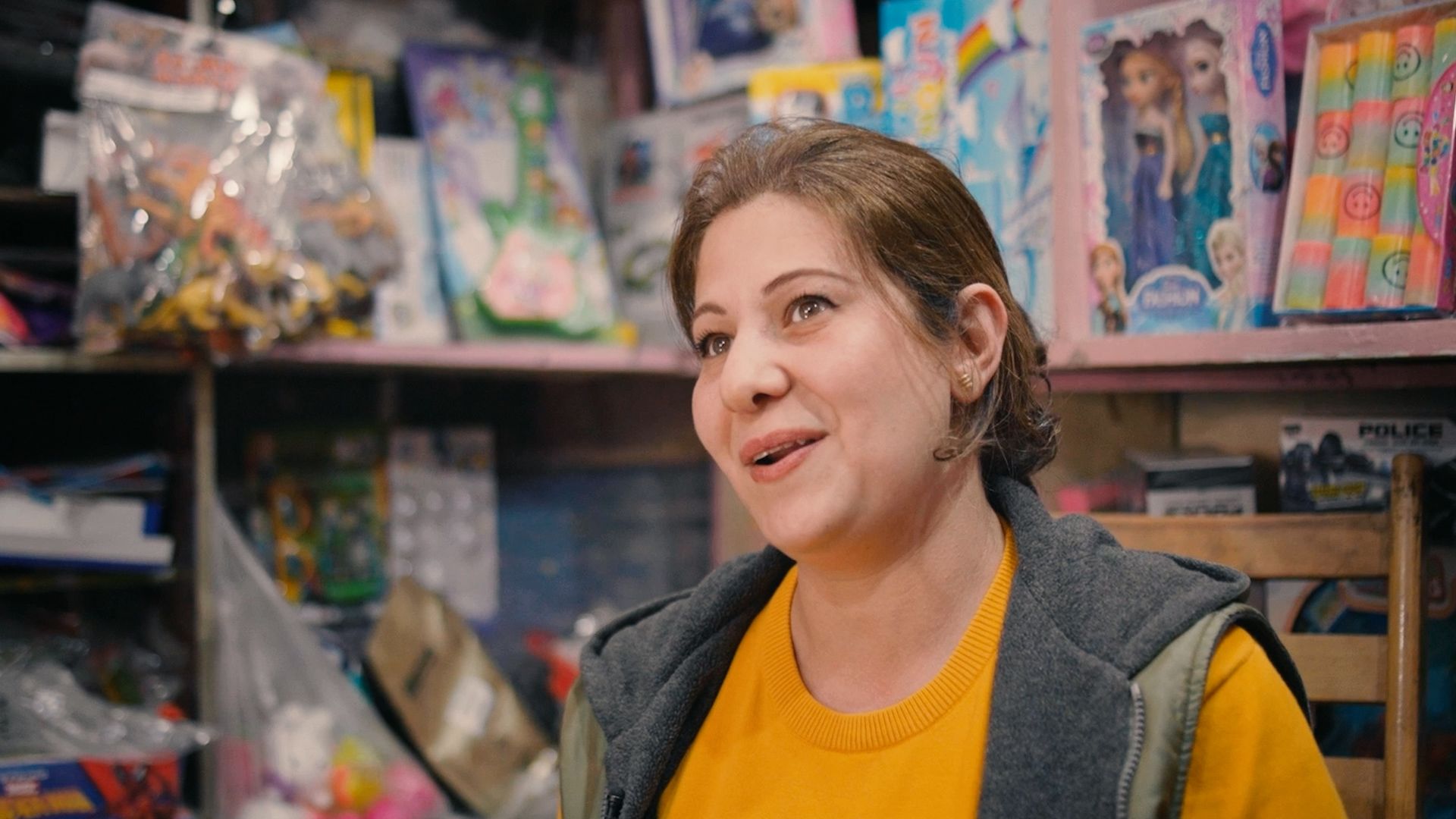
She had the idea and the drive.
What she needed was the means. It started with a small printer. A loan through ZAAT — Banque Misr's financing program for women entrepreneurs, designed with IFC — allowed her to open the store. A second loan helped her grow it. She and her husband run it together.
"The store helped me build my own identity."
Azza Ibrahim · stationery business owner, Beni SuefZAAT was the result of years of IFC advisory work with Banque Misr — market research, product design, and the deliberate effort to understand what Egyptian women entrepreneurs need. Egypt's first banking program built specifically for women. A $234 million loan to Banque Misr followed — the first gender-lens investment in a public sector Egyptian bank — with half earmarked for women-owned businesses. Through this program, more than 80,000 women have entered the formal banking system for the first time.
The same logic runs at every scale. Al Tadamun Microfinance Foundation — Egypt's only microfinance institution solely serving women — has grown its portfolio to serve over 2.6 million micro entrepreneurs since inception, supported by three IFC engagements over more than 10 years. At the other end of the spectrum, Integrated Diagnostics Holdings (IDH) — Egypt's largest diagnostics network, founded and led by women across two generations — received a $35 million IFC investment to scale across Egypt, Jordan, Nigeria, Sudan, and Saudi Arabia. IDH is the first healthcare provider in the Middle East and North Africa to obtain the EDGE gender equality certification, a recognized global standard for gender and intersectional equity.
Chapter Two
For most of the twentieth century, the small Red Sea city of Ras Ghareb ran on oil. Its identity, its economy, and the livelihoods of its 40,000 residents were built on crude. Then, in 2019, IFC and renewable power company Lekela partnered to develop the West Bakr Wind Farm — 96 turbines capitalizing on the steady winds blowing off the Red Sea. Today the farm generates more than 250 megawatts, powers more than 350,000 Egyptian homes, and avoids more than 550,000 tons of carbon dioxide emissions every year.
Among those locally recruited was Kholoud Moustafa Bakry, an electrical engineer who had pursued a Master's degree in renewable energy, drawn by what she had already seen changing in her own city. She joined Lekela and rose to lead the West Bakr Operating Committee — often the only woman in a room of ten. Ras Ghareb's city logo has since been updated. The oil derrick is gone. In its place: a wind turbine.
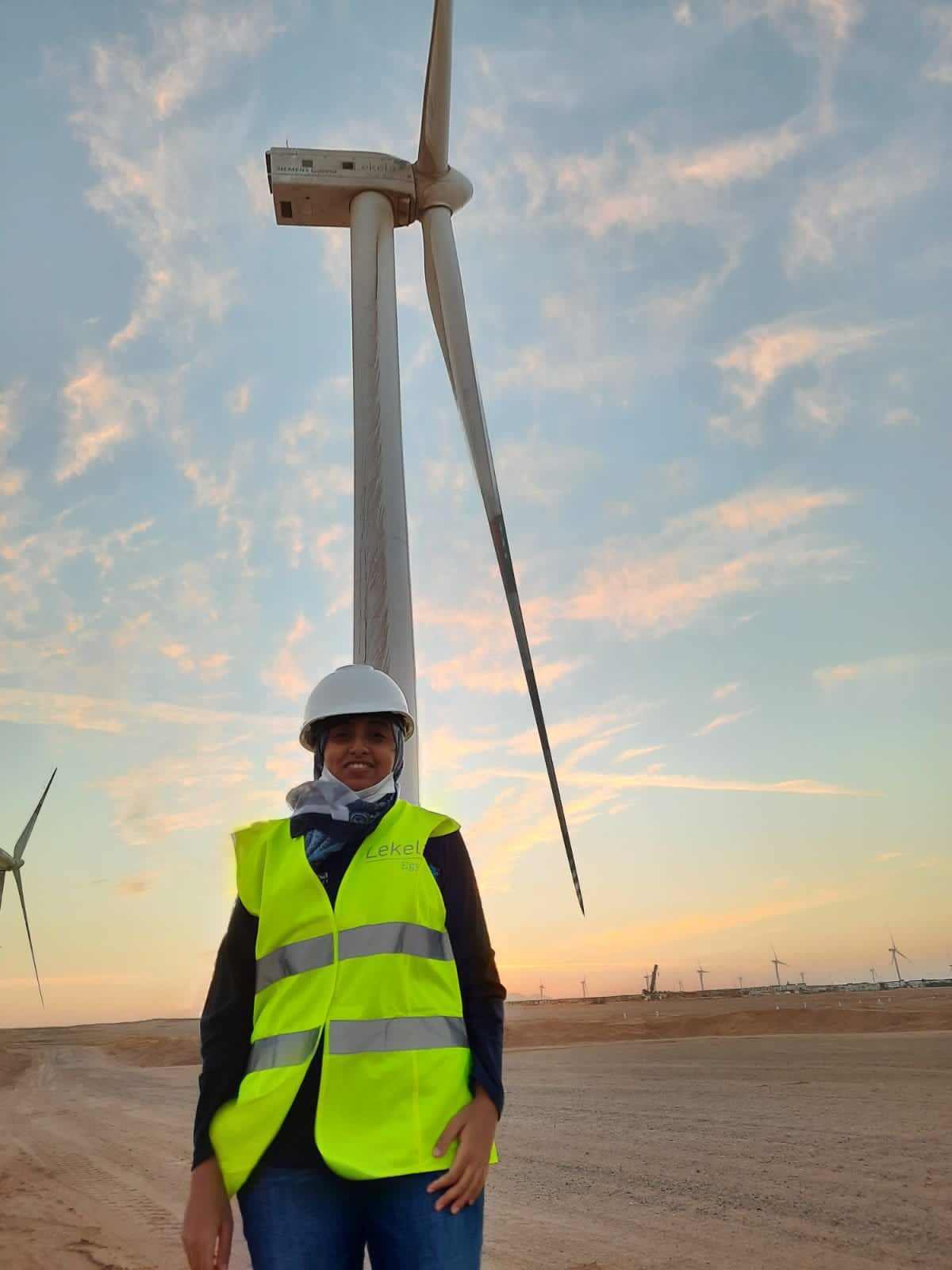
"Growing up in Ras Ghareb, I watched this city run on oil my whole life. When the wind farm came, I knew I wanted to be part of it — not just as an engineer, but as someone from here."
Kholoud Moustafa Bakry · electrical engineer, West Bakr Wind FarmWest Bakr is one chapter in a larger energy story. IFC mobilized $653 million for Benban Solar Park — 1,650 megawatts, at the time the world's largest solar installation, avoiding 2 million tons of greenhouse gas emissions annually. Then, a $1.1 billion investment and mobilization in Abydos Solar and Amunet Wind — 560 megawatts and 505 megawatts respectively, at the lowest clean energy tariffs Africa had ever seen. Now comes Abydos II: 1,250 MWp of solar paired with Egypt's first utility-scale battery storage system, producing 3 million MWh of clean energy per year, avoiding 1.6 million tons of CO₂ annually, and creating more than 4,000 construction jobs — over 95 percent filled by Egyptians.
None of it was inevitable. Between 2014 and 2016, the World Bank Group worked with Egypt's Ministry of Electricity to design the Feed-in-Tariff framework that made Egypt Africa's leading solar market. Egypt built the renewable energy industry. IFC helped unlock the financing and frameworks that allowed it to scale.
Chapter Three
Sohaila had never once thought about working in a factory. That world belonged to men.
Then she learned what Wadi Group had done. The company had made a deliberate commitment — through its partnership with IFC — to bring women onto production lines that had always been male. Not as an experiment. As a policy. When Sohaila arrived, she found herself surrounded by women doing work that the industry had never imagined for them.
It was her first job.
She was always afraid — she will tell you that herself. But on the quality control and printing line, something clicked. She found herself there, recognized for what she could do. That line became hers.
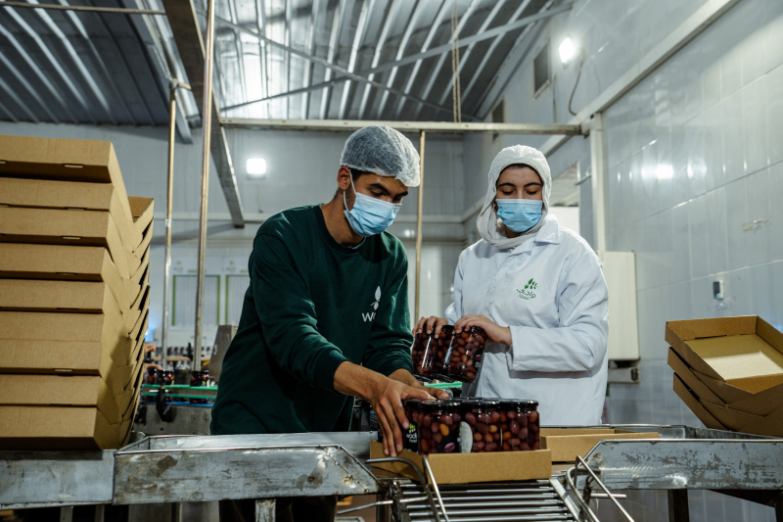
"Don't be afraid. Just do it."
Sohaila · production line worker, Wadi GroupIt is what she tells other women who hesitate at the edge of something unfamiliar. She knows what that hesitation feels like. She also knows what is waiting on the other side of it.
Wadi Group grew from 30 hectares of desert farmland in 1984 to 4,600 hectares today — Egypt's largest egg producer and one of the largest on the continent. IFC backed the company across multiple rounds over two decades, with EDGE gender advisory support running alongside. Egypt's agricultural exports exceeded $10.6 billion in 2025. Less than 10 percent of crops are processed domestically. Closing that gap means companies like Wadi need to recruit from the full talent pool.
Chapter Four
Essam arrived at a remote section of the Red Sea desert in the mid-1990s, dressed in a galabeya (a traditional men's garment) and carrying a stick. At 22 years old, originating from Upper Egypt, he took a job as a security guard. The stick reflected his understanding of security responsibilities at the time, and the desert constituted the entirety of his surroundings.
He was the first security guard El Gouna ever hired.
Over thirty years, the desert became a city. And as El Gouna changed around him, so did Essam. The galabeya became a uniform. The stick became proper equipment. And the world, which had once ended at the edge of his governorate, opened up in ways he could not have imagined standing at that empty site in the 1990s.
He met people he never expected to meet — like international celebrities at the El Gouna Film Festival. He saw things he never expected to see — like a community built by Samih Sawiris, where everyone was treated equally. That was the culture, from the beginning — and Essam felt it.
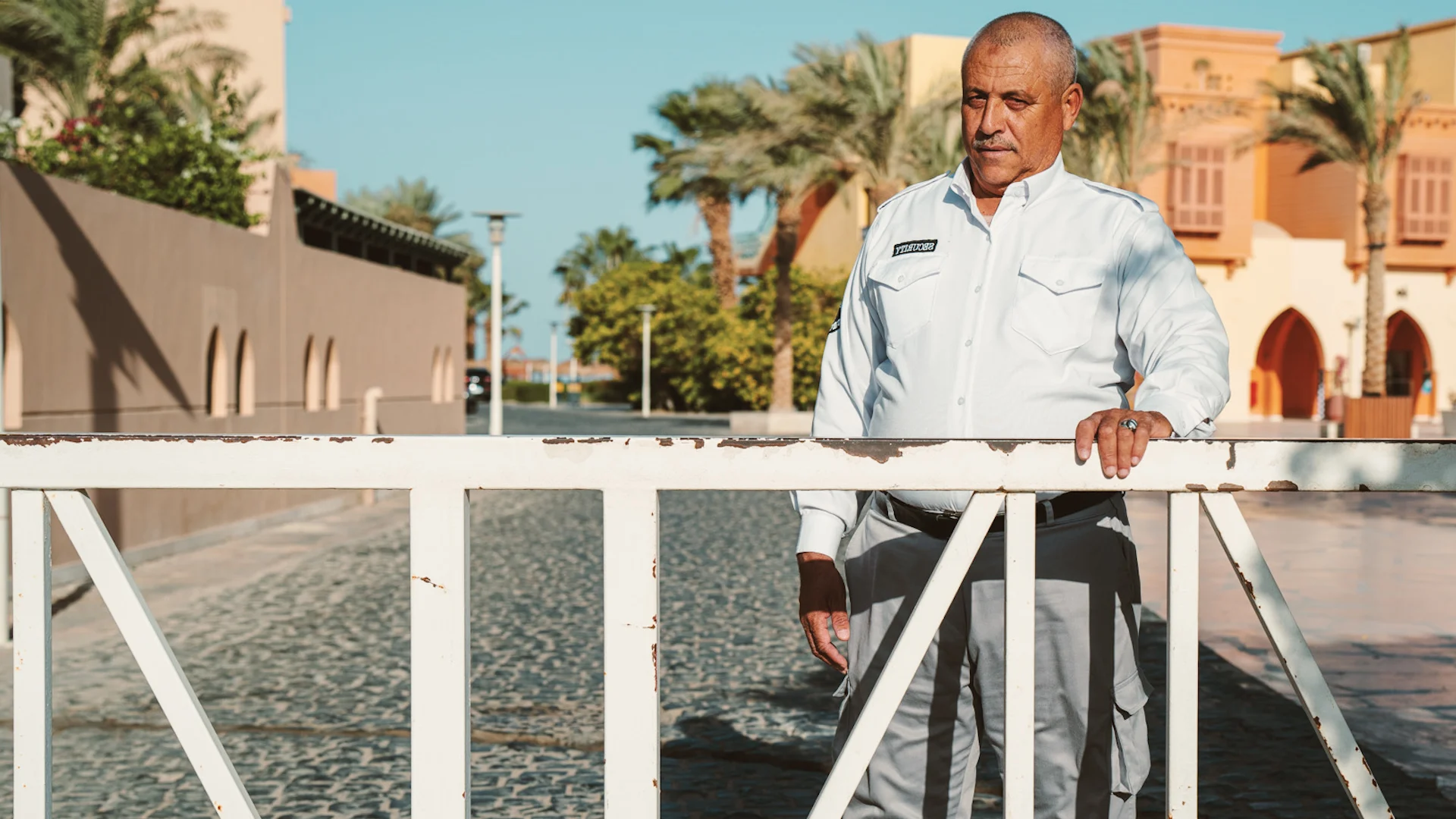
Today, his two grown children work in El Gouna. His whole life is there.
"Thirty years. My children grew up here. Everything I have is here."
Essam · 30 years, El GounaIn 1997, IFC made its first tourism investment in Egypt — $50 million in Orascom's vision for El Gouna when it was still under construction. Over time, El Gouna grew into a full city: more than 25,000 residents and workers, its own utilities, schools, and hospitals, a benchmark for integrated resort development across the region. In 2025, IFC returned with a $155 million sustainability-linked loan — Egypt's first by a tourism company — requiring 50 percent energy efficiency and 20 percent water efficiency improvements across much of El Gouna's hotels.
Essam arrived at a construction site, just starting his life. His children grew up in the city he helped build.
Chapter Five
In 2016, fewer than one in three Egyptians had access to the formal financial system. By June 2025, according to the Central Bank of Egypt, that number had reached 76.3 percent — one of the fastest expansions of financial access recorded anywhere in the world. That shift did not happen because of a single investment or a single company. It happened because of decades of layered infrastructure, built piece by piece.
In 2005, IFC advisory work helped establish I-Score — Egypt's first private credit bureau, built with 29 banks, allowing lenders in the country to assess a borrower's history. Without it, the loans that followed — to Azza, to the women Banque Misr reached, to the MSMEs IFC has backed — would have been harder to make and harder to scale.
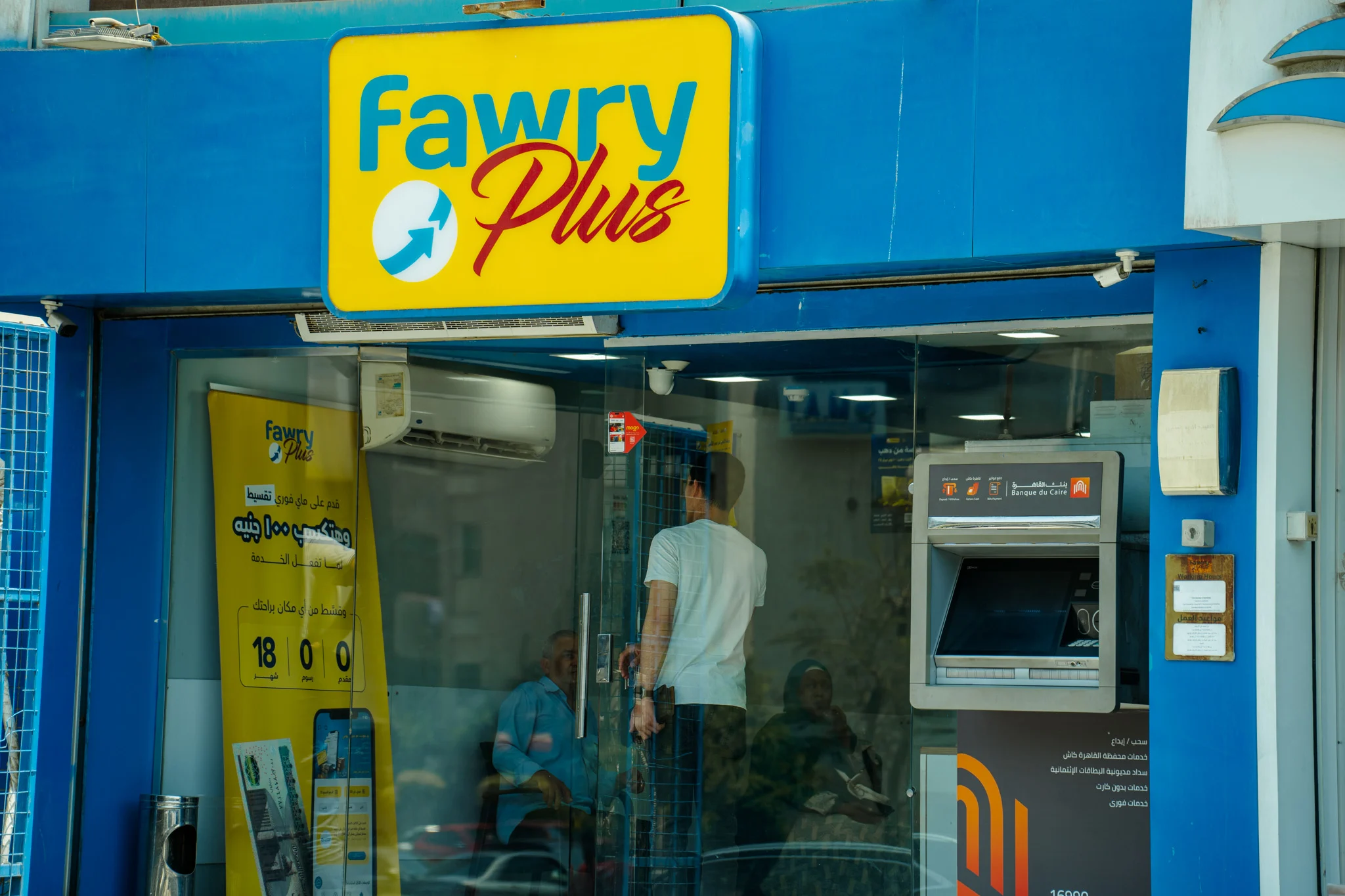
Then IFC took a bet on Fawry — a startup with an unlikely thesis: that Egyptians would trust a payment terminal at a neighborhood grocery store, in a country where cash governed 94 percent of all transactions. IFC invested $14.8 million beginning in 2013, at the moment when the model had been proven, but scale was still out of reach. Fawry now processes 2.5 million transactions a day, serves more than 35 million Egyptians, and in 2019 became the first Egyptian fintech to list on the national stock exchange. Today, Fawry is a household name, delivering digital infrastructure that everyone uses daily.
Underneath both sits a thirty-year relationship with CIB — with more than half a billion dollars of engagements from early equity to anchoring Egypt's first private sector green bond in 2021 to a capital-strengthening loan in 2024. CIB is now one of the most profitable commercial banks in Africa. That outcome was not visible from the starting point. It was the product of a relationship that kept reinvesting in itself — which is, in the end, the same story as everything else in this piece.
Chapter Six
Every year, 1.3 million young Egyptians enter the labor market. The economy generates roughly 600,000 jobs. That gap will not close without private capital at scale — without the market-building, framework design, and long-term conviction that IFC has spent fifty years learning how to bring to Egypt.
IFC's most consequential work has often happened before the market agreed: the advisory that created an industry, the investment made before the company was famous, the relationship sustained when others did not.
That is still the work. And fifty years in, IFC and the World Bank Group are still here to do it, together with Egypt.
.png)
"Egypt's best chapter is still being written. The defining question now is speed — whether reform can translate fast enough into private sector-led job creation at the scale Egypt's demographics demand. That is the work IFC is here to accelerate."
Cheick-Oumar Sylla · IFC Division Director, North Africa and Horn of AfricaFirst Investment
1976 · Arab Ceramic Company · $12.8M across multiple rounds
Total WBG Commitment
More than $40 billion · IFC: $10 billion+ across ~300 projects
Women
Al Tadamun (10+ yrs, 2.6 million microentrepreneurs) · ZAAT/Banque Misr ($234M, 55,000+ women in year one) · IDH ($35M — 5 countries)
Energy
West Bakr 250+ MW · Benban 1,650 MW ($653M mobilized) · Abydos + Amunet 1,065 MW · Abydos II 1,250 MWp + BESS ($572M) · Feed-in-Tariff framework
Ports & Trade
Damietta Alliance Container Terminal ($260M IFC, $455M total — 80,000 projected jobs by 2040) · East Port Said ($350M) · Safaga ($118M)
Jobs at scale
Kazyon: 9,000+ employees, 1,000+ stores, expanding to Morocco (30,000 projected jobs) · Abydos II: 4,000+ construction jobs (95%+ Egyptian)
Finance & Fintech
Fawry ($14.8M — 35M+ users) · CIB (30 yrs, >$500M) · First private green bond (CIB, 2021) · AAIB sustainability bond ($300M IFC + $200M mobilized) · I-Score
Tourism
El Gouna/Orascom ($50M, 1997; $155M SLL, 2025) · Grand Egyptian Museum (EDGE Advanced — 60%+ energy savings, 34% water reduction) · Hurghada Airport PPP advisory
Reform Advisory
Asset Monetization Program · New Cairo Wastewater PPP (Egypt's first closed PPP) · Egypt Airports PPP (11 airports) · 30by30 Climate Finance · Feed-in-Tariff framework
Financial Inclusion
27% (2016) → 76.3% (June 2025, Central Bank of Egypt)
Op-Ed · IFC Division Director
What five decades of IFC in Egypt tell us about private sector development — and what comes next.
Cheick-Oumar Sylla
IFC Division Director, North Africa and Horn of Africa
Curtain Raiser Op-Ed · IFC50 Egypt
For fifty years, IFC, a member of the World Bank Group, has had the privilege of being part of that story: not as the author, but as a partner that brought private capital, helped design frameworks, and mobilized investors who believed in what Egypt was building. The impact belongs to Egypt.
And the opportunity ahead is even greater. Every year, 1.3 million young Egyptians enter the labor market — a generation ready to work, create, and lead. Meeting that ambition requires private capital at scale from partners with a track record and the commitment to stay.
This month, as IFC marks fifty years in Egypt, closing that gap is exactly what is at stake.
In the 1970s, Egypt made a bold choice — to boost private sector participation in its economy. In 1976, IFC responded. One $5 million equity investment. One ceramics factory outside Cairo — a company worth betting on. From that beginning, a partnership took shape that sits within a larger World Bank Group commitment to Egypt, today amounting to more than $40 billion.
But the numbers only tell part of the story. Across every sector, the World Bank Group has worked in close partnership with the Government of Egypt and the private sector: supporting national reform agendas, co-designing the frameworks that made private investment possible, and mobilizing the capital that Egypt's ambitions required.
Behind those figures is a deliberate model: the World Bank reforms the enabling environment; IFC finances the businesses that environment makes viable; and MIGA provides de-risking tools for investors. Egypt, across fifty years, is one of its most compelling demonstrations.
IFC's work in Egypt is organized around one conviction: that private sector growth is the most powerful engine of jobs. For fifty years — working hand in hand with the World Bank Group and the Government of Egypt — that conviction has guided every investment and every advisory engagement: in energy, financial services, tourism, infrastructure, agribusiness, inclusion, and beyond.
Nowhere is that clearer than in energy. In 2014, the World Bank championed a private-sector-led renewable energy policy, backing it with three development policy operations through 2016–2019. IFC structured the transactions and mobilized financial institutions, enabled by MIGA's guarantees, laying the ground for Benban — at the time the world's largest solar installation. Later, IFC invested and mobilized $1.1 billion in financing for Abydos Solar and Amunet Wind in 2022, bringing clean power to one million Egyptians at tariffs cited globally as a benchmark. IFC also financed Egypt's first utility-scale battery storage system in 2025. What began as a policy framework became Egypt's renewable energy industry — contributing nearly 4 gigawatts of clean power in Egypt's energy grid.
The energy transition is a story about what happens when markets are built right. So is Egypt's financial sector transformation. Egypt's financial inclusion rate rose from 27% in 2016 to 76.3% by June 2025 — one of the fastest expansions anywhere in the world, the product of deliberate national policy and IFC's partnership in delivering it. From Egypt's first private green bond with CIB to the largest privately issued sustainability bond in Africa with Arab African International Bank, IFC has opened channels of capital that did not previously exist. In Egypt, where small businesses generate 90% of private sector employment, every business that gains access to finance is a potential employer.
That jobs logic extends across every sector IFC works in. In tourism, IFC made an early bet on the Red Sea — backing El Gouna before the world knew what it would become — and today Egypt's 19 million annual tourists support 2.9 million jobs, with 30 million tourists targeted by 2030. In infrastructure, IFC has co-financed port expansions at Damietta, East Port Said, and Safaga — among many others — that will generate more than 80,000 jobs and connect Egypt's producers, including those in its most underserved regions, directly to global markets. In agribusiness, Wadi Group grew from 30 hectares of desert farmland to 4,600 — 150 times over — becoming the largest egg producer on the African continent. Wadi is proof that private investment in Egypt's agricultural value chains creates more rural jobs, increases foreign exchange, and cements Egypt's position as a global food producer.
And woven through all of it — boldly and deliberately — a fifty-year commitment to women's economic participation, as a driver of private sector growth and job creation. A few examples tell the story: Al Tadamun's micro-loans reaching women in underserved communities for over a decade; IDH, Egypt's largest diagnostics network founded and led by women — and EDGE Gender certified; and more than 80,000 women brought into the formal financial system for the first time through Egypt's first women-tailored banking products with Banque Misr. Egypt's gender employment gap costs the economy more than 50% of its potential. Closing it is an economic imperative — for the future generation of young Egyptian women entering the workforce.
Job creation is the World Bank Group's North Star — shaping every reform, every investment, and every decision about sustainable growth.
In Egypt, that focus is where ambition meets urgency. The country's fundamentals are strong, and its reform program is delivering tangible results. The defining question now is speed: whether reform can translate fast enough into private sector-led job creation at the scale Egypt's demographics and aspirations demand.
That is the work IFC is here to accelerate — as a partner of fifty years, committed to writing Egypt's next chapter together.
Cheick-Oumar Sylla
IFC's Division Director for North Africa and Horn of Africa. IFC, a member of the World Bank Group, is the largest global development institution focused on the private sector in emerging markets.
